
Main Courses
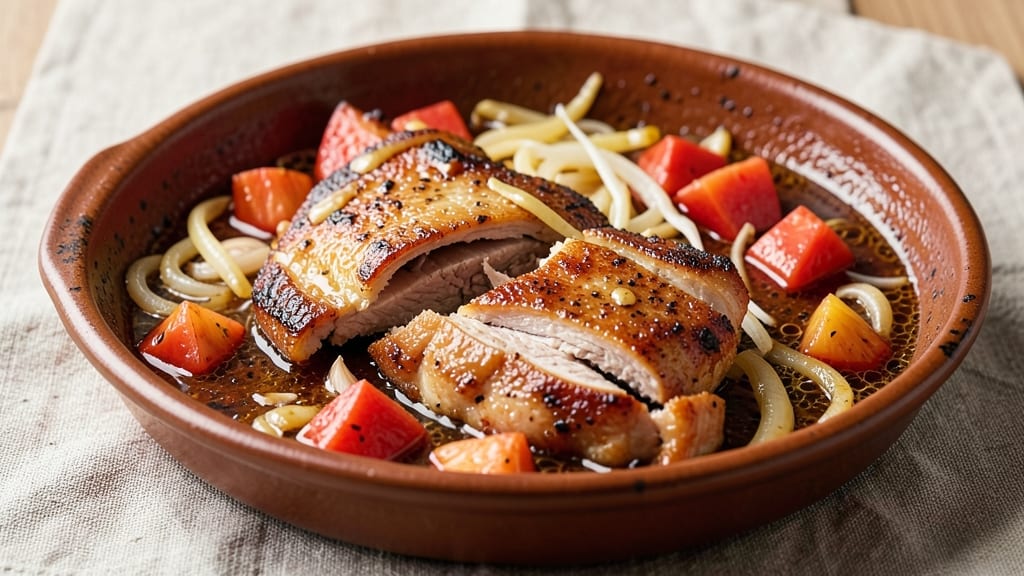
This pork belly pineapple adobo recipe delivers the perfect marriage of crispy, caramelized skin and a tangy-sweet sauce that balances heat and sweetness. 🔥 I developed this version after years of perfecting adobo techniques—balancing the traditional Filipino method with modern kitchen shortcuts that still deliver restaurant-quality results.
The key lies in rendering that pork belly until it's golden and crisp, then braising it low and slow in a sauce that gets sweeter with every minute.
The magic happens when the pineapple's natural enzymes tenderize the pork while adding bright acidity to the sauce. We'll start with a high-heat sear to lock in juices, then braise at 325°F until the meat falls apart.
The adobo sauce—built from soy sauce, vinegar, garlic, and pineapple—develops depth as it reduces, creating a glossy glaze that coats every bite. This isn't just another pork dish; it's a celebration of textures and flavors that'll have everyone asking for seconds.
What you'll end up with is crispy skin that shatters between your teeth, tender pork that melts in your mouth, and a sauce that's perfectly balanced between sweet, tangy, and savory.
The aroma alone will have your kitchen smelling like a Filipino street food stall, and the first bite delivers that perfect harmony of textures and flavors.
This recipe serves four and pairs beautifully with steamed jasmine rice or garlic fried rice to soak up every last drop of that glorious sauce.
Here's where it gets interesting—the pineapple isn't just an ingredient; it's the secret weapon that transforms this dish from good to unforgettable. The acidity cuts through the richness of the pork, while its natural sweetness caramelizes in the sauce, creating layers of flavor that build with every bite.
Trust me on this: once you try this version, you'll never go back to the basic adobo you've been making.
Ingredients for pork belly pineapple adobo
Pork belly and pineapple transform into crispy, caramelized magic with just these 14 ingredients.
| Ingredient | Amount | Notes |
|---|---|---|
| Pork Belly 🥓 | 2 lb | Skin-on, cut into 1-inch thick slices |
| Fresh Pineapple 🍍 | 1 whole | Cored, cut into 1-inch chunks |
| Yellow Onion 🧅 | 1 whole | Thinly sliced, about 1.5 cups |
| Garlic Cloves 🧄 | 8 cloves | Minced, about 2 tbsp |
| Coconut Aminos 🍶 | ½ cup | Or substitute with soy sauce |
| White Vinegar 💧 | ¼ cup | Distilled preferred |
| Brown Sugar 🍚 | ¼ cup | Packed, light brown preferred |
| Black Peppercorns 🌶️ | 1 tsp | Crushed, freshly ground |
| Bay Leaves 🍃 | 2 whole | Dried, for depth of flavor |
| Olive Oil 🫒 | 2 tbsp | Extra-virgin for high heat sear |
| Jasmine Rice 🍚 | 2 cups | Uncooked, for serving |
| Salt 🧂 | 1 ½ tsp | Kosher or sea salt |
| Ground White Pepper 🌶️ | ½ tsp | For finishing |
| Fresh Bay Leaves 🍃 | 2 whole | For garnish, optional |
The pork belly is where this dish shines—skin-on, thick-cut slices are non-negotiable. Look for cuts with good marbling at Whole Foods or your local Asian market; the fat renders beautifully. I always grab mine from Costco when I'm making a big batch, but the regular supermarket stuff works fine. The pineapple should be ripe but firm—Dole or Del Monte brands are reliable, but local farmers markets often have sweeter options. For the coconut aminos, Kikkoman makes a great version that's widely available, or use soy sauce in a pinch—just know it'll be slightly less sweet. The brown sugar needs to be packed; light brown gives the best caramelization.
No coconut aminos? Soy sauce plus 1 tbsp honey gets you close, though the sauce won't be quite as vibrant. Fresh bay leaves are ideal, but dried at half the amount works too. Want more heat? Add a dash of sriracha or chili flakes at the end. The garlic can be pre-minced from a jar (the good stuff, not the pre-shredded kind), but fresh is always better. For the rice, jasmine is traditional, but basmati or even long-grain white works if that's what you've got. The olive oil matters here—use something with a high smoke point like Avocado Brand or Bertolli for the sear.
This dish tastes even better the next day—honestly, the sauce gets more amazing as it reduces. Store leftovers in the fridge for 4-5 days or freeze for 3 months. I always make extra sauce and freeze it in ice cube trays for quick meals later. The rice reheats beautifully with a splash of water, but the pork belly? Best served at room temperature. Garnish with fresh bay leaves right before serving—they add a bright, herbal note that cuts through the richness.
Why You'll Love This Recipe
- One-Pan Magic: I swear by this—just toss everything on a sheet pan, and the pork belly crisps up while the pineapple caramelizes. No chopping boards, no mess, just hands-off cooking.
- Sweet-Savory Balance: That crispy, salty pork belly with the bright, juicy pineapple? It’s the kind of combo that makes you go back for seconds. The coconut aminos tie it all together without being overpowering.
- Meal Prep MVP: Between us, this is my go-to for lunches. The flavors only get better the next day, and it reheats like a dream—perfect for busy mornings or lazy afternoons.
- Budget-Friendly Feast: Pork belly feels fancy, but it stretches further than you’d think, especially with pineapple adding that tropical touch. Honestly, it’s the kind of dish that makes a simple weeknight feel special without breaking the bank.
Step-by-step instructions for pork belly pineapple adobo
Here's how to transform tender pork belly into crispy perfection with a sticky-sweet pineapple glaze.
🔥 Step 1: Render Pork Belly Fat Until Crispy
Preheat your oven to 425°F. Place the 2 lb pork belly slices skin-side down in a cold oven-safe skillet. Turn the heat to medium-high and let it cook undisturbed for 15 minutes—this renders the fat slowly without burning. You'll see the fat start to bubble and sizzle, which is exactly what we want.
After 15 minutes, flip the pork belly slices and continue cooking for another 10 minutes until the skin turns deep golden brown and crispy. Here's the thing—don't rush this step. The slow render creates that perfect crispy skin while keeping the meat tender. If you notice the fat getting too dark, reduce heat slightly to prevent burning.
🍳 Step 2: Build the Sweet-Tart Adobo Sauce
Remove the pork belly from the skillet and set it aside. In the same skillet (leave those flavorful browned bits!), add 2 tbsp olive oil over medium heat. Toss in the thinly sliced yellow onion and cook for 5 minutes until softened and translucent. Add the minced garlic cloves and cook for another 30 seconds until fragrant.
Pour in the 0.5 cup coconut aminos, 0.25 cup white vinegar, and 0.25 cup brown sugar. Stir well and let it simmer for 3 minutes until slightly thickened. This is where the magic happens—the vinegar cuts through the sweetness while the coconut aminos add depth. Add the crushed black peppercorns and 2 whole dried bay leaves to the sauce.
🥘 Step 3: Braise Pork Belly in Flavorful Sauce
Return the pork belly to the skillet, skin-side up, and pour the sauce over it. The sauce should coat the pork belly about halfway up. Transfer the skillet to the preheated 425°F oven and braise for 45 minutes, uncovered. This allows the pork to cook gently while the sauce reduces and caramelizes.
After 45 minutes, remove the pork belly from the oven and add the 1-inch pineapple chunks to the sauce. Return the skillet to the oven for another 15 minutes to let the pineapple absorb the flavors. The pork belly should be fork-tender with a crispy skin that peels away easily. If the sauce looks too thin, let it reduce uncovered for a few extra minutes.
🍽️ Step 4: Finish with Jasmine Rice and Garnish
While the pork belly finishes, cook the 2 cups jasmine rice according to package instructions. I like to use a rice cooker for perfect fluffy grains every time. In a small bowl, mix 1.5 tsp salt and 0.5 tsp ground white pepper—this will be our finishing seasoning for the pork.
Once the pork belly is done, transfer it to a cutting board and sprinkle with the salt and pepper mixture. Let it rest for 5 minutes before slicing. Serve the pork belly slices over the jasmine rice, spooning the pineapple adobo sauce generously over the top. Garnish with the 2 whole fresh bay leaves for a pop of color and fresh aroma. The contrast of crispy pork belly, sweet pineapple, and tangy sauce is what makes this dish truly special.
Pro Tips For Making Pork Belly Pineapple Adobo
- CRISP THE BELLY FIRST: Skip the raw pork belly straight into the sauce—it’ll turn greasy. Sear it skin-side down in a hot pan until the fat renders and the skin cracks golden. That crispy barrier keeps the meat from falling apart later, and the flavor? Night and day.
- CHAR THE ONIONS LOW: I used to rush the onions and end up with bitter, mushy bits. For this dish, cook them on low heat until deep brown—almost jammy—stirring occasionally. That slow caramelization balances the sweet pineapple and adds depth the quick-cook method misses.
- SAVE THE PINEAPPLE JUICE: Don’t drain that golden juice after chopping the pineapple—it’s liquid gold for the adobo. Strain it into the pot with the coconut aminos; it cuts through the richness and keeps the sauce from clinging too heavily to the pork.
- SIMMER NOT BOIL: After everything’s in the pot, resist the urge to crank the heat. A gentle simmer (tiny bubbles, occasional skimming of fat) lets the flavors meld without turning the pork belly into tough, rubbery slices. Patience here makes the difference between good and exceptional.
Wine and beer pairings for this recipe
Filipino-Inspired White Wine
For this dish, I always reach for a crisp Filipino-style white wine like Rizal or Petron—both are widely available in Asian markets and have that perfect balance of acidity and fruitiness that cuts through the pork's richness.
If you can't find these, a dry Riesling from Germany or a Sauvignon Blanc with citrus notes works beautifully. The acidity in these wines mirrors the vinegar in the adobo sauce, creating harmony with every sip. 🍷
Light-Bodied Red Options
If you prefer red wine, go for something light and fruity like a Pinot Noir from Oregon or a Spanish Garnacha. These wines won't overpower the dish but complement the sweet-tart flavors of the pineapple and pork.
I've found that a Pinot Noir with its bright cherry notes actually enhances the caramelized pork belly. Avoid heavy Cabernets—they'll clash with the delicate flavors here.
Craft Beer Pairings
For beer lovers, a Belgian Witbier like Stella Artois or Hoegaarden is my go-to choice. The citrusy notes from the coriander in these beers play perfectly with the pineapple and vinegar in the sauce.
Alternatively, a light lager with a touch of sweetness, like Peroni, cleanses the palate between bites. If you're feeling adventurous, try a honey wheat beer—the subtle sweetness complements the caramelized pork beautifully.
Non-Alcoholic Choices
Don't have alcohol? No problem. A sparkling pineapple juice with a splash of lime is a fantastic non-alcoholic option—it mirrors the sweet-tart balance of the dish. For something more sophisticated, try sparkling water with a twist of lime and mint.
The effervescence helps cut through the richness, just like the wine or beer would. I often serve this at family gatherings when we're avoiding alcohol, and it's always a hit. 💫
Regional Adaptations
In the Philippines, this dish is often paired with local calamansi juice or sugarcane wine called tuba. If you can find these at an Asian market, they're worth trying—they add an authentic touch.
For a Southeast Asian twist, serve with a Thai iced tea or Vietnamese iced coffee to contrast the rich pork flavors. These drinks add a refreshing element that balances the meal perfectly.
Nutrition facts
Frequently asked questions
Can I substitute regular pineapple for fresh in this recipe?
Fresh pineapple gives the best texture and natural sweetness, but you can use canned pineapple chunks in a pinch. Drain well and pat dry to avoid excess moisture in the sauce. For extra flavor, add 1 tsp lime juice to mimic fresh pineapple's brightness. The sauce will still taste great, though the texture won't be quite as vibrant.
How do I get extra crispy pork belly skin?
The secret is patience! After the initial 15-minute render, flip the pork belly and cook another 10 minutes at medium-high heat until deep golden brown. For even more crispiness, broil for 2-3 minutes at the very end—just watch it closely to avoid burning. The oven's dry heat helps crisp the skin perfectly while keeping the meat tender.
What's the best way to reheat leftovers?
Reheat in a 350°F oven for 15-20 minutes covered with foil to prevent drying. For extra crispiness, broil for 2-3 minutes at the end. Microwaving isn't ideal—it makes the skin soggy. The sauce actually improves overnight, so leftovers often taste even better the next day!
Can I make this recipe in a slow cooker?
Yes! Sear the pork belly first, then transfer it to a slow cooker with all sauce ingredients (except pineapple). Cook on low for 6-7 hours or high for 3-4 hours. Add pineapple during the last 30 minutes to prevent it from turning mushy. The skin won't be as crispy, but the flavors will be just as rich and tender.
Why does my adobo sauce look too thin?
Simmer uncovered for 5-10 extra minutes to reduce it naturally. If it's still too thin, mix 1 tsp cornstarch with 1 tbsp water, stir into the sauce, and simmer until thickened. The sauce should coat the back of a spoon. Too thick? Thin with 1 tsp hot water at a time until you reach the perfect consistency.