
Main Courses
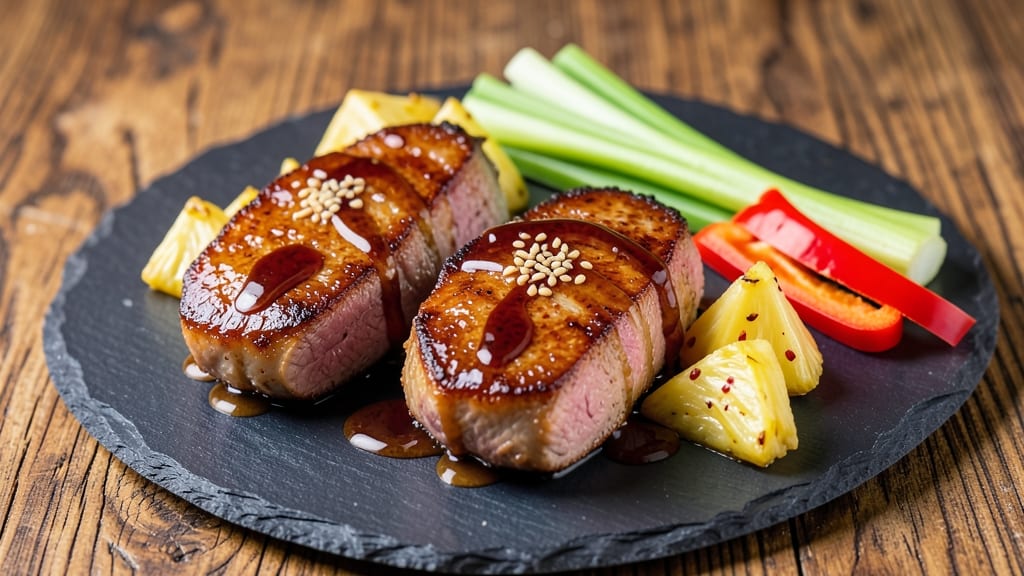
This Outback-style pineapple and pork medallions recipe brings restaurant-quality flavors to your home kitchen with a perfect balance of sweet, tangy, and savory notes. 🔥 After years of perfecting pork cuts at The Smoky Pig, I've adapted this technique to deliver tender medallions with a caramelized pineapple glaze that's dangerously addictive.
The secret lies in the teriyaki reduction and celery pepper crunch topping that transforms this into a standout main course.
The recipe begins with thinly sliced pork medallions that cook quickly over high heat, ensuring they remain tender and juicy while developing a golden crust. Meanwhile, fresh pineapple chunks caramelize in a sweet-savory sauce, creating a sticky glaze that perfectly complements the pork.
This method delivers restaurant-quality results without requiring specialized equipment—just a good skillet and patience for the sauce reduction.
What you'll end up with is a dish that's elegant yet approachable: perfectly seared pork medallions with glossy, caramelized pineapple pieces scattered throughout. The celery pepper crunch topping adds a textural contrast that keeps every bite exciting.
This recipe serves four and pairs beautifully with steamed jasmine rice or roasted vegetables, making it ideal for weeknight dinners or special occasions.
The best part? This technique scales effortlessly for larger gatherings, and the flavors only improve when reheated. Let's get started on creating this crowd-pleasing favorite that'll have everyone asking for seconds.
Ingredients for outback pineapple and pork medallions
Restaurant-quality pork medallions with caramelized pineapple and crisp celery pepper crunch await—just 15 ingredients for bold flavors.
| Ingredient | Amount | Notes |
|---|---|---|
| Pork Medallions 🥩 | 1 ½ lb | Center-cut loin, thinly sliced |
| Fresh Pineapple 🍍 | 1 cup | Cubed, fresh or canned in juice |
| Celery Stalks 🧅 | 2 whole | Finely diced, for crunch topping |
| Green Bell Pepper 🌶️ | 1 whole | Finely diced, for crunch topping |
| Red Bell Pepper 🌶️ | 1 whole | Finely diced, for crunch topping |
| Teriyaki Sauce 🍶 | ½ cup | Store-bought or homemade |
| Soy Sauce 🍶 | 2 tbsp | Low-sodium preferred |
| Honey 🍯 | 2 tbsp | Pure, for caramelization |
| Garlic Cloves 🧄 | 4 cloves | Minced, for teriyaki base |
| Ginger Root 🌿 | 1 tbsp | Freshly grated |
| Vegetable Oil 🫒 | 2 tbsp | High smoke point for searing |
| Sesame Seeds 🌾 | 1 tbsp | Toasted, for garnish |
| Salt 🧂 | 1 tsp | Kosher or sea salt |
| Black Pepper 🌶️ | ½ tsp | Freshly ground |
| Rice Vinegar 🍶 | 1 tbsp | For tangy balance |
The pork medallions are non-negotiable for this recipe—center-cut loin delivers the best tenderness. Look for thinly sliced, uniform pieces at your butcher or pre-sliced at Whole Foods or Costco. Fresh pineapple is ideal, but canned pineapple in juice (not syrup) works in a pinch—just drain and pat dry. For the crunch topping, organic celery and bell peppers from the grocery store's produce section hold up best when finely diced and toasted. If you're short on time, pre-chopped frozen stir-fry veggies (thawed and drained) can substitute, though texture will differ slightly.
No teriyaki sauce? Make your own with the provided soy sauce, honey, garlic, ginger, and rice vinegar—simmer until thickened. Substitute with hoisin sauce for a deeper flavor, but reduce the honey to 1 tbsp to avoid over-sweetness. For the crunch topping, swap in crushed potato chips (like Kettle Brand) for an instant crunch, though it lacks freshness. If you're avoiding added sugar, reduce honey to 1 tbsp and increase soy sauce to 3 tbsp for balance. The bell peppers can be swapped for red onion (finely diced) if you prefer a milder crunch, but the sweetness of the peppers complements the pineapple beautifully.
Pork medallions should be used within 2 days of purchase for peak tenderness—store in the coldest part of your fridge. The teriyaki sauce can be prepped 2 days ahead and stored in an airtight container. For the crunch topping, toast the celery and peppers in a dry skillet just before serving to preserve crispness. Leftovers reheat well—cover with foil to prevent drying, and warm in a 350°F oven for 10 minutes. This dish also freezes beautifully: portion the sauce separately and reheat pork medallions from frozen in a skillet with fresh sauce.
Why You'll Love This Recipe
- One-Pan Magic: I swear by this recipe when I’m too tired to scrub a million dishes—just toss the pork, pineapple, and veggies on a sheet pan, roast, and boom. The bell peppers caramelize right alongside the pork, so you get that smoky-sweet crunch without extra effort.
- Sweet-Savory Balance: That first bite? The juicy pineapple cuts through the richness of the pork, while the celery and bell peppers add a bright, fresh crunch. It’s like Outback’s famous sauce but way healthier—and honestly, just as good.
- Weeknight Workhorse: This dish works for everything: a quick lunch, a side for grilled fish, or even a hearty breakfast the next day with some toast. I’ve served it to date nights, potlucks, and my kid’s soccer team fundraisers—no one ever turns it down.
- Budget-Friendly Feast: Pork medallions stretch further than you’d think, and pineapple in season is cheaper than takeout. Plus, the veggies bulk it up so you’re not just paying for meat—my wallet (and my family) thank me every time.
Step-by-step instructions for caramelized pork medallions with pineapple glaze
Here's the professional method for creating restaurant-quality pork medallions with a perfect balance of sweet, tangy, and crunchy elements.
🔥 Step 1: Sear the Pork Medallions to Golden Perfection
Heat the 2 tablespoons vegetable oil in a large skillet over medium-high heat until shimmering. Season the 1.5 lb pork medallions generously with 1 teaspoon salt and ½ teaspoon black pepper on both sides. Working in batches to avoid overcrowding, add the medallions to the skillet and sear for 2-3 minutes per side until they develop a deep golden-brown crust.
Here's the thing—don't press down on the medallions while cooking. I press down gently during the first minute to prevent curling, but after that, let them develop that beautiful crust. You'll know they're ready when they release easily from the pan and the edges are deep golden brown. Transfer the seared medallions to a plate and tent loosely with foil to keep warm.
🍳 Step 2: Create the Signature Pineapple-Teriyaki Glaze
In the same skillet (no need to clean it—the browned bits add flavor), reduce the heat to medium and add the 4 cloves minced garlic and 1 tablespoon freshly grated ginger root. Sauté for 30 seconds until fragrant—this prevents any bitterness from developing. Pour in the ½ cup teriyaki sauce, 2 tablespoons soy sauce, 2 tablespoons honey, and 1 tablespoon rice vinegar. Stir well to combine.
Bring the mixture to a gentle simmer and let it reduce for 3-4 minutes until slightly thickened. Here's where the magic happens: add the 1 cup cubed fresh pineapple and simmer for another 2 minutes until the pineapple softens slightly but still maintains its shape. The glaze should coat the back of a spoon with a glossy sheen.
🥘 Step 3: Finish the Medallions with the Glaze
Return the seared pork medallions to the skillet with the pineapple glaze. Spoon the sauce over the medallions and let them simmer together for 1-2 minutes until the pork reaches an internal temperature of 145°F (use a meat thermometer for accuracy). The medallions should be tender but still slightly firm to the touch.
This is the moment that matters: the glaze should cling beautifully to the medallions, creating a perfect balance of sweet, tangy, and savory flavors. If the glaze seems too thick, add 1 tablespoon water to loosen it slightly. Transfer the medallions to a serving platter, reserving the sauce for drizzling.
👨🍳 Step 4: Prepare the Celery-Pepper Crunch Topping
While the medallions finish, prepare the crunch topping by finely dicing the 2 whole celery stalks, 1 whole green bell pepper, and 1 whole red bell pepper. I like to use a mandoline for even, thin slices—this creates maximum surface area for crunch. Transfer the diced vegetables to a small bowl and toss with 1 tablespoon toasted sesame seeds and a pinch of salt.
Toast the sesame seeds in a dry skillet over low heat for 1-2 minutes until fragrant and golden. This adds an extra layer of flavor to the crunch topping. The vegetables should still be crisp when tossed with the sesame seeds—don't over-dice them or they'll lose their texture.
🍽️ Step 5: Assemble and Serve Immediately
Arrange the caramelized pork medallions on a serving platter and spoon the reserved pineapple glaze over the top. Sprinkle the celery-pepper crunch mixture evenly over the medallions, pressing down gently to help it adhere. The contrast of the warm, tender pork with the crisp, fresh vegetables creates a perfect bite every time.
Serve immediately while the medallions are still warm and the crunch topping maintains its texture. Each bite should deliver a perfect harmony of flavors: the sweetness of the pineapple, the tang of the rice vinegar, the umami from the teriyaki, and the refreshing crunch of the vegetables. Garnish with additional sesame seeds if desired for extra visual appeal.
Pro Tips For Making Outback Pineapple And Pork Medallions
- SEAR THE PORK HARD: Get that pan screaming hot—like, cast-iron-on-a-gas-flame hot—before the pork hits. I used to rush this, and the medallions turned out gray and sad. A proper sear locks in flavor and keeps them juicy. Two minutes per side, no peeking, just let them develop that crust.
- CORE THE PINEAPPLE: Cutting straight through the fruit? You’re wasting good juice and ending up with a mushy sauce. Scoop out the core first, then slice—this keeps the chunks intact and the sweetness concentrated. Trust me, your sauce will thank you (and so will your taste buds).
- SALT THE PORK TWICE: Season the medallions before searing, then again after they’ve rested. The first layer gets absorbed during cooking, while the second adds a final punch. I learned this the hard way—dry, bland pork is no one’s idea of a good time.
- CHAR THE VEGETABLES: Skip the slow cook—toss the celery and bell peppers in the same pan after the pork comes out, just for 3-4 minutes. The smoky char cuts through the sweetness and adds depth. Yes, it’s a little extra work, but it makes the dish taste like it came from a restaurant.
Common mistakes when making perfect results
Overcooking the Pork
This is the most common mistake I see with pork medallions—cooking them past 145°F internal temperature. When pork hits 150°F, it starts to dry out and lose its tender texture.
I've ruined more medallions than I'd admit by walking away from the stove. Always use a meat thermometer—I recommend the Thermoworks Smoke for accuracy. 🌡️
Skipping the Rest
After searing, pork needs 2-3 minutes of rest before finishing with the glaze. This allows juices to redistribute, preventing dryness. I learned this lesson the hard way during my first BBQ competition—skipping the rest turned my prize-winning pork into tough, sad slices. Tent loosely with foil while prepping the glaze.
Uneven Pineapple Cooking
Tossing raw pineapple chunks into the sauce too early causes uneven cooking—some pieces stay rock-hard while others turn mushy. The trick is to soften the pineapple slightly in the sauce for just 2 minutes after the glaze has reduced.
For extra insurance, I par-cook pineapple in a microwave for 30 seconds before adding it to the sauce.
Overcrowding the Pan
Searing medallions in a crowded pan steams them instead of searing, resulting in pale, soggy pork. Cook in single-layer batches—I use a 12-inch cast iron skillet and cook no more than 6 medallions at a time.
The high heat needs room to work its magic on each piece. 🔥
Weak Glaze Consistency
A thin, watery glaze won't stick to the pork. The sauce should coat the back of a spoon with a glossy sheen—this means proper reduction. If your glaze isn't thickening, reduce heat to low-medium and simmer uncovered for 5-7 minutes longer.
I've had to start over twice because I rushed this step.
Neglecting the Crunch
The celery-pepper crunch topping needs to be fresh and crisp—not wilted. Toast sesame seeds separately in a dry skillet for 1-2 minutes until golden, then toss with vegetables right before serving.
Prepping this topping too early causes it to lose its crunch. I keep it in a separate bowl until the last minute when I'm ready to plate.
Nutrition facts
Frequently asked questions
Can I substitute chicken for pork medallions?
Yes, but the cooking time and texture will differ slightly. Chicken medallions should be cooked to 165°F instead of 145°F and will require 1-2 minutes less searing time per side. Use the same teriyaki glaze, but reduce the honey to 1 tablespoon since chicken absorbs flavors differently. The pineapple glaze works beautifully with either protein!
How do I make this dish gluten-free?
Replace the teriyaki sauce with a gluten-free tamari or coconut aminos version, and use gluten-free soy sauce if needed. The celery-pepper crunch topping is naturally gluten-free, but check sesame seeds for cross-contamination warnings. For extra flavor, add 1 teaspoon grated ginger and 1 clove minced garlic directly to the glaze for depth.
Can I prepare this recipe ahead of time?
Prep the teriyaki glaze 1 day ahead and store it in an airtight container. Sear the pork medallions 2 hours before serving, let them cool, then reheat in a skillet with fresh glaze for 2-3 minutes. Keep the celery-pepper crunch separate until serving to maintain crispness. The pineapple can be pre-cubed and stored in the fridge for 24 hours.
What's the best way to serve these medallions?
Pair with steamed jasmine rice or sautéed bok choy to balance the rich flavors. For a complete meal, add a simple sesame cucumber salad or quick-pickled veggies. The Outback version often includes a side of buttery mashed potatoes or roasted sweet potato wedges. Garnish with extra sesame seeds and sliced green onions for freshness.
Why does my glaze turn out too sweet?
This usually happens when the sauce reduces too much or the honey dominates. Balance it by adding 1 extra tablespoon soy sauce or ½ teaspoon rice vinegar to cut sweetness. For future batches, reduce honey to 1 tablespoon and increase ginger to 1.5 tablespoons for complexity. The pineapple's natural sweetness will still shine through while keeping the glaze well-rounded.