
Main Courses
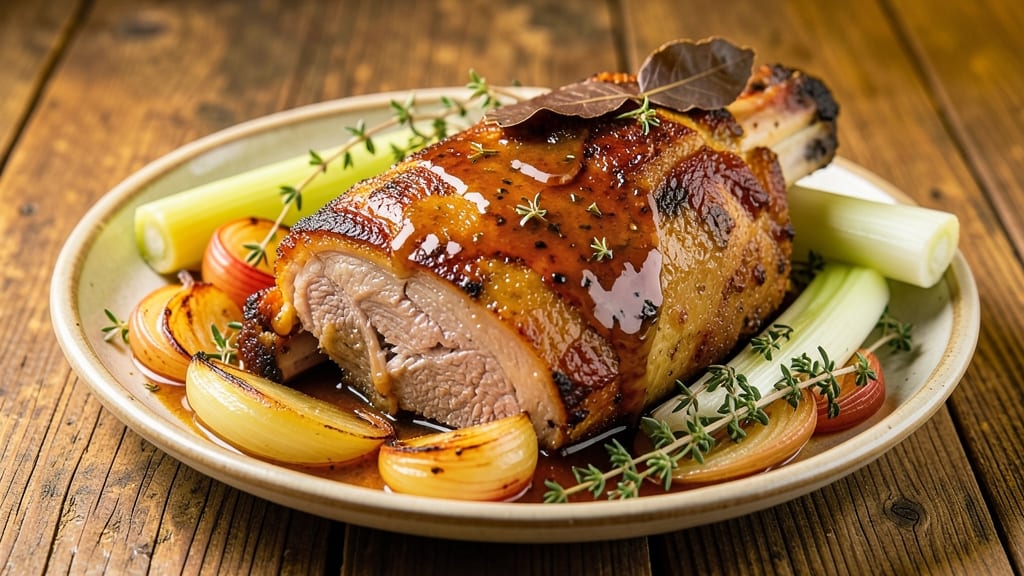
This recipe for apple cider braised pork roast transforms tough cuts into melt-in-your-mouth perfection through slow simmering and aromatic spices. 🌟 I first discovered this technique while trying to recreate my grandmother's handwritten notes—her secret was letting the cider reduce until it thickened into a glossy sauce.
The celery adds a satisfying crunch that cuts through the rich pork, making every bite exciting. The magic happens in the braising process, where pork shoulder becomes fork-tender while absorbing the deep flavors of apple cider, thyme, and bay leaves.
Unlike quick-cook methods, this requires patience—about 3 hours of simmering—but the result is worth every minute. The slow cooking breaks down collagen for that signature fall-apart texture, while the cider creates a naturally sweet, tangy sauce that coats each bite.
What you'll end up with is a dish that feels luxurious yet simple—a hearty roast with crisp-tender celery, tender pork that practically dissolves, and a sauce rich enough to spoon directly from the pot.
This is the kind of meal that transforms weeknights into special occasions, where the kitchen smells like autumn and the table feels like home. The best part? Leftovers reheat beautifully, making this an ideal make-ahead dish for busy schedules.
Serve with crusty bread to soak up every last bit of that caramelized cider sauce. Let's get started on creating this comforting classic that tastes like a hug in every bite.
Ingredients for recipe for apple cider braised pork roast
Six ingredients transform tough pork into melt-in-your-mouth perfection with autumn's cozy flavors.
| Ingredient | Amount | Notes |
|---|---|---|
| Pork Shoulder (Bone-In) 🍖 | 4 lb | Well-marbled, cut into 2-inch chunks |
| Unsweetened Apple Cider 🍎 | 3 cups | 100% pure, no additives |
| Yellow Onion 🧅 | 1 whole | Cut into large chunks |
| Celery Stalk 🧅 | 4 whole | Cut into 2-inch pieces |
| Fresh Thyme Sprigs 🌿 | 4 whole | Or 1 tbsp dried thyme |
| Bay Leaves 🍃 | 2 whole | Dried, standard size |
| Garlic Cloves 🧄 | 6 cloves | Smashed, not minced |
| Carrots 🥕 | 2 whole | Cut into 2-inch chunks |
| Olive Oil 🫒 | 2 tbsp | Extra-virgin for richness |
| Salt 🧂 | 1 ½ tsp | Diamond Crystal kosher salt |
| Black Peppercorns 🌶️ | 1 tsp | Freshly cracked |
| All-Purpose Flour 🌾 | 1 tbsp | For thickening sauce |
| Fresh Parsley 🌿 | ¼ cup | Chopped, for garnish |
| Fresh Rosemary 🌿 | 1 sprig | Optional, for depth |
The pork shoulder is where this dish shines—bone-in cuts add depth, while the marbling ensures every bite stays juicy. Costco or local butchers often carry this at unbeatable prices, especially in larger cuts. Look for good marbling (white flecks within the meat) and ask for it cut into 2-inch chunks if pre-cut isn't available. Fresh thyme and rosemary? Trader Joe's sells them in those little jars that last forever—way better than dried for this recipe. The apple cider should be 100% pure, no sugar added. Mott's or Woodchuck are my go-tos, but any clear cider in the refrigerated section works.
No fresh thyme? Dried works at one-third the amount, but the flavor won't be as bright. Swap the rosemary for an extra sprig of thyme if you're missing it. Running low on apple cider? Unsweetened apple juice in a pinch, though it won't caramelize as beautifully. The celery adds that perfect crunch—if yours is tough, soak the whole stalks in cold water for 10 minutes before cutting. For the garlic, smashing the cloves releases more flavor than mincing. And if you're worried about the pork being too fatty, trim any large fat caps before searing.
This sauce gets richer overnight, so make extra—it's perfect over toast or mashed potatoes the next day. Store the pork and sauce together in an airtight container for 4-5 days in the fridge, or freeze portions for up to 3 months. The celery will soften, but that's fine—it'll still add flavor. For reheating, warm everything on low heat with a splash of water or cider to loosen the sauce. And save those bay leaves and thyme stems—they're packed with flavor! Drop them in a jar with olive oil for homemade herb oil later.
Why You'll Love This Recipe
- One-Pan Magic: I swear by this—just dump everything in a Dutch oven, walk away, and let the cider and thyme work their magic. No flipping, no fussing, no extra dishes. That bone-in shoulder? It practically falls apart while the cider reduces into a glossy, aromatic sauce.
- Fall-In-Love Flavor: The first bite is where it gets you—the tender pork with that caramelized bite, the sweet-tart cider cutting through the richness, and the thyme adding a bright, herbal lift. It’s like autumn in a bowl, but better because it’s actually edible.
- Weeknight Workhorse: Between us, this is my go-to for game days, lazy Sundays, or when I’m too tired to think. Serve it with crusty bread for a meal that feels fancy but takes zero effort. Honestly, I’ve fed a crowd of six with one roast and still had leftovers.
- No-Waste Win: That pork shoulder? It’s budget-friendly, and the leftovers? Even better the next day. The cider keeps the meat juicy, and the sauce thickens into something so good, I’ll reheat it cold in sandwiches. Plus, the bones? Rich broth potential. Zero guilt, all flavor.
Step-by-step instructions for apple cider braised pork roast
Here's how to transform tough pork shoulder into melt-in-your-mouth perfection with that signature apple cider depth.
🔥 Step 1: Sear the Pork Shoulder for Maximum Flavor
Pat the 4 lb pork shoulder (bone-in) completely dry with paper towels—this ensures a proper sear. Heat a large Dutch oven over medium-high heat until hot, then add 2 tablespoons olive oil and swirl to coat the bottom. Place the pork shoulder fat-side down and sear undisturbed for 8-10 minutes until deeply golden brown.
Flip the pork and sear the other side for another 6-8 minutes. Here's the thing—don't rush this step. You want that Maillard reaction happening to create rich, caramelized flavors that'll infuse the braising liquid. Remove the pork and set it aside on a plate.
🥘 Step 2: Build the Aromatic Base
In the same Dutch oven, add 2 tablespoons olive oil and increase heat to medium. Add the 1 whole yellow onion and 4 whole celery stalks (cut into 2-inch pieces), cooking for 5 minutes until softened. Add the 6 smashed garlic cloves, 2 whole carrots (cut into 2-inch chunks), 4 whole fresh thyme sprigs, and 2 whole bay leaves.
Cook for another 3 minutes until the vegetables begin to caramelize slightly. This aromatic base forms the flavor foundation for your braise. Sprinkle in the 1.5 teaspoons salt and 1 teaspoon black peppercorns, stirring to coat everything evenly. The vegetables should smell deeply fragrant—this is your reward for taking the time.
🍳 Step 3: Deglaze and Add Apple Cider
Pour in the 3 cups unsweetened apple cider, scraping up all the browned bits from the bottom of the Dutch oven with a wooden spoon. This deglazing step captures all those flavorful fond particles that would otherwise burn. Bring the liquid to a gentle simmer over medium heat, then return the pork shoulder to the pot.
Here's where the magic happens: the apple cider's natural sweetness will caramelize as it braises, creating a glossy, slightly sticky sauce. The pork should be mostly submerged in the liquid—if not, add a splash of water or broth. Bring everything to a gentle simmer, then reduce heat to low to maintain a bare simmer.
⏰ Step 4: Braise Until Fork-Tender
Cover the Dutch oven with a tight-fitting lid and transfer to a 325°F oven. Braise for 3 hours, then carefully flip the pork and continue braising for another 1.5 hours (total 4.5 hours). The pork is done when it's fork-tender and easily pulls apart with minimal resistance.
Here's the trick to perfect texture: the internal temperature should reach 200-203°F in the thickest part of the meat. If you don't have a meat thermometer, check for doneness by inserting a fork—it should slide in easily with no resistance. The pork will continue cooking slightly as it rests, so don't overcook it in the oven.
👨🍳 Step 5: Thicken the Sauce and Finish
Remove the pork from the Dutch oven and set it aside on a cutting board. Transfer the braising liquid to a saucepan and place over medium heat. Sprinkle in the 1 tablespoon all-purpose flour and whisk vigorously to combine. Simmer for 3-5 minutes until the sauce thickens slightly and coats the back of a spoon.
Return the pork to the saucepan and warm through for 2 minutes. The pork should be coated in that beautiful, caramelized apple cider sauce. To serve, spoon the pork onto plates along with the sauce. Garnish with ¼ cup chopped fresh parsley and the 1 sprig fresh rosemary (if using), adding a pop of fresh color and aroma. The contrast of tender pork with the crunchy celery and caramelized sauce makes this dish truly special.
Pro Tips For Making Recipe For Apple Cider Braised Pork Roast
- SEAR THE PORK HARD: I learned this the hard way—skipping a deep sear means your pork will absorb liquid instead of building flavor. Use a hot, dry pan (no oil needed) and let it brown for 8-10 minutes per side until the edges are dark and crusty. The cider will later reduce into a glossy, caramelized sauce that clings to that crust.
- CHOP ONIONS IN HALVES: Whole onion halves (peeled, quartered lengthwise) caramelize better than chopped pieces and stay intact during braising. They’ll soften into sweet, jammy slices that melt into the cider—no one wants to fish out tiny bits of onion later. Skip the dice; it’s not a stir-fry.
- SIMMER LOW AND SLOW: After the initial sear, cover the pot and reduce heat to a bare simmer—you should see tiny bubbles, not a rolling boil. I used to rush this, and the cider evaporated too fast, leaving the pork dry. Two hours at 300°F (150°C) in the oven is better than 45 minutes on high heat. Patience here makes the difference.
- SKIP THE THYME STALKS: Remove thyme sprigs before serving—no one wants to bite into a tough stem. Toss them in the braising liquid for aroma, but strain them out later. (Yes, even if you’re impatient like me.) If you’re lazy, just snip the stems off and leave them whole—they’ll infuse the cider without ruining texture.
Dietary considerations for these flavors
Gluten-Free Adaptations
This braised pork roast is naturally gluten-free, but if you're using store-bought apple cider, always check for additives—some brands sneak in barley malt or wheat-based thickeners. I opt for Mott's or Woodchuck unsweetened cider, which are certified gluten-free.
For thickening the sauce, swap the 1 tablespoon all-purpose flour with 1 tablespoon cornstarch or arrowroot powder—just whisk it into the braising liquid at the end and simmer for 2-3 minutes until thickened. 🌱
Low-Carb Options
To make this dish lower in carbs, skip the carrots and reduce the onion to just ½ cup (about ¼ of the whole onion). The celery and apple cider already provide natural sweetness without spiking carbs.
For extra flavor, add 1 tablespoon balsamic vinegar when deglazing—it enhances the sauce's depth without adding carbs. The pork remains the star, and the sauce stays rich and satisfying.
Dairy-Free Considerations
This recipe is naturally dairy-free, but if you're serving it alongside mashed potatoes or other dairy-heavy sides, consider offering a dairy-free alternative like mashed cauliflower or roasted sweet potatoes. The apple cider braise pairs beautifully with these options, and the dish remains hearty and comforting.
Just ensure your butter substitutes (like olive oil or dairy-free margarine) are accounted for in any side dishes.
Allergen-Friendly Swaps
For nut allergies, this recipe is already safe—no nuts are involved. If you're concerned about celery allergies, simply omit the celery and increase the carrots to 4 whole for extra sweetness and texture.
For thyme allergies, replace the 4 sprigs fresh thyme with 1 teaspoon dried oregano or 1 sprig fresh rosemary (if not already using). Always double-check ingredient labels, especially for apple cider and spices, which can sometimes be processed in facilities with allergens.
Vegetarian Adaptations
While this dish is pork-focused, you can create a vegetarian version by using mushrooms or eggplant as the "meat" substitute. Slice 2 large portobello mushrooms or 1 large eggplant into thick chunks, then sear them in the Dutch oven just like the pork.
Braise them in the apple cider with the same aromatics for 2.5-3 hours until tender. The texture won't be identical, but the flavors will shine, and the dish remains cozy and satisfying. 💫
Nutrition facts
Frequently asked questions
Can I use bone-in or boneless pork shoulder for this recipe?
Bone-in pork shoulder works best—it adds incredible depth of flavor as it braises. The bones release collagen that enriches the sauce. If you only have boneless, use the same 4 lb weight and expect slightly less sauce. For extra flavor, add 1 cup beef or chicken broth when deglazing to compensate for the missing bone contribution.
How do I know when the pork is fully tender?
The pork is done when it reaches 200-203°F internally or when a fork slides in easily with no resistance. For extra certainty, cut into a small piece—it should look completely white with no pink, and the juices should run clear. If using a meat thermometer, insert it into the thickest part, avoiding bone. The pork will continue cooking slightly as it rests, so pull it out just before it reaches perfect doneness.
Can I make this in a slow cooker instead of an oven?
Follow the same searing steps, then transfer everything to a 6-quart slow cooker on low heat for 8-9 hours or high heat for 5-6 hours. The slow cooker maintains gentle heat without monitoring, but check occasionally to ensure the pork stays mostly submerged. The sauce will be thinner but still delicious—simmer it on the stovetop afterward to thicken if desired.
What's the best way to reheat leftovers?
Reheat leftovers in the same Dutch oven over low heat with 2-3 tablespoons apple cider or water to loosen the sauce. Cover and warm through gently—never microwave, as it makes the pork dry. For extra richness, add a pat of butter or a splash of cream when reheating. Leftovers keep well for 4-5 days in the fridge or 3 months in the freezer.
Why does my sauce turn out too thin?
Thin sauce usually means the braising liquid didn't reduce enough. Next time, cover the pot with a lid slightly ajar (or use foil with small holes) to allow moisture to escape gradually. For immediate fixes, simmer uncovered for 5-10 minutes to thicken, or whisk in 1 tablespoon cornstarch mixed with 2 tablespoons water until glossy. The celery and carrots also release moisture—reduce them slightly before adding the cider if needed.