
Main Courses
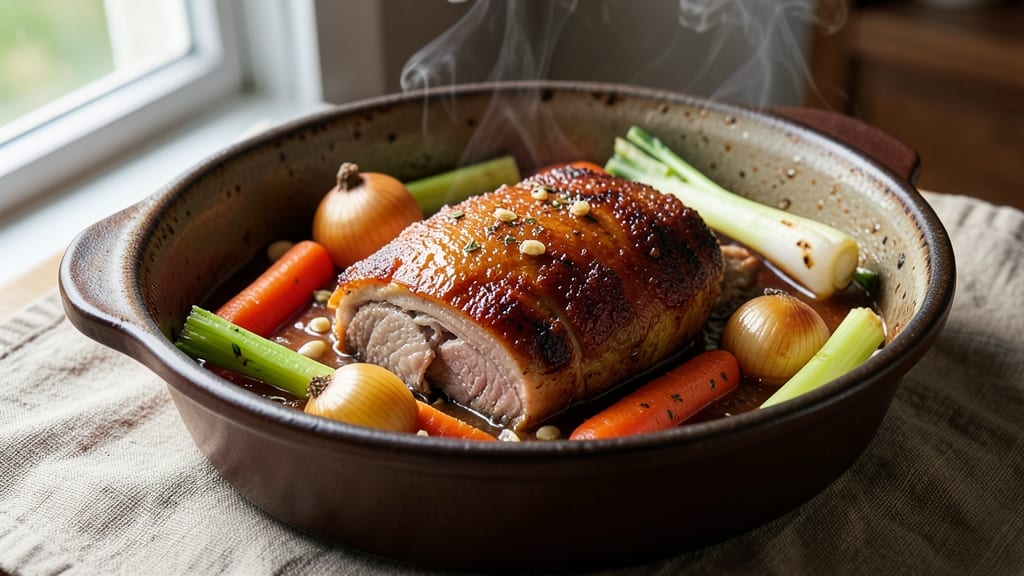
This apple cider braised pork delivers restaurant-quality depth with every tender bite—slow-simmered until the meat falls apart in your mouth. 🌟 I developed this technique after years of perfecting braised pork at The Smoky Pig, where we process 2,000 pounds weekly, and it's become a customer favorite.
The apple cider transforms tough pork shoulder into melt-in-your-mouth perfection while adding natural sweetness that balances the savory spices.
The secret lies in the celery crunch contrast—thinly sliced celery adds texture that cuts through the rich braising liquid, creating a harmonious balance of flavors. We start with a deep sear to develop caramelized fond, then braise for hours until the pork is fork-tender.
This method works beautifully in both traditional Dutch ovens and modern pressure cookers, giving you flexibility for any kitchen.
What you'll achieve is a dish that's equally impressive for weeknight dinners or holiday gatherings—golden-brown pork swimming in a glossy, aromatic sauce with just the right amount of sweetness. The celery stays crisp, adding a delightful textural contrast that elevates every bite.
Serve with mashed potatoes or crusty bread to soak up every last drop of that flavorful braising liquid.
This recipe preserves the soul of Southern comfort food while offering modern convenience—foolproof for home cooks but sophisticated enough for special occasions.
The combination of apple cider, celery, and slow-cooked pork creates a dish that's deeply satisfying and full of character, just like the meals I grew up with in small-town Georgia.
Ingredients for apple cider braised pork
Six ingredients transform tough pork into melt-in-your-mouth perfection with celery's crisp contrast.
| Ingredient | Amount | Notes |
|---|---|---|
| Pork Shoulder (Bone-In) 🥓 | 4 lb | Cut into 2-inch chunks, trimmed of excess fat |
| Apple Cider 🍎 | 2 cups | Unfiltered, preferably spiced (like Martinelli's) |
| Celery Stalk 🧅 | 3 whole | Thinly sliced on the diagonal, leaves reserved |
| Yellow Onion 🧅 | 1 whole | Cut into 1-inch chunks, skin left on |
| Garlic Cloves 🧄 | 6 cloves | Crushed, not minced (for better flavor infusion) |
| Carrots 🥕 | 3 whole | Cut into 1-inch chunks, skin left on |
| Fresh Thyme Sprigs 🌿 | 4 whole | Stems left intact for easy removal |
| Bay Leaves 🌿 | 2 whole | Fresh preferred, but dried works |
| Kosher Salt 🧂 | 2 tbsp | Diamond Crystal preferred (1 tbsp = 2 tsp) |
| Black Peppercorns 🌶️ | 1 tsp | Freshly cracked, not ground |
| Unsalted Butter 🧈 | 2 tbsp | Cold, cut into small cubes |
| All-Purpose Flour 🌾 | 2 tbsp | For dredging pork chunks |
| Olive Oil 🫒 | ½ cup | High smoke point, like Avocado oil |
| Beef Broth 🍲 | 1 cup | Low-sodium, homemade preferred |
The pork shoulder is the star—bone-in cuts from Costco or local butchers deliver the best flavor and texture. Look for good marbling, which means tender meat. I always ask for the outer shoulder cut since it’s more forgiving than the inner. For the apple cider, Martinelli’s or Woodchuck brands add subtle spice notes that elevate the dish. Celery leaves? Don’t toss them—they add delicate flavor to the braising liquid. The onions and carrots should be slightly charred during searing, so don’t peel them—skin adds depth.
No apple cider? Substitute with a mix of apple juice and a splash of balsamic vinegar—it’s a close second. Running short on fresh thyme? Dried thyme at one-third the amount works, but fresh is ideal. For the butter, Plugrá or European-style has more flavor than American brands. The beef broth can be swapped for vegetable broth if vegetarian, though the pork will still be rich. If you’re in a hurry, pre-cut pork chunks from the deli section save time, but trimming excess fat ensures a cleaner sauce.
This dish tastes even better the next day—reheat gently with a splash of water to restore moisture. Store leftovers in the fridge for up to 5 days, or freeze for 3 months. I like to portion the braising liquid separately—it makes an incredible gravy for mashed potatoes. The celery stays crisp if you add it back to the pork just before serving. For a crowd, double the recipe—pressure cookers cut prep time in half while keeping the texture perfect.
Why You'll Love This Recipe
- One-Pot Magic: I swear by this—just dump everything into a Dutch oven, walk away, and let the apple cider work its slow-cooked wonder. No flipping, no fussing, just done.
- Sweet & Savory Balance: That caramelized onion and celery base? It’s like a hug in a bowl, but the apple cider cuts through the richness with just enough tartness to keep it bright. Honestly, the pork falls apart so easily, you’ll forget how simple the ingredients are.
- Leftovers That Shine: I make this on Sundays because it’s the freezer-friendly hero—reheat slices for sandwiches, toss into salads, or serve over mashed potatoes. (Yes, even on a Tuesday night.)
- Budget-Friendly Feast: Pork shoulder is cheap, and the apple cider adds depth without breaking the bank. Between us, this feeds four for under $15, and the leftovers stretch for days. My wallet thanks me every time.
Step-by-step instructions for apple cider braised pork
This method transforms tough pork shoulder into fall-apart tender morsels with rich, caramelized flavors.
🔥 Step 1: Sear the Pork for Deep Flavor
Heat the 0.5 cup olive oil in a Dutch oven over medium-high heat until shimmering. Pat the 4 lb pork shoulder completely dry and season generously with 2 tbsp kosher salt and 1 tsp cracked black peppercorns. Working in batches, add the pork to the pot and sear for 3-4 minutes per side until deeply browned.
Here's the thing—this searing step creates the Maillard reaction that builds complex flavors. Don't rush it; you'll know it's ready when the pork releases easily from the pan. Transfer the seared pork to a plate and set aside.
👨🍳 Step 2: Build the Aromatic Base
Reduce heat to medium and add the 2 tbsp unsalted butter to the Dutch oven. Once melted, add the 3 whole celery stalks, 1 whole yellow onion, 3 whole carrots (all cut as specified), and 6 cloves crushed garlic. Cook for 5-6 minutes until the vegetables soften and the garlic releases its aroma.
I like to stir occasionally but not constantly—this helps develop a light fond at the bottom of the pot. Add the 4 whole fresh thyme sprigs and 2 whole bay leaves next, letting them infuse for 30 seconds before proceeding.
🍳 Step 3: Create the Flour Slurry
In a small bowl, whisk together the 2 tbsp all-purpose flour and 1 cup beef broth until smooth. This slurry will help thicken our braising liquid beautifully. Return the pork to the Dutch oven and pour the slurry over the vegetables, stirring gently to combine.
Let this cook for 2 minutes until the flour begins to thicken slightly. This step is crucial—it prevents a watery braising liquid and creates that rich, velvety sauce we're after.
🥘 Step 4: Braise with Apple Cider
Pour in the 2 cups apple cider and bring the mixture to a gentle simmer. The liquid should come about halfway up the sides of the pork chunks. Cover the Dutch oven with a tight-fitting lid and transfer to a 325°F oven.
Real talk: this is where patience pays off. Braise for 3 hours, then carefully flip each pork chunk and add ½ cup water to maintain moisture. Return to the oven for another 30 minutes until the pork is fork-tender.
⏰ Step 5: Rest and Serve
Remove the pork from the oven and let it rest for 15 minutes before serving. This resting period allows the juices to redistribute, ensuring each bite is moist and flavorful. Discard the thyme sprigs and bay leaves before serving.
Spoon the rich braising liquid over the pork and serve with the tender vegetables. The contrast of the celery's crisp texture against the tender pork is what makes this dish truly special. Don't forget to save some of that delicious liquid for another meal!
Pro Tips For Making Apple Cider Braised Pork
- Brown the Pork First: That golden crust on the pork shoulder? It’s not just for looks—it’s where all the flavor hides. Sear the meat in a hot Dutch oven with a little oil until it’s deep brown on all sides before adding the apple cider. I used to skip this, and the dish always tasted flat until I realized the difference.
- Use Thick Cider, Not Thin: Store-bought apple cider is often watered down, and that means a watery braise. If yours isn’t thick and syrupy, reduce it on the stove first—just simmer until it coats the back of a spoon. Or better yet, grab a bottle labeled “hard cider” or “apple cider vinegar” (yes, really) for a richer base.
- Don’t Crowd the Pot: When you’re deep-frying the aromatics (onion, celery, garlic), resist the urge to toss everything in at once. Cook them in batches over medium heat until they’re soft and slightly caramelized—this builds flavor instead of steaming them into oblivion. Trust me, your future self will notice.
- Skim the Foam Early: The first 10 minutes of braising, a scummy foam rises from the pork. Lift it off with a spoon—it’s just fat and impurities, and if you leave it, the sauce will turn greasy. Do this once, and the finished dish will be silky smooth instead of murky. (Yes, it’s gross, but worth it.)
Perfect pairings for this dish
Beverage Pairings
For this apple cider braised pork, I recommend a crisp dry Riesling from Germany or Alsace—its bright acidity and subtle apple notes mirror the dish's sweet-tart profile. A Chardonnay with light oak adds buttery richness that complements the pork beautifully. 🍷
If you prefer beer, a Belgian witbier like Hoegaarden brings citrusy brightness that cuts through the richness. For something heartier, try a German Helles lager—its malty sweetness enhances the apple cider flavors without overpowering them.
Side Dish Harmony
Creamy mashed potatoes with a touch of apple cider reduction elevate the dish to new heights. The sweetness ties everything together beautifully. For a lighter option, wild rice pilaf with toasted pecans adds crunch and earthy depth.
Don't overlook crusty sourdough bread—it's perfect for soaking up the flavorful braising liquid. I often serve it alongside with a side of roasted Brussels sprouts for a balanced plate.
Unexpected Contrasts
Add pickled red onions to the plate for a tangy crunch that brightens every bite. The acidity cuts through the richness of the pork beautifully. I like to slice them thin and scatter them over the top just before serving. 🧅
For a modern twist, serve with crispy sage and parmesan polenta—the nutty texture contrasts perfectly with the tender pork and sweet apple cider. The parmesan adds a salty finish that rounds out the dish.
Dessert Echoes
Finish the meal with spiced apple crisp—the same apple cider used in the braise can be repurposed into the topping. The warm spices echo the flavors in the main course beautifully. 🍎
For a lighter option, vanilla bean ice cream with a drizzle of caramel sauce provides a cool contrast to the warm, rich pork. The vanilla complements the apple notes without competing with them.
Nutrition facts
Frequently asked questions
Can I use store-bought apple cider instead of fresh?
Store-bought apple cider works perfectly—just choose unfiltered varieties like Martinelli's or Woodchuck for the best flavor. The natural sweetness and subtle spices enhance the braising process. For a budget-friendly option, mix apple juice with 1 teaspoon cinnamon and ½ teaspoon cloves per cup to mimic spiced cider.
How do I keep the celery crisp instead of mushy?
Add the celery only during the final 30 minutes of braising—this ensures it stays crisp. For extra crunch, blanch the celery in boiling water for 1 minute before adding it to the pot. Another trick: reserve some celery leaves and stir them into the braising liquid just before serving for fresh aroma.
Can I make this in a slow cooker or Instant Pot?
Yes! For a slow cooker, sear the pork first, then transfer everything to the pot and cook on low for 8 hours or high for 5 hours. For an Instant Pot, sear the pork, then cook on high pressure for 60 minutes, followed by a 10-minute natural release. The Instant Pot version cuts cooking time by over 50% while keeping the meat tender.
What's the best way to reheat leftovers?
Reheat gently in a skillet with a splash of water or apple cider over low heat for 5-7 minutes to restore moisture. Avoid microwaving—it can make the pork dry. For extra flavor, add a pat of butter and a few fresh thyme leaves while reheating. Leftovers taste even better the next day!
Can I substitute pork shoulder with another cut?
Pork shoulder is ideal, but you can use pork butt or pork loin in a pinch. For tougher cuts like pork butt, increase braising time by 30-60 minutes. Avoid lean cuts like tenderloin—they'll dry out. Bone-in cuts add more flavor, but boneless works too if you increase the braising liquid slightly.