
Main Courses
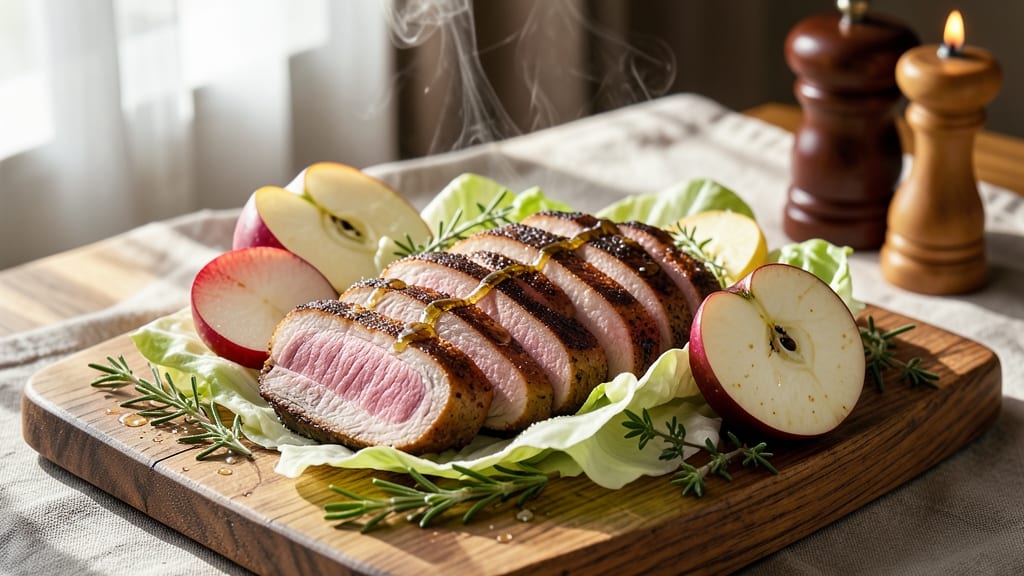
This pork tenderloin apple cabbage recipe transforms a simple one-pan meal into a symphony of textures and flavors—tender pork, crisp apples, and caramelized cabbage all harmonizing on a single sheet. 🔥 After years of perfecting this dish at The Smoky Pig, I’ve learned that the secret lies in balancing sweet and savory through slow roasting, where the pork’s natural juices meld with the apples’ tartness and cabbage’s earthy depth.
The beauty of this recipe is its simplicity: just 30 minutes of prep followed by hands-off roasting at 400°F, yielding pork so tender it nearly falls apart at the touch. The apples and cabbage roast alongside, their natural sugars caramelizing into a glossy glaze that coats every bite.
I use fresh thyme and rosemary from my garden to elevate the dish without overpowering the natural flavors—just like my grandmother taught me in Georgia.
What you’ll end up with is a restaurant-quality meal that’s rich in flavor but light enough for any season. The pork stays juicy, the apples become tender yet hold their shape, and the cabbage develops a satisfying crispness at the edges.
This dish pairs perfectly with a crisp white wine or a cold beer, making it ideal for both weeknight dinners and special occasions.
Whether you’re cooking for a family gathering or treating yourself to a Sunday feast, this recipe delivers foolproof results every time. The best part? Minimal cleanup—just one pan to wash. Let’s bring this one-pan harmony to your table.
Ingredients for pork tenderloin apple cabbage
Fresh herbs, crisp cabbage, and sweet apples create a one-pan masterpiece with tender pork at its heart.
| Ingredient | Amount | Notes |
|---|---|---|
| Pork Tenderloin 🥩 | 1 ½ lb | Center-cut, trimmed of fat |
| Green Cabbage 🥬 | 1 whole | Small head, cored and quartered |
| Honeycrisp Apples 🍎 | 2 medium | Peeled, cored, sliced into wedges |
| Fresh Thyme 🌿 | ¼ cup | Stems removed, loosely packed |
| Fresh Rosemary 🌿 | ¼ cup | Stems removed, loosely packed |
| Olive Oil 🫒 | ¼ cup | Extra-virgin, for roasting |
| Dijon Mustard 🍯 | 1 tbsp | For pork marinade |
| Balsamic Vinegar 🍷 | 1 tbsp | For pork marinade |
| Salt 🧂 | 1 ½ tsp | Kosher salt, coarse grain |
| Black Pepper 🌶️ | ½ tsp | Freshly ground |
| Garlic Cloves 🧄 | 4 cloves | Minced for pork marinade |
| Brown Sugar 🍚 | 1 tbsp | Lightly packed |
The pork tenderloin is the star—look for center-cut pieces with good marbling for juiciness. Costco or Whole Foods carry excellent quality, but any butcher will trim it perfectly for you. Honeycrisp apples are ideal here—their crisp texture holds up beautifully during roasting. If you can't find them, Fuji or Pink Lady work just as well. The cabbage should be firm with vibrant green leaves; avoid any with yellowing edges. Fresh thyme and rosemary from the garden add that restaurant-quality depth, but Trader Joe's sells great dried blends if you're in a pinch.
No Dijon mustard? Yellow mustard plus 1 tsp honey works in a bind. Swap balsamic vinegar for apple cider vinegar plus 1/2 tsp sugar—the flavor profile stays balanced. The brown sugar caramelizes beautifully with the cabbage and apples, but white sugar works fine if that's what you have. For extra richness, add 1 tbsp butter to the roasting pan during the last 10 minutes. The garlic can be pre-minced from a jar if you're short on time, but fresh is always better.
Prep everything ahead—this dish tastes even better the next day. Store leftovers in an airtight container for up to 4 days in the fridge, or freeze for 3 months. The pork reheats beautifully with a splash of water or broth. For a quick weeknight meal, double the recipe and freeze half—just thaw overnight before roasting. The cabbage and apples keep well in the fridge for 1 week if you need to prep ahead.
Why You'll Love This Recipe
- One-Pan Magic: I swear by this trick—just toss everything on a sheet pan, roast, and walk away. The apples caramelize while the cabbage gets tender, and the pork? Perfectly juicy without a single extra dish.
- Sweet-Savory Balance: That crisp Honeycrisp apple with the rosemary-kissed pork? It’s like fall in a bite—bright, herby, and just sweet enough to make you linger. (Yes, even on a Tuesday night.)
- Leftovers That Don’t Suck: Between us, most pork dishes turn dry when reheated. Not this one. The cabbage stays crisp, the apples hold their bite, and the pork? Still tender. Pack it for lunch or freeze it—no regrets.
- Budget-Friendly Feast: Pork tenderloin is lean but satisfying, and cabbage stretches like crazy. Add a few apples and herbs, and suddenly you’ve got a meal that feels fancy but costs next to nothing. My wallet thanks me every time.
Step-by-step instructions for herb-roasted pork with apples and cabbage
Here's how to create a perfectly balanced one-pan dish where tender pork meets sweet apples and crisp cabbage.
👨🍳 Step 1: Prepare the Pork Marinade and Prep Vegetables
In a small bowl, whisk together the 1 tbsp Dijon mustard, 1 tbsp balsamic vinegar, 1 tbsp brown sugar, 1.5 tsp salt, 0.5 tsp black pepper, and the 4 minced garlic cloves. This marinade will infuse the pork with deep, savory-sweet flavors while tenderizing the meat.
Place the 1.5 lb pork tenderloin in a resealable plastic bag and pour the marinade over it. Seal the bag and massage the marinade into the pork, coating it evenly. Let it marinate in the refrigerator for at least 30 minutes—this ensures maximum flavor penetration and tenderness. While it marinates, peel and core the 2 medium Honeycrisp apples, slicing them into wedges. Core and quarter the 1 whole green cabbage, removing any tough outer leaves.
🔥 Step 2: Roast the Pork to Perfect Medium-Rare
Preheat your oven to 400°F. Remove the pork from the marinade (reserve the marinade for later) and place it on a wire rack set inside a large roasting pan. This rack allows air to circulate around the pork, ensuring even cooking and crispy edges. Roast the pork for 15-20 minutes, or until the internal temperature reaches 145°F on a meat thermometer. You'll know it's ready when the edges are golden brown and the meat releases easily from the marinade.
Here's the thing—pork tenderloin cooks quickly, so don't walk away. If you're unsure, use the thermometer as your guide. Once it reaches 145°F, remove it from the oven and let it rest on a cutting board for 10 minutes. This resting period is crucial for redistributing juices and ensuring tender slices.
🍳 Step 3: Sear the Apples and Cabbage in the Pork's Juices
While the pork rests, place the roasting pan with the drippings on the stovetop over medium-high heat. Add the 2 medium sliced apples and 1 whole quartered cabbage to the pan. Drizzle the reserved marinade over the vegetables and toss to coat. Let them sear for 3-4 minutes, until the apples begin to caramelize and the cabbage edges turn golden.
This step is where the magic happens—the pork's juices and marinade infuse the vegetables with incredible flavor. If the pan gets too dry, add a splash of water to deglaze and keep everything moist. Once the vegetables are lightly caramelized, transfer them to the same wire rack where the pork rested, and return both to the oven.
🥘 Step 4: Finish with Fresh Herbs and Olive Oil
Return the pork and vegetables to the oven and roast for an additional 8-10 minutes at 400°F. Just before serving, remove the pan from the oven and drizzle the 0.25 cup olive oil evenly over the pork and vegetables. Sprinkle the 0.25 cup fresh thyme and 0.25 cup fresh rosemary over the top, pressing gently to release their aromatic oils. This final touch adds a bright, herbal finish that ties everything together.
Let the dish rest for another 5 minutes before serving. The pork should slice easily and be juicy, the apples tender with a hint of caramelization, and the cabbage crisp-tender with a slightly charred edge. Serve immediately, ensuring each bite delivers a perfect harmony of textures and flavors.
Pro Tips For Making Pork Tenderloin Apple Cabbage
- USE A MEAT THERMOMETER: I learned this the hard way—pork tenderloin looks done when it’s still pale inside. Aim for 145°F (63°C) and let it rest; cutting into it earlier makes it dry and tough. (Yes, even if you’re impatient like me.)
- CUT APPLES IN HALVES: Thin slices turn to mush in the pan, while halves hold their shape and caramelize better. Core them first, then slice each half into 3-4 wedges—this keeps them sturdy enough to roast without falling apart.
- SALT THE CABBAGE WELL: Skip this, and your cabbage will taste bland against the rich pork. Toss wedges with 1 tsp salt per pound before cooking—it softens them faster and makes the flavor pop. (Trust me, your future self will notice.)
- ROAST IN BATCHES: Crowd the pan, and the apples and cabbage steam instead of brown. Roast pork first, then add apples and cabbage in stages—this guarantees crispy edges and caramelized spots. (Your oven’s not a magic heat multiplier.)
Pro cooking tips for great pork tenderloin apple cabbage
Pork Resting Mastery
Let me share the secret I learned from Master Chef Chen: resting pork tenderloin is where the magic happens. After roasting to 145°F internal temperature, transfer the pork to a cutting board and tent it loosely with aluminum foil.
Let it rest for 10-15 minutes—this allows the juices to redistribute, preventing dry slices. I've seen home cooks skip this step and end up with tough, dry pork. Trust me, the wait is worth it for that first perfect bite. 💫
Wire Rack Technique
Using a wire rack in your roasting pan isn't just about aesthetics—it's about science. The rack elevates the pork, allowing air to circulate on all sides, creating crispy edges while keeping the interior juicy.
I use a Viking brand wire rack (available at Williams Sonoma) that fits perfectly in my All-Clad roasting pan. This technique also prevents the pork from steaming in its own juices, which is crucial for maintaining texture. The result? Pork that's perfectly browned and tender throughout.
Vegetable Timing
Here's where most home cooks go wrong: adding all the vegetables at once. Instead, I roast the pork first to 145°F, then sear the apples and cabbage in the pork's juices for 3-4 minutes on the stovetop.
This concentrated caramelization happens quickly and creates incredible flavor. The cabbage should have crisp-tender edges, not be mushy. I find Green Cabbage holds up best—avoid red cabbage as it tends to get too soft.
Herb Finishing Touch
The final herb infusion is my signature move. Just before serving, I drizzle extra-virgin olive oil over everything and sprinkle the fresh thyme and rosemary. The key is to press the herbs gently into the pork and vegetables—this releases their aromatic oils and creates that restaurant-quality finish.
I use herbs from my garden when possible, but Trader Joe's dried herb blends work in a pinch. The combination of fresh herbs and olive oil elevates the dish from good to extraordinary.
Temperature Control
Oven temperature fluctuations are the enemy of perfect pork. I always preheat my oven to 400°F for at least 20 minutes before adding the pork. Use an oven thermometer to verify your oven's actual temperature—many home ovens run 25°F hotter or colder than set.
For the final roast with vegetables, maintain that same 400°F temperature. Consistency is everything when you're working with such a quick-cooking protein like pork tenderloin. 🌡️
Substitution Safety
If you can't find Honeycrisp apples, Fuji or Pink Lady work beautifully—they hold their shape during roasting. For cabbage, stick with green varieties like Savoy or Napa for better texture. When substituting mustard, use yellow mustard plus 1 tsp honey to mimic Dijon's depth.
And if you're short on time, pre-minced garlic from a jar works—just add an extra clove to compensate for the lack of freshness. The goal is balance, so adjust seasonings to taste after roasting.
Nutrition facts
Frequently asked questions
Can I use red cabbage instead of green?
I don't recommend it for this recipe. Red cabbage tends to get too soft during roasting, losing that perfect crisp-tender texture we want. Green cabbage holds its shape better and develops those beautiful caramelized edges. If you're set on using red, try roasting it separately at 375°F for 15 minutes less than the green cabbage.
How do I know when the pork is fully cooked?
Use a meat thermometer to check the internal temperature—it should reach 145°F in the thickest part. The edges should be golden brown, and the meat should pull away from the bone easily. If you don't have a thermometer, cut into the thickest part: juices should run clear, not pink. Never rely on color alone, as pork can look cooked but still be underdone.
Can I make this recipe in a slow cooker?
Place the marinated pork in the slow cooker with sliced apples and cabbage. Cook on low for 4-5 hours or high for 2-3 hours. The pork will be more tender, almost falling-apart tender. Just add 2 tbsp apple cider vinegar and 1 tbsp brown sugar to the marinade before cooking. The flavors will meld beautifully, though the cabbage may be softer than in the oven method.
What's the best way to store leftovers?
Store in an airtight container in the fridge for up to 4 days. For best results, reheat in a skillet with a splash of water or broth to maintain moisture. The pork reheats beautifully, though the cabbage and apples will be softer. You can also freeze individual portions for up to 3 months—thaw overnight in the fridge before reheating.
Can I substitute chicken for pork?
While you can try it, the results won't be the same. Chicken breast cooks faster and dries out more easily than pork tenderloin. If you must substitute, use 1 lb boneless, skinless chicken breasts and reduce the roasting time to 12-15 minutes at 400°F. The chicken will be more tender but won't have the same rich, juicy texture. For a better poultry alternative, try chicken thighs—they stay juicier.