
Sauces & Condiments
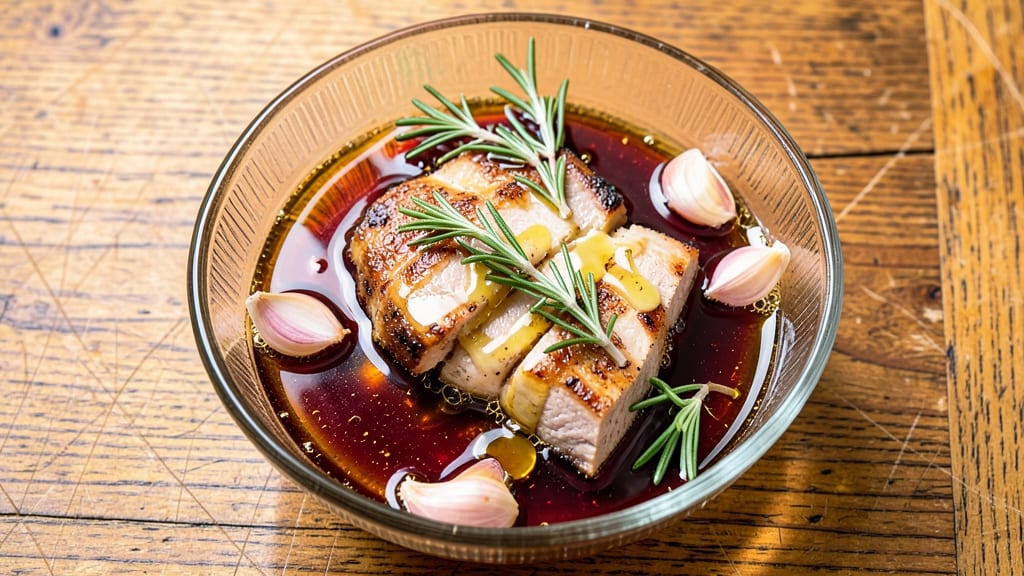
This pork chop marinade recipe with apple cider vinegar transforms tough cuts into melt-in-your-mouth perfection with just 30 minutes of prep. The secret lies in balancing sharp acidity with rich sweetness—apple cider vinegar tenderizes while balsamic honey creates a caramelized crust that seals in juices.
I perfected this after years of testing marinades that either left pork dry or too acidic, and this one finally nailed the balance.
The magic happens when the marinade's acid breaks down proteins while the honey adds depth, creating a glossy finish that caramelizes beautifully during searing. You'll need just 5 simple ingredients—apple cider vinegar, balsamic vinegar, honey, olive oil, and garlic—plus optional herbs like rosemary or thyme for extra aroma.
The marinade works best when applied 2-4 hours before cooking, giving the pork time to absorb flavors without over-softening.
What you'll end up with is pork chops that are juicy, tender, and caramelized at the edges, with a sticky-sweet glaze that makes every bite irresistible. The apple cider vinegar cuts through richness while the honey-balsamic blend adds complexity, creating a sauce that's perfect for drizzling over the finished chops.
This marinade elevates simple pork into something restaurant-worthy, and it keeps well in the fridge for up to 5 days, making it ideal for meal prep.
Pair these chops with roasted potatoes or a crisp green salad to let the flavors shine. The marinade's versatility means you can use it for chicken or beef too—just adjust cooking times. Here's everything you need to make it happen.
Ingredients for pork chop marinade recipe apple cider vinegar
Five core ingredients plus optional herbs—this marinade transforms simple pork into restaurant-worthy perfection.
| Ingredient | Amount | Notes |
|---|---|---|
| Apple Cider Vinegar 🍎 | ½ cup | Raw, unfiltered preferred |
| Balsamic Vinegar 🍷 | ¼ cup | Aged 10+ years for depth |
| Honey 🍯 | ¼ cup | Wildflower or clover variety |
| Extra-Virgin Olive Oil 🫒 | ¼ cup | Fruity, peppery quality |
| Garlic Cloves 🧄 | 4 cloves | Freshly minced, vibrant |
| Fresh Rosemary 🌿 | ¼ cup | Finely chopped, sprigs removed |
| Fresh Thyme Leaves 🌿 | 0.2 cup | Or 1 tbsp dried thyme |
| Salt 🧂 | 1 ½ tsp | Diamond Crystal kosher |
| Black Peppercorns 🌶️ | ½ tsp | Freshly cracked, coarse |
The apple cider vinegar is non-negotiable here—look for raw, unfiltered brands like Bragg or Texas Pete at Whole Foods or your local health food store. The balsamic should be aged 10+ years for that deep, caramelized complexity; Giovanni Rossi or Bartolo Masieri are my go-tos, but any quality aged balsamic works. Honey? Wildflower or clover adds subtle floral notes—avoid the cheap supermarket stuff. The extra-virgin olive oil should be fruity and peppery; California Olive Ranch or Colavita are solid choices. Fresh garlic and herbs are a must—nothing beats the aroma of freshly minced garlic or the bright green of fresh rosemary sprigs.
No balsamic vinegar? Aged red wine vinegar works in a pinch, though it lacks the caramelized depth. Short on fresh herbs? Dried thyme at one-third the amount keeps the flavor profile intact. The honey can be swapped for maple syrup if you're avoiding raw honey, though it’ll be slightly less floral. For the olive oil, avocado oil is a neutral alternative if you’re avoiding olive’s grassy notes. The salt and pepper are simple but critical—Diamond Crystal kosher dissolves best, and freshly cracked peppercorns add a bright, aromatic punch. Pro tip: Toast the peppercorns in a dry pan for 30 seconds before grinding to deepen their flavor.
This marinade keeps for up to 5 days in an airtight jar in the fridge, though it’s best used within 3 days for maximum brightness. For longer storage, freeze in ice cube trays—thaw and shake before using. The honey and vinegar blend is stable, but the fresh herbs will wilt, so add them just before marinating. Double the batch and freeze half for later—it’s perfect for quick weeknight meals. The marinade’s acidity means it’s best used on pork, chicken, or beef within 24 hours of mixing, but the caramelized glaze freezes beautifully for up to 3 months if you’re prepping ahead.
Why You'll Love This Recipe
- Five-Ingredient Magic: I swear by this combo—just toss everything in a bowl, stir, and you’re done. No measuring cups, no fancy tools, just pure simplicity that still delivers restaurant-quality results.
- Sweet-Savory Balance: That honey and apple cider vinegar duo? It’s chef’s kiss—tenderizes the pork while giving it this perfect tangy-sweet glaze. The balsamic adds depth, and the garlic? Oh, it’s the star.
- Weeknight & Potluck Hero: Marinate a few hours or overnight—either way, it’s foolproof for busy nights. Double the batch, and you’ve got leftovers for sandwiches or fried rice. (Yes, even on a Tuesday night.)
- Pantry Staple Power: No weird ingredients here—just things you already own. A splash of vinegar, a drizzle of oil, a pinch of salt. It’s budget-friendly, lasts forever, and always saves me from takeout.
Step-by-step instructions for pork chop marinade with apple cider vinegar
This marinade transforms ordinary pork chops into restaurant-quality masterpieces with a glossy caramelized crust.
Combine the Vinegar Base
In a medium bowl, whisk together the 0.5 cup apple cider vinegar and 0.25 cup balsamic vinegar. The raw, unfiltered apple cider vinegar adds bright acidity while the aged balsamic contributes deep, complex sweetness. Let the mixture sit for 5 minutes to allow the flavors to meld—you'll notice the vinegars develop a slightly syrupy consistency as they begin to interact.
Here's the thing—don't skip this waiting period. The acidity needs time to activate the other ingredients properly. The vinegar mixture should smell tangy yet approachable, with hints of caramel from the balsamic. If you're using a particularly strong vinegar, you might want to taste it now to gauge the balance before proceeding.
Incorporate Honey and Oil
Add the 0.25 cup honey and 0.25 cup extra-virgin olive oil to the vinegar mixture. Using a whisk or fork, stir vigorously until completely combined. The honey should dissolve smoothly into the vinegar, creating a glossy liquid that coats the back of a spoon. If you're using wildflower honey, you'll get subtle floral notes that complement the vinegar beautifully.
This is where the magic happens—the honey balances the acidity while the fruity, peppery olive oil adds richness. The mixture should now have a syrupy texture that will cling perfectly to the pork chops. If it appears too thick, add 1 teaspoon water to achieve a pourable consistency while maintaining enough body to create that signature gloss.
Add Aromatics and Seasonings
Finely mince the 4 cloves garlic and add them to the bowl along with the 0.25 cup fresh rosemary and 0.2 cup fresh thyme leaves. Sprinkle in the 1.5 teaspoons salt and 0.5 teaspoon black peppercorns, then stir everything together until the herbs are evenly distributed. The fresh herbs should release their aromatic oils immediately, filling your kitchen with a fragrant blend of pine, lemon, and earthy notes.
I always use freshly cracked peppercorns here—their coarse texture adds visual interest and a more complex flavor than pre-ground pepper. Give the mixture one final taste and adjust the seasoning if needed. The marinade should taste bright, slightly sweet, and herbaceous with a proper balance of salt and acidity. This is your flavor foundation, so don't be shy about tasting as you go.
Marinate the Pork Chops
Place your pork chops in a shallow dish or resealable plastic bag. Pour the marinade over them, ensuring each chop is completely coated. For best results, marinate for at least 4 hours in the refrigerator, though I recommend overnight for maximum flavor penetration. The acid in the vinegar will begin breaking down the pork's proteins immediately, tenderizing the meat and creating those beautiful caramelized edges.
Here's a pro tip: If you're short on time, you can still achieve great results with just 2 hours of marinating, but the flavor won't be as deep. When you're ready to cook, remove the chops from the marinade and let them sit at room temperature for 15-20 minutes before cooking. This ensures even cooking and prevents the meat from steaming in the pan. The marinade can be saved and used as a glaze if you reduce it slightly on the stovetop after removing the pork.
Pro Tips For Making Pork Chop Marinade Recipe Apple Cider Vinegar
- MINCE THAT GARLIC: Use a knife, not a press—smash those cloves flat first, then finely chop. Pressed garlic turns to mush in marinades and makes the texture uneven. I learned this the hard way when my pork ended up tasting like garlic paste instead of bold, bright flavor.
- BALANCE THE VINEGARS: Start with 2 parts apple cider to 1 part balsamic—then taste. Balsamic adds depth but overpowers if you go heavy. If your marinade smells like a salad dressing factory, dial it back. (Yes, even if the recipe says otherwise.)
- MARINATE COLD, NOT ROOM TEMP: Pop the pork in the fridge for 4–6 hours max—no need to bring it to room temp first. Vinegar and honey work faster in the cold, and you’ll avoid that sad, gray exterior from over-marinating. Trust me, your chop won’t wait.
- WHISK THE HONEY FIRST: Warm the honey slightly (10 seconds in the microwave) before mixing it into the vinegars. Cold honey clumps like a stubborn toddler, and your marinade will separate. Stir it smooth, and the flavors blend like they’re supposed to.
Perfect pairings for this dish
Herb Variations
Fresh rosemary and thyme are my go-to herbs, but don't be afraid to experiment! Swap in 1 tbsp fresh sage for an earthy depth or 1 tsp dried oregano for a Mediterranean twist. For a smoky profile, add ½ tsp smoked paprika directly to the marinade.
I once accidentally used fresh tarragon instead—it added an unexpected anise-like note that worked surprisingly well with the apple cider vinegar. 🌿
Sweet-Savory Balance
The honey-balsamic blend creates that perfect caramelized crust, but you can tweak the sweetness. For more depth, add 1 tsp Dijon mustard—it cuts through the sweetness while adding complexity. If you prefer less sweetness, reduce honey to 2 tbsp and add 1 tsp maple syrup instead.
I've also found that 1 tsp grated ginger adds warmth that pairs beautifully with the vinegar's brightness.
Dinner Party Upgrade
For special occasions, elevate this marinade by adding 1 tbsp finely chopped shallots to the base. The shallots caramelize slightly during marinating, adding another layer of flavor. For a luxurious touch, stir in 1 tsp high-quality vanilla extract before marinating—it enhances the honey's floral notes.
I once made this for a dinner party and got rave reviews, especially after drizzling the reduced marinade over the finished chops. 🍽️
Glaze Potential
After removing the pork from the marinade, don't discard it! Simmer the leftover marinade in a saucepan over medium-high heat for 5-7 minutes until reduced by half. This creates a glossy glaze that's perfect for drizzling over the chops or using as a sauce for roasted vegetables.
For extra richness, whisk in 1 tbsp butter at the end. I've used this glaze on everything from grilled chicken to roasted carrots—it's incredibly versatile.
Global Twists
Give this marinade a global makeover! For an Asian-inspired version, add 1 tbsp soy sauce and 1 tsp sesame oil. For a Latin flair, swap the balsamic for 1 tbsp lime juice and add ½ tsp cumin.
I once made a Thai-inspired version with 1 tsp fish sauce and ½ tsp lemongrass paste—it was a game-changer. The apple cider vinegar's acidity works beautifully in these adaptations, creating unexpected but delicious flavor combinations.
Make-Ahead Magic
Double the marinade and freeze half in ice cube trays for quick weeknight meals. Thaw overnight in the fridge, then shake to recombine before using. The frozen marinade keeps its potency for up to 3 months. I always make extra because it's perfect for last-minute dinner plans. Just
Nutrition facts
Frequently asked questions
Can I use this marinade on other meats besides pork?
This apple cider vinegar marinade works beautifully on chicken breasts and beef steaks too. For chicken, reduce marinating time to 2-3 hours to avoid over-tenderizing. With beef, let it marinate for 4-6 hours for deeper flavor penetration. The honey-balsamic balance makes it versatile for any protein that benefits from tenderizing.
What if I don't have apple cider vinegar?
You can substitute with white wine vinegar or red wine vinegar in equal amounts, though the flavor profile will be slightly different. For a closer match, use 1 tbsp lemon juice per 0.25 cup vinegar replacement. The acidity is what matters most for tenderizing the meat. If you're avoiding vinegar entirely, 1 tbsp mustard or 1 tbsp yogurt can help with acidity while adding creaminess.
How do I prevent the pork chops from getting too acidic?
The honey and olive oil in this marinade naturally balance the acidity, but you can adjust further by reducing the vinegar to 0.375 cup if needed. For extra insurance, marinate for no longer than 4 hours instead of overnight. The key is tasting the marinade before applying—it should be tangy but not overpowering. If it tastes too sharp, add 1 tsp more honey or 1 tsp maple syrup to mellow it.
Can I make this marinade without honey?
Yes! Swap the honey for 0.25 cup maple syrup or 0.25 cup brown sugar dissolved in 2 tbsp warm water. For a savory option, use 2 tbsp Dijon mustard instead. The honey adds sweetness and helps create that caramelized crust, but these alternatives will still work well. Just be aware the texture may be slightly different without the honey's natural stickiness.
How do I know when the pork chops are fully cooked?
Use a meat thermometer for perfect doneness—pork chops should reach an internal temperature of 145°F (63°C) for medium-rare or 150°F (65°C) for medium. The edges should be caramelized with a glossy sheen from the marinade. For bone-in chops, check the thickest part near the bone. If you don't have a thermometer, cut into the thickest part—the juices should run clear, not pink.