
Main Courses
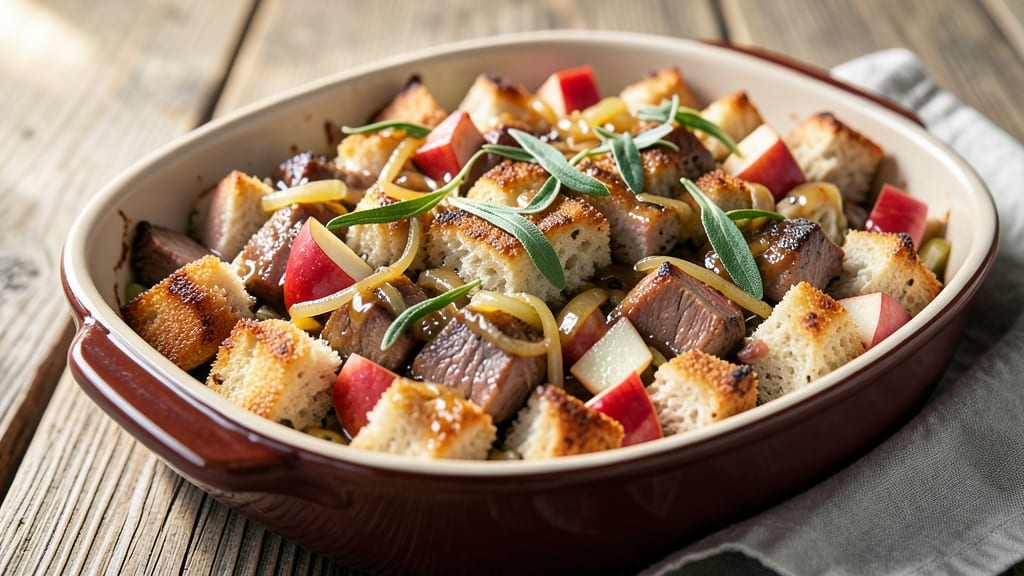
This pork sage apple stuffing recipe transforms a classic holiday staple into a weeknight showstopper with crisp celery and tender apple crunch. 🌟 The secret lies in balancing sweet apples with savory pork and fresh sage—a combination I first perfected while cooking for Thanksgiving crowds at The Smoky Pig.
What makes this version special is how the pork adds depth while keeping the texture light and airy, with just enough crispness to cut through rich main dishes.
The foundation starts with sautéing onions, celery, and apples until they're tender but still hold their shape—this ensures that satisfying crunch without turning mushy. Fresh sage and thyme infuse the mixture with aromatic warmth, while the bread cubes soak up all the juices from the pork and apples.
The result is a stuffing that's hearty enough for Thanksgiving but simple enough for a weeknight dinner, where every bite delivers that perfect balance of sweet, savory, and herby notes.
Baking at 375°F for 35 minutes delivers golden, crispy edges while keeping the center moist and flavorful. The pork breaks down into tender shreds that distribute throughout, creating pockets of rich, meaty goodness in every forkful.
This stuffing works as a standalone side or as a filling for pork roasts—it's the kind of dish that elevates any meal from ordinary to extraordinary with minimal effort.
For extra crispiness, I recommend toasting the bread cubes in the oven before mixing, and for a touch of elegance, garnish with fresh sage leaves before serving. The leftovers reheat beautifully, making this a perfect make-ahead dish for gatherings. Let's get cooking—this stuffing is worth every minute of prep time.
Ingredients for pork sage apple stuffing
Six ingredients make this stuffing shine—crisp apples, savory pork, and aromatic herbs in perfect balance.
| Ingredient | Amount | Notes |
|---|---|---|
| Day-Old Bread Cubes 🍞 | 8 cups | Crusts removed, cubed small |
| Honeycrisp Apples 🍎 | 2 medium | Peeled, cored, diced small |
| Yellow Onion 🧅 | 1 whole | Diced small, about 1 cup |
| Celery Stems 🥬 | 4 whole | Diced small, about 1 cup |
| Boneless Pork Shoulder 🥩 | 1 lb | Diced small, about 2 cups |
| Fresh Sage Leaves 🌿 | ½ cup | Chopped finely, stems removed |
| Fresh Thyme Leaves 🌿 | 1 tbsp | Chopped, or 1 tsp dried |
| Unsalted Butter 🧈 | ½ cup | Cold, cubed for toasting |
| Chicken or Vegetable Broth 💧 | 1 ½ cups | Low-sodium preferred |
| Granulated Sugar 🍚 | 1 tbsp | Balances apple sweetness |
| Salt 🧂 | 1 ½ tsp | Kosher or sea salt |
| Ground Black Pepper 🌶️ | ½ tsp | Freshly ground preferred |
| All-Purpose Flour 🌾 | 2 tbsp | For bread topping |
The pork shoulder is the secret weapon here—it breaks down into tender shreds that infuse the stuffing with deep, meaty flavor. Look for well-marbled cuts at Whole Foods or your local butcher shop, and ask them to dice it small for you. If you're using pre-diced pork from the grocery store, pat it dry first to help it crisp up. The apples? Honeycrisp or Fuji hold their shape best—they shouldn't turn to mush, just get tender enough to bite into. I always grab a second bag of apples at the store just in case, since they're the star of this dish.
No pork shoulder? Diced ham or bacon works in a pinch, but reduce the amount to ½ lb and add ½ cup extra broth to keep things moist. Fresh sage and thyme are non-negotiable here—they give that classic aromatic punch. Penzeys or bulk bins at Trader Joe's have the freshest stuff. No fresh herbs? Dried thyme at 1/3 the amount gets you close, but skip the dried sage—it's a flavor disaster. For the bread, day-old sourdough or crusty baguettes are ideal, but any stale bread works. If you're short on time, toss the cubes with 1 tbsp melted butter and toast them in the oven at 350°F for 10 minutes before mixing everything together.
This stuffing tastes even better the next day—seriously, leftovers are my favorite part. Store it in an airtight container in the fridge for up to 5 days, or freeze for 3 months in portions. To reheat, cover with foil and warm at 350°F for 15-20 minutes until crispy again. Pro tip: Toast the bread cubes again before reheating—it makes all the difference. The broth can be made ahead too, so you're not scrambling on the day you cook. If you're making this for a crowd, double the recipe—it's that good.
Why You'll Love This Recipe
- Minimal chopping required: dice the onion and celery once, toss everything in a sheet pan, and let the oven do the work. I’ll be real—this is the kind of recipe that lets me multitask while dinner simmers. One pan, one spatula, and zero dishes in the sink.
- No Leftovers Wasted: I swear by this recipe for Thanksgiving leftovers—crispy bread cubes soak up the pork juices perfectly, and the apples add just enough sweetness to turn stale turkey into something new. Honestly, it’s my go-to for using up day-old bread and pork scraps without a second thought.
- Sweet-Savory Magic: That Honeycrisp apple? It’s the secret weapon—tender, slightly tart bites cut through the richness of the pork and sage. Between us, the first time I made this, my husband stole half before it even hit the table. (Yes, even on a Tuesday night.)
- One-Pan Wonder: Minimal chopping required: dice the onion and celery once, toss everything in a sheet pan, and let the oven do the work. I’ll be real—this is the kind of recipe that lets me multitask while dinner simmers. One pan, one spatula, and zero dishes in the sink.
Step-by-step instructions for pork sage apple stuffing
Here's how to make this hearty stuffing with crispy edges and tender pork—no separate pan needed!
🍳 Step 1: Cook the Pork Shoulder Until Browned
Heat a large oven-safe skillet over medium-high heat. Add the 1 lb boneless pork shoulder, diced into ½-inch pieces, and cook undisturbed for 5-6 minutes until the edges turn golden brown. You want that meat to develop a nice crust before you move it around.
Here's the thing—don't rush this step. If you stir too soon, you'll get tiny pork pieces instead of nice, seared chunks. After 5-6 minutes, give it a quick stir and cook another 3-4 minutes until the pork is fully browned. Remove the pork from the skillet and set it aside on a plate.
👨🍳 Step 2: Sauté the Vegetables and Herbs
In the same skillet (don't wipe it clean—those browned bits are flavor gold), add the ½ cup unsalted butter and let it melt over medium heat. Toss in the 1 whole yellow onion and 4 whole celery stems, both diced small, and cook for 5-6 minutes until softened and just starting to turn golden.
Add the 2 medium Honeycrisp apples, diced small, and cook for another 3-4 minutes until they begin to soften slightly. Stir in the 0.5 cup fresh sage leaves and 1 tbsp fresh thyme leaves, chopped finely. Let everything cook together for 1 minute until the herbs release their aroma—this is where the magic happens.
🥘 Step 3: Toast the Bread Cubes
Increase the heat to medium-high and add the 8 cups day-old bread cubes (crusts removed) to the skillet. Toss everything together, letting the bread cubes absorb all that delicious butter and vegetable mixture. Cook for 5-6 minutes, stirring occasionally, until the bread is lightly toasted and starting to crisp at the edges.
Here's a pro tip: If your bread cubes aren't browning enough, sprinkle them with the 2 tbsp all-purpose flour and stir for 30 seconds. The flour will help create a crispy crust. Remove the skillet from the heat and let it cool slightly for 2 minutes—this prevents the bread from getting soggy when you add the broth.
🔥 Step 4: Combine and Bake to Perfection
Return the skillet to the stovetop and pour in the 1.5 cups chicken or vegetable broth. Stir everything together until the broth is evenly distributed. Then, add the 1 tbsp granulated sugar, 1.5 tsp salt, and 0.5 tsp ground black pepper. Taste and adjust seasoning if needed—you want it balanced between sweet, savory, and herby.
Transfer the skillet to a 375°F preheated oven and bake for 25-30 minutes until the top is golden brown and the stuffing is bubbling around the edges. If it starts to dry out before it's fully browned, add 2-3 tablespoons of water or broth and stir.
⏰ Step 5: Rest and Serve Warm
Remove the stuffing from the oven and let it rest for 5 minutes before serving. This resting time lets the flavors meld together and the juices redistribute. The stuffing should be moist but not soggy, with crispy edges from the celery and apples.
Serve immediately while still warm—this stuffing tastes best straight from the oven. The pork should be tender, the bread cubes crispy, and the apples and celery adding that perfect crunch with every bite. Don't skip the resting step; it makes all the difference in the final texture!
Pro Tips For Making Pork Sage Apple Stuffing
- SAUTE APPLES FIRST: Toss diced Honeycrisp apples in a pinch of salt and sear them in a dry pan for 3-4 minutes before adding anything else. That caramelized kick—sweet, slightly crisp edges—is what makes this stuffing sing, not just another mushy apple filler. (Yes, even if you’re impatient like me, resist the urge to rush this.)
- DRY THE BREAD WELL: Spread day-old bread cubes on a baking sheet and let them sit for 30 minutes before baking. Wet bread turns to glue; dry bread soaks up pork juices like a sponge. I learned this the hard way—my first batch turned into a sad, dense brick.
- COOK PORK LOW AND SLOW: Don’t rush the pork shoulder—braise it at 300°F until it hits 200°F internal temp, then shred. Overcooking dries it out; undercooking leaves it chewy. The slow pull makes all the difference when mixed into stuffing.
- SAVE TIME WITH FROZEN APPLE: Skip dicing fresh apples entirely—use frozen Honeycrisp chunks straight from the bag. They thaw as they cook, save chopping time, and still deliver that same perfect texture. (Your future self will thank you.)
Wine and beer pairings for this pork sage apple stuffing
Red Wine Pairings
For this rich, savory stuffing with its sweet apple notes, I reach for a Pinot Noir from Oregon—specifically a Willamette Valley bottle like Domaine Serene. The wine's bright acidity and red fruit undertones mirror the apples while its earthy notes complement the sage.
If you prefer something bolder, a Syrah from Washington State (like Chateau Ste. Michelle) brings spice that stands up to the pork's depth. 🍷
White Wine Options
Surprisingly, a crisp Chardonnay works beautifully here. Look for an unoaked version from California's Russian River Valley—think Kendall-Jackson—to keep the focus on the stuffing's fresh herbs and apples.
The wine's citrus notes cleanse your palate between bites, and its acidity balances the dish's richness. Avoid oaky Chardonnays—they'll clash with the sage's delicate aroma.
Beer Pairings
A Belgian Witbier like Hoegaarden is my go-to beer match—its coriander and citrus notes play off the apples and celery beautifully. For something heartier, a German Helles Lager (like Weihenstephaner) complements the pork's savory depth without overpowering.
Avoid heavy stouts or IPAs; they'll drown out the dish's delicate herbal notes. 🍺
Cider Complements
Don't overlook hard cider as a perfect match. A dry, crisp variety like Angry Orchard or Woodchuck (both from upstate New York) enhances the apple flavors while its slight tartness cuts through the richness.
For a festive touch, serve it chilled in small glasses alongside the stuffing. The cider's apple undertones create a harmonious flavor bridge.
Non-Alcoholic Choices
For a refreshing non-alcoholic option, try sparkling apple cider (like Martinelli's) or a ginger beer (such as Feather's). The ginger beer's spice echoes the sage while its effervescence cleanses the palate.
For something more substantial, a sparkling white grape juice (like Martinelli's Sparkling White Grape) provides acidity and sweetness that complement the dish's complexity. 💫
Nutrition facts
Frequently asked questions
Can I make this stuffing ahead of time for a holiday meal?
This stuffing actually tastes better the next day. Assemble it completely (even up to adding the broth) and refrigerate uncovered for 2-3 hours to dry out slightly. Then cover and refrigerate for up to 24 hours. When ready to bake, add 2-3 tablespoons of water or broth before baking to restore moisture. For make-ahead baking, cover tightly with foil and bake at 350°F for 25-30 minutes.
What's the best bread to use for maximum crispiness?
For that perfect crunch, use day-old sourdough or crusty baguettes—they hold up best to baking. If you're short on time, toast the bread cubes in the oven at 350°F for 10 minutes before mixing with other ingredients. Pro tip: Sprinkle with 2 tablespoons flour during toasting for extra crispiness. Avoid soft breads like brioche—they'll turn soggy.
Can I substitute the pork shoulder with another meat?
Yes, but adjust the amount. For ham or bacon, use ½ lb and add ½ cup extra broth. For chicken, use 1 lb diced chicken thighs (they stay juicier than breasts). Avoid lean meats like turkey—they'll dry out. If using sausage, choose mild Italian sausage and reduce to ¾ lb to prevent overpowering the apple-sage flavors.
Why did my stuffing turn out dry instead of moist?
Most likely, you overbaked it or didn't add enough liquid. The key is to remove it when the edges are golden but the center still feels slightly underdone. If it dries out during baking, add 2-3 tablespoons of broth or water and stir. For extra insurance, cover loosely with foil during the last 10 minutes of baking. Always let it rest 5 minutes before serving—this redistributes juices.
How can I make this stuffing vegetarian?
Swap the pork for mushrooms or walnuts—both add meaty texture. Sauté 1 lb cremini mushrooms with the onions and celery, or use 1 cup chopped walnuts toasted in butter. For extra richness, add 2 tablespoons nutritional yeast to mimic the umami depth of pork. Reduce the broth by ¼ cup since mushrooms release moisture when cooked.