
Main Courses
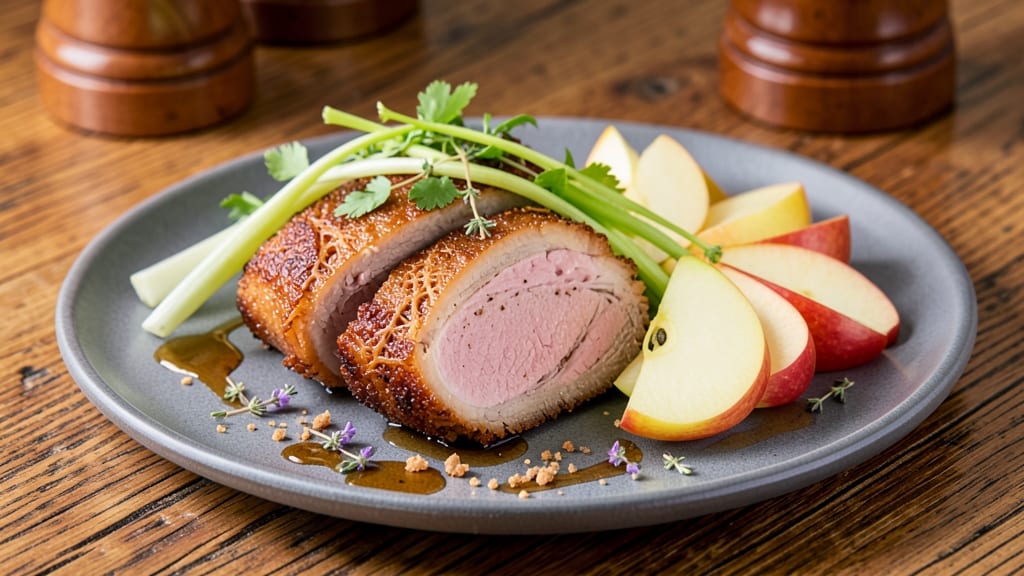
This pork belly and apple recipe transforms rich, fatty pork into crispy, caramelized perfection paired with sweet apples—where savory meets sweet in every bite. 🔥 After years of perfecting this dish at The Smoky Pig, I’ve cracked the code for achieving that coveted crackle without drying out the meat, while the apples caramelize into sticky, golden sweetness.
The secret? A slow roast followed by a high-heat blast to render fat while keeping the pork tender.
The magic happens when you balance the pork’s fat cap with crispy celery crunch and apples that soften just enough to release their natural sugars. I use a mix of Honeycrisp and Fuji apples—their balance of tartness and sweetness cuts through the pork’s richness while adding texture.
This isn’t just a side dish; it’s the star of the plate, with a glaze that ties everything together into a harmonious, restaurant-worthy bite.
What you’ll end up with is a dish that’s equal parts indulgent and balanced—crispy pork belly with a crackly exterior and juicy interior, paired with apples that caramelize into a glossy, sweet contrast. The aroma alone will have guests asking for seconds, and the plating?
Simple yet striking: sliced pork belly fanned over a bed of caramelized apples, garnished with fresh thyme. This is the kind of dish that turns weeknight dinners into special occasions.
Serve it alongside a crisp green salad or roasted root vegetables to round out the meal, or keep it as a standalone centerpiece for holiday gatherings. The technique is straightforward, but the results are anything but basic.
Let’s get cooking—this pork belly and apple dish is about to become your new signature recipe.
Ingredients for pork belly and apple
Rich pork belly meets sweet apples—just 13 ingredients for restaurant-style flavor.
| Ingredient | Amount | Notes |
|---|---|---|
| Pork Belly 🐖 | 1 ½ lb | Skin-on, fat cap intact |
| Honeycrisp Apples 🍎 | 2 whole | Cored, sliced 1/4-inch thick |
| Fuji Apples 🍎 | 2 whole | Cored, sliced 1/4-inch thick |
| Celery Stalks 🥬 | 4 whole | Trimmed, cut into 1-inch pieces |
| Fresh Thyme 🌿 | ¼ cup | Leaves only, chopped |
| Brown Sugar 🍚 | ¼ cup | Packed, light kind |
| Apple Cider Vinegar 🍏 | 2 tbsp | For glaze |
| Honey 🍯 | 2 tbsp | Wildflower preferred |
| Olive Oil 🫒 | 2 tbsp | Extra-virgin for richness |
| Salt 🧂 | 1 ½ tsp | Kosher or sea salt |
| Black Pepper 🌶️ | ½ tsp | Freshly ground |
| Garlic Cloves 🧄 | 3 cloves | Minced for glaze |
| Cinnamon Stick 🌰 | 1 whole | For glaze aroma |
The pork belly is the star here, so look for thick-cut pieces with a good fat cap—that's what gives you the crispy crackle. Costco or your local butcher shop are your best bets for quality cuts. I always ask for the belly with the skin intact, as it helps render the fat beautifully. For the apples, Honeycrisp and Fuji are my go-tos—their balance of tartness and sweetness cuts through the pork's richness perfectly. If you can't find Honeycrisp, Pink Lady or Braeburn work well too. The celery adds that crispy crunch—don't skip it, even though it seems small.
No Honeycrisp apples? Gala or Granny Smith will work in a pinch, but you might want to add a pinch of sugar to the glaze to compensate for their milder flavor. Running low on thyme? Fresh rosemary at half the amount gives a similar woodsy note. For the glaze, if you don't have apple cider vinegar, white vinegar or lemon juice will do the trick. The cinnamon stick is just for aroma—skip it if you're in a hurry, but trust me, it adds that extra layer of warmth. And if you're feeling fancy, toasted sesame oil in the glaze takes this dish to the next level.
This dish tastes even better the next day—honestly, the flavors meld into something magical after resting. Store leftovers in the fridge for up to 5 days, covered with a paper towel to keep the pork belly from getting soggy. For reheating, pop it in a 350°F oven for 10-15 minutes until warmed through. The glaze might thicken when chilled, so just add a splash of water or apple cider and warm it up. I always make extra because it disappears fast—perfect for meal prep or holiday gatherings.
Why You'll Love This Recipe
- One-Pan Magic: I swear by this—just slice the pork belly into thick slabs, toss in the apples and celery, and let the oven do the work. No chopping boards, no extra pans, just golden edges and tender meat by the time you’re scrolling through your phone.
- Sweet-Savory Magic: That crispy pork belly with the juicy Honeycrisp apples? It’s like fall in your mouth—salty, sweet, and herby all at once. The Fuji apples add a gentle crunch, while the thyme ties it all together like a warm hug.
- Weeknight Hero: Between us, this is my go-to when I’m too tired to think. Serve it with mashed potatoes for dinner, slice it cold for lunch the next day, or even toss it in a sandwich. It’s that flexible.
- Budget-Friendly Feast: Pork belly feels fancy, but it stretches further than you’d think—especially when paired with apples and celery. I’ve fed four people for under $20, and they’ll still ask for seconds. (Yes, even on a Tuesday night.)
Step-by-step instructions for pork belly and apples
Here's how to transform crispy pork belly into a showstopping dish with caramelized apples and celery crunch.
🔥 Step 1: Score and Season the Pork Belly
Place the 1.5 lb pork belly skin-side up on a cutting board. Using a sharp knife, score the skin in a diamond pattern, making cuts about ½ inch apart without cutting into the fat. This creates crispy pockets while keeping the meat tender.
In a small bowl, mix together the 1.5 tsp salt, 0.5 tsp black pepper, and 0.25 cup chopped fresh thyme. Rub this mixture all over the pork belly—press it into the cuts and massage it into the meat. Let it sit at room temperature for 30 minutes while you prep the apples and celery. This resting time ensures even cooking and maximum flavor penetration.
🍳 Step 2: Prep the Apple and Celery Mixture
Core and slice the 2 whole Honeycrisp apples and 2 whole Fuji apples into ¼-inch thick slices. Trim the 4 whole celery stalks and cut them into 1-inch pieces. Toss everything together in a large bowl with the 2 tbsp olive oil until evenly coated. Spread the mixture on a baking sheet and roast at 400°F for 15 minutes until the edges start to soften.
While the apples and celery roast, prepare the glaze by combining the 2 tbsp honey, 2 tbsp apple cider vinegar, 3 minced garlic cloves, and 1 whole cinnamon stick in a small saucepan. Simmer over medium heat for 5 minutes until slightly thickened. Remove from heat and let cool for 10 minutes—this gives the flavors time to meld.
🔥 Step 3: Cook the Pork Belly to Crispy Perfection
Preheat your oven to 425°F. Place the seasoned pork belly fat-side up on a wire rack set inside a rimmed baking sheet. Roast for 1 hour, flipping once halfway through, until the skin is deep golden brown and the internal temperature reaches 145°F. Here's the thing—don't peek too often. Every time you open the oven, you risk losing heat and steam, which can make the skin less crispy.
Once the pork belly reaches 145°F, remove it from the oven and let it rest on a cutting board for 10 minutes. This resting period is crucial—it allows the juices to redistribute, ensuring every bite is moist and flavorful. While it rests, increase the oven temperature to 450°F for the final crisping step.
🥘 Step 4: Assemble and Finish with Glaze
Slice the rested pork belly into ½-inch thick slices. Arrange the crispy pork slices on a baking sheet lined with parchment paper. Pour the cooled apple-cider glaze evenly over the pork, letting it soak in for 2 minutes. Return the pork to the oven and broil for 3-5 minutes until the glaze bubbles and caramelizes slightly.
Remove the pork from the oven and stir the roasted apple and celery mixture with the 0.25 cup packed brown sugar. Toss everything together until the apples are coated with the sugar and glaze. Serve the crispy pork slices topped with the caramelized apple and celery mixture. The contrast of crispy pork, sweet apples, and crunchy celery makes every bite unforgettable.
Pro Tips For Making Pork Belly And Apple
- CRISP THE SKIN FIRST: Pork belly’s magic happens in the crust, not the center. Sear it skin-side down in a cold pan on medium heat—yes, cold—until the fat starts rendering and the skin crisps in 8-10 minutes. After that, you can roast it low and slow without burning the edges.
- PEEL APPLES LAST MINUTE: Honeycrisp and Fuji turn mushy fast. Peel and slice them right before tossing with thyme and celery—no need to pre-cook. The residual cold helps them stay crisp even after roasting, and the acidity brightens the pork’s richness.
- DON’T OVERCROWD THE PAN: I learned this the hard way—pork belly steams when packed too tight, and the apples release too much moisture. Leave gaps between slices. If your pan’s full, roast in batches or use a second sheet tray. The goal is caramelized apples, not a soggy mess.
- USE THYME SPRIGS, NOT LEAF STRIPS: Whole sprigs of thyme stay fragrant longer and infuse the pork belly’s fat better than chopped leaves. Tuck 2-3 sprigs into the pork’s crevices before roasting—they’ll crisp slightly and add a piney aroma that cuts through the fat. (Yes, even if you’re impatient like me.)
Troubleshooting this recipe
Skin Not Crispy
The most common issue with pork belly is under-crispy skin. The secret is patience and technique—I can’t stress this enough.
If your skin isn’t crackling like it should, try this: score the skin more aggressively in a crosshatch pattern (about ¼-inch apart) to create more surface area for fat rendering. Use a wire rack to elevate the pork belly off the pan—this allows hot air to circulate evenly.
If your oven runs hot, reduce the temp to 400°F and add 5-10 extra minutes to the cook time. And for heaven’s sake, don’t flip it too soon—wait until the skin is deep golden brown before turning. 🔥
Apples Too Soft
Overly soft apples can turn your dish mushy instead of caramelized. The key is timing and acidity. If your apples are turning to mush, reduce the roasting time to 10-12 minutes (instead of 15) and add 1 tbsp apple cider vinegar to the glaze to help preserve texture.
I also recommend using thicker apple slices (⅓-inch instead of ¼-inch)—they hold up better. For extra insurance, toss the roasted apples with 1 tsp cornstarch before adding the glaze to create a light, crisp coating. 🍎
Pork Too Dry
Dry pork belly happens when you overcook it or don’t rest it properly. To prevent this, use a meat thermometer and pull the pork at 145°F internal temperature—no higher! Let it rest for at least 10 minutes (I often rest mine for 20 minutes) before slicing.
If you’re worried about drying out, reduce the oven temp to 400°F and cook for 1 hour 15 minutes instead of 1 hour. And here’s a pro tip: slice against the grain—this shortens the muscle fibers, making each bite more tender. 💪
Glaze Too Thin
A runny glaze can make your dish feel unbalanced. If your glaze isn’t thickening properly, simmer it longer (up to 8-10 minutes) or add ½ tsp arrowroot powder mixed with 1 tsp water to help it gel. For extra richness, stir in 1 tbsp butter at the end.
If the glaze is too sweet, balance it with a splash of apple cider vinegar or a pinch of salt. And remember, the glaze should coat the back of a spoon—if it’s watery, it won’t stick to the pork. ✨
Celery Losing Crunch
Celery can turn soggy if it’s roasted too long or mixed with too much moisture. To keep it crisp, roast it separately for just 8-10 minutes at 400°F before tossing with the apples. Add the celery to the apples only in the last 2 minutes of roasting.
For extra crunch, toss the celery in 1 tsp olive oil and a pinch of salt before roasting—this helps it hold up better. If you’re serving this dish ahead, keep the celery and apples separate until the last minute to preserve texture. 🥬
Uneven Cooking
If your pork belly is cooking unevenly, it’s likely due to hot spots in your oven or uneven fat distribution. To fix this, rotate the baking sheet halfway through cooking and use a wire rack to ensure even airflow.
If your oven has hot spots, place a baking sheet under the rack to diffuse heat. For thicker cuts, trim excess fat to about ¼-inch to ensure even cooking.
And if you’re using a cast-iron skillet, preheat it for 10 minutes before adding the pork to create a stable cooking surface. 🌡️
Nutrition facts
Frequently asked questions
Can I substitute regular apples for Honeycrisp and Fuji?
For tartness, try Granny Smith or Pink Lady, but add 1 tbsp extra brown sugar to the glaze. For sweeter apples like Gala, reduce the sugar to ¼ cup and add ½ tsp cinnamon to the pork rub for depth. The key is balancing sweetness with acidity—if your apples are mild, boost the apple cider vinegar in the glaze to 3 tbsp.
How do I store leftovers to keep the pork belly crispy?
Store the pork belly and apples separately in airtight containers. For the pork, wrap it tightly in parchment paper first to preserve crispness, then refrigerate for up to 5 days. Reheat in a 350°F oven for 10-15 minutes until warmed through. The apples can be reheated in a skillet with 1 tsp butter for 2-3 minutes to restore their caramelized texture. Pro tip: Re-crisp the pork skin by broiling for 1-2 minutes at the end.
Can I make this recipe in a slow cooker?
Not ideal for crispy skin, but you can adapt it! Score the pork belly and sear it in a skillet first, then place it in the slow cooker with apples, celery, and ½ cup apple cider on low for 6-8 hours. For glaze, mix 2 tbsp honey + 1 tbsp vinegar and brush on during the last 30 minutes. The result will be tender pork with sweet apples, but the skin won’t be crispy—save that for oven methods.
What’s the best way to serve this dish?
This recipe shines as a standalone centerpiece, but pair it with crisp white wine (like Sauvignon Blanc) or sparkling cider to cut through the richness. For a full meal, add a simple arugula salad with lemon vinaigrette or roasted Brussels sprouts. Garnish with fresh thyme sprigs and extra celery for color. For holiday gatherings, serve family-style with extra apples on the side for seconds.
Why does the recipe call for both Honeycrisp and Fuji apples?
The combination balances texture and flavor perfectly! Honeycrisp adds crispness and tartness, while Fuji brings natural sweetness. Together, they create a harmonious contrast—Honeycrisp holds its shape better during roasting, while Fuji caramelizes beautifully. If you must use one variety, Honeycrisp alone works best, but add 1 extra tbsp vinegar to the glaze to compensate for the tartness.