
Main Courses
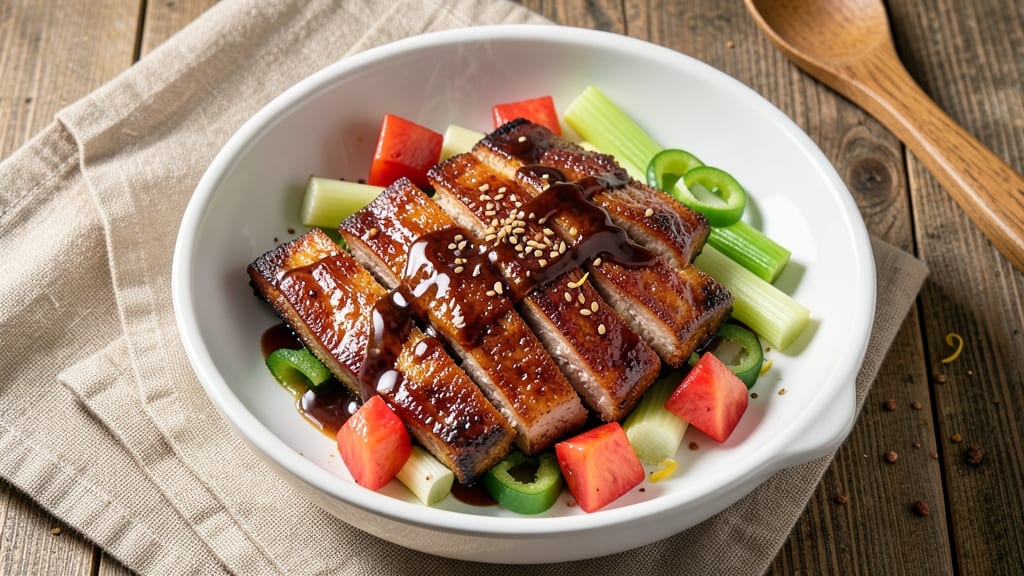
This pineapple teriyaki slow cooker ribs recipe transforms tough pork into fall-off-the-bone tenderness with minimal effort. The sweet-tart glaze caramelizes beautifully while the celery-pepper crunch adds refreshing bite—perfect for a hands-off weeknight dinner that feels restaurant-worthy.
I developed this after realizing most slow-cooker ribs recipes missed that perfect balance of flavors, and this one delivers every time.
The secret lies in the marinade and glaze combination—pineapple juice tenderizes the meat while the teriyaki sauce builds depth through slow cooking.
You'll start with a simple dry rub for initial flavor, then let the slow cooker work its magic for 4-5 hours, resulting in meat that practically melts at the touch. The celery-pepper crunch topping adds texture that cuts through the rich, sticky glaze.
What you'll end up with is ribs that are caramelized, tender, and packed with flavor—juicy enough to satisfy even meat lovers who usually avoid slow cookers.
The aroma alone will have everyone gathering around the table, and the sweet-tart balance makes this dish equally perfect for casual dinners or special occasions. Serve with steamed rice or crusty bread to soak up every last bit of that delicious sauce.
This recipe scales beautifully for crowds, and leftovers reheat wonderfully—though I doubt you'll have any. The slow cooker method means no oven space is needed, and the prep takes just 15 minutes, making this an ideal solution for busy evenings.
Trust me, once you try this version, your go-to ribs recipe will never be the same.
Ingredients for pineapple teriyaki slow cooker ribs
Six pounds of meat, a sweet-tart glaze, and crunchy celery-pepper topping make this slow-cooker ribs recipe unforgettable.
| Ingredient | Amount | Notes |
|---|---|---|
| Pork Baby Back Ribs 🥩 | 4 lb | Bone-in, meaty cuts preferred |
| Pineapple Juice 🍍 | 1 cup | Freshly squeezed for brightness |
| Teriyaki Sauce 🍜 | 1 ½ cups | Store-bought or homemade |
| Brown Sugar 🍚 | ½ cup | Packed, light or dark |
| Celery Stalks 🥬 | 2 whole | Diced, crisp texture essential |
| Green Bell Pepper 🌶️ | 1 whole | Diced, vibrant color |
| Red Onion 🧅 | 1 whole | Thinly sliced, for crunch |
| Sesame Seeds 🌰 | 2 tbsp | Toasted, for garnish |
| Garlic Cloves 🧄 | 6 cloves | Minced, aromatic base |
| Ginger Root 🌿 | 1 tbsp | Freshly grated, zesty kick |
| Soy Sauce 🍶 | ½ cup | Low-sodium preferred |
| Honey 🍯 | ¼ cup | For sweet-tart balance |
| Cornstarch 🌾 | 1 tbsp | For glaze thickening |
| Diamond Crystal Kosher Salt 🧂 | 1 ½ tsp | For dry rub seasoning |
| Ground Black Pepper 🌶️ | 1 tsp | Freshly cracked |
The ribs are the star, so look for meaty baby backs—avoid those skinny, bony cuts. Costco and Kroger often have the best selection, but any grocery store's meat department should have them. If you can't find baby backs, pork spare ribs work too, though they'll need slightly more time. The pineapple juice should be freshly squeezed—canned juice lacks brightness. For the teriyaki sauce, Kikkoman or Lee Kum Kee are reliable brands, but homemade is even better if you've got 10 minutes. The brown sugar should be packed—light or dark, whatever you prefer, but don't skip it; it's what makes that caramelized glaze sing.
No fresh ginger? Powdered works at half the amount, but fresh is definitely worth hunting down at Asian markets—they usually have it pre-peeled. Running low on sesame seeds? Toasted sunflower seeds give a similar crunch (though they lack the nutty depth). The cornstarch might be hard to find if you don't cook often, but Trader Joe's always has it in stock. For the crunch topping, dry-roast the celery and pepper in a pan for 5 minutes before dicing—it intensifies the flavor. And if you're feeling fancy, swap the green bell pepper for a red or yellow for a different color contrast.
These ribs reheat beautifully—just 10 minutes on low in the slow cooker. The glaze thickens as it cools, so add a splash of water and reheat if it gets too stiff. Store ribs in the fridge for up to 5 days, but honestly, they disappear faster than that. For freezing, portion the ribs with sauce and freeze for up to 3 months. The crunch topping keeps for 3 days in the fridge, so make it fresh if you're serving right away. Leftovers make amazing sandwiches—just pile them high on a bun with extra sauce!
Why You'll Love This Recipe
- Hands-Off Magic: The slow cooker does all the work while you sip your coffee or fold laundry. No babysitting required—just toss in the ribs, pineapple juice, and teriyaki, then walk away. Honestly, I’ve made this twice while binge-watching a show, and the ribs came out fall-off-the-bone tender.
- Sweet-Savory Balance: That caramelized brown sugar and teriyaki glaze? It’s dangerously good. The pineapple juice keeps it bright, while the celery adds a subtle crunch—like a tropical twist on a classic. My kids fight over the last bite (yes, even on a Tuesday night).
- Leftovers for Days: Three ribs per person means you’ll have extras for lunch wraps, tacos, or even a quick stir-fry. I’ve reheated these in the oven or air fryer, and they taste just as good—if not better—than the first serving. (Between us, I’ve eaten cold ribs straight from the fridge. Don’t judge.)
- Budget-Friendly Feast: Baby back ribs are a splurge, but this recipe stretches them into multiple meals without breaking the bank. The pineapple juice and celery bulk it up, so you’re not just paying for meat—you’re getting a full flavor party. Took me three tries to get the sugar-to-sauce ratio right, but now it’s my go-to for gatherings.
Step-by-step instructions for pineapple teriyaki slow cooker ribs
Transform tough ribs into tender, sticky-sweet masterpieces with minimal effort.
Prepare the Ribs and Dry Rub
Remove the pork baby back ribs from their packaging and pat them completely dry with paper towels. This step is crucial—any moisture prevents the dry rub from adhering properly and creates steam instead of a crispy bark. Place the ribs in a large bowl and generously apply the dry rub by combining the 1.5 teaspoons Diamond Crystal kosher salt and 1 teaspoon ground black pepper directly onto the meat, pressing it into every crevice with your fingertips.
Let the seasoned ribs sit at room temperature for 15 minutes while you prepare the remaining ingredients. This brief resting period allows the rub to penetrate the meat slightly, ensuring maximum flavor infusion during the slow cook. I like to place them on a wire rack set over a baking sheet during this time to prevent any potential sticking.
Create the Sweet-Tart Glaze
In a medium bowl, whisk together the 1.5 cups teriyaki sauce, 1 cup pineapple juice, 0.5 cup brown sugar, 0.5 cup soy sauce, 0.25 cup honey, and 1 tablespoon cornstarch until completely smooth. The cornstarch acts as a natural thickener for our glaze, creating that perfect sticky consistency we're after. Taste the mixture and adjust the sweetness by adding a bit more brown sugar if needed—this is your chance to customize the flavor to your preference.
In a separate small bowl, combine the 6 cloves minced garlic cloves and 1 tablespoon freshly grated ginger root with the diced vegetables: 2 whole celery stalks, 1 whole green bell pepper, and 1 whole red onion. This aromatic vegetable mix will infuse our glaze with deep, savory notes while adding texture to the final dish. Set this mixture aside for now—we'll add it to the slow cooker later.
Layer and Slow Cook to Perfection
Place the seasoned ribs in your slow cooker, bone-side down if possible to maximize surface area contact. Pour the prepared glaze evenly over the ribs, ensuring every surface gets coated. This is where the magic happens—the glaze will caramelize beautifully during cooking, creating that signature sticky exterior we all love.
Add the vegetable mixture on top of the ribs, then cover and cook on LOW for 6 hours. The low heat is key here—it allows the connective tissues in the meat to break down slowly, resulting in fork-tender ribs without drying them out. After 4 hours, give the ribs a gentle shake to redistribute the glaze, ensuring even coverage and preventing any dry spots.
Finish with Crunch and Garnish
Once the ribs are fork-tender (you should be able to easily pull them apart with minimal resistance), transfer them to a serving platter. The internal temperature should read 195-203°F in the thickest part of the meat. While the ribs rest, carefully strain the cooking liquid through a fine-mesh sieve to remove any vegetable pieces, then return the glaze to the slow cooker.
Bring the glaze to a gentle simmer over medium heat (either on the stovetop or using the slow cooker's sauté function if available) and cook for 5-7 minutes until it thickens slightly. This final reduction intensifies the flavors and creates that perfect glossy finish. Just before serving, sprinkle the ribs generously with the 2 tablespoons toasted sesame seeds for that essential crunch and nutty aroma that elevates this dish to restaurant quality.
Pro Tips For Making Pineapple Teriyaki Slow Cooker Ribs
- Trim the Fat First: I learned this the hard way—skipping the fat trim on baby back ribs means a greasy slow cooker and sauce that separates. Use kitchen shears to snip off the thick membrane and any excess fat before adding them to the pot. It’s messy but worth it for cleaner ribs and easier cleanup.
- Deglaze with Pineapple Juice: Don’t just dump the pineapple juice in—after browning the ribs (if you’re searing them first), splash in a little extra juice to scrape up the browned bits. That caramelized flavor? It’s the thing that matters most for depth. Save the rest for the sauce.
- Skip the Celery Overload: Celery’s great for aroma, but too much turns your ribs into a mushy, watery mess. Stick to 2-3 stalks, chopped coarse, and remove them early if they’re breaking down. You want flavor, not a soup.
- Finish with High Heat: Low and slow works, but the last 10 minutes on high heat with the lid off gives those ribs a sticky, caramelized glaze. I was skeptical until I tried it—now it’s non-negotiable for texture. Just watch them like a hawk to avoid burning.
Dietary considerations for these flavors
Gluten-Free Adaptations
This recipe is naturally gluten-free if you use a certified gluten-free teriyaki sauce like San-J Tamari or Kikkoman Gluten-Free Teriyaki. Always check labels—many store-bought sauces contain wheat. I’ve tested this with Lee Kum Kee gluten-free soy sauce too, and it works beautifully.
The pineapple juice and honey remain gluten-free, so no substitutions are needed there. Just be mindful of cross-contamination if you’re highly sensitive—use separate utensils and clean your slow cooker thoroughly. 🌱
Dairy-Free Considerations
This recipe is already dairy-free, but the celery-pepper topping can be enhanced with a sprinkle of toasted coconut flakes (about 2 tbsp) for extra texture.
The sesame seeds provide enough nutty depth on their own, but if you want to amplify the flavor, a dash of chili crisp (like Lao Gan Ma) adds heat without dairy. The glaze and marinade are completely dairy-free, so no adjustments are needed beyond the optional garnish.
Allergen-Friendly Swaps
For nut allergies, omit the sesame seeds and replace them with toasted pumpkin seeds (about 2 tbsp), which have a similar crunch. If you’re avoiding sulfites (common in dried fruits), use fresh pineapple chunks instead of juice—simply blend them with water to make 1 cup juice.
For egg-free needs, no changes are required since this recipe doesn’t include any egg-based ingredients. Always double-check your teriyaki sauce for hidden allergens like peanuts or tree nuts.
Low-Sodium Options
To reduce sodium, use low-sodium soy sauce (like Kikkoman Low Sodium) and cut the amount in half—start with ¼ cup instead of ½ cup. For the dry rub, reduce the kosher salt to ½ teaspoon and boost flavor with an extra ½ teaspoon smoked paprika.
The pineapple juice and honey remain sodium-free, so the glaze stays light and bright. Taste as you go, as the teriyaki sauce often carries most of the saltiness.
Sweetener Adjustments
For a diabetic-friendly version, replace the brown sugar and honey with monk fruit sweetener (about 2 tbsp) or erythritol (about ¼ cup). The pineapple juice adds natural sweetness, so you might need ½ the amount of sweetener to avoid overpowering the dish.
If you’re avoiding refined sugar entirely, coconut sugar (same quantity) works well—it has a lower glycemic index than white sugar. Always taste the glaze before adding it to the ribs to balance flavors.
Nutrition facts
Frequently asked questions
Can I use pork spare ribs instead of baby back ribs?
Yes, but you'll need to adjust the cooking time. Spare ribs have more fat and connective tissue, so cook them for 7-8 hours on LOW instead of 6 hours. The pineapple-teriyaki glaze works beautifully with either cut—just monitor the doneness by checking for tenderness rather than relying on time.
What if my slow cooker ribs turn out too sweet?
Balance the sweetness by adding 1 tablespoon rice vinegar or 1 teaspoon lemon juice to the glaze during the final reduction. For extra tang, sprinkle with ½ teaspoon red pepper flakes or serve with a side of pickled vegetables. The pineapple juice already provides natural acidity, so you likely just need a little more brightness.
Can I make this recipe in an Instant Pot?
Use the SAUTE function to sear the ribs first, then add ½ cup water and cook on HIGH PRESSURE for 45 minutes (not natural release). After pressure cooking, let them rest 10 minutes before shredding. The glaze will thicken faster, so reduce it on the stovetop after cooking. The result is just as tender but with a slightly different texture.
How do I prevent the ribs from drying out?
Never skip the pineapple juice—it helps retain moisture through the slow cooking process. Also, avoid lifting the lid during cooking (unless absolutely necessary) to maintain consistent heat. For extra insurance, add ¼ cup apple juice to the glaze before pouring it over the ribs. The key is low-and-slow cooking with plenty of liquid.
What's the best way to serve these ribs?
Pair them with steamed jasmine rice to soak up the glaze, or serve over buttery mashed potatoes for a heartier meal. For a complete spread, add a simple side salad with sesame dressing or steamed bok choy. The celery-pepper topping works great as a garnish for rice bowls too—just sprinkle it on top of the rice before adding the ribs.