
Sauces & Condiments
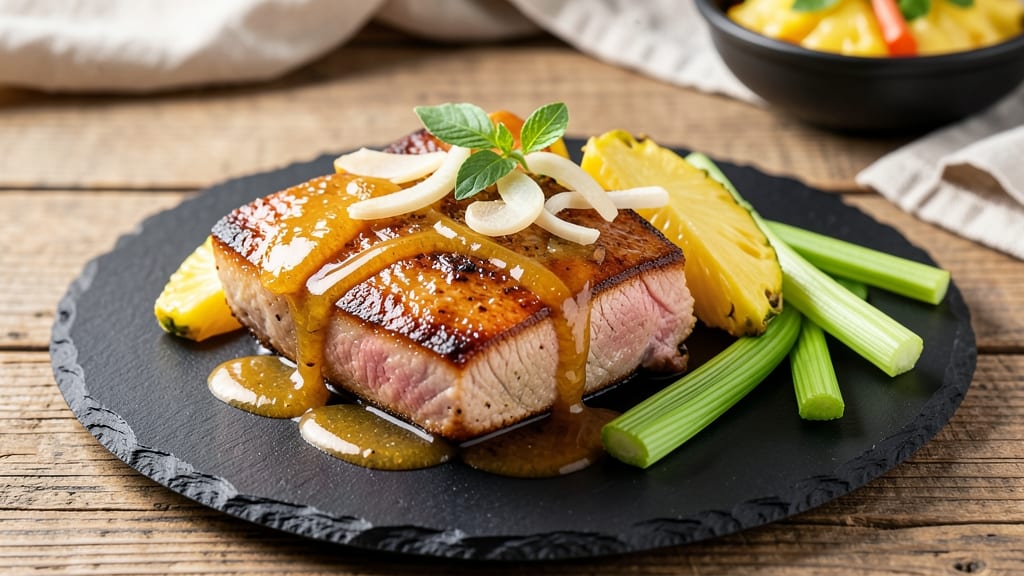
This pineapple pork sauce recipe transforms simple ingredients into a caramelized masterpiece that elevates every pork dish. The balance of sweet pineapple, tangy vinegar, and aromatic spices creates a sauce that's perfect for glazing, marinating, or serving as a tangy side.
I developed this recipe after years of experimenting with Asian-inspired sauces, and it consistently delivers restaurant-quality results at home.
The secret lies in the caramelization process, where sugar and pineapple juice combine to create a glossy, amber glaze with deep flavor. Fresh ginger and garlic add warmth, while celery and bell pepper bring a satisfying crunch that cuts through the richness.
This sauce works equally well on roasted pork chops, grilled ribs, or even as a dipping sauce for spring rolls.
What makes this sauce truly special is its versatility—it can be used as a marinade for tender pork tenderloin, a glaze for crispy pork belly, or a tangy accompaniment to stir-fried pork.
The ingredients come together in just 30 minutes, with most of that time devoted to simmering for maximum flavor development. The result is a sauce that's sweet, tangy, and slightly spicy, with a texture that's perfect for drizzling or spooning.
Once made, this sauce keeps well in the refrigerator for up to 5 days, making it ideal for meal prep. The flavors actually improve as it sits, allowing the ingredients to meld together beautifully.
Whether you're cooking for a weekend dinner or preparing for a week of pork dishes, this pineapple pork sauce will become your new go-to recipe.
Ingredients for pineapple sauce recipe for pork
Ten ingredients balance sweet, tangy, and aromatic notes for a sauce that transforms pork dishes.
| Ingredient | Amount | Notes |
|---|---|---|
| Fresh Pineapple Juice 🍍 | 1 cup | Freshly squeezed for bright flavor |
| Brown Sugar 🍚 | ½ cup | Packed tightly for caramelization |
| Rice Vinegar 🍶 | ¼ cup | White or seasoned variety |
| Fresh Ginger 🌿 | 2 tbsp | Finely grated, aromatic |
| Garlic Cloves 🧄 | 4 cloves | Minced for aromatic depth |
| Celery Stems 🧅 | ½ cup | Finely chopped for crunch |
| Red Bell Pepper 🌶️ | ½ cup | Diced, for fresh crunch |
| Low-Sodium Soy Sauce 🍜 | 2 tbsp | For umami balance |
| Sesame Oil 🫒 | 1 tbsp | Toasted for nutty aroma |
| Ground Black Pepper 🌶️ | ½ tsp | Freshly ground for heat |
The pineapple juice is non-negotiable—freshly squeezed delivers the bright acidity that cuts through the caramelized sweetness. Trader Joe's carries pre-juiced bottles for convenience, but nothing beats the fresh stuff. Brown sugar's molasses content is key for that deep caramelization; Domino or C&H brands work perfectly. For ginger, look for firm, knobby roots with smooth skin—Whole Foods or Asian markets often carry the best quality. The celery and bell pepper should be crisp; organic varieties from the grocery store's produce section work well, but avoid wilted stalks. Sesame oil should be toasted—Kadoya or La Choy are reliable brands for that nutty aroma.
No fresh pineapple juice? Canned crushed pineapple (drained) works in a pinch, though it lacks the bright acidity. Substitute brown sugar with white sugar plus 1 tsp molasses for depth. For vinegar, apple cider vinegar adds complexity if rice vinegar isn't available. The celery and bell pepper can be swapped for green onions or scallions if you prefer milder crunch. Low-sodium soy sauce is critical—regular soy sauce will overpower the delicate balance. If you're avoiding gluten, tamari is an excellent substitute. The sesame oil can be omitted entirely if you're sensitive to its flavor, but I recommend keeping it for that signature nutty finish.
This sauce develops best when made ahead—flavors meld beautifully over 24 hours in the fridge. Store in an airtight container with a thin layer of olive oil on top to preserve freshness for up to 5 days. For longer storage, freeze in ice cube trays and transfer to a bag; thaw in the fridge before use. The caramelized glaze thickens as it cools, so reheat gently with a splash of water if it becomes too stiff. Portion into small jars for easy drizzling over pork dishes throughout the week.
Why You'll Love This Recipe
- No-Fuss Blend: I just toss everything into a saucepan—juice, sugar, vinegar—and let it simmer while I prep the pork. The ginger and garlic hit the stove in minutes, and honestly? That’s half the battle won.
- Sweet-Savory Magic: The brown sugar caramelizes into the pineapple juice, giving it this deep, sticky richness that clings to pork like a dream. Between us, the tangy vinegar and fresh ginger cut through the fat so cleanly—no greasy aftertaste here.
- Potluck Hero: This sauce doubles as a dipping sauce for spring rolls or a glaze for grilled pork skewers. I’ve brought it to BBQs, family dinners, and even packed it for lunch—it’s the one thing people always ask for seconds on.
- Budget-Friendly Staple: A single pineapple lasts me three batches, and the rest of the ingredients? Pantry basics. I make a big pot on Sundays, store it in the fridge, and use it all week—no takeout needed, no extra trips to the store.
Step-by-step instructions for pineapple pork sauce
This sauce delivers perfect balance—sweet caramelized depth with bright acidity and fresh crunch.
Build the Sweet-Savory Base
In a medium saucepan, combine the 1 cup fresh pineapple juice, 0.5 cup brown sugar, and 0.25 cup rice vinegar. Bring to a gentle simmer over medium-high heat, then reduce to medium-low and cook uncovered for 10-12 minutes until the mixture thickens slightly and develops a golden hue. You'll notice the aroma intensify—that's the sugar caramelizing and the vinegar cutting through the sweetness.
Stir occasionally to prevent sticking, but don't over-stir—you want those sugar crystals to break down naturally. The sauce should reduce by about 20% and coat the back of a spoon. If it thickens too quickly, add 1 tablespoon water to maintain balance. This foundational reduction creates the sauce's signature sweet-tangy backbone.
Infuse with Aromatics
Add the 2 tablespoons finely grated fresh ginger and 4 minced garlic cloves to the simmering mixture. Cook for an additional 3-4 minutes until the garlic becomes fragrant and the ginger softens slightly. You'll see the mixture bubble gently—this indicates the flavors are melding together. The ginger should release its bright, citrusy notes while the garlic adds depth without bitterness.
Here's the thing—don't let the aromatics burn. If you notice any darkening at the bottom, immediately reduce the heat to low and stir to incorporate. The goal is to infuse, not char. These ingredients transform the sauce from simple sweetness to complex umami harmony. Once properly infused, remove the pan from heat temporarily while you prepare the crunchy elements.
Incorporate Crunch and Umami
In a separate small bowl, toss together the 0.5 cup finely chopped celery stems and 0.5 cup diced red bell pepper with 2 tablespoons low-sodium soy sauce. This pre-mixing ensures even distribution of the soy's umami punch throughout the crunchy vegetables. Return the saucepan to medium heat and add the celery-pepper mixture along with the 1 tablespoon toasted sesame oil. Stir gently to warm through for 2-3 minutes—just enough to soften the celery slightly while preserving its crisp texture.
The crunch elements should remain vibrant, not mushy. If they begin to soften too quickly, remove from heat immediately. The sesame oil adds nutty aroma that bridges the sweet and savory components. The soy sauce here serves dual purposes: it enhances the umami profile while preventing the vegetables from overcooking in the acidic-sweet medium.
Finish with Seasoning and Rest
Return the sauce to a gentle simmer and add the 0.5 teaspoon freshly ground black pepper. Cook for an additional 2 minutes to let all flavors meld completely. The pepper should be incorporated but not overpowering—just enough to add subtle heat that complements the sweetness. Taste and adjust: if you need more acidity, add 1 teaspoon rice vinegar; if it needs sweetness, add 1 teaspoon brown sugar. The sauce should balance sweet, tangy, umami, and peppery notes.
Remove from heat and let the sauce rest for 10 minutes at room temperature. This resting period allows all the flavors to fully integrate and the sauce to thicken slightly through natural reduction. The crunchy vegetables will continue to soften just enough to release their juices into the sauce, creating that perfect textural contrast. Serve immediately over grilled or roasted pork for maximum freshness and crunch.
Pro Tips For Making Pineapple Sauce Recipe For Pork
- Simmer Slow and Low: This sauce isn’t a race—keep the heat at a gentle simmer (think tiny bubbles, not a rolling boil) or the ginger and garlic will turn bitter faster than you can say "overcooked." I learned this the hard way after burning the aroma right out of a batch.
- Juice It Fresh, No Substitutes: Canned pineapple juice lacks the bright acidity and depth of fresh—skip it if you can. If you’re pressed for time, at least use extra-fresh pineapple (not the sad, fibrous kind) and strain it well. The pulp clogs the sauce faster than you’d think.
- Balance the Sweet Early: Taste as you go, especially when adding brown sugar. The sauce needs sweetness, but too much too soon will drown the ginger’s zing. Start with half the sugar, simmer, then adjust—your pork’s natural juices will mellow it out anyway.
- Toast the Ginger First: Mince the ginger after dry-toasting it whole in a hot pan for 30 seconds—it deepens the flavor without bitterness. (Yes, it’s an extra step, but the difference is noticeable, especially if you’re serving this with fatty pork belly.)
Troubleshooting this recipe
Sauce Too Thin
If your sauce ends up too watery, the issue is usually under-reduction. Simmer uncovered for an additional 5-8 minutes to evaporate excess liquid. For a quicker fix, mash 1-2 tablespoons of cooked white rice into the sauce—it absorbs moisture without altering flavor.
I’ve also found that adding ½ teaspoon of cornstarch mixed with 1 teaspoon cold water and stirred in helps thicken immediately. 🌡️
Sauce Too Thick
A overly thick sauce happens when sugar caramelizes too aggressively or when celery/pepper releases too much liquid. Thin with 1-2 teaspoons of pineapple juice or water while stirring constantly over low heat. If the sauce is syrupy, add 1 teaspoon of rice vinegar to balance the sweetness.
For a smoother texture, strain out any excess crunchy bits before thinning. Remember, the sauce should coat the back of a spoon but still flow easily.
Burnt Aromatics
Burnt garlic or ginger ruins the delicate balance of flavors. To prevent this, keep heat at medium-low when adding aromatics and stir frequently. If you notice dark spots, immediately remove from heat and stir in 1 teaspoon of fresh pineapple juice to deglaze.
For a quick fix, whisk in ½ teaspoon of honey or brown sugar to counteract bitterness. Always taste before proceeding—if the sauce tastes burnt, start fresh with a new batch.
Lacking Sweetness
If your sauce tastes tart or vinegary, it needs more sweetness. Gradually add 1 teaspoon of brown sugar at a time while simmering, stirring until dissolved. For a deeper caramel flavor, add ½ teaspoon of molasses along with the sugar.
If the sauce is already thick, thin it slightly with 1 teaspoon of water before adding extra sweetener to ensure even distribution. Trust me, a little more sugar goes a long way in balancing the acidity.
Crunch Disappearing
Overcooked celery and bell pepper turn mushy, losing their signature crunch. To preserve texture, add the chopped vegetables just 2-3 minutes before the sauce is fully cooked. If they soften too quickly, remove the pan from heat and let the sauce sit off the stove for 1-2 minutes before serving.
For extra crunch, toss in 1 tablespoon of toasted sesame seeds or finely chopped scallions right before serving. 🌶️
Sauce Too Tangy
Excess vinegar makes the sauce overly sharp. Balance it by adding 1 teaspoon of honey or brown sugar and simmering for 1-2 minutes to integrate. If the sauce is still too acidic, stir in ½ teaspoon of toasted sesame oil—its nutty richness helps mellow the tang.
For a smoother finish, reduce heat to low and let the sauce sit for 5 minutes before tasting again. The flavors will mellow as they cool.
Nutrition facts
Frequently asked questions
Can I use canned pineapple instead of fresh juice?
Yes, but with adjustments! Drain 1 (20 oz) can crushed pineapple (with juice) and use the juice for the recipe. For extra brightness, add 1 teaspoon lemon juice to compensate for the canned pineapple's milder acidity. The texture will be slightly thicker, so thin with 1 tablespoon water if needed.
How long can I store this sauce?
In an airtight container in the fridge, this sauce keeps for 5-7 days. For longer storage, freeze in ice cube trays (portion-sized) or small jars for up to 3 months. Thaw overnight in the fridge—never at room temperature. The flavors actually improve with time as ingredients meld!
What pork dishes work best with this sauce?
This sauce shines on grilled pork chops, roasted pork tenderloin, or crispy pork belly. It also works as a marinade (coat pork for 30-60 minutes) or dipping sauce for spring rolls. For extra richness, brush the sauce on pork during the last 5-10 minutes of cooking.
Can I make this sauce without sesame oil?
Skip the sesame oil or substitute with ½ teaspoon toasted sesame seeds stirred in at the end for nutty aroma. For a different flavor profile, try 1 teaspoon olive oil or ½ teaspoon almond extract (use sparingly—it's potent!). The sauce will still taste delicious without it.
Why does my sauce separate?
Separation usually means the sauce cooled too quickly or ingredients weren't fully incorporated. Gently reheat over low heat while stirring constantly. For a smoother texture, strain out any separated bits. To prevent this, always let the sauce rest for 10 minutes after cooking before refrigerating.