
Main Courses
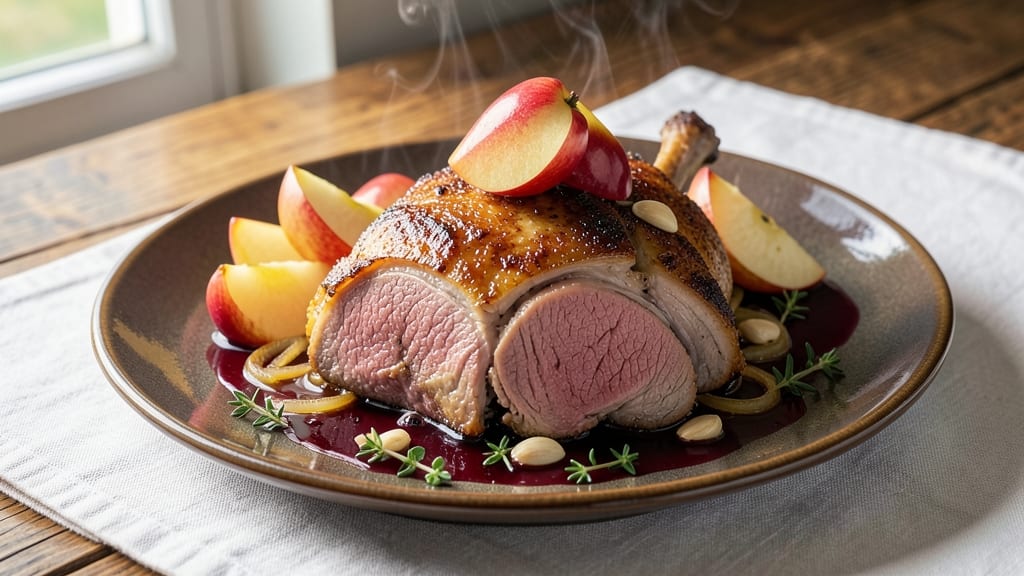
This lamb and apple recipe transforms rich, savory lamb into a luxurious dish with tender apples that caramelize into sweet perfection. The secret lies in slow-braising the lamb with aromatic herbs while apples soften into a naturally sweet glaze, creating a balance of flavors that feels both elegant and comforting.
I developed this recipe after years of perfecting the art of braising—where patience pays off in every bite.
The dish starts with a simple yet profound technique: searing lamb chops or shoulder to lock in juices before they're bathed in a fragrant broth of red wine, garlic, and thyme.
Apples—sweet-tart varieties like Honeycrisp or Braeburn—are added mid-cook, their natural sugars caramelizing into a glossy sauce that clings to the lamb. The result is fall-off-the-bone meat with a glossy, tangy-sweet sauce that pairs beautifully with crusty bread or roasted root vegetables.
What makes this recipe stand out is its versatility—serve it as a hearty main course for dinner parties or a comforting weeknight meal. The lamb stays incredibly tender, while the apples add a touch of brightness that cuts through the richness.
This is the kind of dish that feels special without requiring hours of prep, making it perfect for both everyday cooking and impressing guests.
For best results, use bone-in lamb cuts like shoulder or shanks, as they stay juicier during the long braising time. Pair with a simple arugula salad dressed in lemon vinaigrette or buttery mashed potatoes to round out the meal.
The combination of textures—tender lamb, caramelized apples, and crisp vegetables—creates a restaurant-worthy experience at home.
Ingredients for lamb and apple
These premium ingredients transform simple braising into a luxurious lamb and apple dish with restaurant-quality depth.
| Ingredient | Amount | Notes |
|---|---|---|
| Bone-In Lamb Shoulder 🍖 | 2 ½ lb | Bone-in for maximum flavor |
| Honeycrisp Apples 🍎 | 4 medium | Peeled and quartered |
| Dry Red Wine 🍷 | 1 ½ cups | Bold Cabernet Sauvignon preferred |
| Fresh Thyme 🌿 | ¼ cup | Stems removed, loosely packed |
| Garlic Cloves 🧄 | 6 cloves | Peeled and smashed |
| Yellow Onion 🧅 | 1 whole | Diced, medium size |
| Carrots 🥕 | 3 medium | Peeled and sliced |
| Tomato Paste 🍅 | 2 tbsp | Smooth, not chunky |
| Olive Oil 🫒 | ¼ cup | Extra-virgin for richness |
| Beef Broth 💧 | 2 cups | Low-sodium preferred |
| Fresh Rosemary 🌿 | ⅛ cup | Chopped, loosely packed |
| Salt 🧂 | 1 ½ tsp | Diamond Crystal preferred |
| Black Pepper 🌶️ | 1 tsp | Freshly ground |
| Balsamic Vinegar 🍶 | 1 tbsp | For finishing touch |
The lamb shoulder is non-negotiable for this recipe—bone-in cuts stay juicier during the long braise. Whole Foods or local butchers often carry the best quality, but any reputable grocery store will have it. Look for cuts with good marbling; avoid anything with a grayish tint. Honeycrisp apples are ideal for their balance of sweetness and tartness, but Braeburn or Fuji work well too. Peel and quarter them before adding to the pot—they'll caramelize beautifully. Fresh thyme and rosemary from the grocery store's produce section (not dried) elevate the herb profile significantly. For the wine, Cabernet Sauvignon adds depth, but any bold red will work.
No red wine? Substitute beef broth with 1 tbsp balsamic vinegar for similar acidity. Short on apples? Pear halves or quince segments add complexity. The tomato paste can be omitted if you prefer a more wine-forward sauce, but it adds a subtle sweetness that complements the apples. Fresh herbs are ideal, but dried thyme at one-third the amount works in a pinch. For the carrots, baby carrots save prep time, though they'll break down more during cooking. The beef broth should be low-sodium—Pacific Foods or Swanson brands are reliable choices.
This braise tastes even better the next day as flavors meld. Store in an airtight container in the fridge for up to 5 days or freeze portions for 3 months. The sauce thickens as it cools, so you may need to add a splash of water or broth when reheating. For meal prep, portion into individual containers with a side of crusty bread or roasted vegetables. The lamb reheats beautifully in a skillet with a splash of broth to keep it moist. A sprinkle of fresh parsley just before serving brightens the dish.
Why You'll Love This Recipe
- One-Pot Magic: That bone-in lamb shoulder? It basically cooks itself while you slice apples and chop garlic—no fancy techniques, just sear, simmer, and let it work its magic. The wine and thyme do all the heavy lifting.
- Sweet-Savory Balance: Honeycrisp apples add that crisp, juicy bite that cuts through the rich lamb, while the red wine keeps it from being too heavy. It’s like dessert and dinner had a baby—and it’s ridiculously good.
- Weeknight or Weekend: Make it for a lazy Sunday brunch with crusty bread, or pull it together for a dinner party when you’re short on time. The leftovers? Even better the next day, especially with a sprinkle of fresh herbs.
- Budget-Friendly Luxury: Lamb shoulder is cheaper than chops but tastes like you splurged, and Honeycrisp apples stretch the meal without breaking the bank. Plus, the wine and thyme make it feel special—without the restaurant price tag.
Step-by-step instructions for herb-infused lamb braise
Here's the method for a rich, tender lamb shoulder with caramelized apples and aromatic herbs.
Sear the Lamb Shoulder for Deep Flavor
Pat the 2.5 lb bone-in lamb shoulder dry with paper towels—this ensures maximum browning. Heat 0.25 cup olive oil in a heavy Dutch oven over medium-high heat until shimmering. Place the lamb fat-side down and sear undisturbed for 8-10 minutes until deeply golden brown. Flip and repeat on the second side for another 8-10 minutes.
I press down gently on the lamb during the first minute—this prevents it from curling and ensures even contact with the pan. Remove the lamb and set aside. The goal is to develop a rich, caramelized crust that will form the flavor base for your braise. If the oil starts smoking excessively, reduce heat slightly to prevent burning.
Build the Herb and Apple Base
In the same Dutch oven, add 1 whole yellow onion and 3 medium carrots sliced into rounds. Cook for 5 minutes until softened. Add 6 cloves garlic cloves and 2 tbsp tomato paste, stirring for 1 minute until fragrant. Pour in 1.5 cups dry red wine and scrape up any browned bits from the bottom—this deglazes and captures all the flavor.
Add the 4 medium honeycrisp apples (peeled and quartered), 0.25 cup fresh thyme, and 0.125 cup fresh rosemary. Stir gently to combine, then reduce heat to medium-low and let simmer for 5 minutes until the apples begin to soften slightly. This step builds the aromatic foundation while partially caramelizing the fruit.
Braise the Lamb with Liquid and Seasonings
Return the lamb to the Dutch oven, fat-side up. Add 2 cups beef broth, 1.5 tsp salt, and 1 tsp black pepper. Bring to a gentle simmer, then cover tightly with a lid. Transfer to a preheated 300°F oven and braise for 2.5-3 hours until the lamb is fork-tender and easily pulls apart.
Check the liquid level after 1 hour—if it's reduced too much, add ½ cup water to maintain moisture. The key is low and slow cooking, which breaks down the connective tissue for melt-in-your-mouth tenderness. I like to check for doneness by inserting a knife—it should slide in easily with minimal resistance.
Finish with Balsamic Vinegar and Rest
Once the lamb is tender, remove it from the oven and transfer to a cutting board. Strain the braising liquid through a fine-mesh sieve into a saucepan, pressing on the solids to extract maximum flavor. Return the liquid to medium heat and simmer for 5-7 minutes until slightly thickened. Stir in 1 tbsp balsamic vinegar and reduce by half.
Slice the lamb against the grain into ½-inch thick pieces and return it to the Dutch oven. Spoon the reduced sauce over the top and let it rest for 10 minutes before serving. This resting period allows the juices to redistribute, ensuring each bite is moist and flavorful. The balsamic vinegar adds a bright, tangy finish that cuts through the richness of the lamb.
Pro Tips For Making Lamb And Apple
- SEAR THE LAMB FIRST: Get that Dutch oven screaming hot—like, smoking hot—before adding the lamb. I used to skip this, and the meat would just steam instead of develop that deep, caramelized crust that clings to the bone. Two minutes per side, no peeking, or you’ll lose that heat.
- PEEL APPLES LAST MINUTE: Honeycrisp apples oxidize fast, turning your dish into a sad, brown mess. Keep them whole until you’re ready to add them to the pan, then peel and slice just before tossing in. If you’re really ahead, toss them in lemon water while you finish the lamb.
- DON’T DROWN THE THYME: Fresh thyme sprigs get lost in the sauce, so tie them in a bundle with kitchen twine before dropping them in. I learned this after fishing for stems in my first attempt—now they infuse the wine without turning it into a herb soup.
- REST THE LAMB UNDER FOIL: Pull the lamb out at 130°F (medium-rare) and let it sit under foil for 10 minutes. The meat will climb to 135°F while resting, and the juices redistribute instead of pooling on the cutting board. Trust me, your first slice will be way juicier.
Common mistakes when making your lamb and apple
Overcooking the Lamb
One of the biggest mistakes is letting the lamb overcook, which turns it dry and tough. The magic happens at 300°F for 2.5-3 hours—any longer, and the meat will lose its tenderness. I test doneness by inserting a knife; if it slides in easily with minimal resistance, it's perfect.
For thicker cuts, use a meat thermometer and aim for 195-200°F internal temperature. Overcooking also concentrates the flavors too much, making the sauce overly intense and bitter. 🌡️
Skipping the Sear
Many cooks rush the searing step, but this is where the deep, caramelized crust forms—the flavor foundation for your braise. If you skip it or sear too quickly, the lamb will lack that rich, meaty depth. I always sear for 8-10 minutes per side on medium-high heat until deeply golden.
Use a heavy Dutch oven to distribute heat evenly and prevent burning. A quick sear in a skillet before braising also works if your pot isn't large enough.
Using the Wrong Apples
Not all apples caramelize equally! Sweet-tart varieties like Honeycrisp or Braeburn are ideal—they soften beautifully and hold their shape. Avoid mealy apples like Granny Smith or overly soft ones like Red Delicious.
I peel and quarter the apples before adding them to the braise, which ensures even cooking and prevents bitterness from the skins. If you must use a different variety, add them 30 minutes before the lamb is done so they don’t turn to mush.
Ignoring Liquid Levels
The braising liquid should always cover about half the lamb—if it reduces too much, the meat will dry out. I check the liquid after 1 hour and add ½ cup water or broth if needed. Using a tight-fitting lid traps steam, which keeps the lamb moist.
If the liquid evaporates completely, the sauce will turn gluey instead of rich and velvety. A splash of red wine or beef broth can rescue a dried-out pot, but prevention is key.
Rushing the Resting Time
Skipping the 10-minute rest after cooking is a common mistake—this step lets the juices redistribute, so every bite stays moist. If you slice the lamb immediately, the juices will pool at the bottom, leaving you with dry meat.
I always tent the lamb loosely with foil while resting to keep it warm. For extra flavor, I spoon the reduced sauce over the lamb during this time, letting it soak in those delicious aromatics. 💫
Overcrowding the Pot
If you add too many apples, onions, or carrots, the vegetables will steam instead of caramelize, and the lamb may not cook evenly. I keep the Dutch oven about 75% full to allow for proper heat circulation.
Overcrowding also makes it harder to sear the lamb properly, as the vegetables will compete for space. For large batches, braise in two smaller pots instead of one overfilled one—this ensures consistent cooking and better flavor development.
Nutrition facts
Frequently asked questions
Can I substitute chicken or pork for the lamb?
While this recipe is designed specifically for lamb, you can adapt it for chicken thighs (bone-in, 3-4 hours braising time) or pork shoulder (2.5-3 hours). The cooking time will be shorter, but the technique remains the same. Use 1.5 lbs of chicken or 2 lbs of pork for similar serving sizes.
What’s the best way to reheat leftovers?
Reheat lamb and apple leftovers in a skillet over medium-low heat with 1-2 tbsp beef broth or water to prevent drying. Cover and warm for 5-7 minutes until heated through. For oven reheating, cover with foil and bake at 300°F for 15-20 minutes. The sauce may thicken further, so add a splash of liquid if needed.
Can I make this dish in a slow cooker?
Sear the lamb first, then transfer everything (except the balsamic vinegar) to a slow cooker. Cook on LOW for 7-8 hours or HIGH for 4-5 hours. Add apples 1 hour before serving to prevent overcooking. Finish with balsamic vinegar just before serving. The texture will be slightly more tender, but the flavor remains rich.
How do I choose the best apples for this recipe?
Look for sweet-tart varieties like Honeycrisp, Braeburn, or Fuji—they caramelize beautifully without turning mushy. Avoid overly tart apples like Granny Smith or mealy varieties like Red Delicious. If using organic apples, no need to peel, but conventional apples should be peeled to remove any wax.
What sides pair best with this dish?
This lamb and apple braise pairs beautifully with creamy mashed potatoes, crusty sourdough bread, or roasted root vegetables like carrots and parsnips. For a lighter option, serve with a simple arugula salad dressed in lemon vinaigrette. The sweetness of the apples balances the richness of the lamb perfectly.