
Main Courses
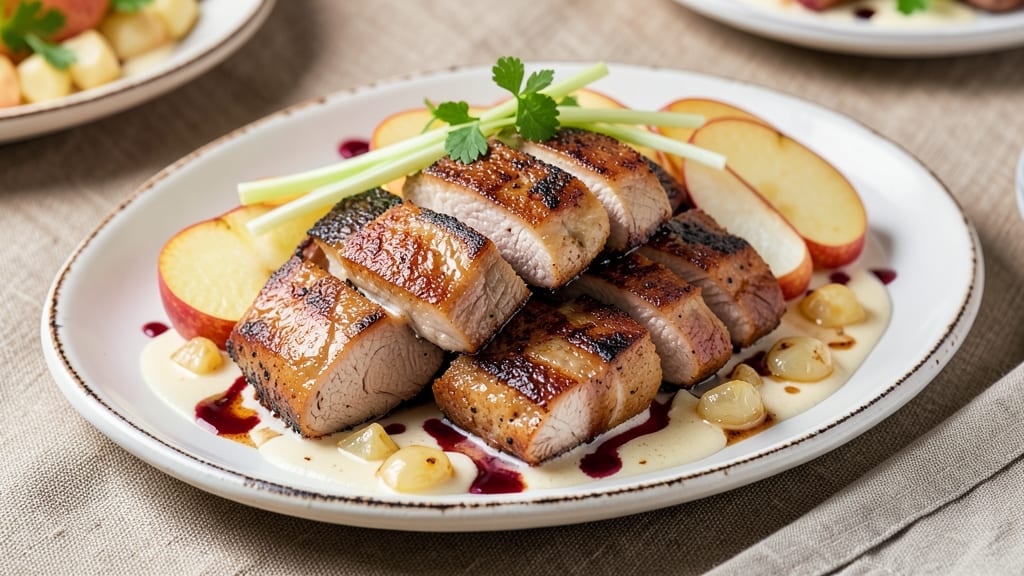
This creamy pork and apple recipe transforms humble ingredients into a restaurant-worthy dish that balances rich, velvety pork with sweet-tart apple crunch. After years of perfecting braising techniques in my Atlanta kitchen, I’ve developed a method that delivers melt-in-your-mouth pork shoulder paired with tender apples and crisp celery.
The secret? A slow cook that builds depth while keeping the meat juicy and the sauce irresistibly smooth.
What makes this dish special is how the flavors come together—tender pork infused with warm spices, apples that caramelize just enough to add natural sweetness, and celery that adds a satisfying crunch.
Unlike other braised pork recipes, this one doesn’t rely on heavy cream; instead, it uses apple cider and a touch of Dijon for a lighter, more balanced sauce. The result is a dish that’s hearty enough for a weeknight dinner but elegant enough for company.
By the time you’re done, you’ll have a platter of creamy, slow-braised pork slices resting on a bed of apples and celery, all bathed in a sauce that’s rich yet not overpowering.
The pork falls apart at the touch of a fork, while the apples and celery add texture and brightness. This is the kind of meal that feels like a hug—comforting, familiar, and deeply satisfying.
Serve it with crusty bread to soak up every last bit of sauce or pair it with a simple green salad to balance the richness. The leftovers reheat beautifully, making it perfect for meal prep. Let’s get cooking—this dish is worth every minute of slow braising.
Ingredients for creamy pork and apple
Six servings of velvety pork, sweet apples, and crisp celery—all you need for a dish that tastes like a hug.
| Ingredient | Amount | Notes |
|---|---|---|
| Pork Shoulder 🍖 | 3 lb | Bone-in for flavor, cut into 2-inch chunks |
| Honeycrisp Apples 🍎 | 4 whole | Peeled, cored, sliced into 1/2-inch wedges |
| Celery Stalks 🧅 | 4 whole | Trimmed, cut into 1-inch pieces |
| Yellow Onion 🧅 | 1 whole | Peeled, sliced into 1/2-inch rings |
| Garlic Cloves 🧄 | 6 cloves | Peeled, smashed |
| Apple Cider 🍏 | 2 cups | Unfiltered for depth of flavor |
| Dijon Mustard 🍯 | 1 tbsp | For tangy balance |
| Thyme Sprigs 🌿 | 4 whole | Fresh, stems removed |
| Bay Leaves 🌿 | 2 whole | For subtle earthiness |
| Beef Broth 💧 | 2 cups | Low-sodium preferred |
| Olive Oil 🫒 | 2 tbsp | Extra-virgin for richness |
| Brown Sugar 🍚 | 2 tbsp | Enhances caramelization |
| Salt 🧂 | 1 ½ tsp | Diamond Crystal preferred |
| Black Peppercorns 🌶️ | 1 tsp | Freshly cracked |
The pork shoulder is the star here—bone-in for maximum flavor, but don’t stress if you grab boneless. Costco or your butcher’s counter usually have it pre-cut, which saves time. Look for good marbling—those little fat streaks are what keep the meat juicy during the long cook. If you’re buying a whole shoulder, ask for it cut into 2-inch chunks before you leave. Apples should be firm and sweet—Honeycrisp or Fuji work best, but Granny Smith adds a nice tart contrast if you prefer. Celery? The fresher, the better—those crisp stalks add the perfect crunch at the end.
No apple cider? Unsweetened apple juice works in a pinch, but you’ll lose some depth. Fresh thyme is ideal, but dried thyme at one-third the amount gets you close. The Dijon mustard is non-negotiable—it’s what gives the sauce that subtle tang that balances the sweetness. If you’re feeling fancy, swap the beef broth for vegetable broth for a lighter touch. Brown sugar can be swapped for white sugar, but it won’t caramelize as nicely. And if you’re out of olive oil, avocado oil works just as well—just don’t use anything with a strong flavor like walnut oil.
This dish tastes even better the next day, so double the batch if you’re feeding a crowd. The pork keeps for 4-5 days in the fridge, and the sauce freezes beautifully for up to 3 months. I always portion it into containers with a little extra sauce on top—just reheat in the microwave for 2-3 minutes, stirring once. The apples and celery can be prepped ahead and stored in the fridge for up to 2 days before adding to the braise. Trust me, the extra time is worth it for that fall-apart texture.
Why You'll Love This Recipe
- One-Pan Magic: I swear by this recipe—just brown the pork, toss in the chopped apples, celery, and onion, then let the slow cooker do the work. No dirty pots, no fuss, and honestly? That’s my kind of meal.
- Sweet-Savory Balance: The Honeycrisp apples add a bright crunch that cuts through the creamy pork, while the garlic and onion deepen every bite. It’s rich but never heavy, and that caramelized edge on the pork? Chef’s kiss.
- Lunchbox Hero: Between us, this is my secret weapon for meal prep. The pork stays tender for days, and the apples hold their shape—perfect for sandwiches, wraps, or even cold salads. My kids beg for leftovers, and I don’t blame them.
- Budget-Friendly Feast: Pork shoulder is cheap, and a few apples stretch a long way. I’ve fed six people for under $15, and the flavor? Ridiculously good. Plus, it’s the kind of dish that tastes even better the next day—so no wasted ingredients.
Step-by-step instructions for slow-braised pork and apple
This method delivers melt-in-your-mouth pork with sweet apples and celery crunch—every bite is rich and satisfying.
Sear the Pork Shoulder for Deep Flavor
Heat a large Dutch oven over medium-high heat and add 2 tablespoons olive oil. Working in batches if needed, add the 3 lb pork shoulder cut into 2-inch chunks, arranging them in a single layer. Let each piece sear undisturbed for 3-4 minutes until deeply browned on all sides. This step creates the Maillard reaction that builds rich, caramelized flavor.
As you work, sprinkle the pork with 1.5 teaspoons salt and 1 teaspoon freshly cracked black peppercorns—don't skip this. The seasoning needs time to penetrate during the long braise. Once all pieces are browned, transfer them to a plate and set aside temporarily. Here's the thing—don't crowd the pan or the pork will steam instead of sear.
Build the Flavor Base with Aromatics
In the same Dutch oven, add 1 whole yellow onion sliced into ½-inch rings, 4 whole celery stalks cut into 1-inch pieces, and 6 cloves smashed garlic. Cook for 5-6 minutes, stirring occasionally, until the vegetables soften and the garlic becomes fragrant. You'll smell that sweet, nutty aroma—this is where the foundation of your dish begins.
Next, stir in 2 tablespoons brown sugar and 1 tablespoon Dijon mustard. The sugar will help caramelize the vegetables while the mustard adds a subtle tang that balances the richness. Cook for another 2 minutes, stirring constantly, until the sugar begins to melt and the mixture smells like a sweet, savory perfume. This is the moment that matters: don't rush it or the flavors won't meld properly.
Deglaze and Combine All Ingredients
Pour in 2 cups apple cider and scrape up all the browned bits from the bottom of the pot with a wooden spoon. These bits are packed with flavor—don't miss this step. Add the seared pork back to the pot along with 4 whole thyme sprigs and 2 whole bay leaves. Bring everything to a gentle simmer over medium heat, then reduce heat to low.
Here's where it gets fun—cover the pot and let it cook for 2 hours, stirring occasionally. You want the pork to become fork-tender but still hold its shape. After 2 hours, add 2 cups beef broth and 4 whole Honeycrisp apples sliced into ½-inch wedges. The apples will soften slightly but retain their shape, adding sweetness and texture. Return to a simmer and cook uncovered for another 30-45 minutes until the pork is fork-tender and the sauce has thickened.
Adjust Consistency and Serve Warm
Once the pork is tender, remove it from the pot and set it aside. Strain the braising liquid through a fine-mesh sieve into a saucepan, pressing on the solids to extract all the flavor. Return the strained liquid to the pot and simmer over medium heat until it reaches your desired consistency—it should coat the back of a spoon but still be saucy enough to cling to the pork.
Taste and adjust seasoning with more salt or pepper if needed. The sauce should be rich, slightly sweet, and tangy from the mustard. Return the pork to the pot and let it soak up the sauce for 5 minutes. Serve immediately with the apples and celery, letting everyone scoop up that creamy, flavorful sauce. The pork should pull apart easily with a fork, and the apples should be tender with just a hint of crunch.
Pro Tips For Making Creamy Pork And Apple
- Brown the Pork First: I learned this the hard way—skipping the sear means your pork stays bland no matter how much cream you add. Get that shoulder screaming hot in a dry pan for 8-10 minutes, turning it until it’s deep golden in spots. The crust locks in flavor when the sauce comes later.
- Slice Apples Thin and Toss in Lemon: Honeycrisp apples turn to mush if you’re not careful. Cut them paper-thin (about 1/8-inch slices) and immediately toss with 1 teaspoon of lemon juice while you prep the rest. This keeps them crisp enough to cut through the creaminess—no one wants a watery sauce.
- Don’t Skip the Celery: I know, it’s easy to half the recipe when celery’s involved, but resist the urge. The celery stalks (especially the leafy ends) add a bright, herbal note that balances the pork’s richness. Roughly chop the whole stalk—no need to peel—and let it sweat down with the onions.
- Start with a Cold Pan: This isn’t the prettiest method, but it’s the tastiest. Add your onions, celery, and garlic to a cold pan with a splash of water or stock, then turn the heat to medium. This slow, even cook prevents burning and lets the flavors meld before the pork even hits the pot—no sad, charred bits here.
Essential equipment for perfect results
Dutch Oven
This is my go-to tool for braising—it’s heavy enough to distribute heat evenly and deep enough to handle large cuts of meat without boiling over. I swear by a Lodge 6-quart Dutch oven for its durability and even heat retention.
If you don’t have one, a heavy-bottomed pot with a tight-fitting lid will work, but you might need to adjust cooking times slightly. The key is a pot that can handle medium-low heat for hours without scorching. 🔥
Meat Thermometer
A Thermoworks Smoke thermometer is non-negotiable for this recipe. You’ll need it to monitor the pork’s internal temperature—aim for 203°F for perfect tenderness. I’ve ruined plenty of pork by guessing, so invest in a reliable probe thermometer.
The instant-read version is perfect for checking doneness without opening the lid and losing heat. Trust me, this is the difference between "good" and "showstopper" pork.
Wooden Spoon
Use a long-handled wooden spoon (I love the OXO Good Grips version) to stir the braise without scratching your Dutch oven. Wood won’t conduct heat like metal, so it won’t burn the sauce.
Plus, it’s gentle on your pot’s seasoning. I keep one dedicated to braising—it develops its own patina over time, which actually helps release flavors as you cook. 🌟
Fine-Mesh Sieve
Straining the braising liquid through a fine-mesh sieve (like the OXO Good Grips model) ensures a silky-smooth sauce without any gritty bits. This step is crucial for that restaurant-quality finish. Press the solids gently with a spoon to extract every drop of flavor.
I’ve tried cheesecloth, but it’s messy and doesn’t strain as finely. A good sieve makes all the difference in the final texture.
Knife Skills
Sharp knives are your best friend for prepping this dish efficiently. A Wüsthof 8-inch chef’s knife is my workhorse for chopping the pork into 2-inch chunks and slicing the apples and celery evenly.
Dull knives make prep frustrating—and dangerous. I recommend honing your knife regularly with a Shun Premier whetstone to keep it razor-sharp. Even edges mean cleaner cuts and safer handling. 💡
Slow Cooker Option
If you’re short on time, a 6-quart slow cooker (like the Hamilton Beach) works beautifully for the braising phase. Transfer the seared pork, aromatics, and liquids to the slow cooker, then cook on low for 8 hours or high for 5 hours.
The texture might be slightly different, but it’s still delicious. Just
Nutrition facts
Frequently asked questions
Can I use pork tenderloin instead of pork shoulder for this recipe?
Pork tenderloin is leaner and cooks much faster than pork shoulder, so it won't work well for this braised dish. The shoulder's fat and connective tissue break down beautifully during the slow cook, creating that melt-in-your-mouth texture. If you're set on using tenderloin, consider a quick pan-seared version with apples instead—it'll be tender but won't have the same rich, creamy quality from braising.
What if I can't find Honeycrisp apples? What's the best substitute?
Any crisp, sweet apple works—Fuji, Gala, or Pink Lady are great choices. For a tangier balance, try Granny Smith (they'll stay firmer during cooking). Avoid mealy varieties like Red Delicious. The key is using apples that hold their shape while adding sweetness to the braise. If you're using tart apples, you might want to reduce the brown sugar slightly to balance flavors.
How can I make this dish ahead of time for meal prep?
This recipe actually tastes better the next day! Cook it completely, then refrigerate for up to 4-5 days or freeze for 3 months. Reheat gently in a saucepan with a splash of water or broth to restore moisture. The pork will be even more tender, and the flavors will have melded beautifully. I recommend portioning it into containers with extra sauce on top for easy reheating.
Can I make this dish in an Instant Pot or electric pressure cooker?
Use the sauté function to sear the pork first, then switch to high pressure for 45 minutes after adding all ingredients. Quick-release the pressure, then finish with the apples for 10 minutes on high heat. The texture will be slightly different (more tender, less fall-apart), but still delicious. Just be careful not to overcook the apples—they'll soften faster under pressure.
What's the best way to serve this dish for a special occasion?
For a restaurant-worthy presentation, arrange the creamy pork slices on a platter with the apples and celery artfully placed around them. Drizzle with extra sauce and garnish with fresh thyme sprigs. Serve with crusty sourdough bread for dipping, and pair with a crisp white wine like Sauvignon Blanc or a light red like Pinot Noir. The contrast of warm pork with cool wine makes it feel extra special.