
Sauces & Condiments
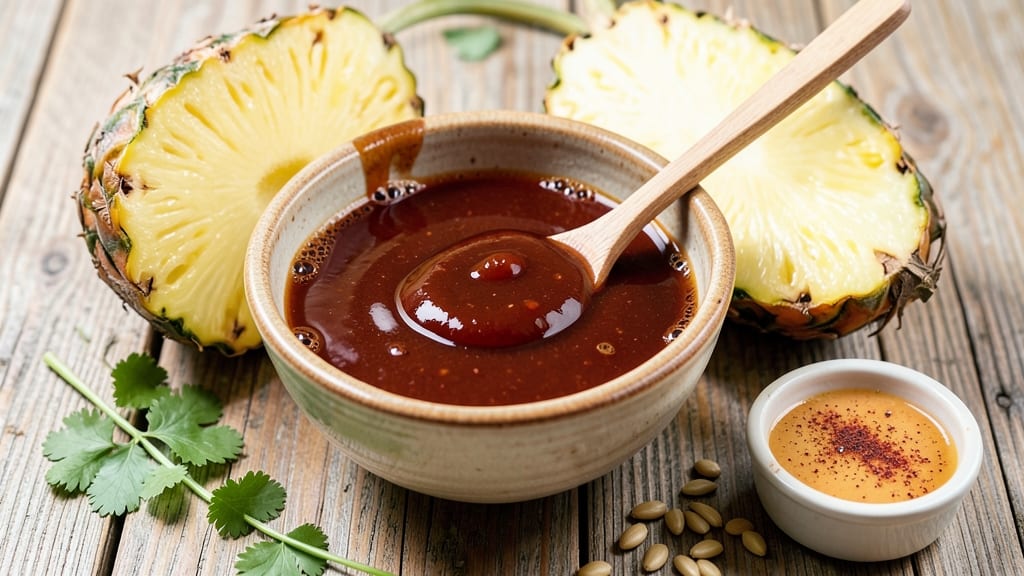
This BBQ sauce recipe with pineapple juice transforms your backyard cookouts with a bold, caramelized glaze that balances sweet, tangy, and smoky flavors. The pineapple juice adds a bright tropical twist that tenderizes meat while creating a sticky, glossy finish.
I developed this sauce after years of experimenting with commercial blends that always fell short—this version delivers depth without overpowering the natural taste of the meat.
The secret lies in the slow simmer, where pineapple juice melds with brown sugar and spices to create a sauce that caramelizes beautifully on the grill or in the oven.
Unlike traditional BBQ sauces, this one stays vibrant and tangy even after hours of cooking, thanks to the acidity of the pineapple. It’s perfect for glazing ribs, chicken, or pork chops, but also works as a dipping sauce for fries or wings.
With just 10 simple ingredients, this sauce comes together in under 30 minutes and keeps well in the fridge for up to 2 weeks. The pineapple juice not only adds flavor but also helps prevent the sauce from becoming too thick, ensuring a smooth, pourable consistency every time.
Whether you're grilling for a crowd or slow-cooking a weekend project, this sauce elevates every bite with its tropical-sweet profile.
For best results, let the sauce reduce slightly before applying—this intensifies the flavors and creates that signature caramelized crust. Store leftovers in an airtight container, and trust me, you’ll reach for this again and again. Let’s make it.
Ingredients for bbq sauce recipe with pineapple juice
Ten simple ingredients create a tropical BBQ sauce that caramelizes beautifully on meat.
| Ingredient | Amount | Notes |
|---|---|---|
| Pineapple Juice 🍍 | 1 cup | Freshly squeezed preferred |
| Brown Sugar 🍚 | ½ cup | Light or dark variety |
| Ketchup 🍅 | ½ cup | High-quality, no artificial flavors |
| Apple Cider Vinegar 🍎 | ¼ cup | For tangy brightness |
| Tomato Paste 🍅 | 2 tbsp | Smooth, no added salt |
| Smoked Paprika 🌶️ | 1 tbsp | For smoky depth |
| Garlic Powder 🧄 | 1 tsp | Freshly ground for best flavor |
| Ground Black Pepper 🌶️ | ½ tsp | Freshly cracked |
| Onion Powder 🧅 | ½ tsp | Adds subtle sweetness |
| Salt 🧂 | 1 tsp | Kosher or sea salt |
The pineapple juice is the star here—freshly squeezed has the best flavor, but canned works in a pinch. Dole or Del Monte brands are reliable for canned juice, but if you're using fresh, grab a ripe pineapple from Costco or Trader Joe's—they always have good quality. The brown sugar should be light for a smoother finish, but dark adds a deeper molasses flavor. Domino or C&H are solid pantry staples. For ketchup, Heinz 57 Varieties is the classic choice, but any no-artificial-flavors brand will do.
No pineapple juice? Coconut water or orange juice can mimic the tropical vibe, though the flavor won't be identical. Skip the vinegar? Lemon juice at half the amount works, but you'll lose that caramelized depth. Tomato paste is non-negotiable for thickness—Muir Glen is my go-to, but any smooth paste will work. The spices can be adjusted: add cayenne for heat or cumin for earthiness. If you're using canned tomato paste, shake it well—settled paste can taste uneven.
This sauce thickens as it cools, so stir in a splash of water if it gets too stiff. Keeps for 2 weeks in the fridge and freezes beautifully for 6 months. I always make extra—it disappears fast. Store in a glass jar with a tight lid, and shake before each use to redistribute the spices. Perfect for glazing ribs, chicken, or even drizzling over grilled veggies.
Why You'll Love This Recipe
- Pantry Magic: Honestly, I keep this sauce in my fridge because it’s made from stuff I already have—no weird ingredients or last-minute grocery runs. Just open the pantry, measure, and simmer. The pineapple juice cuts through the sweetness of the brown sugar, so it’s never cloying, just perfectly balanced.
- Sweet-Tart Magic: Between us, the apple cider vinegar and tomato paste give this sauce depth that cheap store-bought versions lack. The pineapple juice adds a bright, almost tropical tang that makes it way more interesting than your average BBQ sauce—like a grown-up version of what you love.
- Weeknight Wonder: I use this on grilled chicken for Taco Tuesday, drizzle it over baked beans for game day, and even toss it with roasted veggies when I’m lazy. It’s the one sauce that works everywhere, no matter what’s on the menu.
- Budget Stretch: A single batch lasts me weeks because it’s so versatile—I’ll use half on burgers and the rest on wings, then finish it with a quick stir-fry. Plus, brown sugar and ketchup are cheap staples, so I’m not breaking the bank for something this good.
Step-by-step instructions for tropical BBQ sauce
Here's how to blend sweet, tangy, and smoky flavors into a sauce that caramelizes beautifully on ribs or chicken.
Combine Wet Ingredients in a Saucepan
In a medium saucepan, pour in the 1 cup pineapple juice and 0.5 cup brown sugar. Stir until the sugar dissolves completely—this prevents grainy texture in your finished sauce. Add the 0.5 cup ketchup and 0.25 cup apple cider vinegar, then bring everything to a gentle simmer over medium heat. You'll see small bubbles form around the edges, but don't let it boil vigorously yet.
This initial simmer helps the sugars start caramelizing, which builds that deep, rich flavor. If you notice the mixture thickening too quickly, reduce the heat slightly. The pineapple juice will add natural sweetness while the vinegar cuts through it, creating that perfect tropical tang.
Add Tomato Paste and Spices
Once the mixture is simmering gently, stir in the 2 tbsp tomato paste until fully dissolved. This thickens the sauce and adds a subtle umami depth. Add the 1 tbsp smoked paprika, 1 tsp garlic powder, 0.5 tsp onion powder, 0.5 tsp ground black pepper, and 1 tsp salt. Stir well to distribute the spices evenly throughout the sauce.
Here's where the magic happens—the smoked paprika gives that signature BBQ smokiness, while the garlic and onion powders add warmth. The salt enhances all the flavors, so don't skip this step. Let the sauce simmer uncovered for 10 minutes, stirring occasionally, until it thickens noticeably. You're looking for a consistency that coats the back of a spoon but still flows smoothly.
Simmer Until Thick and Glossy
Continue simmering the sauce for an additional 15-20 minutes, stirring frequently. The longer it simmers, the deeper the caramelized flavor becomes. You'll notice the sauce darkening slightly and developing a glossy sheen—this is your cue that it's ready. If the sauce thickens too much, add 1-2 tablespoons of water to reach your desired consistency.
I like to taste it at this stage to check the balance. It should be sweet, tangy, and slightly smoky with a hint of garlic. If it needs more sweetness, add a touch of brown sugar. If it's too tangy, a splash of pineapple juice helps. The goal is a well-rounded flavor that caramelizes beautifully on meat.
Cool and Store for Maximum Flavor
Once the sauce reaches your desired consistency, remove it from heat and let it cool to room temperature. This resting period allows the flavors to meld together. For the best results, transfer the sauce to an airtight container and refrigerate for at least 2 hours before using it on meat. The flavors deepen as it chills, making it even more delicious.
This sauce keeps well in the refrigerator for up to 2 weeks or can be frozen for 3 months. When you're ready to use it, give it a quick stir—it'll thicken slightly as it cools, so you may want to thin it with a splash of water or pineapple juice before brushing it onto your ribs, chicken, or pulled pork. The tropical tang pairs perfectly with smoky meats, creating a flavor profile that's both bold and balanced.
Pro Tips For Making Bbq Sauce Recipe With Pineapple Juice
- Simmer Slow and Steady: Pineapple juice burns faster than you’d expect—keep the heat at a gentle simmer (medium-low) once everything’s combined. I learned this the hard way when my first batch turned into a sticky, caramelized mess. Let it bubble quietly for at least 20 minutes, stirring occasionally, so the flavors meld without scorching.
- Reduce the Juice First: Before adding ketchup or vinegar, boil the pineapple juice down by half in a separate pan. This concentrates the sweetness and cuts the watery finish that pineapple juice can leave behind. Think of it as pre-cooking the fruit’s brightness into the sauce.
- Balance the Vinegar Gradually: Apple cider vinegar is potent—start with half the amount called for and taste as you go. Too much upfront and your sauce will taste harsh; too little and the tang gets lost in the sugar. Add it in small splashes, then let the sauce sit for 5 minutes before deciding if you need more.
- Skip the Pre-Mixed Tomato Paste: Use unsweetened tomato paste instead of the canned kind—it’s thicker and won’t dilute your sauce with extra water or sugar. A single 6-ounce can is enough; dump it in whole and stir it in vigorously to break up clumps. (Yes, even if it looks weird at first.)
Creative variations of this bbq sauce recipe with pineapple juice
Tropical Fruit Fusion
Swap the pineapple juice for ½ cup mango puree and ½ cup orange juice to create a mango-habanero BBQ sauce. Use 1 tsp habanero powder (or 1 fresh habanero, finely minced) for heat, and reduce the brown sugar to ¼ cup.
This fusion adds a fruity heat that works amazingly on grilled shrimp skewers or spicy pork ribs. 🌶️
For a guava-ginger twist, replace the pineapple juice with ½ cup guava nectar and add 1 tbsp grated fresh ginger with the spices. The ginger brightens the sauce while the guava adds a floral sweetness that pairs beautifully with caramelized chicken thighs.
Let the sauce simmer for an extra 5 minutes to let the ginger infuse fully.
Spicy Caribbean Style
Transform this sauce into a Caribbean-inspired glaze by adding 1 tbsp soy sauce and 1 tsp ground allspice (pimento). Replace the smoked paprika with 1 tsp jerk seasoning (store-bought or homemade).
This version works perfectly as a dipping sauce for jerk chicken or as a glaze for grilled pineapple slices. The allspice gives it that warm, slightly nutty depth that’s classic in Caribbean cuisine.
For extra richness, stir in 1 tbsp melted butter at the end. This creates a lighter, glossier finish that’s ideal for brushing onto grilled mahi-mahi or shrimp tacos.
The butter also helps balance the acidity from the apple cider vinegar, making the sauce more versatile for both sweet and savory dishes.
Smoky Maple-Pineapple
Replace the brown sugar with ½ cup pure maple syrup and add ½ tsp liquid smoke (like La Choy) for a deep, woodsy flavor.
This variation is perfect for smoked meats or grilled ribs, as the maple syrup caramelizes beautifully while the liquid smoke enhances the smoky notes. The pineapple juice keeps the tropical brightness, but the maple adds a subtle earthiness that rounds out the sauce.
For a maple-bourbon twist, stir in 1 tbsp bourbon (like Buffalo Trace) after removing the sauce from heat. The bourbon adds a warm, caramel-like depth that pairs exceptionally well with pork shoulder or pulled pork sandwiches.
Let the sauce sit for 10 minutes after adding the bourbon to allow the alcohol to cook off fully.
Sweet & Tangy Variations
For a strawberry-balsamic glaze, replace the pineapple juice with ½ cup strawberry puree (blend fresh or frozen strawberries) and add 2 tbsp balsamic vinegar. This sauce is lighter and brighter, perfect for grilled chicken breasts or vegetable kebabs.
The balsamic vinegar adds a complex tang that cuts through the sweetness of the strawberries.
For a peach-rosemary version, use ½ cup peach nectar and add ½ tsp dried rosemary with the spices. The rosemary gives a herbal, slightly piney note that complements the peach’s natural sweetness.
This sauce is ideal for grilled peaches or rosemary-lamb chops, creating a harmonious sweet-savory balance. Simmer for an extra 3 minutes to let the rosemary infuse.
Nutrition facts
Frequently asked questions
Can I substitute canned pineapple juice for fresh?
Yes, but fresh pineapple juice gives the best flavor! Canned pineapple juice works in a pinch—look for brands like Dole or Del Monte that don't add extra sugar. For a richer taste, blend fresh pineapple chunks and strain, then use 1 cup of the juice. The fresh version has more natural enzymes that tenderize meat beautifully.
How do I adjust the sweetness if I don't like it too sugary?
Start by reducing the brown sugar to ¼ cup instead of ½ cup. For extra tang, add 1 extra tablespoon of apple cider vinegar. If you prefer a sweeter sauce, stir in 1 tablespoon of honey at the end. Always taste as you go—this sauce is very adjustable!
Can I make this sauce without tomato paste?
Replace the 2 tbsp tomato paste with ½ cup extra ketchup or ¼ cup tomato sauce. For a deeper flavor, add 1 tsp soy sauce or ½ tsp Worcestershire sauce. The sauce will be slightly thinner but still delicious—just simmer it 5 extra minutes to thicken.
Why did my sauce turn out too thick?
This happens when the sauce reduces too much during simmering. To fix it, stir in 1-2 tablespoons of water or pineapple juice while warm. For prevention, simmer at low heat and stir frequently. If the sauce thickens after cooling, reheat gently and thin with liquid before using.
What's the best way to use this sauce on ribs?
Apply a thin layer to ribs during the last 30-45 minutes of cooking. For extra caramelization, brush on 2-3 times in the final 15 minutes. The pineapple juice helps tenderize, so it works perfectly with fall-off-the-bone ribs. For competition-style ribs, use this sauce as a mop sauce during cooking and finish with a glaze.