
Sauces & Condiments
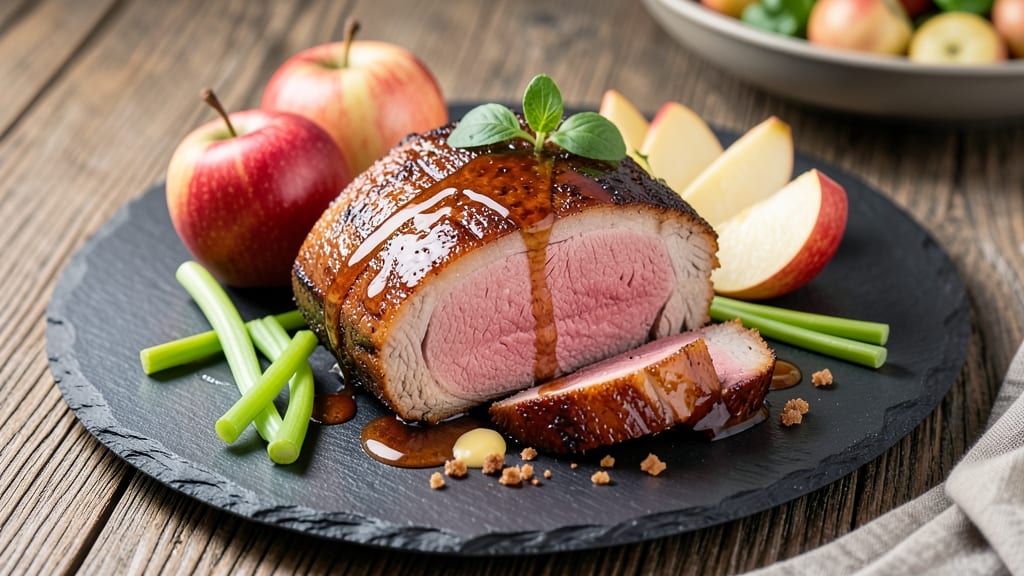
This apple glazed pork tenderloin recipe delivers melt-in-your-mouth tenderness with a caramelized apple-celery glaze that balances sweetness and savory perfection. 💛 As a pitmaster who's spent years perfecting pork, I can tell you this technique transforms simple ingredients into a restaurant-worthy centerpiece that pairs beautifully with seasonal sides.
The secret lies in searing the pork first to lock in juices, then simmering it with a homemade glaze made from apples, celery, and just the right amount of brown sugar. This method ensures the pork stays tender while developing a crisp edge that contrasts beautifully with the soft interior.
The glaze reduces to a sticky, caramelized finish that clings perfectly to every bite.
What makes this dish truly special is how the apple's natural sweetness complements the pork's richness without overpowering it. The celery adds subtle depth, creating a glaze that's complex yet approachable for weeknight dinners. Plus, the recipe scales effortlessly—whether you're feeding a family of four or entertaining a crowd.
Serve with roasted root vegetables or creamy mashed potatoes to round out the meal. The glaze also works beautifully on chicken or salmon if you want to mix up your protein game. Let's get cooking—this pork tenderloin will have everyone asking for seconds.
Ingredients for apple glazed pork tenderloin
Pork tenderloin and apples star in this caramelized glaze that balances sweetness with savory perfection.
| Ingredient | Amount | Notes |
|---|---|---|
| Pork Tenderloin 🥩 | 1 ½ lb | Center-cut for even cooking |
| Honeycrisp Apples 🍎 | 2 medium | Peeled, cored, sliced thin |
| Celery Stalks 🧅 | 3 whole | Trimmed, sliced thin |
| Brown Sugar 🍚 | ½ cup | Packed, light brown preferred |
| Apple Cider Vinegar 🍶 | ¼ cup | For tangy balance |
| Unsalted Butter 🧈 | ½ cup | Cold, cubed for searing |
| Kosher Salt 🧂 | 1 ½ tsp | Diamond Crystal preferred |
| Freshly Ground Black Pepper 🌶️ | 1 tsp | For seasoning pork |
| Fresh Thyme Leaves 🌿 | ¼ cup | Chopped, or 1 tbsp dried |
| Granulated Garlic 🧄 | 1 tsp | For extra flavor punch |
| Water 💧 | ½ cup | For deglazing pan |
The pork tenderloin needs to be center-cut and uniform—ask your butcher for a single piece if unsure. Costco or Whole Foods usually carry the best quality, but any well-marbled tenderloin works. Honeycrisp apples are ideal for their crisp texture and sweetness, but Fuji or Gala hold up well too. Celery adds subtle depth—don't skip it, even if you're tempted to leave it out. For the brown sugar, light brown gives a better caramelized finish than dark. If you can't find it, use white sugar plus an extra pinch of molasses.
No Honeycrisp? Granny Smith adds tartness that cuts through the richness. Apple cider vinegar can be swapped for red wine vinegar at half the amount. Butter substitutes? Olive oil or coconut oil work, but butter gives that signature richness. Fresh thyme is best, but dried works at one-third the amount. The glaze reduces fast, so don't overcrowd the pan. If your pork is larger than 1.5 lbs, just increase the glaze ingredients proportionally—this recipe scales perfectly for crowds.
Pork stays best 1-2 days in the fridge once cooked—reheats beautifully with a splash of water. The glaze thickens as it cools, so store it in an airtight container with parchment between layers. Freeze portions for up to 3 months. I always make extra glaze—it's perfect for drizzling over roasted veggies or even grilled chicken. The apples and celery can be prepped ahead and refrigerated for 2 days before cooking.
Why You'll Love This Recipe
- One-Pan Magic: I swear by this for lazy nights—just toss everything on a sheet pan, and the apples caramelize right alongside the pork. No pots, no pans, no stress.
- Sweet-Savory Balance: That crispy apple glaze? It’s the perfect mix of tart vinegar, buttery Honeycrisp sweetness, and a touch of brown sugar depth. The celery adds this bright, herby contrast that keeps it from being too heavy.
- Weeknight to Holiday: Between us, this is my go-to for dinner parties and Tuesday dinners. Slice the pork thin for sandwiches, serve it whole for a showstopper, or even shred it into tacos the next day. It works everywhere.
- Budget-Friendly Feast: Pork tenderloin stretches far with the apples and celery bulking it up, and the glaze uses pantry staples. Honestly, it’s the kind of recipe where I double the batch just to have leftovers—because it’s that good.
Step-by-step instructions for apple glazed pork tenderloin
This method delivers melt-in-your-mouth pork with a perfect caramelized glaze every time.
🔥 Step 1: Sear the Pork for Maximum Flavor
Pat the 1.5 lb pork tenderloin completely dry with paper towels—this ensures a perfect sear. Season both sides generously with 1.5 tsp kosher salt and 1 tsp freshly ground black pepper, pressing it into the meat so it adheres well.
Heat a large oven-safe skillet over medium-high heat until very hot. Add the 0.5 cup unsalted butter, cubed, and let it melt completely. Once foaming subsides, add the pork and sear for 3-4 minutes per side until deep golden brown and cooked to 145°F internally. Here's the thing—don't move it around too much during searing. Let it develop that crust without disturbing it.
🍳 Step 2: Build the Caramelized Apple-Celery Glaze
Remove the pork from the skillet and set it aside on a plate. In the same skillet, add 2 medium peeled, cored, and thinly sliced Honeycrisp apples and 3 whole trimmed, thinly sliced celery stalks. Cook for 5-6 minutes until the apples begin to soften and the celery turns tender-crisp.
Stir in 0.5 cup packed brown sugar and 1 tsp granulated garlic, letting it caramelize slightly for 1-2 minutes. Then pour in 0.25 cup apple cider vinegar and 0.5 cup water, scraping up any browned bits from the bottom of the pan. This deglazing step captures all that porky flavor. Bring to a gentle simmer and let it reduce by half—about 5-7 minutes—until it thickens into a glossy glaze.
🥘 Step 3: Finish with Thyme and Glaze the Pork
Return the pork to the skillet and spoon the glaze generously over the top. Sprinkle with 0.25 cup chopped fresh thyme leaves and cover the skillet with a lid. Transfer to a preheated 375°F oven and bake for 15-20 minutes until the pork reaches 145°F internally and the glaze is thick and sticky.
I know it seems like too much glaze, but trust me—it'll coat the pork perfectly. The thyme adds an earthy depth that balances the sweetness of the apples and the tang of the vinegar. Watch for the glaze to bubble and thicken as it bakes, creating that perfect caramelized crust.
⏰ Step 4: Rest and Serve with Perfect Glaze
Remove the pork from the oven and let it rest for 10 minutes before slicing. This resting period is crucial—it allows the juices to redistribute so every bite stays tender. During this time, you can use a spoon to baste any remaining glaze over the top of the pork if you're feeling fancy.
Slice the pork into ½-inch thick medallions and serve immediately with the caramelized glaze spooned over the top. Each bite should deliver perfectly tender pork with a sweet-tangy glaze that has just the right crunch from the apples and celery. The glaze should be thick enough to coat the back of a spoon but still drizzle slightly when poured.
Pro Tips For Making Apple Glazed Pork Tenderloin
- SEAR FIRST, GLaze LATER: Start with a screaming-hot pan—no waiting for it to warm up. Sear the pork tenderloin for 3-4 minutes per side until deep golden brown before pulling it out; that crust locks in flavor when the apples later melt into the pan. (Yes, even if you’re impatient like me.)
- CORE THE APPLES: Use a melon baller or small spoon to hollow out the centers of the apples—leave about ¼-inch-thick walls so they hold shape. This keeps them from turning to mush while roasting and lets the glaze soak in evenly. (I learned this the hard way when my first batch collapsed into a sad, soupy mess.)
- DON’T SKIP THE VINEGAR: Add the apple cider vinegar to the glaze before it hits the pan—it cuts through the sweetness and tenderizes the pork as it cooks. If you forget, toss the raw pork in 1 tablespoon of vinegar for 10 minutes before searing; it’s a game-changer for texture.
- REST THE PORK UNDER FOIL: After roasting, tent the pork with foil and let it sit for 5-10 minutes—this is when it finishes cooking and stays juicy. Cutting into it too soon means dry, stringy meat. (Your future self will thank you, even if you’re tempted to serve it immediately.)
Storing and reheating this recipe
Refrigerator Storage
Store your cooked pork tenderloin in an airtight container with a layer of parchment paper between slices to prevent sticking. I always use glass containers because they keep the glaze from absorbing plastic odors.
Keep it refrigerated at 40°F or below for up to 3 days—the flavors actually deepen as the glaze sets slightly. 💛
When reheating, I recommend adding 2-3 tablespoons of water or apple cider to the container to prevent drying. This keeps the glaze from becoming too thick and restores its natural moisture. The pork stays incredibly tender when reheated this way.
Freezer Storage
For longer storage, freeze the pork in single-serving portions wrapped tightly in plastic wrap, then placed in quart-sized freezer bags. I squeeze out all the air to prevent freezer burn—this keeps the glaze vibrant for up to 3 months. Label each bag with the date to track freshness.
Thaw overnight in the fridge before reheating. Never microwave directly from frozen—this causes uneven heating and can make the glaze rubbery. Instead, thaw completely first, then reheat gently on the stovetop.
Stovetop Reheating
My preferred method is reheating in a heavy-bottomed skillet over medium-low heat. Add 2 tablespoons of water or broth to the pan, then place the pork slices in a single layer.
Cover with a lid and heat for 4-5 minutes, stirring occasionally, until reaching 165°F internal temperature. 🔥
This method preserves the glaze's texture and prevents the pork from drying out. If the glaze looks too thick, add another splash of liquid and let it reduce again. The result should be just as sticky and flavorful as when you first made it.
Microwave Safety
For quick reheating, use the microwave on 50% power in 1-minute intervals. Place the pork on a microwave-safe plate with a damp paper towel covering it loosely. After each interval, stir the glaze and check the temperature—it should reach 165°F without overcooking.
Be careful not to overheat the glaze, as it can become grainy. If this happens, simply return it to the stovetop for a quick reduction with a splash of water. The microwave method is convenient, but stovetop reheating always gives better results.
Glaze Preservation
Save any leftover glaze in a small airtight container in the fridge for up to 1 week. It’s perfect for drizzling over roasted vegetables, grilled chicken, or even pancakes. I often double the glaze recipe when I make this dish because it’s so versatile. 💡
If the glaze thickens too much in the fridge, thin it with 1 teaspoon of water or apple cider vinegar before reheating. This brings back its natural gloss and stickiness, making it just as delicious as the first time.
Nutrition facts
Frequently asked questions
Can I use other fruits instead of apples in the glaze?
While Honeycrisp apples work best, you can substitute with pears for a softer texture or peaches for a more pronounced sweetness. For tartness, try cranberries (reduce cooking time by half) or plums. Just adjust the sugar slightly—reduce by 1-2 tablespoons if using naturally sweeter fruits.
Why does my pork turn out dry even after resting?
Dry pork usually means it was overcooked or didn't rest long enough. Always use a meat thermometer—pork should reach 145°F internally, not higher. The 10-minute rest is critical; skip it and the juices escape. Also, avoid cutting into the pork until fully rested, and pat it dry before searing to prevent steam buildup.
Can I make this recipe in a slow cooker?
Yes! Sear the pork first as directed, then transfer it to a slow cooker with all glaze ingredients. Cook on low for 3-4 hours, adding 0.25 cup water halfway to prevent drying. The glaze will thicken more, so reduce it slightly on the stovetop before serving. The slow cooker method works well for large gatherings.
What's the best way to reheat leftovers without drying out the glaze?
Always reheat gently! Place pork in a heavy skillet with 2 tablespoons of water or apple cider, cover, and heat on medium-low for 4-5 minutes. This keeps the glaze sticky and prevents the pork from drying. Microwave reheating works in a pinch (use 50% power in 1-minute bursts) but stovetop always delivers better texture.
How do I adjust this recipe for a crowd?
Double or triple the ingredients proportionally—pork, apples, celery, and glaze components should all scale equally. For large batches, use a large Dutch oven and increase cooking time by 10-15 minutes in the oven. Keep the pork at 145°F internal temp and rest each portion separately before serving to maintain tenderness.