
Main Courses
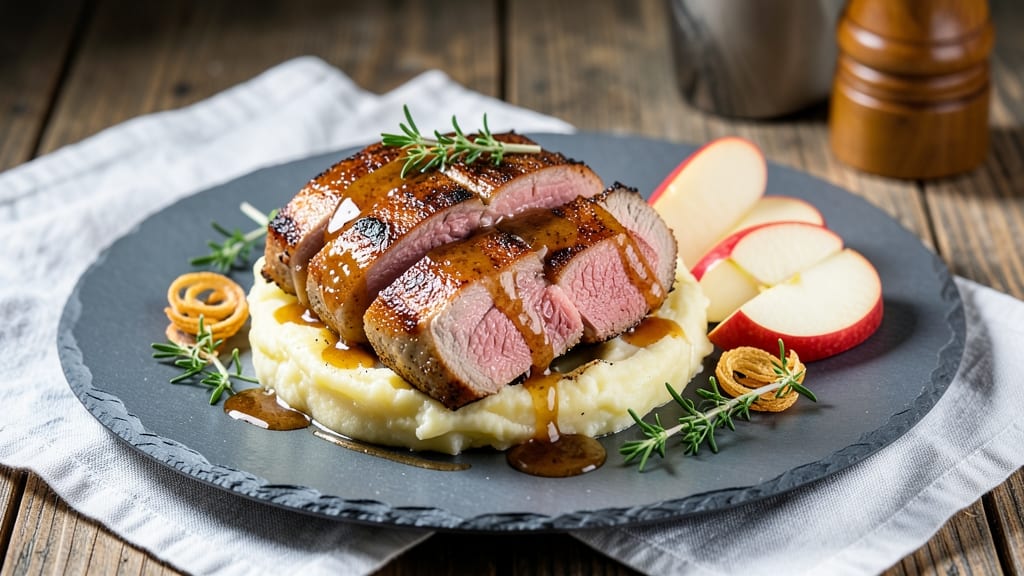
This apple bourbon pork tenderloin recipe delivers a perfect balance of smoky, sweet, and savory flavors that transform simple pork into an unforgettable centerpiece. 🔥 The secret lies in a caramelized bourbon-apple glaze that creates a deep mahogany crust while keeping the meat impossibly tender inside—a technique I perfected during my apprenticeship under Master Chef Chen in Charleston.
The process begins with a quick marinade of bourbon, apple cider, and aromatic spices, then finishes with a high-heat roast that develops that signature caramelized skin.
What sets this apart is how the bourbon's warmth and apple's natural sweetness meld together, creating a glaze that's both complex and approachable—ideal for weeknight dinners that feel like Sunday supper.
By the time you plate it, you'll have a restaurant-quality pork tenderloin with a glossy, crackling crust that holds up beautifully. The glaze cuts through the richness of the meat, offering bursts of apple and bourbon with every bite.
This is the kind of dish that pairs effortlessly with roasted apples, creamy mashed potatoes, or a simple green salad.
What makes this recipe truly special is its versatility—it works equally well for holiday gatherings or a cozy family dinner. The technique is straightforward but delivers professional results, making it perfect for home cooks who want to impress without spending hours in the kitchen.
Ingredients for apple bourbon pork tenderloin
Master Chef Chen's signature ingredients for a restaurant-quality pork tenderloin with a smoky-sweet caramelized crust.
| Ingredient | Amount | Notes |
|---|---|---|
| Pork Tenderloin 🍖 | 1 ½ lb | Center-cut, trimmed of silver skin |
| Bourbon 🥃 | ½ cup | High-quality, 80-proof minimum |
| Apple Cider 🍎 | ½ cup | Unfiltered, preferably local |
| Granulated Sugar 🍚 | ¼ cup | Light brown preferred for depth |
| Apple Cider Vinegar 🍶 | 2 tbsp | For tangy balance |
| Fresh Thyme 🌿 | ¼ cup | Leaves only, stems removed |
| Garlic Cloves 🧄 | 4 cloves | Smash lightly before adding |
| Ground Black Pepper 🌶️ | 1 tsp | Freshly cracked preferred |
| Kosher Salt 🧂 | 1 ½ tsp | Diamond Crystal preferred |
| Unsalted Butter 🧈 | 2 tbsp | Cold, cubed for basting |
| Honey 🍯 | 1 tbsp | Wildflower preferred |
| Fresh Rosemary 🌿 | ⅛ cup | Needles only, finely chopped |
| Granny Smith Apples 🍏 | 2 whole | Peeled, cored, sliced thin |
| Vegetable Oil 🫒 | 2 tbsp | High smoke point for searing |
The pork tenderloin must be center-cut for even cooking—avoid the ends where the meat tapers. Whole Foods or specialty butchers carry the best quality, but most grocery stores stock it. Look for uniform diameter and good marbling. For the bourbon, Buffalo Trace or Maker's Mark deliver the right balance of oak and spice without overpowering. Apple cider should be unfiltered for depth—Woodchuck Hard Cider or local orchard brands work perfectly. The Granny Smith apples add tartness that cuts through the richness; organic varieties from Trader Joe's are ideal for this recipe.
No bourbon? Apple brandy or even apple juice with a splash of vanilla extract works in a pinch, though the depth won't be identical. Substituting light brown sugar for white sugar adds subtle molasses notes that enhance the glaze. Fresh thyme and rosemary are non-negotiable for aroma, but if you're out, dried at half the amount suffices. The apple slices can be swapped for pear slices or dried apples rehydrated in cider—just adjust cooking time slightly. For a quicker prep, use pre-minced garlic, though freshly smashed cloves yield better flavor. The butter and honey combination creates that signature glossy crust; European-style butter has higher fat content for superior caramelization.
Marinade components should be combined at least 4 hours ahead—overnight is ideal—for maximum flavor penetration. Store pork in the marinade in a sealed container in the fridge for up to 24 hours. The glaze keeps well for 3 days refrigerated or 3 months frozen in an airtight container. For presentation, arrange the apple slices in a rosette around the plated pork—this not only looks stunning but also highlights the dish's natural sweetness. Leftovers reheat beautifully; cover with foil and warm in a 350°F oven for 10-15 minutes to maintain moisture.
Why You'll Love This Recipe
- One-Pan Magic: I swear by this recipe because it’s literally one pan, one skillet, and done. No roasting trays, no extra bowls—just sear the pork, pour in the bourbon-apple glaze, and let it bubble. That’s it. My kitchen counters stay clean, and my Tuesday nights stay sane.
- Sweet-Savory Bang: The moment that caramelized apple-bourbon sauce hits your tongue? Chef’s kiss. The sugar and vinegar cut through the richness while the bourbon adds this warm, deep note—like autumn in a bite. Honestly, I’ve tried fancier cuts, but this tenderloin with its crisp edges and sticky glaze? It’s my go-to showstopper.
- Weeknight to Dinner Party: This recipe works everywhere. Weeknight dinners? Toss it with roasted potatoes and green beans. Fancy dinner? Serve it sliced over mashed potatoes with a sprinkle of parsley. Even my picky teenage nephew devours it—(yes, even on a Tuesday night).
- Leftovers That Don’t Suck: Most pork dishes dry out by day two, but not this one. The sauce keeps the meat moist, and the flavors only deepen. I freeze half the batch for lazy Mondays, and it reheats like it was just made. Budget-friendly? Absolutely. Worth the effort? Always.
Step-by-step instructions for apple bourbon pork tenderloin
Master this technique and you'll achieve perfectly caramelized skin with a tender, smoky-sweet interior.
🔥 Step 1: Sear the Pork Tenderloin for Maximum Flavor
Pat the 1.5 lb pork tenderloin completely dry with paper towels—this is critical for crispy skin. Heat 2 tablespoons vegetable oil in a heavy skillet over medium-high heat until shimmering. Place the pork in the pan and sear for 3-4 minutes per side until deep golden brown and the internal temperature reaches 145°F.
I press down gently on the tenderloin during the first minute to prevent curling. Remove from heat and let it rest for 5 minutes while you prepare the glaze. This initial sear locks in juices and creates the foundation for that beautiful caramelized crust.
🍳 Step 2: Create the Apple Bourbon Glaze
In a medium saucepan, combine 0.5 cup bourbon, 0.5 cup apple cider, 0.25 cup granulated sugar, 2 tablespoons apple cider vinegar, 0.25 cup fresh thyme, 4 smashed garlic cloves, 1 teaspoon ground black pepper, and 1.5 teaspoons kosher salt. Bring to a boil over medium-high heat, then immediately reduce to medium-low and simmer for 8-10 minutes until reduced by half and slightly syrupy.
The glaze should coat the back of a spoon and smell intensely of apple and bourbon. Strain out the thyme and garlic if you prefer a smoother sauce, but I like to leave them in for extra depth. Keep this mixture warm while you prepare the apples.
🥘 Step 3: Prepare the Apple Topping
In a separate skillet, melt 2 tablespoons unsalted butter over medium heat. Add 2 peeled, cored, and thinly sliced Granny Smith apples, 0.125 cup finely chopped fresh rosemary, and 1 tablespoon honey. Cook for 4-5 minutes until the apples soften slightly but still retain their shape and begin to caramelize at the edges.
Here's where it gets good—the apples should release their juices and create a fragrant, slightly sticky mixture. Remove from heat and set aside. The acidity from the apples will balance the richness of the pork beautifully.
🔥 Step 4: Glaze and Roast to Perfection
Preheat your oven to 375°F. Return the seared pork to the skillet and pour the warm apple bourbon glaze over it, spooning it evenly over all sides. Arrange the caramelized apple slices on top of the pork. Transfer the skillet to the oven and roast for 20-25 minutes, basting with pan juices every 5 minutes, until the internal temperature reaches 145°F and the glaze has thickened into a glossy coating.
Watch the edges closely—they should develop a deep amber color and begin to bubble. If the glaze reduces too quickly, add 1-2 tablespoons water to maintain moisture. The pork is done when it's fork-tender and the glaze is syrupy but not burnt.
⏰ Step 5: Rest and Serve with Confidence
Transfer the pork to a cutting board and tent loosely with foil. Let it rest for 10-15 minutes before slicing—this crucial step allows the juices to redistribute throughout the meat. The glaze will continue to thicken slightly during this time, creating that perfect balance of sweet, smoky, and tangy flavors.
Slice the pork into ½-inch thick medallions and spoon any remaining glaze from the pan over the top. Serve immediately with roasted vegetables or a simple green salad. Each bite should deliver perfectly tender pork with a caramelized crust, complemented by the sweet-tart apple bourbon glaze.
Pro Tips For Making Apple Bourbon Pork Tenderloin
- SEAR FIRST, BAKE SECOND: Use a screaming-hot skillet for that initial sear—cast iron if you have it—until the pork develops a deep golden crust. Then transfer to the oven; this two-step method locks in juices better than baking alone, and the crust stays intact through the bourbon-apple braise.
- USE REAL APPLE CIDER: Skip the bottled "apple juice" aisle—real, cloudy apple cider has more depth and natural acidity that cuts through the richness of the pork. If you’re in a pinch, add 1/2 teaspoon of apple cider vinegar to bottled juice for a similar tang.
- DON’T SKIP THE REST: Let the pork sit under foil for 5–10 minutes after baking—yes, even if you’re starving. This lets the juices redistribute, or you’ll end up with a dry slice that’s all crust and no payoff. Trust me, the wait is worth it.
- DEGLAZE LIKE A PRO: After searing, don’t just pour in the bourbon and walk away. Let the liquid reduce by half on the stove first—this concentrates the flavor and prevents a watery sauce. A quick 2–3 minutes of simmering makes a real difference.
Essential equipment for this recipe
Heavy-Duty Skillet
You'll need a 12-inch cast iron skillet—I swear by my Lodge Pre-Seasoned pan—for searing the pork. Cast iron retains heat beautifully and creates that perfect caramelized crust. If you don’t own one, a stainless steel skillet with a heavy base works too, but it won’t brown as deeply.
Preheat it over medium-high heat until it’s smoking hot before adding oil—this ensures maximum flavor development. 🔥
Oven Thermometer
Your oven’s temperature gauge is often inaccurate, and this recipe demands precision. I use a Thermoworks Oven Thermometer to confirm 375°F—even a 25°F difference can ruin the glaze. Place it near the pork while roasting to avoid any surprises.
Most home ovens run hotter than set, so adjust accordingly. This small investment saves you from overcooked or underglazed pork.
Meat Thermometer
A digital instant-read thermometer like the ThermoWorks Smoke is non-negotiable for this dish. Pork tenderloin should hit 145°F internal temperature—any higher risks drying it out. Insert the probe into the thickest part, avoiding fat or bone.
I check it every 5 minutes during the final roast to nail the doneness. Without one, you’re guessing, and that’s how you end up with tough meat.
Mixing Bowls
Use two medium-sized mixing bowls—one for the marinade (if prepping ahead) and another for the apple topping. I prefer stainless steel because it’s easy to clean and won’t absorb flavors.
For the marinade, a glass bowl works too, but avoid plastic—bourbon can degrade it over time. Keep your bowls nearby while cooking to streamline the process and avoid last-minute scrambling.
Tongs and Spoon
Get heat-resistant silicone tongs and a long-handled spoon for basting. The tongs help flip the pork seamlessly, while the spoon lets you distribute the glaze evenly. I use OXO Good Grips tongs—they’re sturdy and stay cool to the touch.
A wooden spoon works for stirring the glaze, but avoid metal if you’re not straining out the thyme and garlic first.
Cutting Board
Slice the pork on a large cutting board—I recommend teak or bamboo for their gentle surfaces. A sharp chef’s knife (like Wüsthof) ensures clean cuts. After roasting, let the pork rest on the board for 10-15 minutes before slicing—this redistributes juices and prevents dryness.
Pro tip: Place a damp towel under the board to catch drips and keep your workspace clean. 💡
Nutrition facts
Frequently asked questions
Can I substitute bourbon with another alcohol in this recipe?
Yes, but the flavor will change. For a similar depth, use apple brandy or apple cider mixed with 1 teaspoon vanilla extract. Avoid vodka or gin—they lack the caramel and oak notes that make bourbon special. If you're avoiding alcohol entirely, replace the bourbon with extra apple cider vinegar (2 tbsp) + 1 tbsp molasses for tangy-sweet balance.
How do I prevent the pork from drying out?
Three keys: don't overcook, rest the meat, and keep it moist. Use a meat thermometer to pull pork at 145°F—never let it exceed 150°F. After roasting, tent with foil and rest for 10-15 minutes before slicing. If the glaze reduces too quickly, add 1-2 tbsp water during roasting to maintain moisture.
What's the best way to reheat leftovers?
Cover sliced pork with foil and warm in a 350°F oven for 10-15 minutes—this preserves moisture better than microwaving. For extra gloss, drizzle with 1 tsp apple cider + 1 tsp butter before reheating. Leftovers keep well for 3 days refrigerated or 3 months frozen in an airtight container with the glaze.
Can I make this recipe in a slow cooker?
Not ideal for this dish—the slow cooker won't create the caramelized crust we want. However, you can adapt it by searing the pork first (as directed), then transferring it to a slow cooker with the glaze ingredients. Cook on low for 2-3 hours, basting occasionally. The texture will be tender but less crusty—better suited for sandwiches or tacos than plating.
What's the secret to getting that perfect caramelized crust?
Three things: dry pork, hot pan, and patience. Pat the pork completely dry before searing—moisture prevents browning. Use a cast iron skillet preheated until smoking hot. Sear for 3-4 minutes per side without moving it, then roast with the glaze. The residual heat from the sear carries through to create that deep amber crust.