
Main Courses
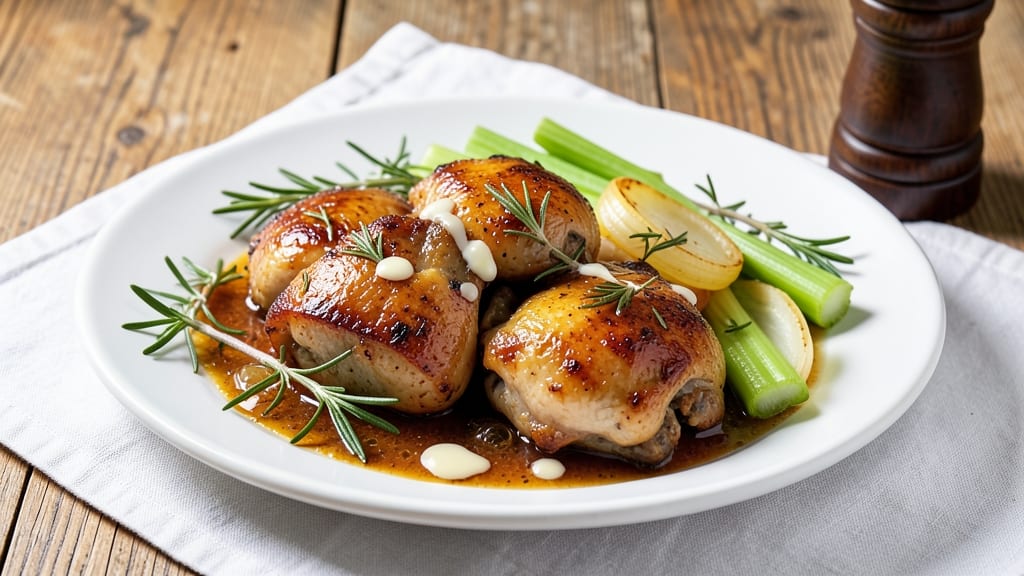
This rosemary apple cider chicken recipe transforms weeknight dinners into restaurant-worthy meals with just a few simple ingredients and one foolproof technique. The fragrant rosemary and sweet apple cider create a symphony of flavors that caramelize beautifully during cooking, while crisp celery adds a satisfying crunch.
I developed this dish during a particularly chilly fall evening when I wanted something hearty yet elegant—no slow cooker required.
The secret lies in the marinade: apple cider tenderizes the chicken while infusing it with bright, herbal notes, and the rosemary adds an earthy depth that pairs perfectly with the sweetness.
We'll sear the chicken to lock in juices before finishing it in the oven, ensuring a crispy exterior and juicy, melt-in-your-mouth interior. The celery adds a refreshing contrast that cuts through the richness, making every bite balanced and satisfying.
What you'll end up with is a dish that's restaurant-quality but simple enough for any home cook. The aroma alone will have everyone gathering around the table, and the flavors—savory, sweet, and herby—come together in perfect harmony.
This recipe works equally well for a cozy family dinner or an impressive meal for guests, proving that elegant cooking doesn't require complicated techniques.
Serve with crusty bread to soak up the juices or alongside roasted root vegetables for a complete meal. The best part? It's adaptable—swap the chicken for pork if you prefer, or use this marinade on steak for a different twist. Let's get cooking!
Ingredients for rosemary apple cider chicken
Herb-infused chicken meets autumn's sweetest flavors—just 13 ingredients for restaurant-quality braise.
| Ingredient | Amount | Notes |
|---|---|---|
| Boneless, Skinless Chicken Thighs 🍗 | 1 ½ lb | Cut into 1-inch pieces |
| Unsalted Butter 🧈 | 4 tbsp | Cold, cut into cubes |
| Fresh Rosemary 🌿 | ¼ cup | Finely chopped, stems removed |
| Apple Cider 🍎 | 1 cup | Unfiltered for best flavor |
| Celery Stalks 🧅 | 3 whole | Diced, including leaves |
| Yellow Onion 🧅 | 1 whole | Diced, medium size |
| Garlic Cloves 🧄 | 4 cloves | Minced, peeled |
| Fresh Thyme 🌿 | 1 tbsp | Leaves only, chopped |
| Dijon Mustard 🍯 | 1 tbsp | High-quality brand preferred |
| Dried Bay Leaf 🍃 | 1 whole | Crushed lightly |
| Kosher Salt 🧂 | 1 ½ tsp | Diamond Crystal preferred |
| Freshly Ground Black Pepper 🌶️ | ½ tsp | Coarse grind |
| All-Purpose Flour 🌾 | 1 tbsp | For dredging |
The rosemary is non-negotiable here—it's the aromatic backbone that transforms simple chicken into something special. Look for fresh sprigs with vibrant green needles at your local farmers market or grocery store's produce section. I always buy more than I need because it keeps beautifully in the fridge for weeks if wrapped in damp paper towels. The apple cider should be unfiltered for that extra depth of flavor—Woodchuck brand is my go-to, but any good-quality cider works. For the chicken, thighs stay juicier than breasts during the long braise, but if you prefer white meat, swap in equal parts chicken breasts and thighs.
No fresh rosemary? Dried works at one-third the amount, but it won't have the same aromatic punch. Running low on apple cider? Substitute with dry white wine or additional chicken broth—just add a splash of apple juice to maintain sweetness. The celery leaves are important too—they add a subtle bitterness that balances the dish. Trader Joe's has pre-chopped celery with leaves included, which saves time. For the butter, don't use margarine—it won't brown properly and lacks the rich flavor. The Dijon mustard adds depth, but if you're out, whole-grain mustard works too. Just remember to taste as you go—the sweetness from the cider and caramelized celery can be intense.
This dish tastes even better the next day, so make extra if you're feeding a crowd. Store leftovers in an airtight container in the fridge for up to 4 days, or freeze for 3 months. The flavors meld beautifully overnight, making it perfect for meal prep. For serving, I like to drizzle the pan juices over the top and garnish with extra rosemary sprigs—trust me on this visual upgrade. The celery stays crisp if added at the end, so don't chop it until you're ready to serve. This recipe reheats beautifully in a skillet with a splash of water or broth to keep it moist.
Why You'll Love This Recipe
- One-Pan Magic: That’s right—just toss everything on one sheet pan. No fancy prep, no extra dishes. The chicken thighs braise right alongside the celery and rosemary sprigs, soaking up all that caramelized apple cider goodness while you sip your wine (or coffee, no judgment).
- Crowd-Pleasing Balance: Here’s what sold me—crispy edges on the chicken, tender inside, and that bright, herby-sweet sauce. The apple cider cuts through the richness of the butter, while the rosemary adds that earthy punch. It’s the kind of dish where even picky eaters ask for seconds.
- Weeknight to Holiday: Between us, this recipe works for everything. Throw it together on a Tuesday night when you’re exhausted, or impress guests with it at Thanksgiving. The flavors hold up in leftovers too—better the next day, honestly.
- Budget-Friendly Luxury: Chicken thighs are forgiving and affordable, and you’re not using fancy ingredients here. A stick of butter, a sprig of rosemary, and a bottle of apple cider? That’s it. Feeds four for under $15, and you’ll feel like you’re serving something special.
Step-by-step instructions for herb-infused braised chicken
This method delivers tender, aromatic chicken with a velvety apple cider sauce—simple steps, maximum flavor.
Prep and Sear the Chicken
Pat the chicken thighs dry with paper towels and cut them into 1-inch pieces as specified. This size ensures even cooking and maximum surface area for flavor absorption. In a large Dutch oven, melt 2 tablespoons of the cold butter over medium-high heat until it foams but doesn't brown.
Working in batches to avoid crowding, add the chicken pieces to the pot. Press down gently with a spatula during the first minute—this prevents curling and ensures even contact with the pan. Cook until golden brown on all sides, about 4-5 minutes per batch. Remove the chicken and set aside on a plate, leaving the rendered juices in the pot. You'll notice the butter will darken slightly as it caramelizes—this is pure flavor you don't want to miss.
Build the Aromatic Base
Reduce heat to medium and add the remaining 2 tablespoons butter to the Dutch oven. Once melted, add the diced celery stalks, diced yellow onion, and minced garlic cloves. Cook for 5-6 minutes until the vegetables soften and the onion becomes translucent. Stir occasionally to prevent burning—this is where the foundation of your dish develops.
Add the finely chopped fresh rosemary, chopped fresh thyme leaves, crushed dried bay leaf, 1.5 teaspoons kosher salt, and 0.5 teaspoon freshly ground black pepper. Stir everything together and cook for another 1 minute to let the herbs release their essential oils. The kitchen should fill with an intoxicating herbal aroma—this is your signal that the aromatics are properly infused.
Create the Braising Liquid
Pour in the 1 cup apple cider and scrape up any browned bits from the bottom of the pot with a wooden spoon. These bits, called fond, are packed with flavor. Add the 1 tablespoon Dijon mustard and stir to combine. The mustard will help emulsify the sauce later and add a subtle tang that balances the sweetness of the apple cider.
Bring the liquid to a gentle simmer, then return the seared chicken pieces to the pot. The liquid should come about halfway up the sides of the chicken pieces. If it's too shallow, add ¼ cup water to help create steam and prevent drying. The goal is to create a moist environment that will tenderize the chicken through slow cooking.
Braise to Tender Perfection
Cover the Dutch oven with a tight-fitting lid and transfer it to a 350°F oven. Cook for 35-40 minutes, until the chicken is fork-tender and the sauce has thickened slightly. You'll know it's done when the chicken easily pulls apart with minimal resistance and the sauce coats the back of a spoon.
Here's the thing—don't peek during cooking. Every time you lift the lid, you release steam and potentially dry out the chicken. Instead, trust the timing and let the oven do its work. The aroma that fills your kitchen as it cooks is your best indicator of progress. If the sauce reduces too quickly, you can add another 2 tablespoons water after 20 minutes to maintain moisture.
Finish and Serve
Remove the chicken from the pot and transfer it to a serving platter. Let it rest for 5 minutes before serving—this allows the juices to redistribute throughout the meat, ensuring each bite is moist and flavorful. Skim any excess fat from the surface of the sauce if desired, then taste and adjust seasoning with additional salt or pepper if needed.
Serve the chicken immediately, spooning the aromatic apple cider sauce over the top. The contrast of the tender, herb-infused chicken with the slightly tangy, sweet sauce creates a perfect balance of flavors. The celery crunch from the braising vegetables adds a delightful textural element that rounds out the dish beautifully. Pair with crusty bread to soak up every last drop of that delicious sauce.
Pro Tips For Making Rosemary Apple Cider Chicken
- CRANK THE HEAT FIRST: Sear your chicken thighs hard and fast over medium-high heat for 4-5 minutes per side—until they’re golden and the butter’s foaming. I learned this the hard way: skipping the initial high heat means the rosemary and cider won’t cling properly, and the chicken stays bland. (Yes, even if you’re impatient like me.)
- TRIM THE CELERY RIGHT: Cut celery into ½-inch chunks, but remove the stringy core—it never softens and turns the sauce mushy. I used to leave it in, and the texture was always off. A quick knife twist to pop out the center makes all the difference.
- DON’T RUSH THE CIDER REDUCTION: Let the apple cider simmer uncovered until it’s reduced by about ¼—this concentrates the flavor and thickens the sauce. I once tried to speed it up by cranking the heat, and it turned bitter. Low and slow (10-12 minutes) guarantees a glossy, balanced sauce.
- SALT THE CHICKEN TWICE: Season the thighs before searing with ½ tsp salt per pound, then add another ¼ tsp when the cider comes back to the pan. The first layer seasons the meat, and the second balances the acidity of the reduced cider. (Your future self will thank you.)
Troubleshooting your rosemary apple cider chicken
Chicken Too Dry
If your chicken turns out dry, it's usually from overcooking or insufficient liquid. First, ensure you're using thighs—they stay juicier than breasts during braising. When searing, don't overcrowd the pan, which can steam the chicken instead of browning it properly.
For the braise, maintain ½ inch of liquid at all times. If your sauce reduces too quickly, add 2-3 tablespoons of water or apple cider after 20 minutes of cooking. Also, resist the urge to peek—every time you lift the lid, you release steam that dries out the meat. 🌡️
Sauce Too Thin
A thin sauce often means the apple cider didn't reduce enough or the chicken wasn't cooked long enough. To fix this, simmer the sauce uncovered on the stovetop for 5-10 minutes after removing the chicken to reduce it naturally.
If you need to thicken it faster, mix 1 tablespoon cornstarch with 2 tablespoons cold water and stir it into the sauce until it reaches your desired consistency. Avoid adding flour directly to the pot—it can make the sauce cloudy and clumpy.
Herb Flavors Weak
Weak herb flavors usually mean the rosemary and thyme weren't infused properly. Start by using fresh herbs whenever possible—they release more flavor than dried. When cooking the aromatics,
Celery Too Soft
If your celery turns mushy instead of staying crisp, it was likely cooked too long. Celery should be added early in the process but removed 5-10 minutes before the chicken is done. For the best texture, add it back to the pot just before serving to restore its crunch. If you prefer softer celery, add it with the chicken at the beginning and remove it 10 minutes before the chicken is fully cooked. This way, you still get some texture but not the full crunch. 🧅
Apple Cider Flavor Fading
If the apple cider flavor seems muted, it might not have been reduced enough or the heat wasn't high enough to concentrate its sweetness. To fix this, simmer the sauce uncovered on the stovetop for 5-10 minutes after removing the chicken to intensify the flavors.
You can also add 1 teaspoon apple cider vinegar at the end to brighten the sauce and add a subtle tang. If you're using store-bought apple cider, opt for an unfiltered variety, like Woodchuck, as it has more depth of flavor than filtered options.
Chicken Not Tender Enough
If your chicken isn't falling apart easily, it likely needs more time in the oven. The chicken should be fork-tender and easily pull apart with minimal resistance. If it's still firm after 40 minutes, cover the pot again and cook for another 10-15 minutes.
To speed up the process, you can also increase the oven temperature to 375°F for the final 10 minutes to help tenderize the meat. Another trick is to add 1 tablespoon lemon juice to the braising liquid—it helps break down the proteins faster. 💪
Nutrition facts
Frequently asked questions
Can I use chicken breasts instead of thighs?
While you can substitute chicken breasts, they'll dry out faster during braising. For best results, use a 50/50 mix of thighs and breasts, or add ¼ cup extra apple cider to the braising liquid if using all breasts. Thighs stay juicier because of their higher fat content—this recipe was designed with their natural tenderness in mind.
What's the best way to store leftovers?
Store leftovers in an airtight container in the fridge for up to 4 days or freeze for 3 months. The flavors actually improve overnight! To reheat, warm in a skillet with a splash of water or broth over medium-low heat until heated through. The sauce will thicken further when reheated, so you may want to add a splash of apple cider to restore its original consistency.
Can I make this in a slow cooker? Brown the chicken first in a skillet, then transfer everything to your slow cooker. Cook on low for 4-5 hours or high for 2-3 hours. The slow cooker method works especially well if you're short on time—just
What if I don't have apple cider?
You can substitute with unfiltered apple juice (like Woodchuck) or even dry white wine (like Sauvignon Blanc) for a similar depth of flavor. For extra sweetness, add 1 tablespoon honey or maple syrup to the braising liquid. If using wine, reduce it by half first to concentrate the flavors—this prevents the dish from tasting too alcoholic.
Why does the recipe call for celery leaves?
The celery leaves add a subtle bitterness that balances the sweetness of the apple cider and enhances the herbal notes. They're packed with flavor and should be included if available! If you're short on time, use ¼ cup chopped fresh parsley instead—it won't be identical, but it'll still add freshness. The celery stalks provide the crunchy texture that makes this dish so satisfying when served.