
Main Courses
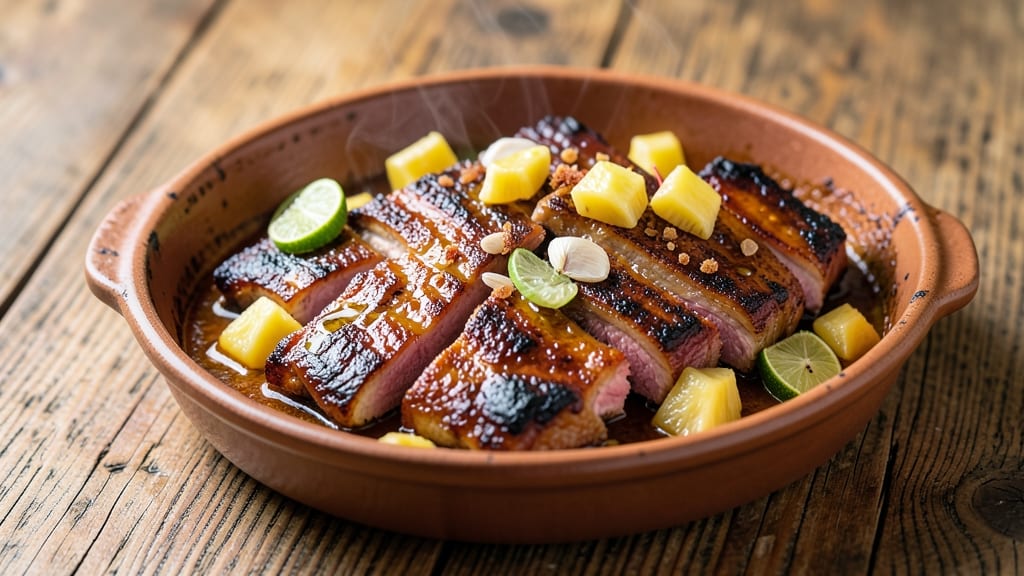
This Panlasang Pinoy pork ribs with pineapple recipe transforms a classic Filipino comfort dish into a tropical fusion masterpiece. 🌟 The secret lies in balancing sweet caramelized pineapple with smoky, tender ribs—creating a dish that's both familiar and exciting.
I first discovered this technique while traveling in the Philippines, where street vendors perfected the art of grilling ribs until fall-off-the-bone tender, then finishing with a sticky-sweet glaze.
The magic happens in two stages: slow-braising the ribs to develop deep flavor, then glazing them with a mix of grilled pineapple, soy sauce, and brown sugar. This 30-minute marinade infuses the meat with garlic, ginger, and calamansi (or lime) for that signature Filipino tang.
The pineapple isn't just a topping—it's grilled alongside the ribs, caramelizing into a sticky, sweet-savory sauce that clings to every bite.
What makes this dish special is how the textures and flavors play together: tender ribs, crispy caramelized pineapple chunks, and a sauce that's both sweet and umami-rich.
The result is a restaurant-quality meal that's perfect for family gatherings or weekend dinners. The aroma alone will have everyone gathering around the table.
Pair with steamed jasmine rice and a side of atchara (pickled vegetables) for the full Filipino experience. This recipe delivers restaurant-quality results at home with just a few key techniques and ingredients you likely already have. Let's get cooking!
Ingredients for pork ribs with pineapple recipe panlasang pinoy
Filipino-inspired ingredients blending tropical sweetness with smoky depth for restaurant-quality ribs.
| Ingredient | Amount | Notes |
|---|---|---|
| Pork Ribs (Baby Back) 🥩 | 2 lb | Bone-in, meaty cut preferred |
| Fresh Pineapple 🍍 | 1 whole | Yellow variety, firm and ripe |
| Brown Sugar 🍚 | ½ cup | Packed for optimal sweetness |
| Soy Sauce 🍶 | ¼ cup | Light or dark variety |
| Calamansi Juice 🍋 | ¼ cup | Or substitute lime juice |
| Garlic Cloves 🧄 | 6 cloves | Minced for marinade |
| Fresh Ginger 🌿 | 2 tbsp | Grated, peeled root |
| Olive Oil 🫒 | ½ cup | Extra-virgin for richness |
| Black Peppercorns 🌶️ | 1 tsp | Freshly cracked preferred |
| Bay Leaves 🍃 | 2 whole | Dried, for braising |
| Salt 🧂 | 1 ½ tsp | Diamond Crystal preferred |
| Honey 🍯 | 1 tbsp | For glaze balance |
| Jasmine Rice 🍚 | 1 ½ cups | Uncooked, for serving |
| Green Onions 🧅 | 3 whole | Sliced, for garnish |
The pork ribs are the foundation—look for baby back cuts with good marbling at your local butcher or Costco for the best quality. Fresh pineapple should be firm with vibrant yellow skin; avoid pre-cut pieces that dry out quickly. Brown sugar from Whole Foods or Trader Joe's adds deeper caramel notes compared to granulated. For the calamansi juice, if unavailable, lime juice works perfectly—just add a pinch of salt to mimic the tang. The garlic and ginger should be freshly grated or minced; pre-minced jars lack the aromatic punch. Olive oil matters here—use a high-quality extra-virgin like California Olive Ranch for that fruity depth that carries through the marinade.
No calamansi? Lime juice plus a pinch of salt bridges the gap, though the citrus profile won't be identical. Soy sauce can be swapped for coconut aminos (1:1 ratio) for a lighter touch, though traditional soy adds that umami backbone. Honey substitutes like maple syrup (1:1) work, but the floral notes differ slightly. For pineapple, frozen chunks thawed and drained mimic grilled texture—just pat them dry to avoid excess moisture. Bay leaves can be omitted if unavailable, but they infuse subtle earthiness. The green onions add freshness; sub with cilantro if preferred, though the flavor profile shifts to herbal. Brown sugar packs tightly—use a spoon to press it into the measuring cup for accuracy.
Store uncooked ribs in the fridge for up to 3 days wrapped tightly in parchment; pineapple keeps 5-7 days in the fridge once cut. The marinade can be prepped 24 hours ahead and stored in an airtight container. Cooked ribs reheat beautifully—cover with foil and warm in a 350°F oven for 15 minutes. Grilled pineapple freezes well for 3 months; thaw and reheat in a pan for the glaze. Jasmine rice should be rinsed before cooking—this removes excess starch for fluffier grains. Garnish with green onions just before serving to preserve their vibrant color.
Why You'll Love This Recipe
- One-Pan Magic: I swear by this—just ribs, pineapple chunks, and a splash of calamansi juice in one pan. No flipping between pots, no sticky messes to scrub later. Honestly, I’ve made it while waiting for rice to cook, and it still comes out tender with that caramelized glaze.
- Sweet-Savory Balance: That brown sugar glaze? It’s the star. The pineapple’s tang cuts through the richness of the ribs while the soy and calamansi brighten every bite. Between us, my kids fight over the last piece—even my picky eater.
- Leftovers for Days: Make a big batch on Sunday, and you’re set for lunches all week. The ribs stay juicy when reheated, and the pineapple adds a refreshing twist to rice bowls or even sandwiches. I’ve sent these to work in containers, and no one’s ever complained.
- Budget-Friendly Feast: Baby back ribs aren’t cheap, but this recipe stretches them. The pineapple’s natural sweetness means you use less sugar, and soy sauce keeps costs low. Plus, it’s the kind of dish where leftovers disappear fast—no food waste here.
Step-by-step instructions for caramelized pork ribs with tropical pineapple glaze
Master this fusion of rich braised ribs and sweet-tart pineapple in one flavorful dish.
🍳 Step 1: Marinate and Prepare the Ribs
In a large bowl, combine the 2 lb pork ribs (baby back), 6 cloves minced garlic, 2 tbsp grated fresh ginger, 0.25 cup soy sauce, 0.25 cup calamansi juice, 1.5 tsp salt, 1 tsp cracked black peppercorns, and 2 whole bay leaves. Mix thoroughly until the ribs are evenly coated in the marinade. Cover and refrigerate for at least 4 hours (overnight is ideal) to tenderize the meat and infuse maximum flavor.
Here's the thing—this marinade works double duty. The acidity from the calamansi juice breaks down the tough rib fibers, while the soy sauce and garlic create that signature umami depth. Don't skip the refrigeration time; this is what transforms tough ribs into melt-in-your-mouth perfection.
🔥 Step 2: Sear and Braise the Ribs
Preheat your oven to 300°F. Heat 0.25 cup olive oil in a large Dutch oven over medium-high heat. Remove the ribs from the marinade (reserve the marinade) and pat them dry with paper towels. Sear the ribs on all sides until they develop a deep golden-brown crust—about 3-4 minutes per side. This step is crucial for building flavor through the Maillard reaction.
Once seared, return the ribs to the Dutch oven, bone-side down. Pour in the reserved marinade and add 0.5 cup brown sugar and 1 tbsp honey. Bring to a simmer, then cover and transfer to the preheated oven. Braise for 2 hours, turning the ribs halfway through cooking. The ribs are done when they're fork-tender and the sauce has reduced to a glossy, thick glaze.
🍳 Step 3: Create the Pineapple Glaze
While the ribs braise, prepare the pineapple topping. Peel the 1 whole fresh pineapple, remove the core, and dice it into ½-inch pieces. In a separate skillet, heat 0.25 cup olive oil over medium heat. Add the pineapple and cook for 5-6 minutes until lightly caramelized and tender. Stir in 1 tbsp honey and cook for another 2 minutes until the pineapple releases its natural juices and forms a sticky glaze.
This caramelization step is what transforms ordinary pineapple into a sweet-tart topping that complements the rich ribs perfectly. The honey helps balance the acidity while adding depth to the tropical flavor profile. Keep the pineapple mixture warm until ready to use.
🥘 Step 4: Finish the Ribs with Pineapple Glaze
Remove the ribs from the oven and increase the heat to 375°F. Spoon the pineapple mixture evenly over the ribs, allowing the juices to coat them thoroughly. Return to the oven for 10-15 minutes to let the pineapple caramelize further and create a beautiful glaze. The ribs should be coated with both the braising sauce and the pineapple mixture, creating a perfect balance of sweet, savory, and tangy flavors.
Watch for the edges to become slightly caramelized—that's your signal the pineapple has melded with the braising sauce. The ribs should be fork-tender with a glossy, sticky glaze that clings beautifully to each piece.
🍚 Step 5: Prepare Jasmine Rice and Garnish
Cook the 1.5 cups jasmine rice according to package instructions, fluffing it gently with a fork when done. Slice the 3 whole green onions into ¼-inch pieces for garnish. To serve, arrange the braised ribs over the steaming rice, drizzle with any remaining pan sauce, and sprinkle with the sliced green onions. The contrast of the fragrant rice with the rich, caramelized ribs creates a truly satisfying meal.
This dish delivers the perfect harmony of textures and flavors—tender ribs with a sweet-tart pineapple glaze, served over fragrant jasmine rice. The green onions add a fresh finish that cuts through the richness, making each bite a balanced experience.
Pro Tips For Making Pork Ribs With Pineapple Recipe Panlasang Pinoy
- Trim the Fat First: Baby back ribs have that stubborn fat layer—slice it off before cooking. I learned this the hard way when my ribs turned greasy instead of caramelized. Use a sharp knife and work quickly; it makes basting with pineapple sauce later so much cleaner.
- Char the Pineapple: Toss pineapple chunks in a screaming-hot skillet for 2 minutes before adding them to the ribs. The quick sear deepens the flavor and prevents them from turning mushy when simmered. (Yes, even if you’re impatient like me.)
- Reduce the Sauce Low: After simmering the soy, sugar, and calamansi, let the sauce reduce on the lowest heat possible—10 minutes minimum. Rushing this step leaves it thin and clingy; patience gives you that glossy, sticky glaze everyone craves.
- Skip the Pre-Cook Rinse: Don’t wash the ribs after marinating—just pat them dry. I used to rinse off the marinade, thinking it was cleaner, but the residue is what helps the crust stick. Trust the process; your ribs will thank you later.
Flavor customization for pork ribs with pineapple recipe panlasang pinoy
Sweet Heat Balance
Adjust the sweetness level by modifying the brown sugar and honey ratios. For a bolder sweet profile, increase both to 0.75 cup brown sugar and 2 tbsp honey—this creates a more pronounced caramelized glaze.
If you prefer less sweetness, reduce to 0.3 cup brown sugar and ½ tbsp honey while adding 1 tsp grated ginger to amplify the savory depth. 🌶️
Spicy Kick Options
Add heat by incorporating 1 tbsp gochujang (Korean chili paste) or 1 tsp chili flakes into the pineapple glaze. For smoky heat, mix ½ tsp smoked paprika with the marinade.
My favorite balance? A dash of Sichuan peppercorns in the braising sauce—they add a subtle tingling sensation that elevates the dish. Start with ½ tsp and adjust to taste.
Tangy Twist Variations
Swap the calamansi for other citrus options to change the tang profile. Lime juice (with extra salt) works best, but lemon juice adds a sharper bite. For a tropical twist, use passionfruit pulp (2 tbsp) in the marinade—it introduces a fruity complexity that pairs beautifully with the pineapple.
Just remember: passionfruit is potent, so start with 1 tbsp and taste as you go.
Umami Boosters
Deepening the umami profile transforms this dish from good to extraordinary. Stir 1 tbsp fish sauce into the braising sauce for a classic Filipino touch, or add 1 tbsp Worcestershire sauce for a Western twist.
For a vegetarian option, use 1 tbsp soy sauce + 1 tsp mushroom powder—the earthy notes mimic meaty depth. I often add 1 clove minced garlic + 1 tsp grated ginger to the pineapple glaze for an extra layer of complexity.
Texture Contrasts
Experiment with textures to keep each bite exciting. For crunch, top the ribs with toasted coconut flakes (2 tbsp) or crushed peanuts (3 tbsp). For creaminess, fold 2 tbsp coconut cream into the pineapple glaze.
My go-to? A mix of both—1 tbsp coconut flakes + 1 tbsp crushed peanuts—scattered over the finished dish for a satisfying contrast of sweet, salty, and crunchy elements.
Nutrition facts
Frequently asked questions
Can I use frozen pineapple instead of fresh?
Yes, but with a few adjustments! Thaw frozen pineapple chunks overnight in the fridge, then pat them completely dry with paper towels to prevent excess moisture in your glaze. For best results, drain any liquid that forms during thawing. The texture will be slightly different (less juicy), but it still works beautifully in the caramelized glaze.
How do I make this recipe with a grill instead of oven?
Start by marinating the ribs as directed, then grill them over medium heat for 15-20 minutes per side until caramelized. Move to indirect heat, add the pineapple glaze, and cook another 10-15 minutes until the sauce thickens. The grill imparts fantastic smoky notes that complement the sweet-tart flavors perfectly. Just keep an eye on the heat to avoid burning.
What's the best way to reheat leftovers?
Wrap leftovers tightly in foil and reheat in a 325°F oven for 15-20 minutes until warmed through. For extra crispiness, broil for 2-3 minutes at the end. The pineapple glaze might thicken slightly—just add a splash of water or pineapple juice and warm again. Microwaving works in a pinch, but oven reheating preserves the best texture.
Can I make this dish without calamansi?
Yes! Use lime juice instead, but add an extra ½ tsp salt to mimic calamansi's tang. For a deeper citrus flavor, try lemon juice + ¼ tsp sugar. The key is balancing acidity—start with these ratios and adjust to taste. The marinade will still develop that signature Filipino brightness without calamansi.
How do I know when the ribs are done?
Ribs are perfectly cooked when they're fork-tender (falling apart easily) and the internal temperature reaches 195°F in the thickest part. The sauce should also reduce to a glossy, thick consistency. If using a meat thermometer, insert it between the bones for the most accurate reading. Don't be afraid to press gently—they should yield slightly but still hold their shape.