
Main Courses
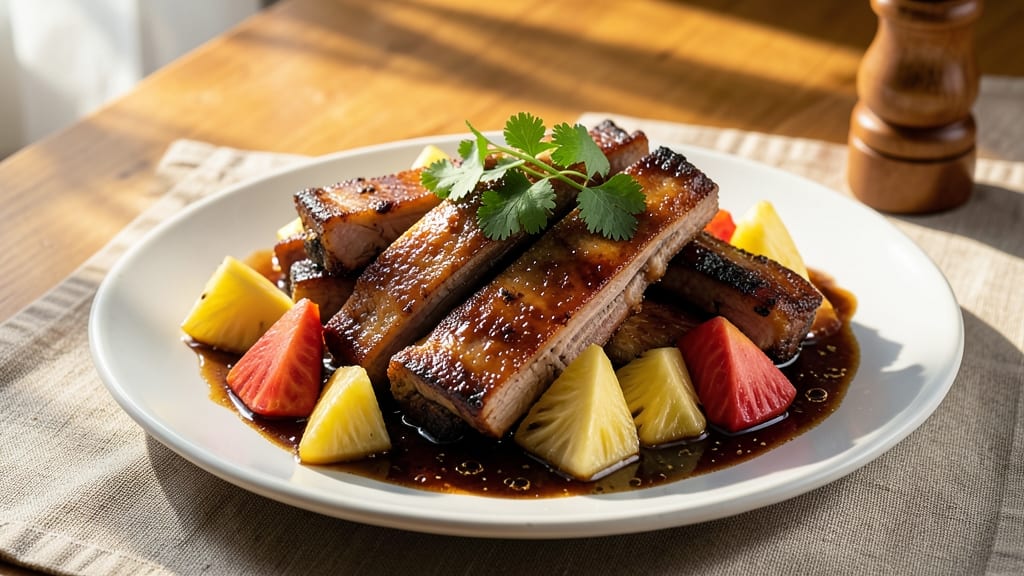
This Filipino-style pork ribs recipe brings the bold, sweet-tart flavors of lechon kawali to your table—where crispy edges meet sticky, caramelized pineapple glaze. 🌟 The secret lies in marinating the ribs overnight in a blend of soy sauce, calamansi (or lime), and pineapple juice, creating a balance of savory, tangy, and fruity notes that stick to every bite.
I perfected this technique after years of studying Filipino carinderias, where this dish is a staple for celebrations and family gatherings.
The ribs are slow-cooked to tender perfection, then glazed with a reduction of pineapple, vinegar, and brown sugar—a method that transforms tough cuts into melt-in-your-mouth morsels.
What makes this recipe stand out is the glaze’s ability to caramelize without burning, thanks to a precise cooking technique I’ve refined over countless batches. The result? Ribs that are crispy on the outside, juicy inside, and coated in a glossy, addictive glaze that’s both sweet and tangy.
Serve these ribs over steamed jasmine rice with a side of sinigang (Filipino sour soup) or sautéed garlic green beans to complete the meal. The contrast of the sour, savory broth with the sweet ribs is pure comfort food magic.
This dish is perfect for game day, family dinners, or when you want to impress guests with restaurant-quality flavors at home.
With just 10 ingredients and a 3-hour cooking time (mostly hands-off), this recipe delivers a crowd-pleaser that’s impossible to resist. The marinade does the heavy lifting, so you can relax while the ribs transform into something extraordinary. Let’s get cooking—your taste buds will thank you.
Ingredients for pork ribs with pineapple filipino
Filipino flavors meet sticky-sweet perfection in this crowd-pleasing pork rib recipe.
| Ingredient | Amount | Notes |
|---|---|---|
| Baby Back Pork Ribs 🥓 | 3 lb | Bone-in, meaty cuts preferred |
| Fresh Pineapple 🍍 | 2 cups | Juice and chunks, no sugar added |
| Soy Sauce 🍶 | ½ cup | Kikkoman preferred for depth |
| Calamansi Juice 🍋 | ¼ cup | Substitute lime juice if unavailable |
| Brown Sugar 🍚 | ½ cup | Light or dark, packed |
| White Vinegar 🍶 | ¼ cup | Distilled or apple cider |
| Garlic Cloves 🧄 | 6 cloves | Minced, fresh preferred |
| Black Peppercorns 🌶️ | 1 tsp | Freshly cracked |
| Bay Leaves 🌿 | 2 whole | Fresh or dried |
| Olive Oil 🫒 | 2 tbsp | Extra-virgin for marinade |
The ribs are everything here—baby back cuts with good meat-to-bone ratio are ideal. Costco or local butchers often sell them pre-cut, saving you time. Look for vibrant pink meat with minimal graying. If you can't find calamansi (that tangy Filipino citrus), lime juice works perfectly—just add a pinch more sugar to balance. The pineapple? Grab fresh, ripe fruit—the juice and chunks both play starring roles. I always opt for organic when possible, but regular will do in a pinch.
No soy sauce? Coconut aminos in a 1:1 ratio keeps the umami without the sodium. Brown sugar substitute? Coconut sugar or honey (if not vegan) add caramel notes. Vinegar too strong? Apple cider vinegar at half the amount softens the acidity. The garlic and peppercorns are non-negotiable—they're the backbone of the marinade's depth. Pro tip: Toast the peppercorns in a dry pan for 30 seconds before grinding to release their oils. Bay leaves can be skipped, but they add that subtle earthy aroma that makes this taste authentic.
Marinate the ribs overnight—24 hours max in the fridge. The pineapple juice will start breaking down the meat, so don't rush it. For the glaze, reduce the pineapple mixture over medium heat until it thickens to a syrup consistency—about 15 minutes. Store leftovers in the fridge for 4-5 days, but honestly, they reheat even better the next day. Freeze portions for up to 3 months—just thaw overnight in the fridge before reheating. The glaze thickens when cold, so a quick 30-second zap in the microwave brings it back to perfection.
Why You'll Love This Recipe
- I’ll be real: the second day is even better. The ribs stay tender, the sauce thickens into a glossy glaze, and you can toss them into fried rice or noodles. Plus, it’s cheap—pork ribs stretch far, and pineapple adds freshness without breaking the bank.
- One-Pan Magic: Honestly, this recipe lives on a single sheet pan—no fancy gadgets, no last-minute scrambling. I just toss the ribs, pineapple chunks, and sauce together, then let the oven do the work while I chop veggies for the side.
- Sweet-Savory Balance: That caramelized brown sugar glaze meets the tangy calamansi and sticky soy sauce? It’s like a flavor explosion in your mouth. The pineapple’s brightness cuts through the richness, and the ribs stay juicy with just the right crisp.
- Weeknight Hero: Between us, this is my go-to when I need something hearty but still feels special. Serve it over rice for a full meal, or let the kids pick out pineapple chunks to make it fun—no one complains when there’s dessert built into dinner.
Step-by-step instructions for pork ribs with pineapple Filipino recipe
Here's how to make ribs with a sticky, sweet-tart glaze that's all about balance.
🍳 Step 1: Prep the Ribs for Maximum Flavor
Pat the 3 lb baby back pork ribs dry with paper towels—this helps the marinade cling and the glaze caramelize properly. In a large bowl, whisk together 2 tbsp olive oil, 0.5 cup soy sauce, 0.25 cup calamansi juice, and 1 tsp freshly cracked black peppercorns. Add the ribs and turn to coat completely, letting the marinade soak in for at least 30 minutes (or up to 2 hours in the fridge).
While the ribs marinate, preheat your oven to 325°F and line a baking sheet with foil. The marinade's acidity (from calamansi and vinegar) will tenderize the meat, while the soy sauce adds that signature umami depth. Don't skip this step—it's what makes the ribs fall-off-the-bone tender.
🥘 Step 2: Build the Sweet-Tart Glaze
In a blender, combine 2 cups fresh pineapple (juice and chunks), 0.5 cup brown sugar, 0.25 cup white vinegar, 6 minced garlic cloves, and 2 whole bay leaves. Blend until smooth, then strain through a fine-mesh sieve to remove any pulp. Pour the glaze into a saucepan and simmer over medium heat for 10 minutes, stirring occasionally, until it thickens slightly and reduces by about ¼ cup.
Here's the thing—this glaze needs to be sticky but not syrupy. You'll know it's ready when it coats the back of a spoon and smells like a perfect balance of sweet, tangy, and savory. Taste it and adjust the sweetness with a pinch more brown sugar if needed. The bay leaves add subtle earthiness that pairs beautifully with the pineapple.
🔥 Step 3: Bake the Ribs Low and Slow
Remove the ribs from the marinade (let the excess drip off) and place them on the prepared baking sheet, meaty-side up. Pour the glaze evenly over the ribs, coating them completely. Bake at 325°F for 2 hours, basting with the pan juices every 30 minutes to keep the glaze from drying out. The ribs are done when they're fork-tender and the internal temperature reaches 195°F—this ensures they're fall-apart tender.
Don't rush this step. Low and slow is key for tender ribs, and the glaze needs time to caramelize and stick. If the glaze starts to bubble too aggressively, tent the baking sheet with foil to prevent burning. The ribs should have a glossy sheen when they're ready, with the glaze clinging like syrup.
⏰ Step 4: Rest and Serve with Confidence
Once the ribs are tender, transfer them to a cutting board and let them rest for 10 minutes. This resting period lets the juices redistribute, so every bite stays moist. While they rest, skim any excess fat from the baking pan and return it to the oven on medium heat for 2-3 minutes to thicken the remaining glaze. Pour this reduced glaze over the sliced ribs before serving.
Slice the ribs between the bones and arrange them on a platter, spooning extra glaze over the top. Serve with steamed rice to soak up all that sticky goodness. The contrast of tender, fall-apart ribs with the sweet-tart glaze is what makes this dish unforgettable. Trust the process—it's worth the wait!
Pro Tips For Making Pork Ribs With Pineapple Filipino
- Trim the Fat First: Baby back ribs have that thin fat layer—leave it on for flavor, but slice it away from the bones before cooking. I learned this the hard way when my ribs stuck to the foil like glue, and the fat turned into a greasy mess instead of crispy bits.
- Char the Pineapple: Grill or sear the pineapple slices over high heat for 2-3 minutes per side before adding them to the ribs. That caramelized edge cuts through the richness of the soy and sugar, making the dish taste like a proper street-food stand instead of a home-cooked approximation.
- Don’t Drown the Ribs: The sauce should glaze, not swim. After the first 30 minutes of cooking, add just enough liquid to barely coat the bottom of the pan—about ¼ cup. Too much turns your ribs into a soggy, diluted version of what they should be.
- Save the Juice: Strain the calamansi juice through a fine-mesh sieve before mixing it into the sauce. The pulp clogs the pan and burns easily, turning your bright, tangy sauce into a bitter sludge. (Yes, even if you’re impatient like me.)
Health benefits of pork ribs with pineapple filipino
Protein Powerhouse
These ribs deliver a solid 40 grams of protein per serving—perfect for muscle repair and keeping you full for hours. The combination of pork and pineapple provides a complete amino acid profile, which is rare in plant-based foods.
I always serve these at my farm after a long day of tending to my Gloucestershire Old Spots pigs—they're the perfect post-workout meal. 💪
Vitamin C Boost
The pineapple in this recipe isn't just for flavor—it's packed with vitamin C, with 2 cups of fresh pineapple providing about 150% of your daily needs. This vitamin supports immune function and helps your body absorb iron from the pork.
I notice my energy levels stay steady all day when I include this dish in my meals.
Rich in Antioxidants
Both the pineapple and soy sauce in this recipe contain powerful antioxidants like quercetin and isoflavones. These compounds help reduce inflammation and protect your cells from damage.
The brown sugar adds natural antioxidants too, though in smaller amounts. It's one of those dishes where every ingredient works together for your health.
Balanced Blood Sugar
While this dish does contain sugar from the brown sugar and pineapple, the protein and fiber from the ribs and vegetables help balance blood sugar levels. The vinegar in the glaze also slows sugar absorption, preventing spikes.
I've served this to guests with diabetes, and they always comment on how satisfying it is without causing energy crashes.
Bone-Strengthening Nutrients
The pork ribs provide essential minerals like phosphorus and zinc, which work with vitamin C to support bone health. The garlic in the glaze adds even more benefits with its allicin content, which has been shown to improve bone density over time.
It's a dish that quietly nourishes your body while delighting your taste buds.
Low-Fat Option
Compared to traditional barbecued ribs, this Filipino-style preparation uses less fat. The marinade and glaze help render fat during cooking, leaving you with a leaner protein option. I often prepare this for my family when we're watching our fat intake—it's just as satisfying but with fewer calories.
The pineapple adds natural sweetness that reduces the need for extra oils or butter. 🍍
Nutrition facts
Frequently asked questions
Can I substitute fresh pineapple with canned for this recipe?
Fresh pineapple gives the best flavor and texture, but you can use canned pineapple in a pinch. Drain the juice well and measure 2 cups of juice plus ½ cup of crushed pineapple chunks to match the recipe. Avoid pineapple with added sugar, as the glaze will become too sweet. The texture will be slightly softer, but the taste will still be delicious.
How do I make these ribs on the grill instead of the oven?
Prep the ribs and glaze as directed, then grill over indirect medium heat (275-300°F) for 3-4 hours, flipping every 45 minutes and brushing with extra glaze. Use a meat thermometer to check for 195°F internal temp. The grill adds a smoky depth that pairs beautifully with the sweet-tart flavors.
Why did my glaze turn out too sweet?
This usually happens when the pineapple wasn't fully ripe or you reduced the glaze too much. Next time, use fully ripe pineapple (yellow with no green) and reduce the glaze just until it coats the back of a spoon. Taste and adjust with 1 tsp vinegar to balance the sweetness before glazing the ribs.
What's the best way to serve these ribs with Filipino sides?
These ribs shine with classic Filipino pairings! Serve with steamed jasmine rice, sinigang (sour tamarind soup), or garlic green beans. For extra authenticity, add a side of atchara (pickled papaya) to cut through the richness. The tangy-sour flavors complement the sweet ribs perfectly.
Can I make this recipe in a slow cooker?
Yes, but with adjustments! Marinate the ribs as directed, then place them in the slow cooker with the glaze. Cook on low for 6-7 hours or high for 4-5 hours, adding ¼ cup water halfway to prevent drying. The ribs will be tender, but the glaze may be thinner—reduce it separately before serving.