
Sauces & Condiments
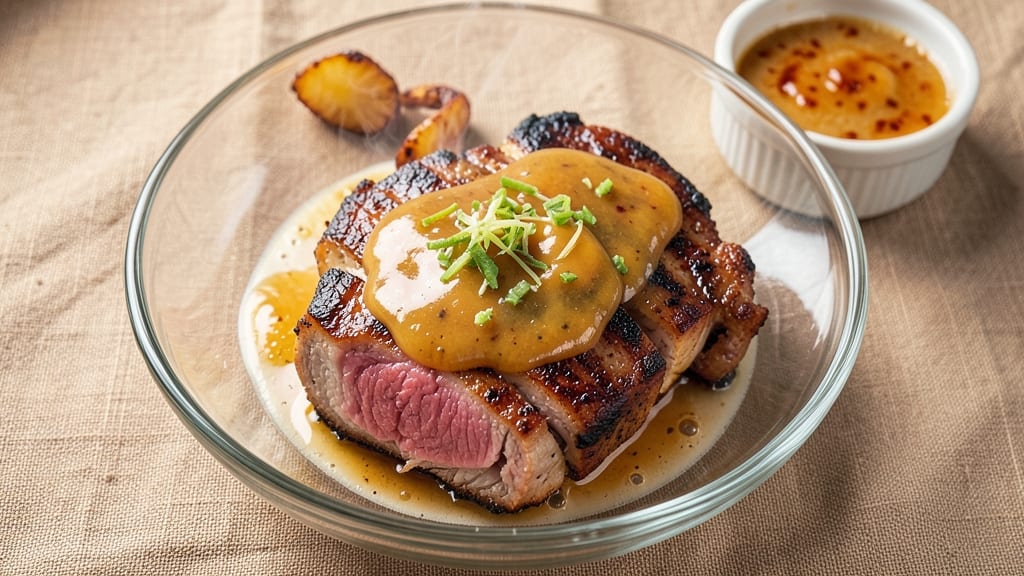
This pineapple pork chops sauce transforms simple pork into a tropical masterpiece with just five ingredients and 20 minutes of active time. I developed it after years of perfecting the balance between sweet, tangy, and savory notes that caramelize meat without overpowering its natural richness.
The secret lies in reducing pineapple juice with ginger and soy sauce until it becomes a thick, glossy glaze that clings beautifully to seared pork chops.
The sauce begins with fresh pineapple juice—never canned—because its natural acids break down the pork's surface while caramelizing into a sticky, aromatic glaze. A touch of soy sauce adds umami depth, while ginger provides warmth that cuts through the sweetness.
The magic happens when you reduce this mixture until it coats the back of a spoon, creating a sauce that's both versatile and restaurant-worthy.
What you'll achieve is a sauce that elevates pork chops from ordinary to extraordinary—golden caramelized edges, tender meat, and a glossy glaze that's perfectly balanced between sweet and tangy.
It works equally well as a finishing sauce for grilled chops, a dipping sauce for spring rolls, or even a marinade component. The best part? It keeps well in the fridge for up to a week, making it perfect for meal prep.
For those who prefer their sauce sweeter, add a touch of honey during the reduction. If you need it thicker for dipping, a cornstarch slurry does the trick without altering the flavor.
This sauce is the kind of game-changer that turns weeknight dinners into memorable meals—simple enough for weeknights but impressive enough for company.
Ingredients for pineapple sauce recipe for pork chops
Five ingredients, one pan—this tropical glaze transforms pork chops into a restaurant-worthy dish.
| Ingredient | Amount | Notes |
|---|---|---|
| Fresh Pineapple Juice 🍍 | 1 cup | From fresh pineapple, not canned |
| Fresh Ginger Root 🌿 | 2 tbsp | Grated, not powdered |
| Soy Sauce 🥢 | 2 tbsp | Light or dark variety |
| Honey 🍯 | 1 tbsp | Optional, for extra sweetness |
| Cornstarch 🌾 | 1 tsp | For thickening if needed |
| Water 💧 | 2 tbsp | For cornstarch slurry |
| Olive Oil 🫒 | 1 tbsp | For finishing drizzle |
| Salt 🧂 | ½ tsp | Adjust to taste |
Fresh pineapple juice is non-negotiable here—canned juice lacks the acidity and depth that caramelizes the pork beautifully. Grab a fresh pineapple at Trader Joe's or Whole Foods; their tropical varieties have the best juice yield. For ginger, look for firm, aromatic roots—the fresher, the better. I always buy extra and freeze it in chunks for future use. The soy sauce should be light or dark, not reduced or tamari, unless you're gluten-free. Kikkoman or La Choy are solid choices, but any good-quality brand works.
No fresh pineapple juice? Freshly squeezed orange juice with 1 tbsp lime juice can stand in, though it won’t have the same caramelization. Powdered ginger is a disaster here—grate your own for that fresh, zesty kick. Want less sweetness? Skip the honey entirely or use 1/2 tbsp maple syrup. The cornstarch slurry is your secret weapon for thickening—mix it with water first, then whisk into the warm sauce. If you're using this as a marinade, reduce the cornstarch to 1/2 tsp so it doesn’t toughen the meat.
This sauce keeps for 1 week in the fridge in an airtight container, though it tastes even better the next day as flavors meld. For longer storage, freeze in ice cube trays—perfect for thawing just what you need. If it thickens too much in the fridge, a splash of warm water or pineapple juice brings it back to life. Drizzle over seared pork chops, use as a dipping sauce for spring rolls, or even toss with grilled chicken. The possibilities are endless!
Why You'll Love This Recipe
- I’ll be real: that first sip of pineapple juice simmered with ginger and soy sauce—it’s like a flavor party in your mouth. The honey rounds out the sharpness, and the cornstarch thickens it just enough to cling to those pork chops like a dream.
- Sweet-Savory Magic: I’ll be real: that first sip of pineapple juice simmered with ginger and soy sauce—it’s like a flavor party in your mouth. The honey rounds out the sharpness, and the cornstarch thickens it just enough to cling to those pork chops like a dream.
- Pantry-Friendly Powerhouse: Honestly, you’re probably already stocked for this. Fresh pineapple juice? I keep a small can in the fridge. Ginger? One root lasts me weeks. Soy sauce, honey, cornstarch—basic stuff that doesn’t break the bank or clutter my shelves.
- Weeknight to Dinner Party: This sauce is my go-to for anything pork—grilled, pan-seared, even leftover chops. Serve it with rice and steamed greens for a quick weeknight meal, or drizzle it over perfectly cooked pork chops at a dinner party. (Yes, even on a Tuesday night.)
Step-by-step instructions for pineapple pork chops sauce
This tropical sauce balances sweet, tangy, and savory flavors perfectly for pork chops.
Prepare the Ginger and Cornstarch Slurry
In a small bowl, finely grate the 2 tablespoons fresh ginger root using a microplane or fine grater. The goal is to create a paste-like consistency—this ensures maximum flavor infusion. Transfer the grated ginger to a saucepan and set aside.
In a separate small bowl, whisk together the 1 teaspoon cornstarch with the 2 tablespoons water until completely dissolved. This mixture will create a silky, glossy finish for your sauce. Set this slurry aside until needed—it's best to add it when the sauce is nearly done cooking to prevent clumping.
Simmer the Base Ingredients
In a medium saucepan, combine the 1 cup fresh pineapple juice, 2 tablespoons soy sauce, 1 tablespoon honey, and ½ teaspoon salt. Bring the mixture to a gentle boil over medium-high heat, then immediately reduce the heat to medium-low to maintain a steady simmer.
Let the sauce bubble away for 8-10 minutes, stirring occasionally, until it reduces by about one-third and becomes slightly syrupy. You'll notice the aroma intensify as the flavors meld together—this is when the magic happens. The sauce should coat the back of a spoon and develop a rich, golden hue.
Add Ginger and Thicken the Sauce
Once the base has reduced, stir in the grated ginger and let it simmer for another 3-4 minutes. The ginger will release its aromatic oils, creating a fragrant, slightly spicy depth that pairs beautifully with pork. Keep the heat at medium-low—you want the ginger to infuse without burning.
Remove the pan from heat and slowly whisk in the cornstarch slurry, stirring constantly for 1-2 minutes until the sauce thickens to your desired consistency. If it's still too thin, return the pan to low heat for an additional 1-2 minutes, stirring constantly. The sauce should coat a spoon smoothly but still be pourable.
Finish with Olive Oil for Gloss and Serve
Return the sauce to low heat and stir in the 1 tablespoon olive oil. This final step adds a luxurious sheen and helps balance the sauce's acidity. Let it heat through for 30 seconds, then taste and adjust the seasoning if needed—add a pinch more salt or a drizzle of honey if the balance isn't quite right.
Serve the sauce immediately over your grilled or pan-seared pork chops, drizzling generously for that perfect tropical-savory contrast. The sauce's caramelized sweetness will complement the meat's richness, while the ginger adds a bright, zesty kick that keeps every bite exciting.
Pro Tips For Making Pineapple Sauce Recipe For Pork Chops
- Simmer Slow and Steady: I learned this the hard way—rushing the sauce on high heat turns it clumpy and bitter. Keep it at a gentle simmer (small bubbles, occasional swirls) for 10-12 minutes, or the ginger will turn sharp and the pineapple flavors won’t meld properly.
- Peel and Grate Ginger Fresh: Pre-packaged ginger paste is convenient, but it’s got additives that muddy the sauce. Use a microplane or fine grater for fresh ginger—it releases aromatic oils that brighten the soy and honey balance, and you only need 1 teaspoon of zest, not the whole root.
- Slurry the Cornstarch: Skip the "toss it in dry" approach—cornstarch lumps are the enemy of silky sauce. Mix 1 tablespoon cornstarch with 2 tablespoons cold water first, then whisk it into the simmering sauce. Stir constantly for 30 seconds until it thickens; this guarantees a glossy finish without graininess.
- Balance the Sweet-Sour Early: Taste the sauce before adding honey—pineapple juice varies wildly in tartness. If it’s too sweet, add ½ teaspoon rice vinegar (trust me, it cuts through). If it’s too sharp, a splash of extra honey (start with 1 teaspoon) prevents overcorrecting later. Adjust while warm, not cold.
Perfect pairings for pineapple sauce recipe for pork chops
Grilled Pork Chop Pairing
This sauce is a game-changer for grilled pork chops, especially when you sear them first over medium-high heat with a ½-inch thick cut for perfect medium-rare doneness.
I recommend brushing the sauce on during the last 2 minutes of grilling—the high heat caramelizes the pineapple sugars instantly, creating a sticky, glossy finish. For extra flavor, marinate the chops in ½ cup of the sauce for 30 minutes before grilling. 🔥
Spring Roll Dipping Sauce
Thicken the sauce slightly with an extra ½ teaspoon cornstarch and serve it warm as a dipping sauce for crispy spring rolls. The balance of sweet, tangy, and umami makes it irresistible—I love pairing it with vegetable spring rolls or shrimp-filled wrappers.
For a smoky twist, add ½ teaspoon smoked paprika to the sauce before serving. The contrast of the sauce's brightness with the fried rolls is pure magic. 🌶️
Tropical BBQ Glaze
Use this sauce as a glaze for pulled pork or ribs by reducing it longer—15-20 minutes—until it reaches a thick, syrupy consistency. Brush it over pork shoulder during the last hour of smoking at 225°F for a sticky, caramelized crust.
I often add 1 teaspoon apple cider vinegar to deepen the tang. This works especially well with heritage hog pork, which has a richer flavor profile. 🐷
Breakfast Pairings
Yes, you read that right! This sauce is fantastic with breakfast dishes like pork belly hash or scrambled eggs with pork. Drizzle it over crispy pork belly slices in a skillet with sautéed potatoes and peppers for a sweet-savory morning surprise.
The ginger adds warmth that cuts through the richness of breakfast meats. I also love it with bacon-wrapped dates for a dessert-like breakfast bite. 🍳
Vegetable Side Dish
Toss this sauce with grilled or roasted vegetables like pineapple chunks, bell peppers, and red onions for a quick side dish. The acidity in the sauce helps tenderize the vegetables while adding a sweet, tangy glaze.
Serve it alongside seared pork chops or as a standalone appetizer. For extra texture, sprinkle with toasted coconut flakes or crushed peanuts. ✨
Meal Prep Flexibility
This sauce is perfect for meal prep—store it in an airtight container in the fridge for up to 7 days or freeze it in ice cube trays for portion control. Reheat it gently on the stovetop with a splash of water if it thickens too much.
I often prep a big batch on Sundays to use throughout the week with grilled pork chops, stir-fries, or even as a marinade. The flavors deepen over time, making it even more delicious. 💡
Nutrition facts
Frequently asked questions
Can I use canned pineapple juice instead of fresh?
Fresh pineapple juice is ideal because it has more natural acidity and depth of flavor that caramelizes beautifully with pork. Canned juice lacks these qualities and may result in a thinner, less flavorful sauce. If you must use canned, choose 100% pineapple juice (no added sugar) and add an extra ½ teaspoon of lime juice to boost acidity.
How do I adjust the sweetness level?
For less sweetness, reduce or omit the honey entirely and add ½ teaspoon of apple cider vinegar instead to balance the flavors. If you prefer a sweeter sauce, increase the honey to 2 tablespoons or add 1 tablespoon of brown sugar during the reduction. Taste as you go—this sauce is all about finding your perfect balance!
Can I make this sauce without cornstarch?
Yes! If you don’t have cornstarch, you can thicken the sauce naturally by reducing it longer—simmer uncovered for an extra 5-7 minutes until it reaches your desired consistency. For a smoother texture, blend 1 tablespoon of the sauce with 1 tablespoon of water and stir it back in at the end. Avoid flour or other starches—they can alter the sauce’s delicate flavor.
What’s the best way to store leftover sauce?
Store the sauce in an airtight container in the fridge for up to 7 days. If it thickens too much, simply reheat it gently on the stovetop with a splash of water or pineapple juice. For longer storage, freeze the sauce in ice cube trays—thaw only what you need. The flavors actually improve over time, making it perfect for meal prep!
Can I use this sauce for other proteins?
This sauce works beautifully with chicken, shrimp, or even tofu. For chicken, brush it on during the last 3-4 minutes of grilling or baking. For shrimp, toss them in the sauce during the last 2 minutes of cooking to avoid overcooking. The tropical flavors complement a variety of proteins—just adjust cooking times to suit your protein type.