
Main Courses
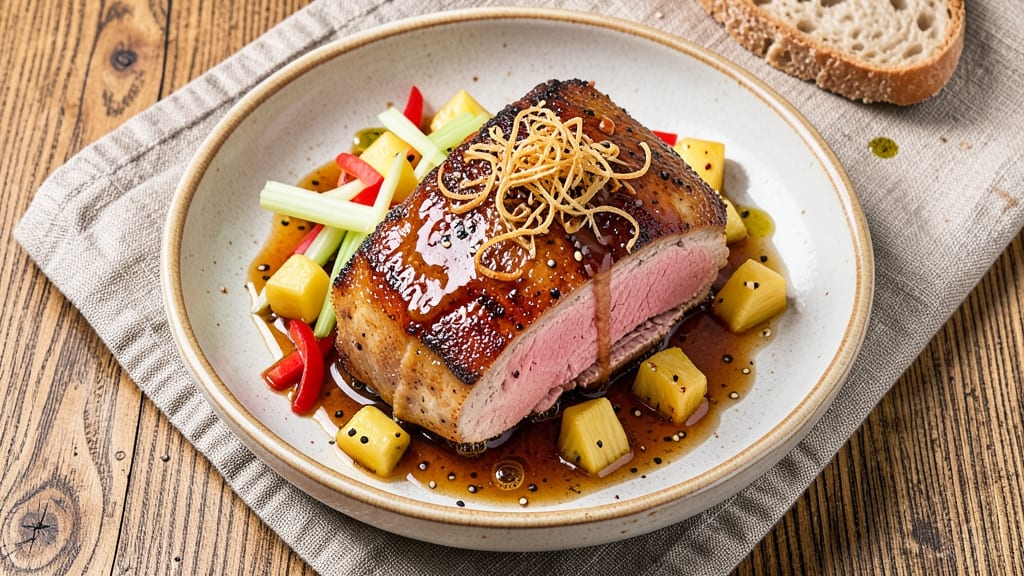
This pineapple pork shoulder recipe transforms tough cuts into melt-in-your-mouth perfection with a caramelized glaze and celery-pepper crunch. After years of perfecting this technique in my Atlanta kitchen, I’ve cracked the code for balancing sweet, tangy, and savory flavors—no shortcuts, just deep, restaurant-quality results.
The key? Slow-cooking the pork until it falls apart while the pineapple glaze caramelizes into a sticky, golden finish.
What sets this recipe apart is the celery-pepper crunch—a crispy topping that adds texture and freshness to every bite. I developed this during a particularly humid Georgia summer when I needed a dish that could handle outdoor cooking without losing its depth.
The pork shoulder, marinated in soy, garlic, and a touch of brown sugar, becomes irresistibly tender, while the pineapple glaze adds a bright, tropical contrast that cuts through the richness.
By the time you’re done, you’ll have a dish that’s foolproof yet impressive—golden-brown pork shoulder with a glossy glaze, topped with crispy celery and red pepper strips.
The aroma alone will draw everyone to the table, and the first bite delivers layers of flavor: sweet pineapple, smoky pork, and a peppery crunch that keeps you reaching for seconds. This is the kind of recipe that turns a simple weeknight dinner into a showstopper.
Serve it with roasted sweet potatoes or a simple green salad to balance the richness, or let the pork stand alone as the star. The leftovers? Even better the next day—just reheat and enjoy. Let’s get cooking!
Ingredients for pineapple pork shoulder
Six ingredients transform tough pork shoulder into melt-in-your-mouth perfection with tropical sweetness and peppery crunch.
| Ingredient | Amount | Notes |
|---|---|---|
| Boneless Pork Shoulder 🥩 | 4 lb | Bone-in preferred for flavor |
| Fresh Pineapple 🍍 | 1 whole | Juicy variety like Gold or Red |
| Celery Stalk 🧅 | 3 whole | Thinly sliced for crunch |
| Red Bell Pepper 🌶️ | 1 whole | Thinly sliced, any color |
| Soy Sauce 🥢 | ½ cup | Low-sodium preferred |
| Brown Sugar 🍚 | ¼ cup | Light or dark works |
| Garlic Cloves 🧄 | 6 cloves | Minced for marinade |
| Olive Oil 🫒 | ¼ cup | Extra-virgin for richness |
| Honey 🍯 | ¼ cup | Wildflower preferred |
| Apple Cider Vinegar 🍶 | ¼ cup | For tangy balance |
| Ground Black Pepper 🌶️ | 1 tsp | Freshly cracked |
| Salt 🧂 | 1 ½ tsp | Kosher or sea salt |
| Fresh Ginger 🌿 | ½ cup | Grated, for marinade |
| Vegetable Oil 🫒 | 2 tbsp | For pan searing |
| Cornstarch 🌾 | 2 tbsp | For glaze thickening |
The pork shoulder is non-negotiable here—bone-in delivers the best flavor, but boneless works too if you're short on time. Local butchers often have the best cuts, or grab one from the meat counter at Kroger or Whole Foods. Look for good marbling and ask for a cut around 4-5 lbs for six servings. Fresh pineapple is a must (canned won't cut it)—pick one that's juicy and ripe, not fibrous. The celery and red pepper? Organic from the farmers market if you can swing it, but regular grocery store works fine. Thinly slice them yourself—pre-cut won't crisp up right.
No fresh ginger? Ground ginger at half the amount works in a pinch, but fresh is worth hunting down. Short on soy sauce? Coconut aminos gives a similar umami punch. The honey can be swapped for maple syrup if you're avoiding it, but trust me, the floral notes pair perfectly with the pineapple. For the glaze, cornstarch is key—it thickens beautifully without making it gummy. If you're feeling fancy, add a splash of pineapple juice to the marinade for extra brightness. And pro tip: toast your cornstarch in the dry pan for 30 seconds before adding liquid—it adds a subtle nutty depth.
This dish gets better the next day—3-4 days in the fridge is ideal. Store in an airtight container with the juices to keep everything moist. For leftovers, reheat in a skillet with a splash of water to restore that caramelized glaze. The celery-pepper topping? Best eaten fresh, but you can reheat it in a dry pan for 2-3 minutes if needed. Freezes beautifully for up to 3 months—just thaw overnight in the fridge before reheating. I always make double batches because it disappears fast.
Why You'll Love This Recipe
- One-Pan Magic: I swear by this for lazy nights—the pork shoulder and veggies all cook together, no flipping or fussing. Just toss everything on a sheet, let it slow-roast, and walk away. (Yes, even on a Tuesday night.)
- Sweet-Savory Magic: That caramelized pineapple glaze cutting through tender pork? Absolute perfection. The soy sauce and bell pepper add depth, but it’s the pineapple’s bright tang that makes this dish ridiculously good.
- Leftovers That Don’t Suck: This recipe actually improves the next day—shredded pork gets even more flavorful, and the pineapple stays juicy. Pack it for lunches or reheat it for tacos; it’s my secret weapon for busy weeks.
- Budget-Friendly Feast: Pork shoulder is cheap, and you’re using the whole cut—no waste. Add celery and bell pepper for crunch, and suddenly you’ve got a hearty, filling meal that feeds four for under $15. (My wallet thanks me.)
Step-by-step instructions for pineapple pork shoulder
This recipe transforms tender pork shoulder into a masterpiece with a sweet-tangy glaze and crisp vegetable crunch.
Prepare the Pork and Marinade
Pat the 4 lb boneless pork shoulder completely dry with paper towels—this helps the marinade stick and creates a better sear. In a large bowl, combine the 0.5 cup soy sauce, 0.25 cup brown sugar, 6 minced garlic cloves, 0.5 cup grated fresh ginger, 1.5 tsp salt, and 1 tsp freshly cracked black pepper. Mix well until the sugar dissolves completely.
Pour this marinade over the pork shoulder, coating it thoroughly on all sides. Place the pork in a resealable plastic bag and refrigerate for at least 4 hours, or preferably overnight. This long marinating time ensures deep flavor penetration and tender meat. I like to turn the bag occasionally for even coating.
Sear the Pork for Maximum Flavor
Preheat your oven to 300°F. Remove the pork from the marinade (reserve the marinade for later) and pat it dry again. Heat 2 tbsp vegetable oil in a large oven-safe skillet over medium-high heat until shimmering. Place the pork shoulder in the skillet, fat-side down, and sear for 5 minutes without moving it. You'll see beautiful golden-brown crust forming—this is the flavor foundation.
Flip the pork and sear the other side for another 5 minutes. Then carefully transfer the skillet to your preheated oven. Pour the reserved marinade over the pork and cover loosely with foil. This searing step creates that irresistible crust while the slow oven cooking ensures tender, juicy meat.
Slow Cook Until Fork-Tender
Cook the pork in the oven for 3 to 3.5 hours, or until the internal temperature reaches 195°F. You'll know it's done when the meat is fork-tender and pulls apart easily. The cooking time varies based on your oven, so use a meat thermometer for accuracy—this is the only reliable way to judge doneness.
About 30 minutes before the pork is done, prepare the glaze by combining 0.25 cup honey, 0.25 cup apple cider vinegar, and 0.25 cup olive oil in a small saucepan. Bring to a simmer over medium heat and cook for 5 minutes until slightly thickened. This glaze will become the sweet-tangy finish to our dish.
Create the Crunchy Vegetable Topping
While the pork cooks, prepare the vegetable crunch. Thinly slice the 3 whole celery stalks and 1 whole red bell pepper. In a large skillet, heat 1 tbsp vegetable oil over medium heat. Add the vegetables and cook for 5-6 minutes, stirring occasionally, until they're tender-crisp with just a slight char on the edges. Remove from heat and set aside.
For the pineapple topping, peel and dice the 1 whole fresh pineapple into ½-inch cubes. In the same skillet (no need to clean it), add the pineapple and cook over medium heat for 3-4 minutes until it begins to caramelize slightly at the edges. This quick cooking preserves the pineapple's natural sweetness while adding depth of flavor.
Glaze and Finish
Remove the pork from the oven and transfer it to a cutting board. Let it rest for 15 minutes before slicing—this resting period is crucial for juicy meat. Meanwhile, return the oven to 400°F. Brush the pork slices generously with the honey glaze you prepared earlier.
Broil the pork for 3-4 minutes until the glaze caramelizes and bubbles. This final step creates that beautiful golden glaze that makes this dish so special. Arrange the sliced pork on a serving platter, top with the cooked pineapple and vegetable mixture, and drizzle any remaining glaze over the top. Serve immediately while everything is warm and the glaze is still sticky.
Pro Tips For Making Pineapple Pork Shoulder
- SEAR THE PORK FIRST: High heat. Seriously, crank it up until that pork shoulder turns golden—no pale, sad meat here. I learned this the hard way: skipping the sear means flavor hiding in the sauce instead of clinging to the meat. A quick 3-4 minutes per side with a hot pan and a splash of oil makes all the difference when you’re braising later.
- CORE THE PINEAPPLE: Cut out the tough core like it’s your enemy—it won’t soften, and you’ll end up with a mouthful of chewy disappointment. Dice the rest into even ½-inch cubes so they cook through without turning to mush. (Yes, even if you’re impatient like me.)
- SALT THE PORK OVERNIGHT: Toss the pork shoulder in 1 tablespoon of salt before you even think about cooking. Let it sit uncovered in the fridge for at least 12 hours—this isn’t just seasoning, it’s breaking down the meat for tender, juicy results. I know, I know, but trust the process.
- STIR THE SAUCE OFTEN: That pineapple-soy sauce mix? Don’t walk away. Stir it every 5-10 minutes while simmering to prevent scorching—especially if you’re using fresh pineapple juice. Burnt sugar = bitter sauce. A wooden spoon keeps it smooth and sweet.
Best sauces and condiments for these flavors
Sweet-Tangy Glaze
The honey-apple cider vinegar glaze is the star of this dish, balancing the pork’s richness with bright tropical notes. Simmer ½ cup honey, ¼ cup apple cider vinegar, and ¼ cup olive oil for 5 minutes until slightly thickened—this creates a sticky, caramelized finish.
For extra depth, add 1 tbsp fresh lime juice right before brushing it on the pork. I like to toast 1 tsp cornstarch in the pan first for a subtle nutty undertone. 🍯
Pineapple Caramelization
Fresh pineapple cubes cooked until slightly caramelized at the edges add a natural sweetness that complements the pork. Dice 1 whole pineapple into ½-inch cubes and cook them in the same skillet used for the celery-pepper mix for 3-4 minutes over medium heat.
The residual oil helps create a golden crust. For a smoky twist, add ½ tsp smoked paprika to the pineapple while cooking. 🍍
Celery-Pepper Crunch
Thinly sliced celery and red bell pepper create a crispy, refreshing contrast to the tender pork. Sauté in 1 tbsp vegetable oil for 5-6 minutes until tender-crisp with slight char. For extra flavor, toss with ½ tsp garlic powder and ¼ tsp onion powder before adding to the pork.
This topping stays crunchy even when reheated—just warm it in a dry pan for 2 minutes. 🧅
Umami Boost Options
For deeper flavor, add 1 tbsp fish sauce or 1 tsp oyster sauce to the glaze for a Southeast Asian-inspired twist. If you prefer a smokier profile, swap ½ cup of the marinade with ½ cup BBQ sauce (like Sweet Baby Ray’s) and add ½ tsp smoked salt.
Both options work beautifully with the pineapple’s brightness. 🔥
Spicy Kick
For heat lovers, stir 1 tbsp gochujang or 1 tsp cayenne pepper into the glaze before brushing it on the pork. If you’re sensitive to spice, add ½ tsp red pepper flakes to the celery-pepper mix instead. The heat cuts through the sweetness and adds complexity. 🌶️
Nutrition facts
Frequently asked questions
Can I use frozen pineapple instead of fresh?
Fresh pineapple is ideal for this recipe because it caramelizes beautifully and maintains the best texture. However, if you must use frozen, thaw it completely first and pat it very dry with paper towels to prevent excess moisture in the pan. The flavor won't be quite as vibrant, but it'll still work in a pinch.
How do I know when the pork shoulder is fully cooked?
Use a meat thermometer to check for doneness—pork shoulder is perfect when it reaches 195°F internally. The meat should pull apart easily with two forks, indicating it's fork-tender. This internal temperature ensures all bacteria are eliminated while keeping the meat juicy.
Can I make this recipe in a slow cooker?
Brown the pork in a skillet first, then transfer it to your slow cooker with the marinade. Cook on low for 8 hours or high for 5-6 hours until tender. In the last 30 minutes, add the pineapple and vegetables to the cooker for warming. Finish with the glaze as directed in the recipe.
What's the best way to store leftovers?
Store leftovers in an airtight container with the juices for up to 4 days in the refrigerator. For longer storage, freeze portions for up to 3 months. To reheat, place slices in a skillet with a splash of water or broth over medium heat until warmed through. The glaze may need a quick broil to restore its shine.
Why does my glaze turn out too thick or too thin?
If your glaze is too thick, add 1-2 teaspoons of water or pineapple juice while heating. For a thinner glaze, simmer it longer until it reduces to your desired consistency. The key is to bring it to a gentle simmer and stir frequently. For extra insurance, toast 1 tsp cornstarch in the pan before adding liquids to help control thickness.