
Sauces & Condiments
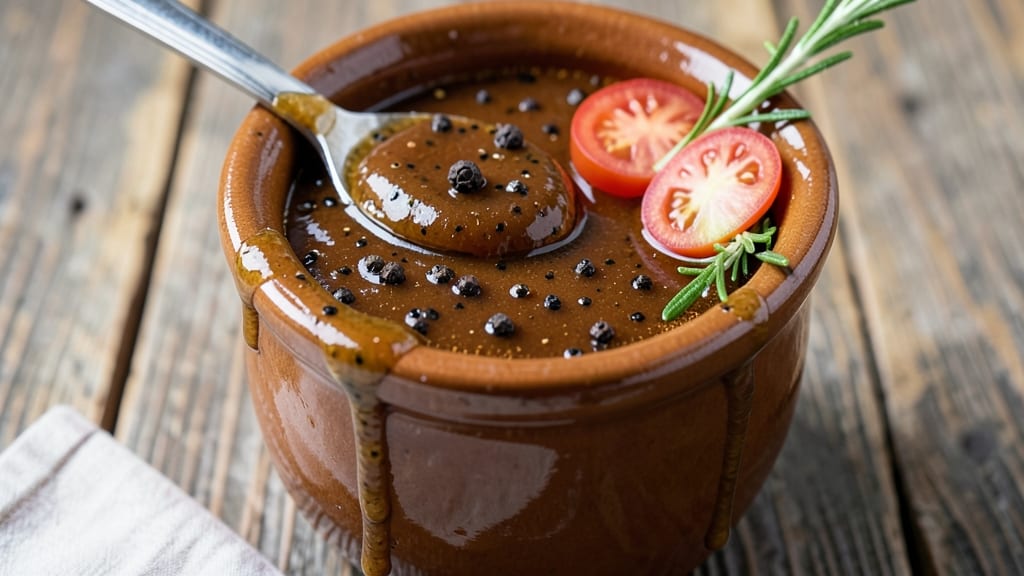
This North Carolina apple cider vinegar BBQ sauce recipe delivers the signature tangy-sweet balance that makes Carolina-style ribs legendary.
The key lies in the vinegar's sharp brightness cutting through the smoky depth of tomato and spices, creating a sauce that caramelizes beautifully on ribs while offering bold flavor in every dip.
I developed this recipe after years of studying traditional Carolina pitmaster techniques, focusing on the perfect ratio of vinegar to sweetness that defines this style.
The foundation starts with apple cider vinegar, which provides that signature tang that sets North Carolina BBQ apart. Combined with a rich tomato base, black pepper, and just a touch of sweetness from molasses, this sauce builds layers of flavor through careful simmering and reduction.
The process transforms simple ingredients into something restaurant-quality, with a glossy sheen that clings perfectly to pulled pork or ribs. What makes this sauce truly special is how it evolves as it cooks - the longer it simmers, the deeper and more complex the flavors become.
What you'll end up with is a versatile sauce that excels as a glaze, dip, or marinade. The vinegar-forward profile gives it a distinctive sharpness that cuts through fatty meats, while the caramelized edges create irresistible texture.
This isn't just another BBQ sauce - it's the kind that transforms ordinary cookouts into memorable experiences. The sauce keeps well in the refrigerator for up to two weeks, allowing you to build up a supply for your next big cook.
Whether you're competing in a local BBQ contest or simply feeding your family, this sauce delivers the authentic North Carolina flavor profile that pitmasters have perfected for generations. The balance of tang, sweetness, and smokiness creates a sauce that's as versatile as it is impressive.
Let's get started on creating this iconic Carolina-style BBQ sauce that will elevate your cooking to the next level.
Ingredients for north carolina apple cider vinegar bbq sauce
Nine ingredients transform into Carolina-style BBQ magic that clings to ribs like a second skin.
| Ingredient | Amount | Notes |
|---|---|---|
| Apple Cider Vinegar 🍏 | ½ cup | Raw, unfiltered preferred for depth |
| Tomato Paste 🍅 | ½ cup | San Marzano preferred for sweetness |
| Black Peppercorns 🌶️ | 1 tbsp | Freshly cracked for intensity |
| Molasses 🍯 | ¼ cup | Unsulphured for authentic flavor |
| Onion Powder 🧅 | 1 tsp | Freshly ground for aroma |
| Garlic Powder 🧄 | 1 tsp | Not garlic salt |
| Smoked Paprika 🌶️ | 1 tsp | Honduran or Spanish preferred |
| Granulated Sugar 🍚 | ¼ cup | Light brown sugar for depth |
| Water 💧 | ½ cup | Filtered preferred for clarity |
| Salt 🧂 | 1 tsp | Diamond Crystal kosher |
The apple cider vinegar is non-negotiable—Bragg or Texas Pete are my go-tos, but any raw, unfiltered brand works. Look for 'raw' or 'unpasteurized' on the label; those cloudy bottles have the most flavor. The tomato paste? San Marzano is worth the splurge—its natural sweetness cuts through the vinegar's sharpness beautifully. If you can't find it, Mueller's is a solid backup. For the peppercorns, Penzeys, but any whole peppercorns will work if you've got a mortar and pestle. The molasses should be unsulphured—check the label, as sulphured versions taste bitter and ruin the balance.
No apple cider vinegar? White vinegar plus 1 tbsp lemon juice gets you close, though the flavor won't be quite as complex. Running short on tomato paste? Crushed tomatoes plus 1 tsp tomato powder works in a pinch, but reduce the water slightly since crushed tomatoes add liquid. The smoked paprika is crucial for that Carolina smokiness—substitute 1/2 tsp regular paprika plus 1/4 tsp liquid smoke if you're out. For the sugar, light brown sugar adds subtle caramel notes, but white sugar keeps it classic. The water can be swapped for broth or apple juice if you want extra depth, though it'll alter the balance slightly.
This sauce gets better with time—simmer for 45-60 minutes for maximum caramelization. Store in a glass jar in the fridge for up to 2 weeks, or freeze in ice cube trays for perfect single-use portions. The longer it sits, the more the flavors meld together, so make a double batch if you're planning a big cookout. Leftovers taste even better the next day as the vinegar mellows and the sugars deepen. Trust me, you'll want to keep a jar in your fridge at all times.
Why You'll Love This Recipe
- Five-Ingredient Magic: I swear by this—just vinegar, tomato paste, molasses, and a handful of peppercorns. No fancy gadgets, no waiting for rare spices to arrive. Honestly, the pantry version of this sauce is better than store-bought because you control the tang.
- Tangy-Sweet Balance: That molasses and apple cider vinegar combo? It’s the secret weapon. The vinegar cuts through the richness of pulled pork or ribs, while the molasses gives it this deep, caramelized warmth—like a hug in sauce form. (Yes, even on a Tuesday night.)
- Weeknight BBQ Hero: Slather it on grilled chicken for a quick dinner or toss it with roasted veggies for a crowd. I’ve used it for tacos, sandwiches, and even as a marinade—it’s the one sauce that does it all without making me feel like I’m slaving away.
- Lasts All Week: Make a big batch—it keeps for months in the fridge, and the flavor only gets better as it mellows. Between us, I’ve had this sauce rescue burnt toast and plain old eggs. Budget-friendly? Absolutely. Versatile? You bet. My secret weapon for lazy days.
Step-by-step instructions for North Carolina apple cider vinegar BBQ sauce
Here's how to build a sauce that balances tangy vinegar, deep molasses sweetness, and smoky warmth.
Toast the Black Peppercorns for Depth
Heat a dry skillet over medium heat and add the 1 tablespoon black peppercorns. Toast them for 2-3 minutes until they begin to darken slightly and release their aromatic oils. You'll smell an intense, almost floral pepper scent—this is your signal they're ready. Immediately transfer the peppercorns to a mortar and pestle or small spice grinder.
Crush them until you have a coarse powder—this releases their essential oils without turning into fine dust. The toasted peppercorns will give your sauce a complex, almost floral heat that's characteristic of North Carolina's signature vinegar-based sauces. If you don't have a mortar and pestle, a clean coffee grinder works well for small batches.
Build the Base with Tomato Paste and Molasses
In a medium saucepan, combine the 0.5 cup tomato paste and 0.25 cup molasses over medium-low heat. Stir constantly for 5 minutes until the mixture begins to bubble gently and the molasses fully incorporates. The sauce should thicken slightly and develop a rich, caramel-like aroma.
This step is where the sauce's signature sweet-tang balance begins to form. The molasses provides that deep, almost butterscotch sweetness while the tomato paste adds body. Don't rush this stage—properly integrating these ingredients prevents a grainy texture later. If the mixture starts to stick, add 1 tablespoon of the 0.5 cup water to help it release from the pan.
Add Vinegar and Spices for Tangy Complexity
Pour in the 0.5 cup apple cider vinegar and the remaining 0.5 cup water all at once. Add the toasted black peppercorns powder, 1 teaspoon onion powder, 1 teaspoon garlic powder, 1 teaspoon smoked paprika, 0.25 cup granulated sugar, and 1 teaspoon salt. Stir vigorously to dissolve the sugar completely and combine all ingredients.
The vinegar will initially make the mixture look curdled, but keep stirring—it will smooth out as it heats. The smoked paprika and toasted peppercorns will infuse the sauce with that signature North Carolina smokiness. Taste at this stage—you should detect all the individual components (vinegar tang, molasses sweetness, pepper heat) but not yet a cohesive flavor. This is the raw foundation that will develop during simmering.
Simmer Until Thick and Glossy
Bring the mixture to a gentle boil over medium heat, then reduce to low heat and let it simmer uncovered for 20-25 minutes. Stir occasionally to prevent sticking and encourage even caramelization. You're looking for the sauce to reduce by about 30%—it should coat the back of a spoon and have a syrupy consistency.
As it simmers, the vinegar's acidity will mellow slightly while the sugars caramelize, creating that beautiful glossy sheen. The sauce should smell like a perfect balance of sweet, smoky, and tangy—almost like apple cider donuts with a BBQ twist. If it thickens too much before reaching this aroma, add 1 tablespoon water at a time until you achieve the right consistency. The final texture should be thick enough to cling to ribs but still pour smoothly.
Cool and Rest for Maximum Flavor
Remove the sauce from heat and let it cool at room temperature for 30 minutes. This resting period allows the flavors to meld completely and the sauce to thicken further as it cools. The color will deepen from a reddish-brown to a rich amber, and the aroma will become more complex.
During this time, taste the sauce again—you'll notice the individual components have blended into a cohesive flavor profile. The vinegar's sharpness should be balanced by the molasses sweetness, with just a hint of pepper heat lingering. If you find it needs more tang, add 1 teaspoon apple cider vinegar; if it needs more sweetness, add 1 teaspoon molasses. Transfer to a clean jar and store in the refrigerator for up to 2 weeks or freeze for up to 3 months.
Pro Tips For Making North Carolina Apple Cider Vinegar Bbq Sauce
- Simmer Slow and Steady: I learned this the hard way—rushing the reduction turns your sauce into vinegar-flavored sludge. Keep it at a gentle boil for at least 20-25 minutes, stirring often, until it thickens to coat the back of a spoon. That’s when the molasses and tomato paste really meld into something rich, not when it’s just a sticky syrup.
- Toast Your Peppercorns: Don’t just toss in whole peppercorns—lightly toast them in a dry pan for 30 seconds until fragrant. This unlocks their flavor and prevents a harsh, raw bite in the finished sauce. (Yes, even if you’re impatient like me, wait for the aroma—it’s worth it.)
- Balance the Vinegar: Apple cider vinegar is potent, and too much makes your sauce taste like a salad dressing. Start with ½ cup and taste as you go, adding more only if needed. The molasses and tomato paste will mellow it out, but you can’t fix overpowering acid later—trust your first sip.
- Skip the Water Shortcut: Some recipes add water to thin the sauce, but that dilutes the depth you’re working for. Instead, simmer uncovered and let the liquid reduce naturally—it’ll concentrate the flavors without turning your sauce into a thin glaze. (Your future self will thank you.)
Regional styles of this north carolina apple cider vinegar bbq sauce
Carolina Vinegar Tradition
This sauce traces its roots to North Carolina's Eastern region, where apple orchards and vinegar production became integral to the state's BBQ culture.
The vinegar-forward profile emerged as a practical way to balance the richness of pork shoulder, especially in the hot, humid summers when meat needed acidity to cut through fat.
I remember my first taste at a roadside pit in Wilson—pure, unapologetic tang that made every bite of pulled pork sing. 🌶️
Coastal vs. Piedmont Styles
Coastal North Carolina versions lean heavier on the vinegar, often using white vinegar as a base, while Piedmont styles incorporate more molasses for depth. The coastal approach creates a sharper, brighter sauce perfect for grilled shrimp or chicken, while Piedmont's richer profile shines on slow-cooked ribs.
I prefer the coastal style's boldness—it's what makes this sauce so distinctive when paired with smoked meats.
Modern Pitmaster Twists
Contemporary pitmasters are experimenting with local honey substitutions (replacing 2 tbsp molasses with honey) for floral notes, or adding 1 tsp apple cider at the end for extra brightness. Some even blend in 1 tbsp tomato juice for a smoother texture.
The key is maintaining that vinegar-to-sweet ratio—I've seen recipes where the balance tips too sweet, losing the Carolina soul. 🍯
Competition Circuit Secrets
At BBQ competitions, top teams often make double batches and reduce them longer for a thicker consistency that clings better to competition plates. They also add 1/4 tsp ground cloves for warmth or 1/2 tsp cinnamon for depth.
The secret? Starting with high-quality vinegar—I've tasted competition sauces made with cheap vinegar that lacked the complexity of homemade versions.
Vegetarian Adaptations
For plant-based versions, swap molasses for maple syrup and use beet juice (1/4 cup) instead of tomato paste for color. The vinegar remains the star, but I reduce the sugar slightly since maple is sweeter.
This version works beautifully as a dipping sauce for veggie burgers or grilled portobellos. The tang still cuts through richness, just without the meaty base. 🌱
Storage Hacks
Keep a small jar in your fridge for quick glazing—this sauce is best when used within 2 weeks. For long-term storage, freeze in ice cube trays for perfect single-use portions. I also recommend labeling batches with dates, as the flavor evolves beautifully over time.
The longer it sits, the more the vinegar mellows and the caramelized sugars deepen—almost like a fine wine. 💫
Nutrition facts
Frequently asked questions
Why does this recipe use apple cider vinegar instead of regular vinegar?
The apple cider vinegar provides that signature North Carolina tang with additional depth and complexity from its apple flavor notes. Regular vinegar works in a pinch, but it lacks the subtle fruitiness that makes this sauce truly authentic. The raw, unfiltered version contains trace minerals and flavors that give it a more sophisticated profile than distilled vinegars.
Can I make this sauce without molasses?
Yes, but the flavor will be less authentic. Replace the 0.25 cup molasses with 0.25 cup brown sugar for a similar caramel depth, or use 0.25 cup honey for floral notes. The molasses creates that signature butterscotch richness that balances the vinegar's sharpness perfectly.
How do I adjust the thickness of the sauce?
For a thicker sauce, simmer uncovered for additional 5-10 minutes to reduce further. If it becomes too thick, add 1 tablespoon water at a time while stirring. The ideal consistency should coat the back of a spoon but still pour smoothly. Remember, the sauce will thicken more as it cools.
What's the best way to use leftover sauce?
Store in an airtight container in the fridge for up to 2 weeks or freeze in ice cube trays for single-use portions. Use it as a marinade for chicken or pork, a glaze for grilled vegetables, or even a tangy salad dressing. The flavor actually improves over time as the vinegar mellows and sugars caramelize further.
Can I make this sauce in a slow cooker?
Combine all ingredients in your slow cooker and cook on low for 3-4 hours, stirring occasionally. The slow cooking enhances the caramelization naturally. For a quicker version, use high for 1.5-2 hours. Just be sure to reduce the water by 1 tablespoon since slow cookers don't evaporate liquid as quickly.