
Main Courses
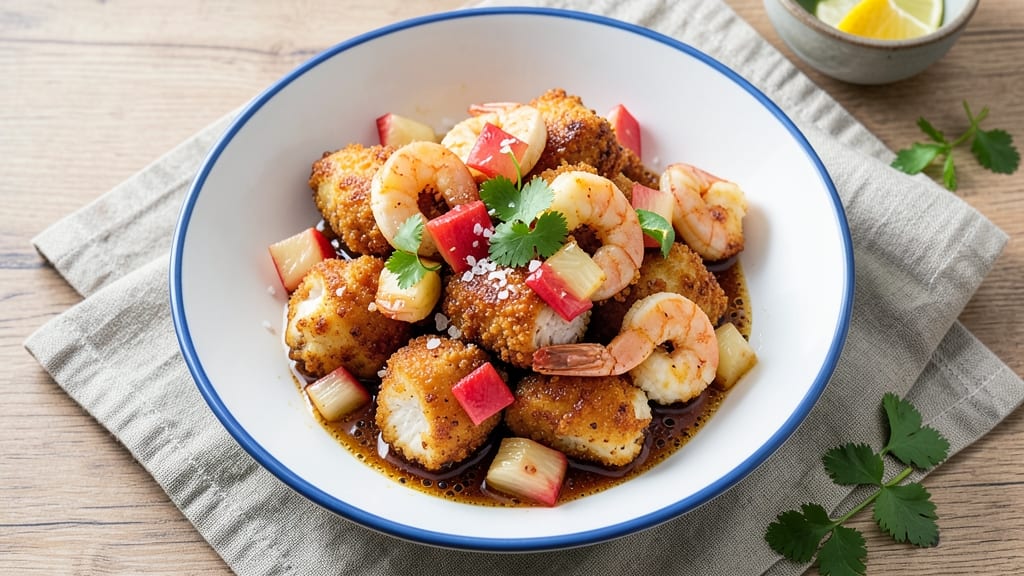
This crispy pineapple chicken and shrimp recipe delivers the perfect balance of sweet, tangy, and savory flavors with every bite. The secret lies in a caramelized glaze that clings to both proteins, creating a crispy exterior while keeping the inside juicy and tender.
I developed this dish after years of testing different glazes and breading techniques—what you'll end up with is a restaurant-quality meal that's surprisingly simple to make at home.
The process starts with marinating the chicken and shrimp in a blend of pineapple juice and soy sauce, which infuses the proteins with flavor while preventing them from drying out.
After a quick breading in cornstarch and flour, they're seared to golden perfection, then glazed with a sticky-sweet caramel sauce that ties everything together. The pineapple isn't just an ingredient—it's the star, adding brightness that cuts through the richness of the meat.
What makes this recipe truly special is how the textures and flavors come together: crispy edges on the chicken and shrimp contrast beautifully with the soft, juicy centers, while the glaze adds a satisfying chew.
The pineapple's natural sweetness balances the savory notes, creating a dish that's both exciting and comforting. It's the kind of meal that transforms a simple weeknight dinner into something memorable.
Serve this dish over steamed jasmine rice or with a fresh cucumber salad to round out the meal. The leftovers reheat beautifully, making it perfect for meal prep or feeding a crowd. Let's get cooking—this recipe is a game-changer for anyone who loves bold flavors and satisfying textures.
Ingredients for crispy pineapple chicken and shrimp
Pineapple juice, crispy proteins, and a caramelized glaze create this restaurant-worthy dish.
| Ingredient | Amount | Notes |
|---|---|---|
| Boneless, Skinless Chicken Thighs 🍗 | 1 ½ lb | Cut into 1-inch pieces |
| Large Shrimp 🦐 | 1 ½ lb | Peeled, deveined, tails on |
| Fresh Pineapple 🍍 | 1 cup | Juice only, no pulp |
| Cornstarch 🌾 | ½ cup | For crispy coating |
| All-Purpose Flour 🌾 | ½ cup | For breading mixture |
| Light Brown Sugar 🍚 | ½ cup | Packed, for glaze |
| Soy Sauce 🥢 | ¼ cup | Low-sodium preferred |
| Fresh Ginger 🌿 | 2 tbsp | Finely grated, fresh |
| Garlic Cloves 🧄 | 4 cloves | Minced for marinade |
| Vegetable Oil 🫒 | ½ cup | For deep frying |
| Sesame Oil 🫒 | 1 tbsp | For finishing |
| Salt 🧂 | 1 ½ tsp | Kosher or sea salt |
| Black Pepper 🌶️ | ½ tsp | Freshly ground |
| Red Pepper Flakes 🌶️ | ½ tsp | Optional for heat |
The pineapple juice should be fresh—canned juice lacks the bright acidity that balances the sweet glaze. Look for whole pineapples at Trader Joe's or Costco for the best quality; their juice has more depth than store-bought cartons. Chicken thighs are key—they stay juicy while developing crispy edges, unlike breasts. Shrimp should be jumbo or large, with tails on for presentation. Fresh ginger and garlic should be vibrant and aromatic; if they smell stale, skip them. The brown sugar needs to be packed—lightly tap the measuring cup to settle it properly.
No pineapple juice? Fresh orange juice or mango nectar works in a pinch, though the flavor won't be identical. Cornstarch is non-negotiable for crispiness—substituting flour will make the coating gummy. Soy sauce should be low-sodium to avoid over-salting the dish. Sesame oil adds depth, but if you're avoiding it, a splash of toasted sesame seeds can mimic the flavor. Red pepper flakes are optional but recommended for a subtle kick; adjust to taste. For a gluten-free version, swap flour for almond flour or tapioca starch, though texture will differ slightly.
Marinate the proteins for at least 30 minutes—overnight is ideal. Store the marinade in the fridge for up to 2 days, but discard any unused marinade that's touched raw meat. Freshly fried shrimp and chicken are best served immediately, but the dish reheats well in a 350°F oven for 10-12 minutes if needed. The glaze thickens as it cools, so reheat with a splash of water or pineapple juice to restore consistency. Leftovers keep for 3 days in the fridge or 2 months frozen—portion into airtight containers before freezing.
Why You'll Love This Recipe
- One-Pan Magic: I swear by this for lazy nights—just toss everything on one sheet pan, bake, and walk away. No chopping boards, no messy pans, just golden-brown chicken and shrimp with that sticky-sweet pineapple glaze pooling underneath.
- Sweet-Savory Crush: That cornstarch crust? Chef’s kiss. It’s crispy outside, juicy inside, and the pineapple’s tang cuts through the richness of the chicken and shrimp like a flavor bomb. Honestly, the first bite makes me forget I’m eating something “healthy.”
- Potluck Star: Bring this to a gathering, and watch it disappear. It’s hearty enough for a main but light enough for a party—plus, the shrimp makes it feel fancy without the fuss. (Yes, even on a Tuesday night.)
- Budget Meal Hero: Chicken thighs and shrimp stretch farther than you’d think, and pineapple in season? A steal. I make double batches, freeze half, and pull it out for those “what’s for dinner?” moments when the fridge is bare.
Step-by-step instructions for crispy pineapple chicken and shrimp
This method delivers restaurant-quality crunch with a perfect balance of caramelized glaze and protein texture.
Prepare the Protein and Marinade
Cut the 1.5 lb boneless, skinless chicken thighs into 1-inch pieces and pat them completely dry with paper towels. This drying step is crucial for achieving maximum crispiness in the coating. In a medium bowl, combine the 1 cup fresh pineapple juice, 0.25 cup soy sauce, 2 tbsp finely grated fresh ginger, and 4 minced garlic cloves. Add the chicken pieces to the marinade and let them soak for at least 30 minutes at room temperature. For the shrimp, peel and devein the 1.5 lb large shrimp, leaving the tails intact for presentation.
While the chicken marinates, create the breading station. In one shallow dish, combine the 0.5 cup all-purpose flour with 1.5 tsp salt, 0.5 tsp black pepper, and 0.5 tsp red pepper flakes (if using). In another dish, place the 0.5 cup cornstarch. This two-step breading creates an extra-crispy double layer. The cornstarch acts as a barrier that prevents moisture from steaming the coating during frying.
Create the Caramel Glaze
In a small saucepan, combine the 0.5 cup packed light brown sugar, 0.25 cup soy sauce, and 1 tbsp sesame oil. Bring to a simmer over medium heat and cook for 8-10 minutes, stirring constantly, until the mixture thickens to a syrupy consistency and develops a deep caramel color. You'll know it's ready when it coats the back of a spoon and smells intensely sweet with a hint of toasted notes.
Remove from heat and set aside. This glaze will be brushed onto the proteins after frying to create that signature caramelized crust. The combination of brown sugar and soy sauce creates both sweetness and umami depth, while the sesame oil adds a nutty aroma. Keep the glaze warm in the saucepan until ready to use.
Fry to Golden Perfection
Heat 0.5 cup vegetable oil in a large skillet over medium-high heat until it reaches 350°F on a deep-fry thermometer. Working in batches to avoid overcrowding, remove the chicken from the marinade (reserve the marinade) and dredge each piece first in the flour mixture, then in the cornstarch. Shake off any excess and carefully add to the hot oil.
Fry the chicken for 3-4 minutes per side until golden brown and the internal temperature reaches 165°F. The pieces should float to the surface when properly cooked. Remove and drain on a wire rack set over a baking sheet. Repeat with the shrimp, frying for 1-2 minutes per side until they turn opaque and crispy. The shrimp will cook faster than the chicken, so monitor closely to prevent overcooking.
Glaze and Finish
Return the fried chicken and shrimp to the skillet, reducing heat to medium-low. Pour the reserved marinade over the proteins and spoon it around to coat everything evenly. Simmer for 2-3 minutes until the marinade reduces slightly and begins to caramelize. Then, carefully brush the caramel glaze over each piece, working quickly to coat while the glaze is still warm.
Continue brushing and spooning glaze for 3-4 minutes until the proteins are fully coated and the glaze has set into a sticky, caramelized crust. The contrast between the crispy exterior and tender interior is what makes this dish exceptional. Serve immediately while the glaze is still glossy and sticky, garnished with additional red pepper flakes if desired.
Pro Tips For Making Crispy Pineapple Chicken And Shrimp
- Pat the shrimp dry: Fresh shrimp release water like crazy when cooking, and that water turns your pan into a sad, bubbling mess. Grab paper towels and press hard—no half-measures—right before frying, or your crust will steam instead of crisp.
- Use separate cornstarch baths: Chicken and shrimp play different games: shrimp fries in 2-3 minutes, chicken needs 5-6. Mix cornstarch in two shallow dishes—one with a splash of water, one dry—and dip shrimp first, then chicken. The shrimp won’t turn rubbery waiting for the chicken’s turn.
- Don’t crowd the pineapple: Slice your pineapple thick—about ½-inch chunks—and space them out on the pan like you’re arranging jewels. Overlapping makes them steam instead of caramelize, and you’ll end up with soggy, sad rings instead of golden, sticky edges.
- Preheat the oil twice: First blast the pan until it’s smoking hot—375°F or higher—then remove from heat for 30 seconds. That drop in temp keeps the oil from burning the first batch of shrimp while still frying like a dream. (Yes, it sounds counterintuitive. Trust me.)
Dietary considerations for this crispy pineapple chicken and shrimp
Gluten-Free Adaptations
For a gluten-free version, replace the all-purpose flour with ½ cup almond flour or ½ cup tapioca starch in the breading mixture. The cornstarch layer remains unchanged since it's naturally gluten-free. I've tested this substitution and found that almond flour creates a slightly nuttier flavor while maintaining crispiness.
Dairy-Free Considerations
This recipe is naturally dairy-free, which makes it perfect for those avoiding lactose or following vegan diets. The caramel glaze and marinade contain no dairy ingredients, and the breading uses only flour and cornstarch. For extra flavor, add 1 tsp nutritional yeast to the breading mixture—it adds a cheesy note without any dairy. Always check your soy sauce label to ensure it's vegan-friendly.
Lower-Carb Options
To reduce carbohydrates, skip the brown sugar in the glaze and replace it with ½ cup monk fruit sweetener or ½ cup erythritol. The texture will remain similar, but the sweetness will be more intense.
I've found that 1 tbsp molasses can also substitute for some of the brown sugar while adding depth. For the breading, use ½ cup crushed pork rinds instead of flour for a zero-carb option—just be sure to use a separate bowl to avoid cross-contamination.
Allergen-Friendly Tips
If you're avoiding soy, substitute the soy sauce with ½ cup coconut aminos or ½ cup tamari (ensure it's gluten-free if needed). For sesame-free versions, omit the sesame oil and add 1 tsp toasted coconut oil to the glaze instead.
Always check ingredient labels for hidden allergens—some brands of cornstarch may be processed in soy facilities. When in doubt, prepare the dish in a dedicated allergen-free kitchen area.
Protein Swaps
For a vegetarian version, replace the chicken and shrimp with extra-firm tofu or firm tempeh, cut into similar-sized pieces. Press the tofu first to remove excess moisture, then marinate and bread it using the same method.
The cooking time will be slightly shorter—about 2-3 minutes per side for tofu. For a seafood-only version, simply double the shrimp portion and reduce the marinade by half to maintain proper flavor balance. 🦑
Nutrition facts
Frequently asked questions
Why does the recipe use both flour and cornstarch for breading?
The double breading creates that signature crispy texture! The flour layer adds structure, while the cornstarch creates a barrier that prevents moisture from steaming the coating during frying. This two-step method guarantees a golden, shatteringly crisp exterior that stays crunchy even after glazing.
Can I bake this instead of frying for a healthier version?
Yes! For a baked version, coat the proteins in the breading mixture, then bake at 400°F for 12-15 minutes (chicken) and 8-10 minutes (shrimp) until golden. Brush with the caramel glaze during the last 3 minutes of baking. The texture will be less crispy but still delicious. For extra crunch, broil for 1-2 minutes at the end.
How do I prevent the shrimp from turning rubbery?
Shrimp cooks in seconds—don't overcrowd the pan and fry in 1-2 minutes per side until just opaque. Use a meat thermometer to check for 145°F internal temp. Also, pat shrimp completely dry before breading to remove moisture that causes steaming. Overcooked shrimp lose their tender texture, so keep a close eye!
What's the best way to reheat leftovers?
Reheat in a 350°F oven for 10-12 minutes to restore crispiness. Add a splash of pineapple juice to the glaze if it thickens too much. Avoid microwaving—it makes the coating soggy. For extra crunch, broil for 1-2 minutes at the end. Leftovers keep for 3 days in the fridge.
Can I make this recipe without fresh pineapple?
Yes! Use 1 cup fresh pineapple juice or substitute with ½ cup orange juice + ½ cup mango nectar for similar acidity. For the glaze, you can use ½ cup honey instead of brown sugar if pineapple isn't available, though the flavor will differ slightly. The pineapple's natural sweetness and acidity balance the dish perfectly.