
Sauces & Condiments
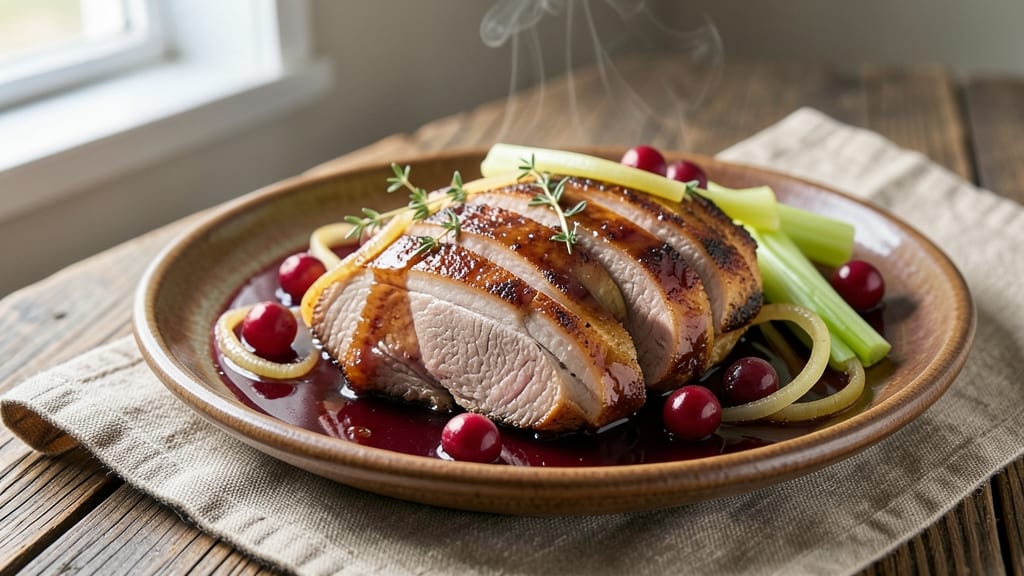
This cranberry Dijon pork roast with apple cider glaze delivers a perfect balance of sweet, tangy, and savory flavors that’ll make your holiday table unforgettable. 🍏✨ After years of perfecting this technique—first in Charleston kitchens, then on my farm—I’ve developed a method that ensures tender, juicy pork with a caramelized glaze that’s impossible to resist.
The secret lies in slow-braising the pork with celery and spices, then finishing it with a rich, glossy glaze that ties everything together.
The beauty of this recipe is its versatility—it works equally well for Sunday dinners or special occasions. We start by searing the pork to lock in juices, then slow-roast it with aromatic vegetables until fork-tender.
The apple cider glaze, infused with Dijon mustard and fresh cranberries, adds depth and brightness that cuts through the richness of the meat. Every bite offers a satisfying contrast of textures: crisp celery crunch, tender pork, and silky glaze.
What sets this dish apart is the harmony of flavors—sweet apple cider, tangy Dijon, and tart cranberries create a sauce that’s both complex and approachable. The slow-cooking method ensures the pork stays moist, while the glaze caramelizes beautifully for a restaurant-quality finish.
This is the kind of dish that impresses guests without requiring hours of prep or advanced techniques.
Pair it with roasted root vegetables or creamy mashed potatoes for a complete meal that feels luxurious yet achievable. The leftovers reheat beautifully, making it perfect for meal prep or feeding a crowd. Let’s get cooking—your taste buds will thank you.
Ingredients for cranberry dijon pork roast with apple cider glaze
Six aromatic ingredients transform simple pork into a showstopping holiday centerpiece.
| Ingredient | Amount | Notes |
|---|---|---|
| Boneless Pork Loin Roast 🐖 | 3 lb | Center-cut for even cooking |
| Fresh Celery Stalks 🧅 | 4 whole | Trimmed, cut into 1-inch pieces |
| Yellow Onion 🧅 | 1 whole | Peeled, quartered |
| Fresh Cranberries 🍇 | 1 cup | Fresh or frozen, no sugar added |
| Apple Cider 🍎 | 1 ½ cups | Unfiltered, preferably organic |
| Dijon Mustard 🍯 | 2 tbsp | High-quality, smooth variety |
| Dry Red Wine 🍷 | ½ cup | Bold variety like Cabernet Sauvignon |
| Fresh Thyme Sprigs 🌿 | 2 whole | Or 1 tsp dried thyme |
| Fresh Rosemary Sprig 🌿 | 1 whole | Or 1 tsp dried rosemary |
| Garlic Cloves 🧄 | 4 cloves | Peeled, smashed |
| Olive Oil 🫒 | 2 tbsp | Extra-virgin for searing |
| Honey 🍯 | 2 tbsp | Wildflower preferred |
| Salt 🧂 | 1 ½ tsp | Diamond Crystal kosher salt |
| Black Peppercorns 🌶️ | 1 tsp | Freshly cracked |
| Balsamic Vinegar 🍶 | 1 tbsp | Aged 10+ years |
The pork loin is your canvas here—look for a center-cut roast at Whole Foods or your local butcher for that perfect balance of tenderness and flavor. Fresh celery and thyme from the farmers market add that bright, crisp crunch that makes this dish sing. I always buy organic apple cider from Angry Orchard or local orchards—it makes a world of difference in the glaze. For the cranberries, frozen works just as well as fresh, but avoid the sugary canned kind. The Dijon mustard should be smooth, not whole-grain—Maille is my go-to for that perfect tang.
No fresh thyme? Dried works at one-third the amount, but trust me on the fresh version. Running low on apple cider? Substitute with unsweetened apple juice—just add an extra splash of balsamic to balance. The red wine can be swapped for extra apple cider or beef broth, though the wine adds depth. If you can't find fresh rosemary, dried is fine, but toast it lightly in a dry pan first to wake up those flavors. The honey should be wildflower—Manuka honey adds an extra layer of complexity if you're feeling fancy. For the celery, baby carrots or fennel work beautifully if you're out of celery.
This roast reheats like a dream—3-4 days in the fridge or 3 months frozen. I always make a double batch because it's that good. The glaze thickens as it cools, so warm it gently before serving—just 2 minutes in the microwave with a splash of water. Store the roast and glaze separately for best results. The celery and onions keep fresh for 5 days in the fridge, so don't feel like you need to use everything at once. The cranberries? Freeze any extras—they're perfect for holiday cocktails later.
Why You'll Love This Recipe
- One-Pan Magic: I swear by this recipe when I’m too tired to scrub pots—just toss the pork, celery, and onion in a roasting pan, drizzle with Dijon and apple cider, and walk away. The cranberries caramelize right on the sheet, so you’re left with sticky, sweet glaze that needs zero extra effort.
- Holiday Ready: Between us, this is my go-to for Thanksgiving leftovers or Christmas dinner prep. The apple cider glaze feels festive but takes half the time of a turkey, and the pork stays juicy for days. (Yes, even my picky uncle likes it.)
- Sweet-Savory Balance: That tangy Dijon and bright cranberries cut through the richness of the pork like a knife—it’s the kind of flavor that makes you reach for seconds without trying. Honestly, the glaze alone is worth the recipe.
- Budget-Friendly Feast: Pork loin is cheaper than you think, and celery/onion/cranberries stretch into a whole meal. I’ve fed six people for under $15 with this, and the leftovers? Perfect for sandwiches or fried rice the next day.
Step-by-step instructions for cranberry Dijon pork roast
Here's how to create a showstopping pork roast with tender meat, bright cranberry glaze, and crunchy celery contrast.
🔥 Step 1: Sear the Pork for Maximum Flavor
Preheat your oven to 325°F. Heat 2 tablespoons olive oil in a large Dutch oven over medium-high heat until shimmering. Pat the 3 lb boneless pork loin roast completely dry with paper towels—this ensures a perfect crust. Season both sides generously with 1.5 teaspoons salt and 1 teaspoon freshly cracked black peppercorns.
Place the pork in the hot oil and sear for 4-5 minutes per side until deeply golden brown. You'll see the edges crisp up and the meat release easily from the pan—that's your signal it's ready. Remove the pork and set it aside on a plate, leaving all that beautiful browned fond in the pot. This step builds the foundation for your sauce and adds incredible depth of flavor.
👨🍳 Step 2: Build the Aromatic Base
In the same Dutch oven (don't wipe out the fond!), add 1 whole yellow onion cut into quarters, 4 whole celery stalks cut into 1-inch pieces, and 4 peeled garlic cloves that you've smashed with the side of your knife. Cook over medium heat for 8-10 minutes until the vegetables soften and become fragrant, stirring occasionally.
Add 2 whole fresh thyme sprigs and 1 whole fresh rosemary sprig to the pot. These herbs will infuse the pork with their earthy aromas as it braises. Stir everything together and cook for another 2 minutes to let the flavors meld. Here's where the magic happens—the vegetables release their natural sweetness and combine with the pork's sear to create an irresistible base.
🍳 Step 3: Deglaze and Simmer the Pork
Pour in 1.5 cups apple cider and 0.5 cup dry red wine, scraping up all those delicious browned bits from the bottom of the pot with a wooden spoon. This deglazing step captures all the flavor you worked so hard to create. Bring the mixture to a simmer over medium heat.
Return the pork to the pot, spooning some of that flavorful liquid over the top. Cover the Dutch oven with a lid and transfer it to your preheated 325°F oven. Here's the thing—this low-and-slow cook is what transforms tough pork into melt-in-your-mouth perfection. Braise for 2-2.5 hours until the pork reaches an internal temperature of 145°F and is fork-tender.
🥘 Step 4: Prepare the Cranberry Glaze
While the pork is braising, make the glaze. In a small saucepan, combine 1 cup fresh cranberries, 2 tablespoons honey, 2 tablespoons Dijon mustard, and 1 tablespoon aged balsamic vinegar. Bring to a simmer over medium heat and cook for 10-12 minutes until the cranberries burst and the mixture thickens slightly.
Use the back of a spoon to mash some of the cranberries against the side of the pan to create a smooth, jam-like consistency. This glaze will add a perfect balance of sweet-tart brightness to cut through the rich pork. Taste and adjust seasoning if needed—you might want to add a pinch more salt or a splash of apple cider to balance the flavors.
⏰ Step 5: Finish and Serve
Remove the pork from the oven and let it rest for 15 minutes before slicing. This resting period is crucial—it allows the juices to redistribute throughout the meat so each slice stays moist and flavorful. While it rests, spoon the braising liquid through a fine-mesh strainer to remove any herbs or vegetables, then return it to the pot.
Slice the pork into ½-inch thick slices and arrange on a serving platter. Drizzle generously with the cranberry glaze and ladle the reduced braising liquid around the slices. Garnish with the remaining 1-inch celery pieces for that delightful crunch contrast. Serve immediately with roasted vegetables or crusty bread to soak up all those delicious juices.
Pro Tips For Making Cranberry Dijon Pork Roast With Apple Cider Glaze
- CRANK THE OVEN HIGH: Start the pork loin at 425°F for the first 15 minutes—this sears the crust and locks in flavor before you lower it to 325°F. I used to skip this, and the glaze would just sit on top instead of sticking to the meat like it should.
- BRINE THE PORK LOIN: Toss the pork in 1/4 cup kosher salt and 1 tablespoon black pepper, then let it sit uncovered in the fridge for at least 2 hours (or overnight if you’re planning ahead). This keeps the meat juicy and lets the Dijon glaze cling better instead of sliding off.
- SAVE THE CRANBERRY JUICE: Strain the cranberries after simmering and reserve the juice—it’s the liquid gold that makes the glaze actually taste like cranberry, not just sweetened vinegar. Don’t dump it; reduce it with the apple cider for depth.
- DON’T SKIP THE ONION MASH: Finely dice the onion and celery, then cook them down until they’re almost caramelized before adding the apple cider. This builds flavor into the glaze instead of letting it taste like raw veggies swimming in sauce. (Yes, it takes 10 extra minutes, but it’s worth it.)
Perfect pairings for this recipe
Classic Side Dishes
Roasted root vegetables like carrots, parsnips, and sweet potatoes bring earthy sweetness that complements the pork’s richness. Toss 2 lbs of mixed roots in 2 tbsp olive oil, 1 tsp thyme, and ½ tsp salt, then roast at 400°F for 30 minutes until caramelized.
The natural sugars in the vegetables mirror the apple cider glaze beautifully. 🥕
Creamy mashed potatoes with roasted garlic elevate the dish to restaurant-level comfort. Boil 2 lbs Yukon Gold potatoes until tender, then mash with ½ cup butter, ½ cup warm milk, and 2 roasted garlic cloves.
The buttery texture contrasts perfectly with the tart-sweet glaze. For extra decadence, fold in ¼ cup sour cream at the end.
Bread Pairings
A warm, crusty baguette is essential for soaking up the glaze and braising juices. Toast slices at 375°F for 5-7 minutes until golden and crisp. I love Brioche from local bakeries—its buttery richness pairs wonderfully with the pork’s savory depth.
For a Southern twist, try cornbread with a hint of jalapeño for a spicy-sweet contrast.
For a lighter option, serve with rosemary focaccia. Brush the focaccia with olive oil and sprinkle with fresh rosemary before baking at 375°F for 15 minutes. The herby aroma ties back to the pork’s seasoning, creating a cohesive bite. 🥖
Wine Pairings
A bold Cabernet Sauvignon from Napa Valley cuts through the pork’s richness while complementing the cranberry’s tartness. Look for wines with 14-15% alcohol and notes of blackcurrant and vanilla. I love Louis M. Martini Cabernet—it’s approachable yet sophisticated enough for special occasions.
For a lighter option, try a Pinot Noir from Oregon. Its bright acidity and red fruit flavors balance the dish’s sweet and savory elements without overpowering them. Domaine Serene Pinot Noir is my go-to for its elegant structure.
If you prefer white wine, a Chardonnay with oak notes works beautifully—just ensure it’s not too buttery.
Beer Pairings
A crisp Belgian-style witbier like Hoegaarden brings refreshing citrus and spice notes that cleanse the palate between bites. The effervescence also helps cut through the richness of the pork. For a local favorite, try Allagash White—its coriander and orange peel flavors mirror the cranberry’s tartness.
For beer lovers, a dark amber ale with caramel and toffee notes pairs wonderfully. Samuel Adams Noble Experiment or Bell’s Two-Hearted Ale add a malty depth that complements the glaze’s sweetness. Avoid heavy stouts or IPAs—they can overpower the dish’s delicate balance.
Seasonal Garnishes
Fresh thyme sprigs scattered over the pork add a bright, herbal note that elevates the presentation. For a pop of color, sprinkle toasted pumpkin seeds—toss ¼ cup seeds in 1 tbsp olive oil and toast at 350°F for 8-10 minutes until golden.
The crunch contrasts perfectly with the tender pork.
In winter, add a sprinkle of fresh cranberries or rosemary sprigs to the platter for a festive touch. For a smoky twist, finish with a pinch of smoked paprika—just ¼ tsp adds warmth without overpowering the dish.
These garnishes not only look stunning but also enhance the flavors with every bite. 🌿
Nutrition facts
Frequently asked questions
Can I use a different cut of pork for this recipe?
A 3 lb boneless pork loin roast is ideal, but you can adapt this recipe for other cuts. For a more tender result, try a pork shoulder (cook longer at 275°F until tender) or pork tenderloin (reduce cooking time to 1 hour). Avoid fatty cuts like pork belly—they may render too much fat during the long braise. Always trim excess fat to prevent greasiness in the glaze.
How do I make the glaze ahead of time?
Prepare the cranberry glaze up to 3 days ahead and store it in an airtight container in the fridge. It thickens as it cools, so reheat gently with 1-2 teaspoons water over low heat until smooth. For the pork, cook it fully, then refrigerate the braised roast (uncovered) for up to 4 days. Reheat slices in a skillet with a splash of apple cider to restore moisture.
What if I don't have apple cider?
Use unsweetened apple juice as a 1:1 substitute, but add 1 extra tablespoon balsamic vinegar to maintain balance. For a deeper flavor, swap with dry red wine (reduce to 1 cup) or beef broth. Avoid sweetened juices—they’ll make the glaze too cloying. The key is acidity to cut through the pork’s richness.
Why does my pork turn out dry?
Overcooking is the most common mistake! Use a meat thermometer and remove the pork at 145°F—it’ll rise to 150°F while resting. For extra moisture, baste the roast every 30 minutes with the pan juices. If using a pork loin, consider butterflying it (slicing horizontally) to ensure even cooking. The resting period is critical—never skip it!
Can I make this recipe in a slow cooker?
Sear the pork first, then transfer everything (including celery and onions) to a 6-quart slow cooker. Cook on LOW for 6-7 hours or HIGH for 3-4 hours. For the glaze, prepare it separately in a saucepan. The slow cooker method is hands-off but may require more liquid—add ½ cup water if needed to prevent burning.