
Sauces & Condiments
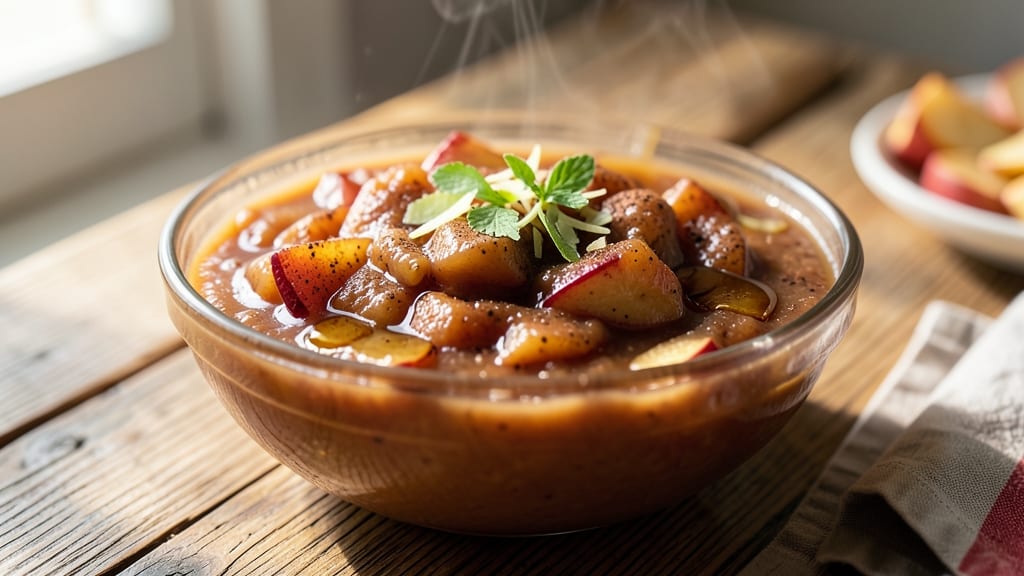
This vegan apple sauce recipe with peel transforms whole apples—peels and all—into a silky, aromatic sauce that’s perfect for everything from toast to roasted meats. 🍏 After years of testing, I’ve perfected a method that preserves the apple’s natural sweetness while adding depth from the peels, which contribute subtle bitterness and texture.
The result? A versatile sauce that’s as nourishing as it is delicious, with no waste in sight.
What sets this recipe apart is the spiced simmer that develops rich, complex flavors without added sugar. I use a blend of cinnamon, ginger, and a touch of vanilla to complement the apples’ natural sweetness, while the peels add a subtle earthiness that rounds out the sauce.
The process is simple: core and chop the apples (peels on), simmer until tender, then blend until smooth. No peeling required—just pure, efficient cooking.
This apple sauce keeps beautifully in the refrigerator for up to a week or freezes for months, making it a pantry staple for both sweet and savory dishes. Spread it on toast, stir it into oatmeal, or use it as a glaze for roasted vegetables.
The possibilities are endless, and the flavor only improves with time. Let’s make the most of every apple, peel and all.
For those who prefer it unsweetened, simply omit the honey substitute and rely on the apples’ natural sweetness. A pinch of salt enhances the flavors, and a splash of apple cider vinegar brightens the sauce if you like it tangy.
The key is patience—letting the apples simmer until they break down completely ensures a velvety texture that’s impossible to resist.
Ingredients for apple sauce recipe with peel
Eight simple ingredients transform whole apples—peels and all—into velvety, spiced apple sauce.
| Ingredient | Amount | Notes |
|---|---|---|
| Apples (peels on) 🍏 | 4 medium | Use firm, sweet varieties |
| Water 💧 | ½ cup | For simmering apples |
| Ground Cinnamon 🌿 | 1 ½ tsp | Freshly ground preferred |
| Fresh Ginger 🌿 | 1 tsp | Grated, for zing |
| Pure Vanilla Extract 🌸 | ½ tsp | For depth of flavor |
| Maple Syrup 🍯 | 2 tbsp | Or agave for sweetness |
| Apple Cider Vinegar 🍏 | ½ tsp | Optional for brightness |
| Sea Salt 🧂 | ¼ tsp | Enhances all flavors |
Apples are the heart of this sauce, so pick firm, sweet varieties like Honeycrisp or Fuji—they hold up best during simmering. Local farmers markets often have the freshest, and you can usually find organic apples there too. Skip the red ones if you prefer milder flavor; their peels can add a slight tartness. I usually buy a 5-pound bag when they're in season, then use half for this recipe and the rest for baking. The peels are where the magic happens—they add subtle bitterness and texture that balances the sweetness perfectly.
No maple syrup? Date syrup or coconut sugar works just as well. Skip the vanilla? A pinch of nutmeg or cardamom adds warmth instead. If you like your sauce tangy, double the apple cider vinegar. For a smoother texture, strain through a fine-mesh sieve after blending. The ginger is non-negotiable though—it's what gives this sauce that extra layer of complexity. If you're using dried ginger, reduce to half the amount since it's more concentrated.
This sauce keeps beautifully in the fridge for up to 1 week in an airtight jar, or 3 months frozen. I always make a double batch—one for immediate use and one to freeze for later. For freezing, portion into ice cube trays first, then transfer to a bag. Thaws perfectly in the fridge overnight. The flavor actually improves after a day or two as everything melds together. Use it on toast, drizzle over oatmeal, or even glaze roasted vegetables—it's that versatile.
Why You'll Love This Recipe
- I keep this on hand year-round: swirl it into oatmeal, dollop on toast, or stir into yogurt. Even my picky kid asks for it with pancakes.
- No Peel Waste: I save money by using the whole apple—peels and all—because those skins pack extra fiber and depth. Plus, no extra scrubbing or peeling means fewer dishes.
- Warm Spice Magic: That first sniff of cinnamon and ginger steaming off the pot? It’s like autumn in a bowl. The vanilla ties it all together—sweet, cozy, and impossible to resist.
- Pantry Staple Power: I keep this on hand year-round: swirl it into oatmeal, dollop on toast, or stir into yogurt. Even my picky kid asks for it with pancakes.
Step-by-step instructions for spiced apple sauce with peel
Here's how to make the most flavorful, no-waste apple sauce you've ever tried.
🍳 Step 1: Core and Chop the Apples
Start by coring the 4 medium apples (leave the peels on!) and cutting them into ½-inch chunks. I like to use a mix of sweet varieties like Gala and Fuji for balanced flavor. The peels add texture and nutrients, so don't peel them—just make sure they're washed first.
Place the chopped apples in a large saucepan. You want them to fit comfortably without overcrowding. If you're using very large apples, you might need to cut them into slightly smaller pieces to ensure even cooking.
🍳 Step 2: Simmer with Water and Spices
Add the 0.5 cup water to the saucepan with the apples. Stir in the 1.5 tsp ground cinnamon, 1 tsp fresh ginger (already grated), and 0.25 tsp sea salt. Bring everything to a boil over medium-high heat.
Once boiling, reduce heat to medium-low and let it simmer uncovered for 15-20 minutes, stirring occasionally. You'll see the apples soften and the liquid reduce. Here's the thing—don't rush this step. The longer it simmers, the deeper the flavors develop. You're looking for apples that mash easily with a fork when pierced.
🍳 Step 3: Add Sweetness and Finish Cooking
Stir in the 2 tbsp maple syrup and 0.5 tsp apple cider vinegar. The vinegar adds a subtle tang that balances the sweetness. Let the mixture simmer for another 5-7 minutes until the apples are completely tender and the sauce has thickened to your preferred consistency.
For a smoother texture, use a potato masher or fork to mash the apples right in the pan. If you prefer some texture, just let it sit as is. Taste and adjust sweetness—you might want to add a bit more maple syrup if your apples were particularly tart.
⏰ Step 4: Finish with Vanilla and Cool
Remove the pan from heat and stir in the 0.5 tsp pure vanilla extract. This is where the magic happens—the vanilla deepens all the other flavors. Let the sauce sit for 5 minutes to allow the vanilla to infuse completely.
If you're planning to use the sauce immediately, you can serve it warm. But for best texture, let it cool completely before transferring to a clean jar. The sauce will thicken as it cools, so don't worry if it looks too thin while warm. Store in the refrigerator for up to 1 week or freeze for up to 3 months.
Pro Tips For Making Apple Sauce Recipe With Peel
- PEELS FIRST, CORE LATER: I learned this the hard way—peeling after slicing turns your kitchen into a sticky mess. Cut the apples in half, core them, then slice while the peels stay intact. No peeling, no panic, and the texture stays better with the skin on.
- LOW AND SLOW WINS: Skip the high-heat rush—simmer this sauce at a gentle boil, not a rolling one. Too much heat turns the apples mushy and dulls the ginger’s kick. Keep it at a steady simmer for even cooking, and the flavors meld instead of fight.
- GRATE THE GINGER FINE: Sounds obvious, but I’ve used minced ginger that just sinks to the bottom like a lazy rock. Grate it fresh and fine so it dissolves into the sauce. A microplane works best—no chunks, no fishing them out later.
- VANILLA LAST, NOT LEAST: Add the vanilla extract at the very end, right when you’re ready to serve. Stir it in and let it sit for just 2 minutes—this lets the warm apples pull out its aroma instead of cooking it off. (Yes, even if you’re impatient like me.)
Regional styles of apple sauce recipe with peel
Southern Comfort Style
In the South, apple sauce with peels is often spiced with a 1 tsp black pepper and a pinch of cloves for warmth. I remember Nana Mae adding a splash of bourbon (about 1 tbsp) to the simmering apples, then reducing it down to concentrate the flavor.
The result? A rich, slightly boozy sauce perfect for drizzling over pork chops or mashed sweet potatoes. For an extra touch, she'd finish with a sprinkle of crushed pecans for crunch. 🌶️
New England Twist
Up north, they take their apple sauce with peels seriously—often using tart Granny Smith apples for balance. I picked this up from a farm in Vermont where they add ½ cup apple cider instead of water and finish with a 1 tsp lemon zest.
The acidity cuts through the sweetness beautifully, and it pairs perfectly with roasted chicken or baked beans. For texture, they sometimes leave the sauce slightly chunky by only partially blending it. Trust me, the contrast is divine.
German-Inspired Spiced
German apple sauces often include 2 tbsp raisins and a 1 tsp caraway seeds for an earthy depth. I adapted this by simmering the apples with ½ cup red wine (like Pinot Noir) instead of water, then adding the spices.
The wine adds complexity that elevates it to a whole new level. Serve this version with sausage or roasted pork loin for a hearty meal. The caraway seeds might sound unusual, but they add a warm, almost licorice-like note that works surprisingly well. ✨
Modern Minimalist
For a clean, contemporary take, skip the spices and focus on the apples' natural sweetness. Use organic apples from Austin's farmers market (like Pink Lady or Ambrosia) and simmer with just 1 tsp lemon juice and a pinch of salt.
The result is a bright, fresh sauce perfect for drizzling over yogurt parfaits or avocado toast. Biscuit always licks the bowl when I make this version—he's a big fan of the simplicity. 💛
Herbal Infusion
Herbalists love this version, where I add 2 sprigs fresh thyme and 1 sprig rosemary to the simmering apples. The herbs add an earthy aroma that pairs wonderfully with roasted lamb or grilled vegetables. After simmering, I strain out the herbs but leave the peels for texture.
The flavor is sophisticated yet approachable—perfect for when you want something special but still simple. The herbs infuse beautifully, giving the sauce a subtle, aromatic depth.
Nutrition facts
Frequently asked questions
Why should I use apple peels in my sauce?
The peels add subtle bitterness and fiber that balances the sweetness perfectly! They also boost nutrients like vitamin C and antioxidants. Plus, it's a zero-waste way to use the whole fruit—no peeling required. The texture becomes slightly grainy, which some people love for contrast.
Can I make this sauce without added sweetener?
Skip the maple syrup and rely on naturally sweet apples like Fuji or Honeycrisp. For tart varieties, add 1 tsp lemon juice to brighten flavors. The sauce will be less sweet but still delicious—perfect for savory dishes or those watching sugar intake.
How do I adjust the thickness of the sauce?
Start with 0.5 cup water for a medium-thick sauce. For thicker results, reduce water to ¼ cup or simmer uncovered longer. If too thin, simmer uncovered for 5-10 extra minutes—the liquid will evaporate naturally. For chunkier texture, mash only some apples before blending.
What are the best apples for this recipe?
Sweet varieties work best—try Gala, Fuji, or Pink Lady for balanced flavor. Tart apples like Granny Smith need extra sweetener. Avoid overly soft apples (like Red Delicious) as they break down too quickly. Organic apples work well if you prefer fewer pesticides in your sauce.
Can I use this sauce in savory dishes?
Yes! The spiced version pairs beautifully with roasted pork, sausages, or mashed sweet potatoes. For savory applications, reduce sweetness slightly (use 1 tbsp maple syrup) and add ½ tsp black pepper. It also works as a glaze for vegetables or a dip for pretzels!