
Main Courses
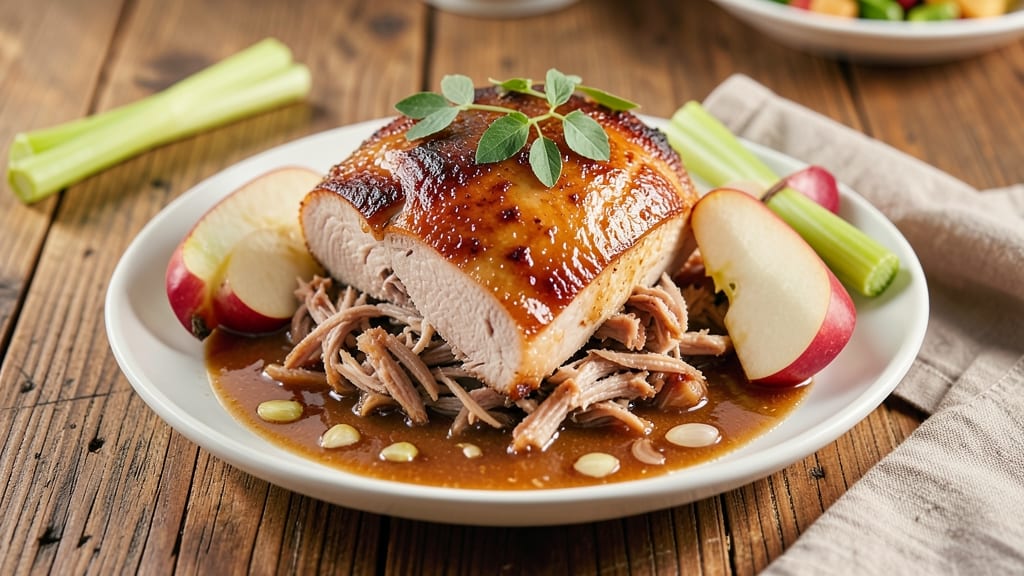
This apple cider pork roast slow cooker recipe transforms simple ingredients into a showstopping centerpiece that smells like autumn in every bite. 🍂 The secret lies in searing the pork first for depth, then letting the slow cooker work its magic with apple cider—where crisp celery and sweet apples create a caramelized crust that'll have your kitchen smelling like a farm market.
I've been perfecting this technique for years, and it never fails to impress even the most skeptical dinner guests.
The beauty of this method is its simplicity: just 30 minutes of prep followed by hands-off slow cooking, which means you can focus on sides or even relax while dinner cooks.
The apple cider doesn't just flavor the meat—it tenderizes the pork while creating a sticky, golden glaze that caramelizes beautifully. I always sear the roast first (don't skip this step!) to build a flavorful crust before the slow cooker transforms it into melt-in-your-mouth perfection.
What you'll end up with is a restaurant-quality pork roast with crisp edges and juicy centers, all wrapped in that signature apple-cider glaze. The celery adds a subtle crunch that cuts through the richness, while the apples bring a natural sweetness that balances the savory pork.
This is the kind of dish that feels special enough for company but simple enough for a weeknight dinner—plus, the leftovers reheat beautifully for sandwiches the next day.
Serve with roasted root vegetables or creamy mashed potatoes to soak up every last drop of that delicious pan sauce. The slow cooker does all the work while you enjoy the process, making this the ultimate foolproof recipe for cooks of all skill levels. Let's get started!
Ingredients for apple cider pork roast slow cooker
Pantry staples plus a few seasonal finds—this pork roast is all about cozy autumn flavors.
| Ingredient | Amount | Notes |
|---|---|---|
| Pork Shoulder Roast 🐖 | 3 lb | Bone-in for extra flavor |
| Apple Cider 🍎 | 1 ½ cups | Unsweetened, preferably local |
| Granny Smith Apples 🍏 | 2 medium | Peeled and sliced (about 1.5 cups) |
| Celery Stalks 🧅 | 4 whole | Chopped into 1-inch pieces |
| Onion 🧅 | 1 medium | Chopped into chunks |
| Garlic Cloves 🧄 | 4 cloves | Minced for depth |
| Olive Oil 🫒 | 2 tbsp | For searing the pork |
| Brown Sugar 🍚 | ¼ cup | Lightly packed |
| Dijon Mustard 🌶️ | 1 tbsp | For tangy kick |
| Salt 🧂 | 1 ½ tsp | Kosher or sea salt |
| Black Pepper 🌶️ | 1 tsp | Freshly ground |
| Thyme Leaves 🌿 | 1 tbsp | Fresh or dried |
| Rosemary Sprigs 🌿 | 2 whole | Fresh, chopped |
The pork shoulder is the star here—bone-in cuts stay juicier and develop deeper flavor. Costco or local butchers often have great deals on this cut, and it's worth splurging for good marbling. Granny Smith apples add that signature tangy-sweet balance, but Fuji or Honeycrisp work too. If you can't find fresh thyme, dried works at one-third the amount. The celery and onion are non-negotiable for that classic slow-cooker aroma—don't skip them even if you're in a hurry. For the apple cider, local farm markets often have seasonal batches that taste better than store-bought.
No Granny Smith apples? Green apples from the store are fine, just peel them first. Running low on fresh thyme? Dried thyme or oregano (half the amount) keeps the flavor profile close. The Dijon mustard adds that restaurant-quality tang—whole-grain mustard works too. If you're searing the pork in a skillet, don't crowd the pan—work in batches to get that perfect crust. The brown sugar caramelizes beautifully with the apple cider, but maple syrup works in a pinch. For extra crisp edges, broil the roast for 3-5 minutes at the end if you're not using a slow cooker with a browning function.
This roast reheats beautifully—3-5 minutes in the microwave or until piping hot. Keeps for 4 days in the fridge or 3 months frozen. I always make double batches because the leftovers make amazing sandwiches. Store the roast in its juices to keep it moist, and portion the sauce separately if you want to drizzle it fresh each time. The celery and onion can be prepped ahead and stored in the fridge for 5 days—just chop them right before adding to the slow cooker for the best texture.
Why You'll Love This Recipe
- Tangy-Sweet Magic: That Granny Smith apple and apple cider combo? It’s the secret weapon—sharp enough to cut through the pork’s richness, but sweet enough to make your mouth water. The celery adds this subtle crunch, and honestly? It’s the kind of flavor that makes people ask, "What’s in this?"
- Leftovers for Days: This roast practically begs to be made extra—shred it for sandwiches, toss it into pasta, or reheat slices for breakfast. I’ve fed my family for three meals from one cook, and the taste stays just as good. (Yes, even on a Tuesday night.)
- Budget-Friendly Feast: Pork shoulder is the ultimate stretch—affordable, hearty, and full of flavor without breaking the bank. Plus, using seasonal apples and basic veggies keeps costs low while delivering a dish that feels special. My wallet and my dinner guests thank me every time.
Step-by-step instructions for apple cider pork roast slow cooker
Here's how to transform simple ingredients into fall-flavored perfection with minimal effort.
🍳 Step 1: Sear the Pork Shoulder for Maximum Flavor
Heat a large skillet over medium-high heat and add the 2 tbsp olive oil. Once shimmering, place the 3 lb pork shoulder roast in the pan, fat-side down. Let it sear undisturbed for 4-5 minutes until a deep golden-brown crust forms—this locks in juices and builds flavor. Flip the roast and sear the other side for another 4-5 minutes.
While the pork sears, sprinkle it generously with 1 tsp salt and 1 tsp black pepper on both sides. I like to press the spices into the meat so they adhere well. This step might seem tedious, but trust me—it makes all the difference in the final texture and taste. Transfer the seared pork to your slow cooker.
👨🍳 Step 2: Build the Sweet-Savory Apple Cider Base
In a medium bowl, combine the 1.5 cups apple cider, 0.25 cup brown sugar, 1 tbsp Dijon mustard, and 1 tbsp thyme leaves. Stir until the sugar dissolves completely. This mixture is the flavor foundation—don't skip the stirring, or you'll end up with grainy bits in your sauce.
Add the chopped 1 medium onion, 4 whole celery stalks (chopped), 2 medium Granny Smith apples (peeled and sliced), and 4 cloves garlic cloves (minced) to the slow cooker. Pour the apple cider mixture over everything, making sure the pork is fully submerged in the liquid. Sprinkle the 2 whole rosemary sprigs (chopped) on top—this herb adds an earthy depth that pairs perfectly with the sweet apples.
⏰ Step 3: Slow Cook Until Fork-Tender
Place the lid on your slow cooker and set it to low heat. Let the pork cook for 8 hours. This long, gentle cooking time breaks down the tough connective tissue, transforming the pork into melt-in-your-mouth perfection. I know it's tempting to check on it, but resist the urge—opening the lid releases steam and can lengthen the cooking time.
After 8 hours, use tongs to carefully remove the pork and check its doneness. It should feel tender enough to pull apart with a fork, and the internal temperature should read 203°F (use a meat thermometer for accuracy). If it's not quite there, return it to the slow cooker and cook for another 1-2 hours on low.
🥘 Step 4: Shred and Mix with the Flavorful Juices
Once the pork is fork-tender, remove it from the slow cooker and place it on a cutting board. Use two forks to shred the meat against the grain into ¼-inch thick strands. This is where the magic happens—the tender pork absorbs all those delicious apple cider and herb flavors.
Return the shredded pork to the slow cooker and stir it into the cooking liquid. The sauce should thicken slightly as it cools, creating a glossy coating on every bite. Taste and adjust the seasoning if needed—you might want to add a pinch more salt or a splash of apple cider to loosen the sauce to your preferred consistency.
🍽️ Step 5: Rest and Serve with Crisp Celery
Let the pork rest in the slow cooker for 10 minutes before serving. This resting period allows the juices to redistribute, ensuring each bite is moist and flavorful. While it rests, arrange the chopped celery stalks on a platter—their crisp texture contrasts beautifully with the tender pork.
Spoon the pork and some of the apple cider sauce over the celery, and serve immediately. The combination of sweet, tangy apple cider, savory pork, and crisp celery creates a symphony of fall flavors. This dish pairs perfectly with mashed potatoes, crusty bread, or even over a bed of creamy polenta.
Pro Tips For Making Apple Cider Pork Roast Slow Cooker
- SEAR THE PORK FIRST: I learned this the hard way—skipping the sear means flavor just sits there, waiting to happen. Hit that pork shoulder with a hot pan for 3-4 minutes per side until it’s deeply browned. The crust locks in moisture and adds depth that slow cooking alone can’t match.
- PEEL AND CHOP APPLES SMALL: Granny Smiths stay tough when sliced thick. Peel, core, and cut them into ½-inch chunks so they soften evenly without turning to mush. (Yes, even if you’re impatient like me—this makes a real difference.)
- DON’T OVERFILL THE SLOW COOKER: Crowding the pot traps steam and turns your roast into sad, gray pork. Fill it only halfway with cider and veggies—leave room for the pork to sit comfortably. Trust me, your future self will thank you.
- SAVE TIME WITH FROZEN CIDER: No fresh apple cider? Use frozen concentrate—thaw it first, then dilute with water as directed. It’s sweeter than fresh, but the acidity still tenderizes the pork beautifully. (I skip this when I’m lazy, but the dish is noticeably better when I don’t.)
Wine and beer pairings for these flavors
Red Wine Pairings
For this apple cider pork roast, I always reach for a dry red wine with enough acidity to stand up to the sweet-savory sauce. A Pinot Noir from Oregon—like Domaine Serene—is my go-to because its bright cherry notes and subtle earthiness complement the caramelized apple flavors without overpowering them.
The wine's acidity also helps cleanse your palate between bites of rich pork. 🍷
White Wine Options
If you prefer white wine, a dry Riesling from Germany or Alsace—such as Dr. Loosen Blue Slate—works beautifully. Its crisp acidity and hints of green apple mirror the dish's flavors while cutting through the pork's richness.
I've also had great success with a Chardonnay from Burgundy that has minimal oak influence, as heavy oak can clash with the apple cider's natural sweetness.
Beer Pairings
A Belgian-style witbier like Hoegaarden or Stella Artois is my top beer recommendation. The citrusy coriander and light effervescence balance the dish's sweetness and richness perfectly.
For a heartier option, try an American amber ale—like Fat Tire—which offers a malty backbone that stands up to the pork while complementing the apple cider's caramel notes.
Cider Pairings
Don't overlook dry hard cider—it's a natural match for this dish! A crisp, unsweetened cider like Angry Orchard Dry or Woodchuck Hard Cider enhances the apple cider flavors in the pork while providing refreshing acidity.
For a more robust option, try a spiced hard cider with cinnamon or clove notes—it adds warmth that complements the rosemary and thyme in the roast.
Non-Alcoholic Options
For those skipping alcohol, a sparkling apple cider like Martinelli's Sparkling Apple Cider or a ginger beer with a citrus twist—such as Brew Dr. Brown's Ginger Beer—works wonderfully.
The effervescence and subtle sweetness mirror the dish's flavors without overpowering them. I also love serving sparkling water with lemon for a refreshing contrast to the rich pork.
Serving Temperature
Serve your wine or beer slightly chilled—about 50-55°F for reds and 45-50°F for whites and ciders. The cool temperature enhances the flavors and provides a refreshing contrast to the warm, comforting pork.
I always pour a glass of wine or cider about 10 minutes before serving to let it breathe and reach the ideal temperature. 🍎
Nutrition facts
Frequently asked questions
Can I use a different cut of pork instead of pork shoulder?
Pork shoulder is ideal for this recipe because it's well-marbled and stays juicy during slow cooking. For best results, stick with it—but if you must substitute, try a bone-in pork butt (they're essentially the same cut) or pork loin (though it may dry out faster). Never use tenderloin, as it lacks the connective tissue needed for this cooking method.
How do I adjust the cooking time if my slow cooker is different?
Most slow cookers run at 170°F on low and 300°F on high. For this recipe, 8 hours on low is perfect, but if you're using high heat, reduce to 5-6 hours and check for doneness early. The key is reaching an internal temperature of 203°F—use a meat thermometer for accuracy. Electric models may cook faster than ceramic.
What if I don't have apple cider? Can I substitute?
Yes! Use unsweetened apple juice (same amount) or a mix of ½ cup apple juice + ½ cup chicken broth. For deeper flavor, add 1 tsp apple cider vinegar to mimic the tang. Avoid sweetened juices—they'll make the sauce cloying. The celery and onion will still provide that classic slow-cooker aroma, but the apple component will be milder.
Can I make this in an Instant Pot or other pressure cooker?
Sear the pork as directed, then add all ingredients and cook on high pressure for 60 minutes. Quick-release the pressure, shred the pork, and finish with 10 minutes on sauté mode to reduce the sauce. The pressure method cuts cooking time by about 6 hours, but the texture will be slightly different—more tender but less fall-apart.
Why does my pork turn out dry when I follow the recipe?
Overcooking is the most common mistake—pork shoulder should be fork-tender, not rubbery. Always check the internal temperature (203°F) and avoid opening the lid frequently (steam escapes). If using a smaller cut (2 lbs), reduce cooking time by 1-2 hours. For extra moisture, add ¼ cup broth when shredding the pork back into the pot.