
Sauces & Condiments
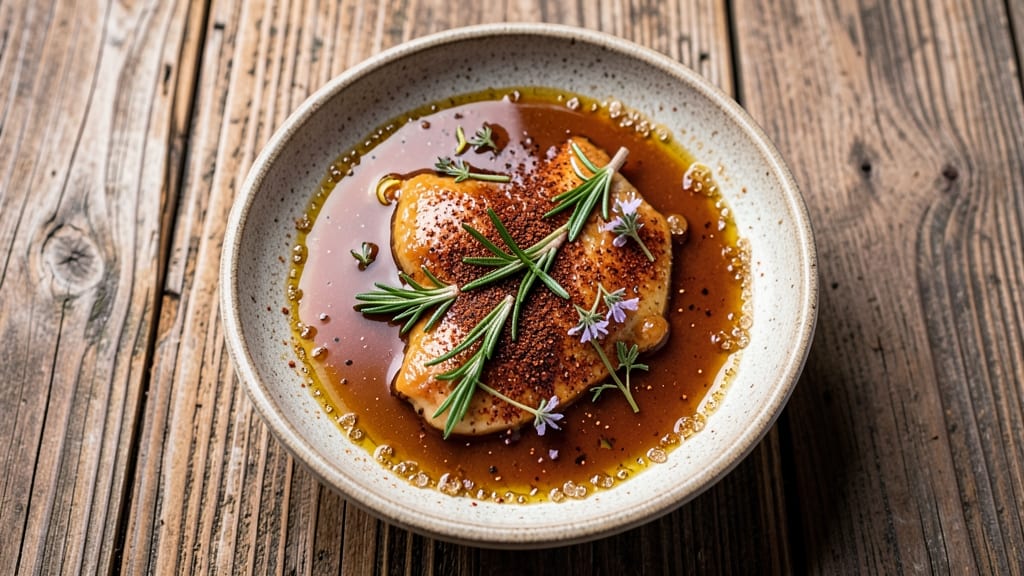
This apple cider chicken marinade transforms ordinary grilled chicken into something extraordinary with its perfect balance of sweet, spiced, and tangy flavors. The secret lies in combining warm apple cider with aromatic spices and herbs that penetrate deep into the meat, creating a caramelized crust that's both tender and flavorful.
I've perfected this marinade over years of grilling, and it never fails to impress—whether you're cooking for a family dinner or hosting a backyard barbecue.
The marinade works its magic through a simple yet effective process: apple cider provides natural sweetness and depth, while brown sugar and spices like cinnamon and smoked paprika create a rich, caramelized crust when grilled.
Fresh rosemary and thyme add aromatic complexity, and a touch of mustard ensures the marinade clings to the chicken. The result is chicken that's juicy, flavorful, and irresistibly crispy on the outside.
What makes this marinade truly special is its versatility—it works equally well on chicken breasts, thighs, or even drumsticks. The flavors develop best when the chicken marinates for at least 4 hours, but overnight is ideal for maximum infusion.
Whether you're grilling, baking, or even air-frying, this marinade elevates your chicken to restaurant-quality perfection every time.
Once you've marinated your chicken, the process is straightforward: grill or bake until fully cooked, then let the caramelized crust form for that signature sweet-spiced crunch. The best part?
This marinade keeps well in the fridge for up to 5 days, so you can always have it on hand for spontaneous cookouts. Let's get started on creating your next grilled masterpiece.
Ingredients for apple cider chicken marinade
Sweet, spiced, and tangy—this marinade transforms plain chicken into grilled perfection every time.
| Ingredient | Amount | Notes |
|---|---|---|
| Apple Cider 🍎 | 1 cup | Unfiltered for best flavor |
| Brown Sugar 🍚 | ½ cup | Light or dark variety |
| Smoked Paprika 🌶️ | 1 tbsp | For that smoky depth |
| Ground Cinnamon 🌿 | 1 tsp | Warm and aromatic |
| Fresh Rosemary 🌿 | ¼ cup | Chopped finely for infusion |
| Fresh Thyme 🌿 | ¼ cup | Leaves only, chopped |
| Dijon Mustard 🍯 | 1 tbsp | For marinade adhesion |
| Olive Oil 🫒 | ¼ cup | Extra-virgin preferred |
| Salt 🧂 | 1 ½ tsp | Kosher or sea salt |
| Black Pepper 🌶️ | ½ tsp | Freshly ground |
The apple cider is the heart of this marinade. Mulling spice cider from Trader Joe's or Costco has the best flavor, but any unfiltered cider works. Brown sugar isn't just for sweetness—it caramelizes beautifully on the grill. Light brown sugar dissolves faster, but dark adds deeper molasses notes. The smoked paprika? Penzeys brand is my go-to, but any quality smoked paprika will do. Fresh rosemary and thyme are non-negotiable here—they give that aromatic complexity that makes this marinade special. If you're using dried herbs, cut the amount to one-third.
No apple cider? Substitute with a mix of orange juice and apple juice—just add a pinch of cinnamon to mimic the cider's depth. Short on fresh herbs? Dried thyme and rosemary work at one-third the amount, but the flavor won't be as vibrant. The Dijon mustard is key for making the marinade cling to the chicken—don't skip it. Olive oil adds richness and helps distribute the flavors evenly. If you're concerned about the marinade being too sweet, reduce the brown sugar to 1/3 cup and add 1/2 tsp of cinnamon for balance.
This marinade keeps beautifully in the fridge for 5 days—perfect for meal prep. Store it in a glass jar with a tight lid. For best results, marinate chicken for at least 4 hours, but overnight is ideal. The flavors intensify as they meld with the meat. If you make extra, freeze it in ice cube trays for 3 months. Thaw overnight in the fridge before using. Pro tip: Let the chicken sit in the marinade for 30 minutes at room temperature before cooking for even better flavor infusion.
Why You'll Love This Recipe
- Fridge-to-Table Magic: I swear by this marinade—just dump apple cider, brown sugar, and rosemary into a bowl, stir, and let the chicken soak while I chop veggies. No measuring cups, no fuss, and the chicken comes out tender without a single pan to scrub.
- Fall in Your Mouth: That smoky-sweet combo? Chef’s kiss. The apple cider caramelizes into a glossy glaze, while the cinnamon and smoked paprika add warmth that lingers. It’s the kind of flavor that makes people ask, “What’d you do to this?”
- Weeknight & Holiday Hero: Slap this on thighs for a slow-cooker meal, toss it on wings for game day, or use it for Sunday roast—it’s my go-to for any occasion. Honestly, I’ve even drizzled the leftover marinade over mashed potatoes. (Don’t judge.)
- Leftovers That Don’t Suck: The best part? This marinade keeps for weeks in the fridge, and the flavor only gets better. Shred the chicken for tacos, dice it into salads, or reheat it for sandwiches—it’s my secret weapon for lazy days. (Yes, even on a Tuesday night.)
Step-by-step instructions for apple cider chicken marinade
Here's how to create a marinade that transforms ordinary chicken into sweet-spiced, fall-off-the-bone perfection.
Combine Wet Ingredients for a Balanced Base
In a medium bowl, whisk together the 1 cup apple cider and 0.25 cup olive oil until fully emulsified. The apple cider should be unfiltered for that rich, complex flavor that stands up to grilling. I like to use a fork for this initial mixing—it creates gentle swirls that help the oil incorporate smoothly without creating bubbles.
Next, add the 1 tbsp Dijon mustard and stir until completely dissolved. The mustard acts as an emulsifier, helping the oil and cider bind together so the marinade clings beautifully to the chicken. This step is crucial—if you skip it, your marinade might separate later. Taste the mixture now; it should be tangy and slightly sweet with a hint of mustard's sharpness.
Sweeten and Spice with Dry Components
In a small bowl, combine the 0.5 cup brown sugar, 1 tbsp smoked paprika, 1 tsp ground cinnamon, 1.5 tsp salt, and 0.5 tsp black pepper. I use my fingers to break up any sugar clumps—this ensures even distribution when we mix everything together. The smoked paprika and cinnamon will give your chicken that signature fall-apart tenderness with warm, aromatic depth.
Pour the dry mixture into the wet ingredients and whisk vigorously for about 30 seconds until everything is fully incorporated. You'll notice the mixture thickens slightly as the sugar begins to dissolve. This is perfect—it means the marinade will coat the chicken thoroughly. Give it one final taste; the sweetness should now balance the tangy cider and spice.
Infuse with Fresh Herbs for Complexity
Gently fold in the 0.25 cup chopped fresh rosemary and 0.25 cup chopped fresh thyme leaves using a silicone spatula. Be careful not to overmix—just enough to distribute the herbs evenly. The rosemary brings a piney freshness that cuts through the sweetness, while the thyme adds earthy warmth. This is where the marinade gets its bright, aromatic character.
Let the marinade sit at room temperature for 10 minutes before using. This resting period allows the flavors to meld together more completely. You'll notice the rosemary releases its essential oils, and the thyme leaves soften slightly—both signs that the marinade is ready to work its magic on your chicken.
Apply and Marinate for Maximum Flavor
Place your chicken pieces in a resealable plastic bag or shallow dish. Pour the marinade over the chicken, making sure each piece is thoroughly coated. For best results, I like to turn the bag or dish several times to ensure even coverage. Seal the bag or cover the dish and refrigerate for at least 4 hours, or overnight for maximum flavor penetration.
Here's the thing about this marinade—it works its magic in two ways. First, the apple cider tenderizes the chicken fibers, making them incredibly juicy. Second, the sugar and spices create a beautiful caramelized crust when grilled. Don't skip the marinating time; this is what transforms good chicken into extraordinary chicken. If you're short on time, even 2 hours will make a noticeable difference.
Pro Tips For Making Apple Cider Chicken Marinade
- Simmer the Cider First: Skip dumping cold cider straight into the pan—heat it for 2-3 minutes until the sugar dissolves and the aroma hits. I used to ignore this, and the marinade always tasted uneven. The warm cider carries the spices better and caramelizes faster when you grill or roast.
- Toast the Rosemary Whole: Toss fresh rosemary sprigs in a dry pan for 30 seconds until fragrant, then add them to the marinade. Sounds weird, but it works—those crisp needles release more flavor without turning bitter. (Yes, even if you're impatient like me.)
- Balance the Sweetness: Taste the marinade before using it—if the brown sugar dominates, add a splash of apple cider vinegar (1 tbsp per cup) to cut through. I learned this the hard way after a batch tasted like dessert, not savory chicken.
- Marinate Overnight, But Not Too Long: Let the chicken sit for 12-16 hours max—any longer and the acid in the cider starts breaking down the meat. I was skeptical until I tried it: 8 hours gives flavor without mushiness, while 24+ hours turns the chicken rubbery. (Your future self will thank you.)
Essential equipment for great apple cider chicken marinade
Mixing Bowls
You’ll need at least a medium mixing bowl (8-10 cups capacity) for combining the wet ingredients and a small bowl (4-6 cups) for the dry spices. I prefer stainless steel bowls from OXO Good Grips—they’re durable, non-reactive, and easy to clean.
If you’re prepping for a crowd, use a large glass bowl (12+ cups) to accommodate extra marinade. Avoid plastic bowls for mixing hot liquids, as they can warp or leach chemicals over time. 🍲
Whisk and Silicone Spatula
A balloon whisk (like the Norpro 10-inch) is essential for emulsifying the apple cider and olive oil smoothly. The flexible wires create gentle swirls that prevent bubbles while ensuring even distribution. For folding in the herbs, grab a silicone spatula—it’s heat-resistant and won’t scratch your bowls.
I keep a set of three (small, medium, large) from Amazon Basics for versatility. Pro tip: Use the spatula to scrape every last drop of marinade from the bowl before transferring it to the chicken. 🍴
Measuring Tools
Precision matters here! Use a liquid measuring cup (like Pyrex) for the apple cider and olive oil, and a dry measuring set (such as Farberware) for the brown sugar and spices.
For the 1 tsp cinnamon and 0.5 tsp black pepper, a spice scoop (like Penzeys’ ¼ tsp measure) ensures accuracy. I also recommend a small kitchen scale (e.g., OXO Good Grips) if you prefer grams—it’s especially useful for spices where volume can vary. 📏
Storage Containers
Store leftover marinade in an airtight glass container (like Le Parfait jars) to preserve freshness for up to 5 days in the fridge. For freezing, use silicone ice cube trays (from Epicurean)—they’re flexible, stackable, and let you portion marinade into 1-tablespoon servings for future use.
Label containers with the date to track freshness. Avoid metal containers for storage, as they can react with acidic ingredients like apple cider over time. ❄️
Chicken Prep Tools
Prep your chicken with a sharp chef’s knife (like Wüsthof’s 8-inch) and a cutting board (I love Teakhaus’ bamboo boards for their durability). For marinating, use resealable plastic bags (from Hefty) or a glass baking dish (like CorningWare)—both work well, but bags save space in the fridge.
If using bags, poke a few holes with a fork to prevent overinflation. For larger cuts (like whole chickens), a meat tenderizer mallet (optional) can help the marinade penetrate deeper. 🍗
Optional Pro Upgrades
For next-level results, invest in a meat thermometer (like ThermoWorks’ Smoke) to monitor chicken doneness—aim for 165°F internal temp. A grill basket (from Lodge) keeps smaller pieces like thighs and drumsticks intact while allowing the marinade to caramelize beautifully.
If you’re air-frying, a wire rack (placed over a tray) ensures crispy skin. These tools aren’t mandatory, but they elevate the dish to restaurant-quality every time. 🔥
Nutrition facts
Frequently asked questions
Can I use this marinade on other meats besides chicken?
This apple cider marinade works beautifully on pork tenderloin, salmon, or even beef ribs. The sweet-spiced profile complements pork especially well, while the acidity tenderizes fish. For beef, reduce marinating time to 2-3 hours to prevent over-tenderizing.
How do I prevent the marinade from making chicken too sweet?
For a less sweet version, reduce the brown sugar to 1/3 cup and add 1/2 tsp extra cinnamon for warmth. You can also increase the apple cider to 1 1/4 cups to dilute the sweetness while maintaining depth. The Dijon mustard helps balance sweetness with its tangy kick.
What's the best way to store leftover marinade?
Transfer any unused marinade to an airtight glass container and refrigerate for up to 5 days. For longer storage, freeze in 1-tablespoon portions using silicone ice cube trays. Thaw overnight in the fridge before reusing. Never refreeze thawed marinade.
Can I use dried herbs instead of fresh?
Yes, but use only 1/3 the amount of dried herbs (about 1/8 tsp each of dried rosemary and thyme). Fresh herbs release more aromatic oils that enhance flavor. If you must substitute, crush dried herbs between your fingers before adding to boost their potency.
How do I get the best caramelized crust when grilling?
Pat the marinated chicken dry before cooking to help the sugars caramelize better. Grill over medium-high heat for the first 3-4 minutes per side to develop the crust, then reduce to medium heat to finish cooking. A spray bottle with water helps control flare-ups from the sugar.