
Sauces & Condiments
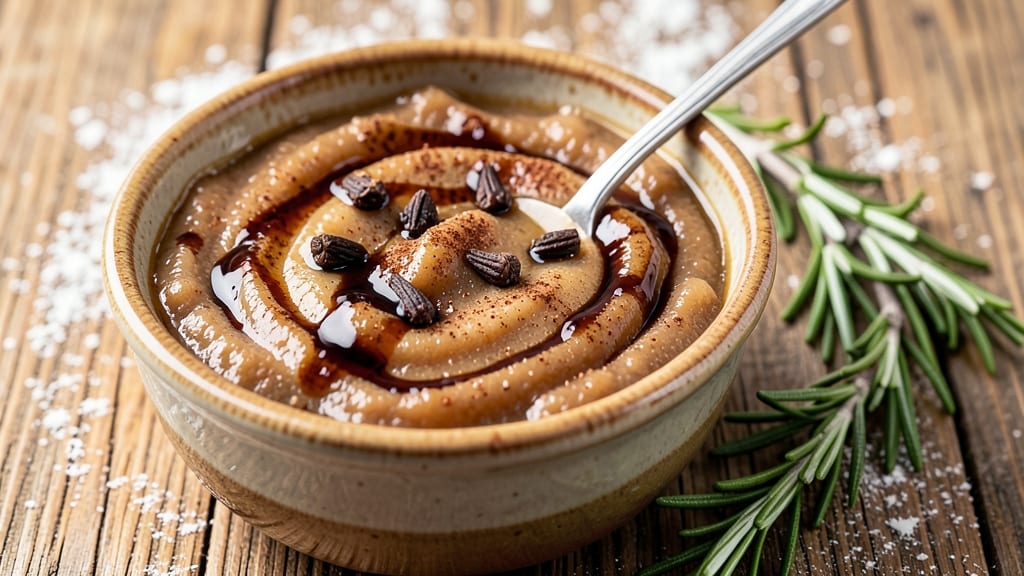
This apple butter recipe with vinegar transforms sweet apples into a bold, tangy-spiced spread that elevates everything from toast to pork chops. The vinegar—whether apple cider or balsamic—cuts through the natural sweetness while adding depth and a subtle tang that makes this condiment far more complex than traditional versions.
I developed this method after years of experimenting with apple butter, and the vinegar is the game-changer that keeps it from tasting cloyingly sweet.
The process is simple but requires patience: simmering apples, spices, and vinegar until they break down into a thick, velvety paste. Cinnamon and cloves provide warmth, while the vinegar balances the sweetness and adds a touch of acidity that brightens every bite.
This isn’t just apple butter—it’s a versatile condiment that works as a glaze, drizzle, or spread, with a shelf life of up to six months when stored properly.
What you’ll end up with is a rich, aromatic spread with a glossy sheen and a texture that’s smooth yet slightly rustic. The vinegar ensures it stays tangy enough to cut through rich foods like sausages or cheeses, while the spices add layers of warmth.
Unlike store-bought versions, this one tastes homemade—deeply flavorful, with none of the artificial aftertaste.
Perfect for drizzling over pancakes, mixing into oatmeal, or pairing with sharp cheeses, this apple butter keeps well in the fridge for weeks or can be canned for long-term storage.
The vinegar not only enhances flavor but also acts as a natural preservative, making this a condiment you’ll reach for time and time again.
Ingredients for apple butter recipe vinegar
Eight essential ingredients transform simple apples into a sophisticated vinegar-infused spread.
| Ingredient | Amount | Notes |
|---|---|---|
| Honeycrisp Apples 🍎 | 4 lb | Peeled, cored, cut into chunks |
| Apple Cider Vinegar 🍶 | ½ cup | Unfiltered for depth of flavor |
| Granulated Sugar 🍚 | 1 ½ cups | Light brown preferred for caramel notes |
| Ground Cinnamon 🌿 | 2 tbsp | Ceylon preferred for subtle warmth |
| Whole Cloves 🌱 | 1 tsp | Lightly crushed for aromatic release |
| Balsamic Vinegar 🍷 | ¼ cup | Aged 10+ years for complexity |
| Fresh Lemon Juice 🍋 | 2 tbsp | Brightens final flavor profile |
| Pinch of Salt 🧂 | ¼ tsp | Diamond Crystal preferred |
The apples are the foundation—Honeycrisp delivers perfect balance of sweetness and tartness, but Gala or Fuji work equally well. Purchase organic when possible to avoid wax coatings that can interfere with texture. For vinegar, Bragg's unfiltered apple cider vinegar and Di Martino balsamic are my go-to brands—their depth of flavor elevates the final product significantly. Spices should be freshly ground if possible, particularly the cinnamon, as pre-ground varieties lose potency quickly. Whole Foods or Trader Joe's carry high-quality versions of all these ingredients in their bulk sections, where you can verify freshness.
No apple cider vinegar? White vinegar or rice vinegar work in a pinch, though they lack the fruity complexity. Substitute maple syrup for sugar at a 1:1 ratio if you prefer a less refined sweetener. For cloves, ground cloves at half the quantity suffice, though they lack the subtle floral notes of whole. The balsamic vinegar can be omitted entirely if unavailable, but the tangy brightness it provides is worth seeking out—Costco often carries excellent aged varieties at reasonable prices. Lemon juice can be replaced with white wine vinegar if citrus isn't on hand, though the flavor profile will shift slightly toward acidity.
This spread develops best over time, so patience is key—simmering for 45-60 minutes yields the most luxurious texture. Once cooled, store in an airtight glass jar in the refrigerator for up to 3 weeks, or can for 6 months using standard water-bath canning techniques. The vinegar acts as a natural preservative, allowing the flavors to meld and intensify. For serving, transfer to a small crock or decorative jar—the glossy sheen and rustic texture make it perfect for gifting. Portion into 1-ounce servings for easy use on toast or pancakes.
Why You'll Love This Recipe
- Five-Ingredient Magic: I swear by this combo—peel, core, and simmer. No fancy gadgets, no stress, just Honeycrisp apples and pantry staples doing all the work while you sip coffee.
- Sweet-Tart Symphony: That first bite? Honeycrisp’s natural sweetness meets vinegar’s tang like a hug from your favorite autumn memory. The cloves add a whisper of warmth—no overpowering spices here.
- Pantry-to-Table Flex: Drizzle it over yogurt, stir into oatmeal, or toss with roasted veggies. Honestly, I’ve even used it as a glaze for pork chops when I’m lazy. Works every time.
- No-Waste Winner: Apples get mushy? No problem—they turn into this rich, spreadable treasure. I’ve made three batches from one bag of Honeycrisp, and the leftovers? They last weeks in the fridge.
Step-by-step instructions for apple butter with vinegar
Transform fresh Honeycrisp apples into a rich, vinegar-infused spread with perfect balance.
Prepare the Apple Base
In a large, heavy-bottomed pot, combine the 4 lb Honeycrisp Apples (peeled, cored, and cut into chunks) with the 0.5 cup Apple Cider Vinegar and 2 tbsp Fresh Lemon Juice. The acidity helps break down the apple fibers while preventing browning during cooking. Bring the mixture to a simmer over medium-high heat and cook uncovered for 15 minutes, stirring occasionally.
You'll notice the apples begin to soften and release their juices. This initial cooking step is crucial—it jumpstarts the breakdown process and ensures even cooking. If the mixture looks too thick, add 1-2 tablespoons of water to help it cook more evenly. The goal here is to create a smooth, jam-like consistency without burning the apples.
Add Sugar and Spices
Reduce the heat to medium-low and stir in the 1.5 cups Granulated Sugar, 2 tbsp Ground Cinnamon, 1 tsp Whole Cloves, and 0.25 tsp Pinch of Salt. The sugar will begin to dissolve as the mixture cooks, creating a syrupy base. Lightly crush the cloves with the back of a spoon to release their aromatic oils without grinding them into powder.
Cook the mixture uncovered for 45-60 minutes, stirring frequently to prevent sticking and ensure even caramelization. You're looking for a thick, jam-like consistency that coats the back of a spoon. If the mixture starts to stick or burn, reduce the heat slightly and add 1 tablespoon of water as needed. The spices will infuse deeply during this stage, creating layers of warm, earthy flavor.
Incorporate Balsamic Vinegar
Once the apple mixture has thickened significantly and the spices are fragrant, stir in the 0.25 cup Balsamic Vinegar. The balsamic adds depth and a subtle tang that cuts through the sweetness, creating a sophisticated balance. Return the heat to medium-low and continue cooking for another 30-45 minutes, stirring occasionally.
During this final cooking phase, the mixture will continue to thicken and darken slightly. You'll know it's ready when it reaches a spreadable, jam-like consistency that holds its shape when spooned. Taste and adjust the seasoning if needed—add a pinch more salt or a splash of lemon juice if the flavor needs brightening. The vinegar should be integrated but still detectable, adding complexity to the finished spread.
Finish and Store
Remove the pot from heat and let the apple butter cool slightly for 10 minutes. Use an immersion blender to achieve a completely smooth texture, or transfer the mixture to a food processor and blend until silky. This step ensures a refined, restaurant-quality finish. If the mixture is too thick, stir in 1 teaspoon of water at a time until it reaches your desired consistency.
Transfer the apple butter to clean, sterilized jars while still warm. The warmth helps the spread settle and prevents air bubbles. Seal the jars tightly and let them cool completely before storing. This vinegar-infused apple butter will keep in the refrigerator for up to 3 months or can be canned for long-term storage. The tangy, spiced profile makes it perfect for toast, cheese pairings, or drizzling over desserts.
Pro Tips For Making Apple Butter Recipe Vinegar
- PEEL AND CORE FIRST: DESCRIPTION:
- STIR THE POT: DESCRIPTION:
- USE A LITTLE WATER: DESCRIPTION:
- STRAIN THE CLOVES: DESCRIPTION:
Essential equipment for perfect results
Heavy-Bottomed Pot
Your 6-8 quart Dutch oven or enamel-coated pot is non-negotiable for this recipe. I swear by my Le Creuset Signature Round Dutch Oven—it distributes heat evenly and prevents scorching, even when simmering for 60+ minutes. The thick base ensures stable temperatures, while the sloped sides make stirring easier.
If you don’t own one, a Calphalon stainless steel pot works well too. Avoid thin aluminum or nonstick—apple butter burns easily, and you need consistent heat for even cooking. 🔥
Immersion Blender
For that silky-smooth texture, an immersion blender is a game-changer. I use my Ninja 1200-Watt to blend the cooled mixture directly in the pot, which saves cleanup and prevents splatters.
If you don’t have one, a high-speed blender or food processor works, but transfer the warm (not hot) mixture carefully to avoid burns. Pro tip: Let the apple butter cool for 10 minutes before blending to avoid steam explosions. 💫
Fine-Mesh Strainer
A fine-mesh sieve or cheesecloth helps achieve a smooth, seed-free spread if you prefer texture without chunks. I strain the cooked mixture through a mesh strainer lined with cheesecloth, pressing gently with a spoon to extract every last drop of flavor.
This step is optional but elevates the final product to restaurant-quality. For a rustic look, skip straining—just blend until smooth. 🍎
Canning Supplies
If you plan to preserve your apple butter long-term, canning jars and a water bath canner are essential. I use Ball Mason jars with two-piece lids for airtight seals.
For canning, follow USDA guidelines: process pint jars in a boiling water bath for 15 minutes and quarts for 20 minutes. Sterilize jars and lids by boiling for 10 minutes before filling.
The vinegar in this recipe acts as a natural preservative, extending shelf life to up to 6 months when canned properly. ❄️
Measuring Spoons
Precision matters when balancing sweetness and acidity, so invest in stainless steel measuring spoons for accurate measurements. I rely on my OXO Good Grips set for spices and vinegar—their ergonomic design makes measuring ½ teaspoon of salt or 2 tablespoons of cinnamon effortless.
For liquids like vinegar and lemon juice, a liquid measuring cup with clear markings ensures you add exactly ½ cup apple cider vinegar without overdoing it. 📏
Wooden Spoon
A heat-resistant wooden spoon (like Oxo Good Grips) is your best friend for stirring. Wood prevents scratching your pot and won’t conduct heat like metal, making it safer for long simmers. I keep one in my pot the entire time, stirring every 5-10 minutes to prevent sticking.
If the mixture starts to stick, add 1 tablespoon of water and scrape the bottom gently with a spatula. Avoid metal utensils—they can react with the vinegar and leave a metallic taste. 🌿
Nutrition facts
Frequently asked questions
Why does vinegar make apple butter taste different?
The vinegar adds a bright, tangy contrast that balances the natural sweetness of the apples. It enhances the spices (like cinnamon and cloves) while preventing the spread from tasting overly cloying. The acidity also helps preserve the fruit, giving your apple butter a longer shelf life.
Can I substitute white vinegar for apple cider vinegar?
Yes, but expect a less complex flavor. White vinegar lacks the fruity depth of apple cider, so your spread will taste sharper and less nuanced. For best results, use Bragg’s unfiltered or a similar brand—its maltiness complements the apples beautifully.
How do I fix apple butter that’s too thick or too thin?
For thick apple butter, stir in 1 teaspoon of water at a time until smooth. If it’s too thin, simmer uncovered for 10-15 more minutes, stirring often. Avoid adding extra sugar—it can make the texture grainy. The vinegar helps regulate consistency naturally.
What’s the best way to store homemade apple butter?
Keep it in an airtight glass jar in the fridge for 3 months, or can it for 6 months using water-bath canning. The vinegar acts as a natural preservative, but refrigeration extends freshness. For gifting, use small jars—the glossy texture makes it irresistible!
Can I make this without a food processor?
Use a potato masher or wooden spoon to mash the cooked apples until smooth. For extra silkiness, strain through a fine-mesh sieve lined with cheesecloth. The texture will be rustic but still delicious—perfect for a homestyle touch.