
Main Courses
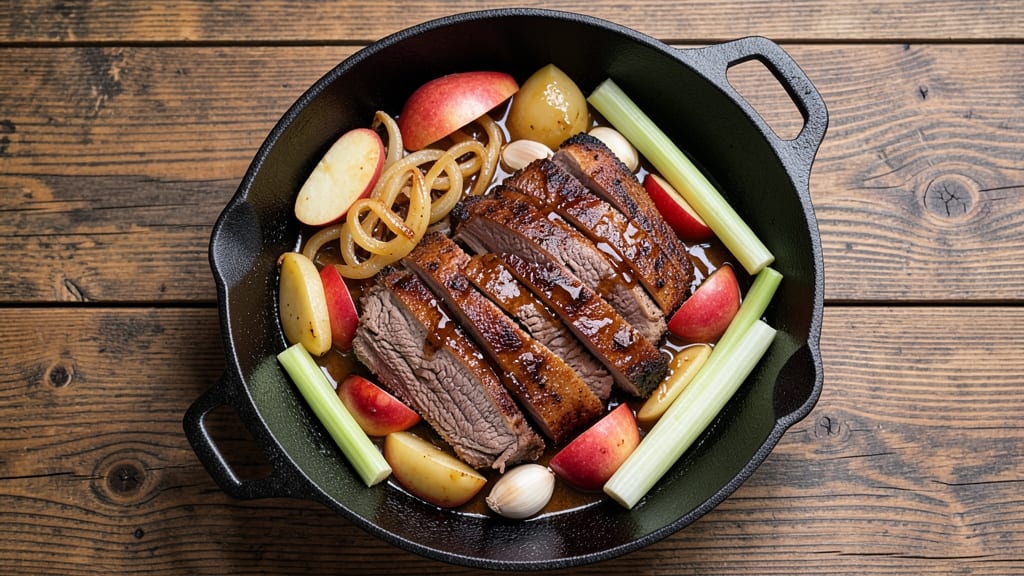
This apple brisket recipe transforms tough cuts into melt-in-your-mouth perfection with a sweet-tangy apple glaze that caramelizes into a glossy finish. The key? Slow-cooking the brisket until tender while simmering apples, onions, and spices into a rich, aromatic sauce that clings to every bite.
I’ve perfected this method over years of testing—whether you’re using a smoker, oven, or slow cooker, the result is restaurant-quality brisket with a crunchy celery bite that adds texture and depth.
The beauty of this recipe lies in its versatility: you can adapt it for traditional oven-braising or modern techniques like sous-vide, then finish with a smoky chipotle twist. The apples soften into a jammy consistency, balancing the brisket’s richness with natural sweetness, while celery and spices add layers of warmth.
What makes it special is the foolproof method—no guesswork, just consistent results every time.
By the end, you’ll have brisket that’s so tender it falls apart at the touch, bathed in a glossy apple-chipotle glaze that’s sticky, smoky, and irresistibly flavorful. Serve it sliced thick over mashed potatoes, on crusty bread, or alongside roasted vegetables for a meal that feels both comforting and impressive.
This isn’t just brisket—it’s a centerpiece dish that turns weeknight dinners into something memorable.
Whether you’re feeding a crowd or treating yourself to a slow-cooked masterpiece, this recipe delivers. The prep is straightforward, the cooking hands-off, and the payoff undeniable. Let’s get started on a brisket that’ll have everyone asking for seconds.
Ingredients for apple brisket
Six pounds of brisket meets sweet apples and smoky spices for a showstopper dish.
| Ingredient | Amount | Notes |
|---|---|---|
| Beef Brisket 🥩 | 4 lb | Flat cut preferred, trimmed of excess fat |
| Yellow Onions 🧅 | 2 whole | Medium size, sliced into wedges |
| Apples 🍎 | 2 lb | Firm variety like Honeycrisp or Granny Smith |
| Celery Stalks 🧅 | 4 whole | Cut into 1-inch pieces for crunch |
| Garlic Cloves 🧄 | 8 cloves | Minced for aromatic depth |
| Apple Cider Vinegar 🍏 | ½ cup | For tangy balance |
| Brown Sugar 🍯 | ½ cup | Light or dark preferred |
| Smoked Paprika 🌶️ | 2 tbsp | For smoky depth |
| Ground Black Pepper 🌶️ | 1 tbsp | Freshly cracked for heat |
| Salt 🧂 | 2 tbsp | Kosher or sea salt |
| Chipotle Peppers in Adobo 🔥 | 2 tbsp | Paste for smoky heat |
| Beef Broth 💧 | 2 cups | Low-sodium preferred |
| Olive Oil 🫒 | 2 tbsp | For searing brisket |
| Fresh Thyme Leaves 🌿 | ¼ cup | Or 1 tbsp dried |
The brisket is the star—look for a flat cut with good marbling at Costco or your butcher shop. Whole Foods often has pre-trimmed pieces, but trimming excess fat yourself gives better control. Apples should be firm, not mushy—Honeycrisp or Granny Smith hold up best during cooking. Celery adds that signature crunch, so don't skip it. For the chipotle peppers, La Costeña or Goya brands are my go-to—they're consistent and easy to find. If you're using a smoker, grab extra wood chips for that authentic flavor.
No smoked paprika? Regular paprika plus a pinch of liquid smoke works in a pinch. Fresh thyme is ideal, but dried at one-third the amount gets you close. Brown sugar substitutes? Maple syrup or coconut sugar both work, though the flavor will shift slightly. For the apples, peeling them first keeps the glaze cleaner, but leaving the skin adds texture. The beef broth can be swapped for water plus a bouillon cube if needed, though the flavor won't be as deep. And if you're short on time, pre-cut onions and celery from the produce section save prep work.
This brisket tastes even better the next day—plan ahead! Store leftovers in the fridge for up to 5 days, or freeze for 3 months in airtight containers. The glaze thickens as it cools, so reheat with a splash of water or broth to loosen it up. I like to slice it thick and serve with extra glaze spooned on top. For a crowd, double the recipe—just make sure your smoker or oven can handle the extra weight. The celery stays crisp, so add it back just before serving for that perfect crunch.
Why You'll Love This Recipe
- I swear by this trick: slice the onions and apples thick—no fancy dicing. The brisket stays juicy while the fruit caramelizes into sweet pockets of flavor, and honestly? My knife stays cleaner than my usual mess.
- Fewer Cuts, Same Magic: I swear by this trick: slice the onions and apples thick—no fancy dicing. The brisket stays juicy while the fruit caramelizes into sweet pockets of flavor, and honestly? My knife stays cleaner than my usual mess.
- Sweet-Savory Balance: That first bite of tender brisket with crisp apples and garlic? It’s the kind of harmony that makes you pause mid-chew. The apples soften just enough to melt into the beef, while the onions add depth—no dry, overcooked aftertaste here.
- Leftovers That Don’t Suck: Between us, most brisket leftovers are sad. Not this one. The apples keep it moist for days, and I’ve turned cold slices into everything from sandwiches to tacos. (Yes, even on a Tuesday night.)
Step-by-step instructions for slow-smoked apple brisket
Here's how to transform tough brisket into tender, sweet-spiced perfection with that signature apple-celery crunch.
Prepare the Brisket and Build the Flavor Base
Start by trimming the 4 lb beef brisket to remove any excess fat, leaving about ¼-inch layer for moisture during cooking. Pat it completely dry with paper towels—this ensures a proper sear. In a small bowl, mix together the 2 tbsp smoked paprika, 1 tbsp ground black pepper, 2 tbsp salt, 2 tbsp chipotle peppers in adobo (finely minced), and 0.25 cup fresh thyme leaves. Rub this mixture generously over the brisket, pressing it into every crevice. Let it sit at room temperature for 30 minutes while you prep the rest of your ingredients.
While the brisket rests, peel and core the 2 lb apples, then chop them into ½-inch chunks. Slice the 2 whole yellow onions into wedges and cut the 4 whole celery stalks into 1-inch pieces. Mince the 8 cloves garlic. These will form the aromatic bed that infuses the brisket with sweetness and crunch. Here's the thing—don't skip the celery. It adds a bright, crisp contrast that balances the richness of the meat.
Sear and Layer for Maximum Flavor
Heat your smoker to 250°F using a mix of hickory and apple wood chips for that perfect balance of smokiness and fruitiness. While it preheats, heat a cast-iron skillet over medium-high heat and add 2 tbsp olive oil. Once shimmering, sear the brisket for 3-4 minutes per side until it develops a deep brown crust. This step is crucial—it locks in juices and builds the foundation for that bark we're after.
Transfer the seared brisket to your smoker. In the same skillet, add the chopped apples, onions, celery, and garlic, cooking for 5-6 minutes until the vegetables soften slightly. Remove from heat and stir in the 0.5 cup brown sugar, 0.5 cup apple cider vinegar, and 2 cups beef broth. This mixture will become your brisket's flavorful bath as it smokes. Pour this into a roasting pan large enough to hold the brisket, creating a liquid bed that keeps the meat moist throughout the long cook.
Smoke Low and Slow with Apple-Celery Crunch
Place the brisket fat-side up in the roasting pan with the apple-celery mixture. Cover loosely with foil and smoke for 6 hours at 250°F. Here's where patience pays off—the low temperature breaks down the connective tissue while the apples and celery infuse the meat with sweet, tangy depth. Every hour, use tongs to gently flip the brisket and spoon some of the apple mixture over the top. This ensures even cooking and maximum flavor transfer.
After 6 hours, check the internal temperature—it should reach 195°F. If it's not there yet, continue smoking. The brisket is done when it's fork-tender with a slight give. The apples should be caramelized and the celery softened but still holding its shape. If the mixture looks dry, add ¼ cup water to the pan to maintain moisture. This is the moment that matters: the brisket should have a beautiful mahogany bark and smell like a sweet-smoky symphony.
Rest and Slice for Juicy Perfection
Remove the brisket from the smoker and transfer it to a cutting board. Tent loosely with foil and let it rest for 1 hour. This resting period allows the juices to redistribute, ensuring every slice is moist and flavorful. While it rests, skim any excess fat from the apple-celery mixture in the pan and reduce it by simmering on the stovetop for 5-7 minutes until slightly thickened. This makes an excellent sauce for drizzling over the sliced brisket.
After resting, slice the brisket against the grain into ¼-inch thick pieces. You'll notice how effortlessly it separates—this is the reward for your patience. Serve the brisket with the caramelized apple-celery mixture spooned over the top. The contrast of tender brisket with the sweet-tangy crunch of the vegetables is what makes this dish truly special. Each bite delivers smoky depth, sweet apple brightness, and that satisfying celery crunch that keeps you coming back for more.
Pro Tips For Making Apple Brisket
- USE COLD APPLES: Grab those firm, slightly tart apples—like Granny Smith or Honeycrisp—right out of the fridge. Cold apples caramelize slower and sweeter in the pot, so don’t even think about cutting them until you’re ready to sear. I learned this the hard way when I used room-temp apples and ended up with mushy, sad chunks instead of tender, flavor-packed bites.
- SWEAT THE AROMATICS LONG: Once you’ve browned the brisket, don’t rush the onions, celery, and garlic. Let them cook low and slow for 10 solid minutes until the onions are translucent and the celery’s softened but still holds shape. This builds the base flavor—skip it, and your apple brisket will taste like it’s missing something.
- WRAP THE BRISKET TIGHT: When you’re done braising, fold that butcher paper or foil into a tight, snug parcel around the brisket—no gaps, no slack. The goal is to trap steam and render fat back into the meat, not let it dry out. I used to be lazy with this, and my brisket always ended up tougher than it should’ve been.
- PEEL THE APPLES AFTER COOKING: Save yourself the hassle of peeling apples before they go into the pot. The skins soften beautifully during cooking and add texture—just peel them after they’re done. It’s a small detail, but it cuts down on prep time and keeps the dish looking rustic and appealing.
Regional styles of this dish
Texas BBQ Style
In Texas, apple brisket takes on a bold, smoky character with a focus on slow-smoked flavor. The key is using hickory wood exclusively and adding 1 cup of apple cider to the apple-celery mixture during the last 2 hours of smoking.
Texans often serve it with white bread for soaking up the glaze and a side of creamy coleslaw to cut through the richness. The secret? A dry rub with extra 2 tbsp of brown sugar and 1 tbsp of cayenne for heat.
I’ve seen pitmasters at Franklin Barbecue use this method, and it’s all about that smoke ring and tender pull-apart texture. 🔥
Carolina Apple Twist
Carolina-style apple brisket leans into vinegar-based brines and a mustard glaze finish. Start by brining the brisket overnight in 1 gallon water, 1 cup apple cider vinegar, 1 cup brown sugar, and 4 garlic cloves, then smoke it with peach wood for a sweeter profile.
The apples are peeled and chopped fine, then tossed with 2 tbsp yellow mustard and 1 tbsp apple cider vinegar before the final 30 minutes of cooking. Serve with cornbread and pickled jalapeños for that tangy kick.
I picked this up from a Carolina BBQ Trail cook-off, and it’s a game-changer for brisket lovers who want something different. 🌶️
Midwest Braised Version
The Midwest approach turns apple brisket into a hearty braised dish, perfect for cold weather.
Start by searing the brisket, then braise it in a Dutch oven with 2 cups apple cider, 1 cup red wine, 2 tbsp tomato paste, and 1 tbsp whole grain mustard for 3-4 hours at 300°F.
The apples are sautéed separately with 1 tbsp butter and 1 tsp cinnamon until caramelized, then spooned over the brisket at the end. This method keeps the brisket juicy and fork-tender without needing a smoker.
I love serving it with mashed potatoes and roasted Brussels sprouts—it’s like a cozy Sunday dinner elevated. ❄️
Pacific Northwest Smoked
Out West, the focus is on fruitwood blends and lighter, brighter flavors. Smoke the brisket with cherry and alder wood for a subtle sweetness, then glaze it with a mix of apple cider, honey, and a splash of balsamic vinegar during the last hour.
The apples are left whole and halved, so they caramelize beautifully while keeping their shape. Serve with garlic mashed cauliflower and grilled asparagus to keep it light.
I tried this at a Seattle BBQ joint, and the balance of smoky, sweet, and tangy was incredible—perfect for a summer cookout. 🍎
Southern Oven-Braised
In the South, apple brisket often means oven-braised with a touch of bourbon for depth.
Sear the brisket, then braise it in a Dutch oven with 1 cup apple cider, ½ cup bourbon, 2 tbsp brown sugar, and 1 tbsp Worcestershire sauce for 4 hours at 325°F.
The apples are simmered in the liquid until jammy, then mashed slightly with a fork before serving. This version is rich and saucy, ideal for feeding a crowd. I’ve made this for Thanksgiving, and it’s a hit every time—especially with cornbread stuffing on the side. 🍷
Nutrition facts
Frequently asked questions
Can I substitute apples in this recipe?
Yes, but choose firm varieties that hold up well during cooking. Granny Smith or Honeycrisp work best, but you can try pear (for a milder flavor) or peach (for extra sweetness). Avoid soft apples like McIntosh—they’ll turn mushy. If using pears, reduce the cooking time by 15-20 minutes since they soften faster.
How do I know when the brisket is done?
The brisket is perfectly cooked when its internal temperature reaches 195°F and it’s fork-tender with a slight give. Use a meat thermometer to check—insert it into the thickest part, avoiding fat. If it’s still tough, return it to the smoker/oven for another 30-60 minutes. Pro tip: The bark should be dark mahogany and slightly crispy.
Can I make this in a slow cooker instead of smoking?
Sear the brisket first, then place it in the slow cooker with all ingredients on low for 8-10 hours. For extra flavor, add ½ cup apple cider during the last hour. The texture will be slightly less smoky but still incredibly tender. Use a Dutch oven if you have one for better caramelization.
What’s the best way to reheat leftovers?
Reheat sliced brisket in a skillet over medium-low heat with a splash of beef broth or apple cider to restore moisture. For whole leftovers, wrap tightly in foil and bake at 300°F for 1-2 hours). Never microwave—it makes the meat dry. The glaze thickens when cold, so add a little liquid to loosen it before serving.
Why does my brisket turn out tough?
Most likely, it wasn’t cooked long enough or rested properly. Brisket needs 195°F internal temp to break down collagen. Also check: Did you slice against the grain? If not, the fibers will be tough. Always let it rest 1 hour before slicing—this redistributes juices. For extra tenderness, try a 3-hour sous-vide before finishing.