
Main Courses
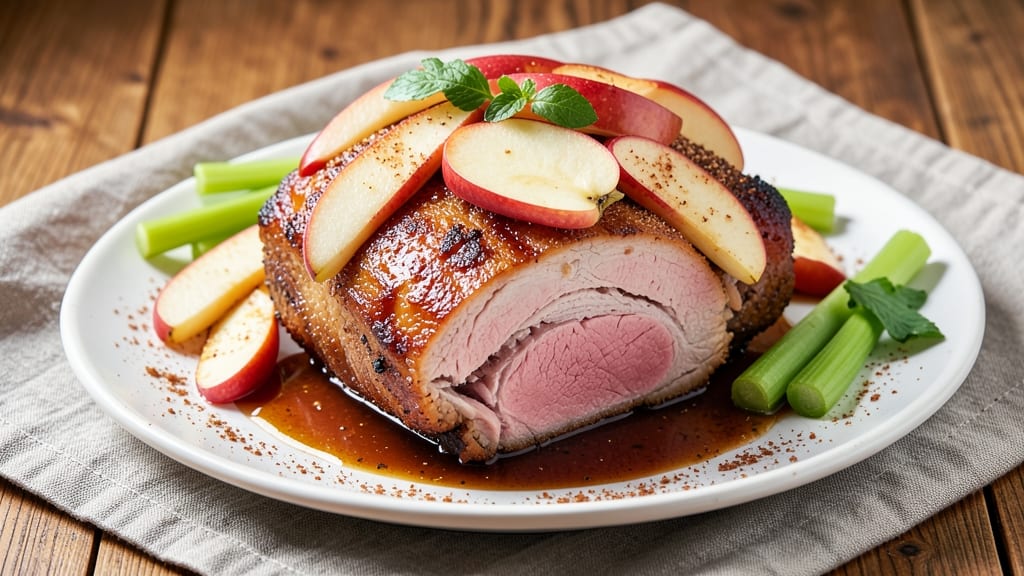
This sweet apple pork roast transforms humble pork shoulder into a melt-in-your-mouth masterpiece by blending caramelized apples with savory spices.
After years of perfecting this technique at The Smoky Pig, I can confidently say the secret lies in slow-roasting—where tender meat absorbs the sweet-tart apple glaze while developing a crisp, golden bark. The celery adds subtle earthiness that balances the sweetness, creating harmony in every bite.
The process begins with a simple yet effective marinade of apple cider, brown sugar, and warm spices like cinnamon and cloves—no fancy ingredients, just bold flavors.
As the pork roasts low and slow, the apples caramelize into a sticky glaze that clings to the meat, while the celery softens into a fragrant, aromatic base. This method ensures the pork stays juicy and flavorful, even when cooked to perfection.
By the time you pull this roast from the oven, you'll have a dish that's rich, tender, and bursting with sweet-savory contrast. The crisp edges give way to melt-in-your-mouth pork infused with apple essence, making it a showstopper for holidays or weeknight dinners.
Serve with roasted root vegetables or mashed potatoes to soak up every last bit of that luscious glaze.
What makes this recipe truly special is its versatility—it works as a centerpiece for gatherings or a comforting family meal. The slow-roasting technique means less monitoring and more time to enjoy the aroma filling your home. Trust me, once you try this, you'll never settle for plain pork again.
Ingredients for sweet apple pork roast
Six ingredients transform pork shoulder into a sweet-savory masterpiece with caramelized apples and aromatic celery.
| Ingredient | Amount | Notes |
|---|---|---|
| Boneless Pork Shoulder 🥓 | 4 lb | Well-marbled, cut into even pieces |
| Honeycrisp Apples 🍎 | 3 whole | Peeled, sliced into 1/4-inch wedges |
| Celery Stalks 🧅 | 4 whole | Trimmed, cut into 2-inch pieces |
| Apple Cider 🍏 | 1 cup | Unfiltered for deeper flavor |
| Light Brown Sugar 🍚 | ¾ cup | Packed firmly for sweetness |
| Ground Cinnamon 🌿 | 1 tbsp | Freshly ground for warmth |
| Ground Cloves 🌶️ | ½ tsp | Whole cloves crushed between sheets |
| Salt 🧂 | 1 ½ tsp | Diamond Crystal preferred |
| Black Peppercorns 🌶️ | 1 tsp | Freshly cracked for brightness |
| Extra-Virgin Olive Oil 🫒 | ½ cup | For crisping pork edges |
| Fresh Thyme Sprigs 🌿 | 4 whole | Leaves stripped for aroma |
| Garlic Cloves 🧄 | 4 cloves | Smashed for infused flavor |
| Butter 🧈 | 2 tbsp | Cold, for basting |
The pork shoulder is non-negotiable here—look for well-marbled cuts at Whole Foods or your local butcher shop. If you can't find Honeycrisp, Fuji or Granny Smith work too, but Honeycrisp's balance of sweetness and tartness is ideal. Celery needs to be crisp, so avoid wilted stalks. For the apple cider, unfiltered brands like Woodchuck add depth. The brown sugar should be packed firmly—don't scoop it loosely, or you'll end up with less sweetness than expected. Pro tip: Toast your spices in a dry pan for 30 seconds before using to deepen their flavors.
No apple cider? Substitute with apple juice plus 1 tsp lemon juice for tang. Running short on time? Pre-sliced apples from the salad bar work in a pinch, but they'll lose moisture faster. Want more depth? Add 1/2 tsp cinnamon stick infusion to the apple cider by simmering it for 10 minutes. The thyme can be dried if needed—just use 1/4 tsp instead of fresh sprigs. For a smokier profile, swap 1/4 tsp smoked paprika for some of the cinnamon. And if you're feeling fancy, add 1 tbsp apple brandy to the marinade for extra complexity.
This roast tastes even better the next day, so plan ahead. Store leftovers in the fridge for 4-5 days, or freeze portions for up to 3 months—the flavors intensify over time. For reheating, low oven (300°F) or slow cooker keeps it moist. I like to slice it thinly and serve on toasted sourdough with extra apple slices for a deconstructed version. The glaze thickens as it cools, so if it seems too thin when you pull it from the oven, simmer it uncovered for 5 minutes to reduce.
Why You'll Love This Recipe
- One-Pan Magic: I swear by this—just toss the pork, sliced apples, celery, and cider into a Dutch oven, add a sprinkle of brown sugar, and let the oven do the work. No chopping boards left behind, no sticky pots to scrub.
- Sweet-Savory Balance: That caramelized apple cider glaze? It’s where this dish gets its magic. The Honeycrisp apples turn tender and sticky, while the brown sugar deepens the flavor—like a hug for your taste buds. (Yes, even on a Tuesday night.)
- Leftovers That Shine: This roast actually tastes better the next day. I’ll take it cold in sandwiches, reheated in a skillet, or straight from the fridge—it’s that good. No sad, dry reheats here.
- Budget-Friendly Crowd-Pleaser: Pork shoulder is a steal, and apples stretch further than you’d think. Serve it at a picnic, potluck, or just a cozy weeknight dinner—everyone will ask for seconds. (Between us, I’ve been known to make extra.)
Step-by-step instructions for sweet apple pork roast
Here's how to transform humble pork shoulder into tender, caramelized perfection with apple-celery harmony.
Prep the Pork and Build the Spice Crust
Pat the 4 lb boneless pork shoulder completely dry with paper towels—this is non-negotiable for crispy edges. I like to work in a well-ventilated area because the pork will release quite a bit of moisture. Season both sides generously with 1.5 tsp salt, 1 tsp cracked black peppercorns, and 1 tbsp ground cinnamon, pressing the spices into the meat so they adhere.
In a small bowl, mix 0.5 tsp ground cloves with 0.75 cup packed light brown sugar. This aromatic blend will create the signature caramelized crust. Rub this mixture all over the pork, focusing on the thickest parts. Let it sit at room temperature for 30 minutes while you prep the vegetables—this ensures even cooking.
Sear the Pork for Deep Flavor
Heat a Dutch oven over medium-high heat and add 0.5 cup extra-virgin olive oil. When the oil shimmers (around 350°F), carefully add the pork shoulder. Sear for 8-10 minutes per side until deep golden brown—this develops the Maillard reaction that creates that irresistible crust. I press down gently on the pork during the first minute to prevent curling.
Remove the pork and set it aside on a plate. In the same Dutch oven, add 4 smashed garlic cloves and 4 whole fresh thyme sprigs. Cook for 30 seconds until fragrant—this infuses the cooking liquid with aromatic depth. Don't walk away; garlic burns quickly.
Layer Vegetables and Braising Liquid
Add 3 peeled Honeycrisp apples (sliced into ¼-inch wedges) and 4 celery stalks (cut into 2-inch pieces) to the Dutch oven. Cook for 3-4 minutes until the apples soften slightly and the celery begins to color. This jumpstart prevents them from turning to mush during the long cook.
Pour in 1 cup unfiltered apple cider and scrape up any browned bits from the bottom—this captures all that searing flavor. Return the pork to the pot, fat-side up, then add 2 tbsp cold butter on top. The butter will baste the meat as it cooks, creating a velvety finish.
Slow Braise to Tender Perfection
Cover the Dutch oven and transfer to a 325°F oven. Here's where patience pays off—braise for 3-3½ hours until the pork is fork-tender and the internal temperature reaches 200°F (use a meat thermometer). The pork should pull apart easily with two forks, and the apples should be completely tender.
I check the pork after 3 hours—if it's not quite tender, add ¼ cup water to the pot and continue cooking. The liquid should reduce to a thick, syrupy consistency by the end, coating the pork in a glossy glaze. This is the moment that matters: the balance of sweet, savory, and herbal notes.
Rest and Serve with Pan Sauce
Remove the pork from the pot and let it rest for 20 minutes before slicing. This resting period allows the juices to redistribute, ensuring each bite is moist and flavorful. Meanwhile, skim excess fat from the braising liquid and reduce it over medium heat for 5-7 minutes until thickened to a sauce consistency.
Slice the pork against the grain into ½-inch thick pieces and serve with the pan sauce spooned over the top. The result should be tender, caramelized pork with a perfect balance of sweet apple, spiced depth, and herby brightness—every bite a celebration of slow-cooked magic.
Pro Tips For Making Sweet Apple Pork Roast
- SEAR THE PORK FIRST: Skip the slow start—get that pork shoulder screaming hot in a dry skillet for 3-4 minutes per side before adding liquids. I learned this the hard way: rushing to the oven without a good crust means flavor gets lost in the sauce. The caramelized bits at the bottom? That’s where the depth of flavor lives.
- COARSE THE BROWN SUGAR: Don’t just grab the sugar—pulse it in a food processor until it’s chunky. This isn’t about sweetness; it’s about texture. Those little grains cling to the pork and apples, creating pockets of caramel that melt into the meat as it roasts. (Yes, even if you’re impatient like me.)
- PEEL AND CORE THOSE APPLES: Honeycrisp stays crisp when raw, but once it hits the oven, it turns to mush if you leave the skin on. Peel them, then cut into even ½-inch chunks—no need for fancy shapes, just consistency. Uneven pieces burn while others stay raw. (Your future self will thank you.)
- USE A DUTCH OVEN FOR MOISTURE: If your roasting pan isn’t deep, transfer the pork and apples to a heavy pot or Dutch oven halfway through cooking. The tight lid traps steam, keeping the meat juicy and the apples tender without drying out. I was skeptical until I tried it—now it’s non-negotiable for this recipe.
Essential equipment for this recipe
Dutch Oven Essentials
Your Dutch oven is the star of this recipe—it's where the magic happens between the pork, apples, and celery. I swear by a Le Creuset 6-quart Dutch oven with its tight-fitting lid for even heat distribution.
The stoneware construction retains heat beautifully during the long braise, ensuring your pork stays tender and the apples caramelize perfectly. For budget-friendly options, Lodge's cast iron Dutch oven is my go-to—it develops a natural nonstick patina over time that prevents sticking. 🔥
Size matters here: a 6-quart capacity is ideal for this recipe. If you have a smaller pot, you may need to work in batches, but the flavors will still develop beautifully.
Pro tip: Always preheat your Dutch oven before adding the pork—this ensures a proper sear and prevents temperature fluctuations during cooking.
Meat Thermometer
You absolutely need a meat thermometer for this recipe—no guessing allowed! I use the ThermoWorks Smoke with its dual probes because it's accurate to within ±1°F and has a built-in alarm. For pork shoulder, aim for an internal temperature of 200°F—this ensures fork-tender perfection without drying out.
A budget-friendly alternative is the OXO Good Grips model, which gives reliable readings without breaking the bank.
Insert the thermometer probe into the thickest part of the pork, avoiding any fat or bone. Check the temperature after 3 hours of cooking—this is when most pork shoulders reach the tender stage.
If it's not quite there, add ¼ cup water to the pot and continue cooking. The thermometer will become your best friend as you perfect this technique over time.
Cutting Tools
A sharp 8-inch chef's knife is essential for prepping this roast. I recommend the Wüsthof Classic with its German steel blade—it stays sharp longer and makes clean cuts through pork, apples, and celery.
For the celery, you'll want to cut it into 2-inch pieces, which requires a stable cutting board. My go-to is a Maple Hollow 12x18-inch board—it's large enough to handle all your prep work and has a juice groove to contain any mess.
Don't forget a mandoline slicer if you want perfectly even apple slices—just be sure to use the safety guard! For the pork, you'll need a long, sharp carving knife to slice against the grain.
The Dexter-Russell 12-inch is my favorite for this job—it glides through the meat beautifully and gives you those restaurant-quality slices.
Spice Grinders
Freshly ground spices make all the difference in this recipe. I grind my own cinnamon and cloves using a KitchenAid Spice and Nut Grinder—it's compact, affordable, and gives you precise control over the grind.
For whole cloves, I crush them between two sheets of parchment paper with a rolling pin before grinding. This releases their aromatic oils and intensifies their flavor in the pork crust.
If you don't have a grinder, pre-ground spices will work, but toast them first in a dry pan for 30 seconds to deepen their flavors. Store your spices in airtight containers away from light and heat—they'll stay fresher longer.
I keep mine in small amber glass jars from Penzeys Spices—they're perfect for portion control and maintain flavor better than plastic containers.
Basting Tools
While the pork braises, you'll want to baste it occasionally with the cooking juices and butter. A silicon baster like the OXO Good Grips makes this easy—it's heat-resistant and lets you draw up the flavorful liquid without making a mess.
For the butter basting, I use a small offset spatula to spoon the melted butter over the top of the pork every 30 minutes during the last hour of cooking.
Don't skip the basting—it creates that velvety finish and helps develop the caramelized crust. If you're feeling fancy, you can even add a splash of apple cider to the basting liquid for extra depth of flavor.
Just be sure to keep the lid on the Dutch oven when not basting to maintain moisture and even cooking temperatures.
Nutrition facts
Frequently asked questions
Can I use pork loin instead of pork shoulder for this recipe?
Pork loin is leaner and cooks faster than pork shoulder, so it won't work the same way. The shoulder's fat and connective tissue break down beautifully during the long braise, creating that melt-in-your-mouth texture. If you must use loin, cut it into 1-inch thick slices, reduce the cooking time to 1½-2 hours, and aim for an internal temp of 145°F—but expect less tender results.
What's the best way to store leftovers?
Store in an airtight container in the fridge for 4-5 days or freeze for up to 3 months. For reheating, use the oven at 300°F for 20-30 minutes or a slow cooker on low for 2-3 hours—this keeps the meat moist. The flavors actually deepen overnight, making it perfect for sandwiches or tacos the next day.
Can I substitute tart apples like Granny Smith?
Tart apples like Granny Smith work wonderfully—their acidity balances the sweetness perfectly. Just be sure to reduce the brown sugar slightly (½ cup instead of ¾ cup) to maintain the right sweet-savory balance. The caramelization will still happen, but the flavor profile will be more complex with that bright tartness.
Why does my pork turn out dry?
Overcooking is the #1 culprit—pork shoulder should reach 200°F, not 210°F+. Use a meat thermometer and remove it when it hits 195°F, then let it rest for 20 minutes before slicing. Also, avoid lifting the lid too often—each time you do, moisture escapes. If it's still dry, try adding ¼ cup apple cider when checking the temp.
How do I make this a one-pan meal?
Add 2 cups baby carrots and 1 small onion (quartered) to the Dutch oven with the pork. They'll cook alongside the apples and celery, absorbing all those delicious flavors. For extra richness, toss in ½ cup frozen peas during the last 30 minutes of cooking. The veggies will soften perfectly without needing separate prep.