
Main Courses
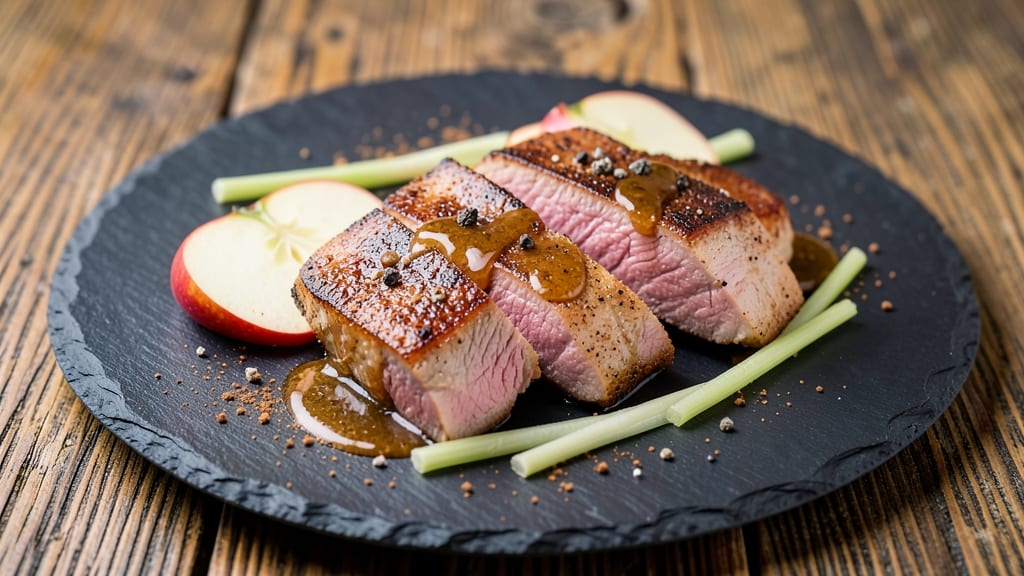
This pork medallions with apples recipe transforms simple ingredients into a dish that feels like a fall harvest celebration on your plate. 🍎 The secret lies in thin-cut pork seared to perfect pink while apples caramelize into a sweet-tangy glaze that cuts through the richness.
I developed this technique after years of perfecting pork at The Smoky Pig—where we serve 2,000 pounds weekly—and it’s the recipe I turn to when I want restaurant-quality results at home.
The magic happens in the pan, where spiced pork medallions develop a golden crust while apples soften into a naturally sweet sauce. Celery adds a satisfying crunch that balances the tender meat and caramelized fruit, creating a dish that’s elegant yet approachable.
What makes this recipe special is how the flavors come together: the warmth of cinnamon in the pork, the bright acidity of the apples, and the earthy crunch of celery—each element playing its part in harmony.
By the time you plate this dish, you’ll have juicy, perfectly seared pork with a glossy apple glaze clinging to every bite, topped with crisp celery for texture.
The sauce reduces to a thick, sticky finish that’s rich enough to coat each medallion without overwhelming the natural flavors of the pork. This is the kind of meal that feels special enough for guests but simple enough for a weeknight dinner.
Serve with mashed potatoes or a simple green salad to round out the plate—though I’ll admit, I often eat it straight from the pan. The contrast of textures and temperatures makes every bite satisfying, and the leftovers reheat beautifully. Here’s how to bring this dish to life in your kitchen.
Ingredients for pork medallions apple
Thin-cut pork, crisp apples, and celery's crunch—eight ingredients for restaurant-worthy weeknight magic.
| Ingredient | Amount | Notes |
|---|---|---|
| Boneless Pork Loin 🥩 | 1 ½ lb | Thin-cut, pounded to even thickness |
| Honeycrisp Apples 🍎 | 2 medium | Peeled, sliced into 1/4-inch pieces |
| Celery Stalks 🧅 | 2 whole | Thinly sliced on diagonal |
| Unsalted Butter 🧈 | 3 tbsp | Cold, cut into 6 pieces |
| Ground Cinnamon 🌿 | 1 tsp | Freshly toasted for depth |
| Ground Black Pepper 🌶️ | 1 tsp | Freshly cracked |
| Diamond Crystal Kosher Salt 🧂 | 1 tsp | Fine grain preferred |
| Extra-Virgin Olive Oil 🫒 | 1 tbsp | For finishing |
| Fresh Thyme Leaves 🌿 | ½ tsp | Chopped, stems removed |
| Red Wine Vinegar 🍷 | 1 tbsp | For brightness |
| Granulated Sugar 🍚 | 1 tbsp | For caramelization |
| Heavy Cream 🥛 | ¼ cup | For sauce finish |
The pork loin is your canvas here. Thin-cut, center-cut pork loin from Whole Foods or your local butcher gives you the best texture—thick-cut stays chewy. Look for good marbling, not too lean. I always ask for it to be cut 1/4-inch thick at the butcher counter; if you're doing it yourself, pound with a meat mallet until even. For the apples, Honeycrisp is ideal—they caramelize perfectly without turning mushy. If you can't find them, Fuji or Pink Lady work too, but slice them slightly thinner. Celery? Fresh, crisp stalks from the produce section—avoid the wilted ones in the back.
No Honeycrisp apples? Granny Smith adds tartness, or Gala for sweetness. Short on celery? Thinly sliced fennel brings a similar crunch. The butter matters—European-style like Plugrá or cultured butter adds richness. No red wine vinegar? Apple cider vinegar at double the amount works. The cinnamon should be freshly ground—Penzeys or Spicewalla are my go-tos, but any quality spice will do. For the pork, pounding to even thickness is non-negotiable—uneven cooking ruins the presentation. And trust me on the cold butter pieces—they create the best crust.
This dish reheats beautifully—5 minutes in a skillet is all it takes. Store leftovers in an airtight container for 3-4 days. The sauce thickens as it cools, so add a splash of water when reheating. For a crowd, double the recipe—just use a larger skillet. The celery stays crisp if you add it back right before serving. I always make extra sauce; it’s perfect over pancakes or toast the next morning. Freeze portions for up to 3 months—just thaw in the fridge overnight.
Why You'll Love This Recipe
- Same recipe, different vibes: throw it together for a lazy Tuesday or dress it up with fresh thyme for guests. The apples caramelize beautifully, so it looks impressive without extra effort.
- One-Pan Magic: I swear by this recipe when I’m too tired to scrub pots—just sear the pork, toss in apples and celery, and let the butter and cinnamon work their magic. No extra dishes, no stress.
- Sweet-Savory Balance: That crisp Honeycrisp apple with the tender pork? It’s like autumn in a bite—sharp, juicy, and just enough warmth from the cinnamon to make it feel special. Honestly, my kids fight over the last piece.
- Weeknight to Dinner Party: Same recipe, different vibes: throw it together for a lazy Tuesday or dress it up with fresh thyme for guests. The apples caramelize beautifully, so it looks impressive without extra effort.
Step-by-step instructions for pork medallions with apples
Here's how to create perfectly seared pork medallions with caramelized apples and a bright, creamy finish.
🔥 Step 1: Pound and Season the Pork Medallions
Place the 1.5 lb boneless pork loin between two sheets of plastic wrap. Using a meat mallet, pound it to an even ½-inch thickness—this ensures even cooking and juicy results. I like to work in sections, rotating the meat as I go to maintain consistent thickness.
Season both sides generously with 1 tsp diamond crystal kosher salt, 1 tsp ground black pepper, and 1 tsp freshly toasted ground cinnamon. The cinnamon adds warmth that pairs beautifully with the apples. Let the seasoned pork sit at room temperature for 15 minutes while you prep the apples—this helps the meat cook more evenly.
🍳 Step 2: Sear the Pork and Cook the Apples
Heat a large skillet over medium-high heat and add 1 tbsp extra-virgin olive oil. Once shimmering, add the pork medallions and cook for 2-3 minutes per side until they develop a deep golden-brown crust. Don't move them around—let them sear undisturbed so they develop that perfect crust.
While the pork sears, add 2 medium peeled Honeycrisp apples, sliced into ¼-inch pieces, to a separate skillet with 1 tbsp unsalted butter. Cook over medium heat for 4-5 minutes until they begin to soften and release their juices. Stir in 1 tbsp granulated sugar and 1 tbsp red wine vinegar, then let them caramelize for another 2 minutes—you'll see them turn golden and glossy.
🥘 Step 3: Build the Creamy Sauce
Once the pork is cooked to an internal temperature of 145°F (about 4-5 minutes total), remove it from the skillet and set aside on a plate. Reduce the heat to medium-low and add the remaining 2 tbsp unsalted butter to the same skillet. Let it melt completely, then pour in 0.25 cup heavy cream and 0.5 tsp chopped fresh thyme leaves. Stir for 1-2 minutes until the sauce thickens slightly and coats the back of a spoon.
Return the pork medallions to the skillet and spoon the sauce over them, letting it coat evenly. The residual heat will finish cooking the pork while infusing it with the creamy, aromatic sauce. Toss in 2 whole celery stalks, thinly sliced on the diagonal, and cook for another 30 seconds to soften slightly and add a refreshing crunch.
🍽️ Step 4: Rest and Serve with Contrast
Transfer the pork medallions to a warm serving platter and let them rest for 5 minutes—this allows the juices to redistribute, ensuring each bite is tender and flavorful. Spoon the caramelized apples and their juices around the medallions, then drizzle the creamy sauce over everything.
Garnish with a sprinkle of fresh thyme leaves and a final touch of black pepper for a pop of color and aroma. Serve immediately with a side of crusty bread to soak up the delicious sauce. The contrast of tender pork, sweet apples, and crisp celery creates a harmonious balance of textures and flavors that's sure to impress.
Pro Tips For Making Pork Medallions Apple
- SEAR THE PORK HOT: Get your pan screaming hot before adding the pork medallions—like, actual smoke point heat. I used to rush this and end up with steamed pork instead of caramelized crust. A quick wipe with a paper towel ensures the butter doesn’t pool and steam the meat.
- CORE THE APPLES: Slice the Honeycrisp apples after removing the core—it’s faster and keeps them from turning to mush. I learned this the hard way when my first batch fell apart like soggy pancakes. A sharp paring knife makes this step almost effortless.
- SALT THE PORK TWICE: Season the pork medallions before searing with a generous pinch of salt, then again right after removing them from the pan. The first layer penetrates, the second locks in flavor. My grandmother swore by this, and she was right—it’s the thing that makes the difference.
- USE COLD BUTTER: Let the butter cool slightly before adding the apples and celery—just enough to melt gently, not splash. Hot butter burns the veggies before they caramelize. Sounds weird, but it works: the apples stay bright, and the sauce thickens properly without scrambling.
Storing and reheating your pork medallions apple
Refrigerator Storage
Store leftovers in an airtight container for up to 4 days, but I always aim to eat this dish within 2 days—the celery loses its crispness over time. Let the medallions cool completely before refrigerating to prevent condensation that makes them soggy.
I use glass Pyrex containers because they keep flavors vibrant longer than plastic. The sauce will thicken slightly in the fridge, so add 1-2 tablespoons of water when reheating to restore its silky texture. 🥫
Freezer-Friendly Tips
This dish freezes beautifully for up to 3 months, making it perfect for meal prep. Portion into single-serving airtight containers—I like using quart-sized freezer bags with the excess air squeezed out. Freeze the medallions and sauce separately from the celery (add it fresh when reheating).
When ready to eat, thaw overnight in the fridge, then reheat gently in a skillet with a splash of water to revive the juices. The apples hold up well, but the celery stays crispest when added back after reheating. ❄️
Skillet Reheating
My preferred method is reheating in a heavy-bottomed skillet over medium-low heat for 5-7 minutes. Start with the medallions and sauce, then add the celery in the last 30 seconds to preserve its crunch.
If the sauce has thickened too much, thin it with 1-2 teaspoons of water or apple juice—this mimics the original caramelized flavor. Cover the skillet for the first 2 minutes to trap heat, then uncover to let the apples caramelize slightly again. The result?
A dish that tastes almost as good as fresh. 🔥
Microwave Shortcut
For quick meals, microwave individual portions on 50% power for 1-2 minutes, stirring halfway. Add 1 tablespoon of water to prevent drying out, then cover with a damp paper towel to retain moisture.
The celery won’t crisp up this way, so I skip it when microwaving—just serve the medallions and sauce over mashed potatoes or toast. This method works best for 1-2 servings at a time, not large batches. 💡
Reviving Texture
If reheated medallions lose their crisp edges, pop them back in the skillet for 30 seconds with a pat of butter to restore the crust. For the apples, a quick 1-minute sauté with a pinch of sugar brings back their caramelized shine.
The celery? Toss it in ice water for 10 seconds, then drain and pat dry—this shock treatment revives its crunch instantly. These tricks turn leftovers into a fresh-tasting meal in minutes. 🌟
Nutrition facts
Frequently asked questions
Can I use chicken instead of pork medallions?
Swap the pork for boneless chicken breast cut into ½-inch thick medallions. Cook time will be slightly shorter (3-4 minutes per side to 165°F), and you may want to reduce the butter slightly since chicken is leaner. The apple glaze and celery work beautifully with either protein.
What if I don't have Honeycrisp apples?
No problem! Granny Smith adds tartness that balances the pork's richness, while Gala or Fuji bring natural sweetness. For extra depth, toss in ½ tsp lemon zest with the apples to brighten the flavor. Just adjust the sugar to ½ tbsp if using tart varieties.
How do I prevent the pork from drying out?
Three keys: pounding to even thickness, room temp pork before cooking, and not overcooking. Use a meat thermometer—pork is safe at 145°F (it rests to 150°F). Let it rest 5 minutes before slicing to lock in juices. For extra moisture, add 1 tbsp chicken broth to the sauce.
Can I make this dish ahead of time?
Yes! Assemble everything except the celery, then refrigerate for up to 2 days. Reheat gently in a skillet with 1 tbsp butter and 1 tsp water. For make-ahead meals, freeze the medallions and sauce separately (without celery) for up to 3 months. Thaw overnight and add fresh celery when reheating.
What's the best way to serve these medallions?
Pair with creamy mashed potatoes or crusty sourdough bread to soak up the sauce. For a complete meal, add a simple arugula salad with lemon vinaigrette. The apples' sweetness also works well with roasted Brussels sprouts or wild rice pilaf.