
Main Courses
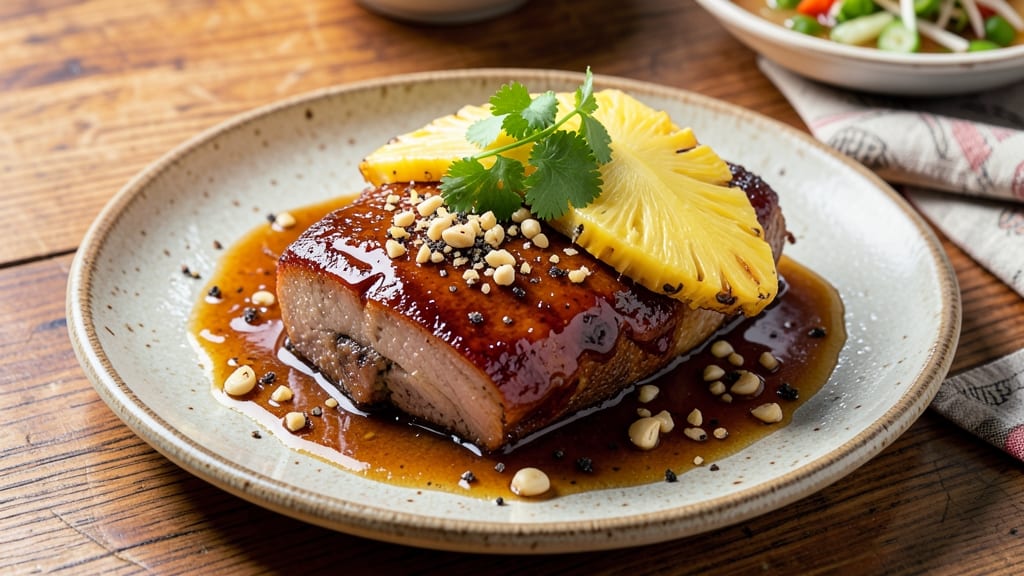
This Pork Hamonado with Pineapple recipe brings the bold flavors of Panlasang Pinoy to your kitchen, where tender pork meets sweet pineapple in a perfect crunchy-sweet glaze. 🌟 The hamonado technique—vinegar-brining—keeps the meat juicy while the pineapple adds just the right tangy sweetness.
I first tried this after a trip to Manila, and it became an instant family favorite for its balance of textures and flavors.
The secret lies in the marination: pork shoulder gets bathed in a mix of vinegar, soy sauce, and garlic for deep flavor, then pan-seared until golden before finishing in a sticky-sweet pineapple glaze.
This method delivers restaurant-quality results with minimal effort—no fancy equipment needed. The dish pairs beautifully with steamed rice and a simple green salad to cut through the richness.
By the time you serve this dish, your kitchen will smell like a Filipino comfort food feast, and every bite will offer a mix of tender pork, caramelized edges, and juicy pineapple chunks.
The glaze clings perfectly to the meat, creating a balance of sweet, savory, and tangy that’s impossible to resist. This recipe is a game-changer for anyone craving bold, flavorful meals with minimal fuss.
Whether you're serving a crowd or treating yourself to a special dinner, this foolproof technique ensures success every time. The prep takes just 30 minutes, and the cooking time is flexible—adjust based on your preferred doneness. Let’s get cooking!
Ingredients for pork hamonado with pineapple recipe panlasang pinoy
Tender pork shoulder, tangy vinegar, and sweet pineapple—this Filipino classic delivers restaurant-quality flavor with simple ingredients.
| Ingredient | Amount | Notes |
|---|---|---|
| Pork Shoulder 🥓 | 1 ½ lb | Boneless, cut into 1-inch cubes |
| White Vinegar 💧 | ½ cup | For hamonado marinade |
| Soy Sauce 🍶 | ⅓ cup | Regular or light soy preferred |
| Garlic Cloves 🧄 | 6 cloves | Minced for marinade |
| Brown Sugar 🍚 | ¼ cup | Light or dark variety |
| Fresh Pineapple 🍍 | 1 whole | Fresh or canned crushed, drained |
| Olive Oil 🫒 | 2 tbsp | Extra-virgin for searing |
| Salt 🧂 | 1 ½ tsp | Diamond Crystal preferred |
| Black Pepper 🌶️ | 1 tsp | Freshly ground for heat |
| Ground White Pepper 🌶️ | ½ tsp | For clean finish |
| Kalamansi or Lime Juice 🍋 | 2 tbsp | Kalamansi if available |
| Green Onions 🧅 | 3 whole | Sliced for garnish |
| Fresh Cilantro 🌿 | ¼ cup | Chopped for garnish |
The pork shoulder is non-negotiable here—bone-in, skin-on gives the most flavor, but boneless works too. Look for well-marbled cuts at your local butcher or Filipino markets if you're serious about authenticity. The vinegar marinade does double duty: tenderizing the meat while infusing it with that signature hamonado tang. I always grab Filipino brands like Silver Swan soy sauce when I can, but regular soy works in a pinch. Fresh garlic is a must—pre-minced loses its punch fast. For the pineapple, fresh is ideal (juicy, sweet chunks), but canned crushed in water works if you're in a hurry.
No white vinegar? Apple cider vinegar or rice vinegar will do, though the flavor profile shifts slightly. Short on brown sugar? White sugar plus 1 tsp molasses mimics the depth. The glaze needs that caramelization, so don't skip the sugar entirely. For the citrus, kalamansi is the gold standard—find it at Asian markets or use lime with a pinch of salt to mimic its tartness. If you're using canned pineapple, drain and pat dry thoroughly to avoid a watery glaze. The green onions and cilantro are for garnish only, but they add that fresh finish that makes the dish pop. Pro tip: Toast the ground white pepper in a dry pan for 30 seconds before adding—it deepens the aroma significantly.
Marinate the pork for at least 4 hours (overnight is best)—this is where the magic happens. The glaze keeps for 5 days in the fridge, but the pork tastes better fresh. If prepping ahead, cook the pork first, then reheat with the glaze. The pineapple glaze can be made 3 days ahead—store separately and reheat gently. Garnishes like green onions and cilantro stay fresh 5 days wrapped in damp paper towels in the fridge. For a crowd, double the glaze and keep it warm in a slow cooker on low—just stir before serving.
Why You'll Love This Recipe
- One-Pan Magic: I swear by this—just toss the pork shoulder, garlic, and vinegar in one pot, let it simmer, then add that sweet pineapple at the end. No chopping, no fuss, and the cleanup is actually just rinsing one pan.
- Tangy-Sweet Balance: Between us, the white vinegar tenderizes the meat while the brown sugar caramelizes into something dangerously addictive. The pineapple? It’s the perfect bright cut-through—like a tropical hug for your taste buds after all that savory depth.
- Party in a Pan: Honestly, this is my go-to for gatherings because it’s ridiculously easy to double. Serve it with rice for a crowd, or slice it cold in sandwiches the next day—no one ever complains when there’s leftover hamonado.
- Budget Stretch: Pork shoulder is cheap, and the ingredients won’t break the bank, but it feels like a fancy meal. I’ve made this for family dinners, potlucks, and even packed it for lunch—always comes back for seconds, and my wallet stays happy.
Step-by-step instructions for pork hamonado with pineapple
Here's how to transform simple ingredients into that perfect balance of tangy, sweet, and savory pork hamonado.
👨🍳 Step 1: Marinate the Pork for Maximum Flavor
In a large bowl, combine the 1.5 lb pork shoulder cut into 1-inch cubes, 0.5 cup white vinegar, 0.33 cup soy sauce, 6 cloves minced garlic, 1.5 tsp salt, 1 tsp black pepper, and 0.5 tsp ground white pepper. Mix thoroughly until every piece of pork is well coated. I like to use my hands here to ensure even distribution of the marinade.
Transfer the marinated pork to a resealable plastic bag and massage it gently to help the flavors penetrate. Let it marinate in the refrigerator for at least 4 hours (overnight is even better). This step is crucial—it tenderizes the meat and infuses it with that signature tangy flavor that makes hamonado special. Don't skip this waiting time; patience here makes all the difference.
🍳 Step 2: Sear the Pork for Deep Flavor
Heat 2 tbsp olive oil in a large skillet over medium-high heat until shimmering. Working in batches if needed, add the marinated pork and sear for 3-4 minutes per side until golden brown and slightly caramelized. You want to develop that beautiful crust that holds all those marinade flavors.
As the pork sears, you'll notice the marinade bubbling and sizzling—this is where all the magic happens. Once all pieces are browned, transfer them to a plate and set aside. Don't drain the skillet yet; those delicious browned bits are essential for building flavor in the next step. Keep the heat at medium for now.
🥘 Step 3: Create the Sweet-Tangy Glaze
To the same skillet, add 0.25 cup brown sugar and stir to combine with the browned bits. Cook for 1-2 minutes until the sugar begins to caramelize slightly, creating a beautiful amber color. Then pour in 2 tbsp kalamansi or lime juice and scrape up any stuck bits from the bottom of the pan.
Add the 1 whole fresh pineapple (peeled, cored, and cut into chunks) to the skillet. Simmer for 5-7 minutes until the pineapple softens slightly and the liquid reduces to a syrupy consistency. You're looking for a glaze that coats the back of a spoon—this will be your perfect sweet-tangy sauce. The pineapple should be tender but still hold its shape.
🔥 Step 4: Finish and Combine
Return the seared pork to the skillet and spoon the pineapple glaze over the top. Toss everything together gently and cook for an additional 3-4 minutes until the pork is heated through and the sauce has thickened slightly. The pork should reach an internal temperature of 160°F—use a meat thermometer to check the thickest piece.
Taste and adjust seasoning if needed. I usually find it's perfectly balanced, but sometimes I add a splash more of the soy sauce or kalamansi juice to enhance the flavors. The pork should be tender with a beautiful glaze clinging to each piece.
🍽️ Step 5: Garnish and Serve
Transfer the pork hamonado to a serving platter. Garnish with 3 whole green onions (sliced) and 0.25 cup fresh cilantro (chopped). The bright green colors contrast beautifully with the golden-brown pork and juicy pineapple.
Serve immediately while the pork is hot and the pineapple is still slightly juicy. This dish is best enjoyed straight from the pan when the flavors are at their peak. The combination of tender pork, sweet pineapple, and that perfect tangy glaze is what makes this Panlasang Pinoy classic so irresistible. Pair it with steamed rice to soak up all that delicious sauce!
Pro Tips For Making Pork Hamonado With Pineapple Recipe Panlasang Pinoy
- CRANK THE HEAT FIRST: I used to simmer this on medium-low, and the pork ended up dry despite all that liquid. Start with high heat until the vinegar and soy sauce reduce by half—this builds flavor fast and keeps the meat tender. Once it’s bubbling hard, drop to low and let it work its magic.
- CHOP GARLIC SMALLER THAN YOU THINK: My first few batches had chunks of garlic that never broke down, leaving you with a weird texture. Mince those cloves into tiny pieces—almost paste-like—so they dissolve into the sauce instead of sitting like little flavor bombs. Trust me, your sauce will thank you.
- DON’T SKIP THE PINEAPPLE PREP: Raw pineapple chunks straight from the can? That’s a shortcut, but it makes the dish taste like dessert instead of savory hamonado. Quick-fry the pineapple in a little oil with a pinch of salt and black pepper for 2 minutes—it caramelizes the edges and balances the sweetness.
- USE LESS SUGAR THAN THE RECIPE SAYS: Brown sugar is delicious, but most recipes overdo it, turning the sauce cloying. Start with 2 tablespoons for a pound of pork, then adjust to taste—you can always add more, but you can’t take it out. The vinegar and soy sauce already bring enough depth.
Perfect pairings for this dish
Filipino Rice Pairings
Steamed jasmine rice is the classic companion to pork hamonado—its delicate aroma and neutral flavor let the dish shine. I always cook 1 cup white rice per person to soak up the sweet-tangy glaze.
For extra flair, try garlic fried rice with day-old rice sautéed in butter and garlic cloves. 🍚
For a heartier option, serve with brown rice or sticky rice to add texture contrast. If you're feeling adventurous, sinangag (garlic fried rice) with crispy bits elevates the meal to restaurant-level quality. The key is to cook the rice just until tender—slightly underdone rice absorbs flavors better.
Vegetable Sides
A simple sautéed spinach with garlic cuts through the richness beautifully. Toss 4 cups baby spinach with 2 minced garlic cloves and 1 tbsp olive oil until wilted. The earthy greens balance the sweet pineapple perfectly. 🥗
For a crunchier option, try kinchay (Filipino-style stir-fried vegetables) with carrots, cabbage, and green beans. Sauté in 1 tbsp oil with 1 tsp soy sauce and ½ tsp black pepper for 5-6 minutes until crisp-tender. This adds vibrant color and freshness to the plate.
Drink Pairings
Calamansi juice is the ultimate Filipino pairing—its tartness mirrors the hamonado's tang. Mix ½ cup kalamansi juice with 1 cup sparkling water and 1 tsp sugar for a refreshing sipper. For a non-alcoholic option, hibiscus tea (tsokolate) with honey adds a floral note. 🍹
If you're serving alcohol, a light lager like San Miguel cleanses the palate without overpowering. For wine lovers, a dry Riesling with its citrusy acidity complements the pineapple's sweetness. Avoid heavy reds—they clash with the dish's brightness.
Garnish Upgrades
Swap the standard green onions for pickled red onions—slice ½ red onion thin, soak in ¼ cup vinegar with 1 tsp sugar for 20 minutes, then drain. The tangy crunch adds another flavor layer. 🌶️
For a smoky touch, sprinkle toasted sesame seeds or crushed fried shallots on top. I also love adding cilantro leaves for a fresh herbal finish. These garnishes elevate the dish from home-cooked to restaurant-worthy with minimal effort.
Nutrition facts
Frequently asked questions
Can I substitute fresh pineapple with canned?
Yes, but drain the canned pineapple thoroughly and pat it dry to avoid a watery glaze. For extra sweetness, add 1 tsp sugar to the glaze. Fresh pineapple gives better texture and natural sweetness, but canned works in a pinch.
What's the best cut of pork for this recipe?
Use pork shoulder for the most tender, flavorful results. It stays juicy during cooking and develops great texture. If you prefer leaner meat, pork tenderloin works but may dry out faster—marinate it for no more than 4 hours to prevent over-tenderizing.
Can I make this recipe in a slow cooker?
Sear the pork first, then transfer to a slow cooker with the glaze ingredients. Cook on low for 6-8 hours or high for 3-4 hours. The pork will be fall-apart tender, and the pineapple will soften perfectly. Just add 2 tbsp extra glaze if needed to compensate for evaporation.
Why does my pork turn out dry?
Overcooking is the most common cause. Use a meat thermometer and remove the pork when it reaches 160°F—it will carry over to 165°F while resting. Also, don't skip the marinade time; it helps retain moisture. For extra juiciness, baste the pork with the pineapple glaze during cooking.
How can I make this dish spicier?
Add ½ tsp chili flakes or 1 tbsp chopped siling labuyo (Filipino chili) to the marinade. For heat in the glaze, stir in 1 tsp sriracha or ½ tsp cayenne pepper when combining with the pineapple. Adjust to taste—start with less if you're sensitive to spice.