
Sauces & Condiments
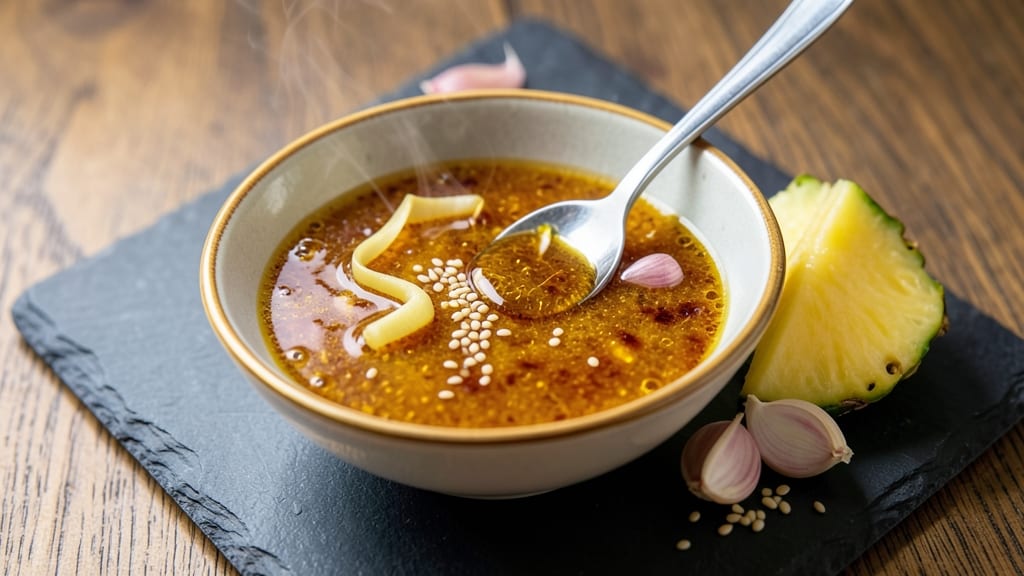
This pineapple stir-fry sauce recipe transforms ordinary stir-fries into vibrant, tropical masterpieces with just 10 minutes of prep and a 5-minute simmer. The perfect balance of sweet pineapple, savory soy, and aromatic ginger creates a sauce that clings beautifully to proteins and vegetables while delivering that signature umami depth.
I developed this after craving something brighter than traditional stir-fry sauces—something that could stand up to bold flavors without overpowering them.
The secret lies in the reduction process, where pineapple juice and soy sauce meld into a glossy, slightly thickened sauce with just the right viscosity. Fresh garlic and ginger add aromatic complexity, while a touch of honey or brown sugar enhances the tropical sweetness without making it cloying.
This sauce works equally well with chicken, tofu, shrimp, or even crispy vegetables, making it a versatile addition to any stir-fry repertoire.
What you’ll end up with is a sauce that’s bright, balanced, and deeply flavorful, with a perfect harmony of sweet, salty, and tangy notes. The aroma alone will have everyone anticipating dinner, and the first bite will confirm why this sauce deserves a permanent spot in your recipe rotation.
It keeps well in the fridge for up to a week, so you can make a batch ahead and enjoy it all week long.
Whether you’re cooking for a weeknight dinner or prepping for a meal prep session, this sauce elevates every dish it touches. The best part? It’s simple enough to make in one pot, yet complex enough to impress even the most discerning palates.
Let’s get started on creating this tropical twist on a classic stir-fry sauce.
Ingredients for pineapple stir fry sauce
Bright tropical flavors meet umami depth in this vibrant stir-fry sauce—just ten ingredients transform any dish.
| Ingredient | Amount | Notes |
|---|---|---|
| Fresh Pineapple Juice 🍍 | ½ cup | Freshly squeezed, no pulp |
| Soy Sauce 🍶 | ¼ cup | Light or dark, to taste |
| Honey 🍯 | 2 tbsp | Or brown sugar dissolved |
| Fresh Ginger 🧄 | 1 tbsp | Grated, aromatic fresh |
| Garlic Cloves 🧄 | 3 cloves | Minced, fresh preferred |
| Rice Vinegar 🍶 | 1 tbsp | White or seasoned |
| Sesame Oil 🫒 | 1 tsp | Toasted, for aroma |
| Cornstarch 🌾 | ½ tsp | For thickening |
| Water 💧 | 1 tbsp | For cornstarch slurry |
| Red Pepper Flakes 🌶️ | ¼ tsp | Optional, for heat |
The pineapple juice is the heart of this sauce—freshly squeezed makes all the difference. Costco or Whole Foods often have pineapple chunks you can blend yourself, but even the juice from a can works in a pinch (just strain out the pulp). Ginger and garlic should be freshly grated and minced—pre-minced garlic lacks that aromatic punch. For the soy sauce, I always reach for Kikkoman or Lee Kum Kee—they’ve got that perfect balance of saltiness without overpowering. If you’re feeling fancy, toast your sesame seeds before pressing them for oil—that nutty aroma takes this sauce to the next level.
No fresh pineapple juice? Coconut water works in a bind, though it’ll be slightly lighter. Swap honey for maple syrup or agave if you’re avoiding it, but keep the amount the same. The cornstarch slurry is non-negotiable for that perfect glossy finish—don’t skip it. Want more depth? Add a dash of fish sauce (if not vegetarian) or extra soy sauce. The red pepper flakes? Start with half a teaspoon—you can always add more, but you can’t take it out. If you’re making this ahead, reduce the sauce longer for a more concentrated flavor.
This sauce keeps beautifully—up to 1 week in an airtight jar in the fridge. The flavors actually deepen over time, so make extra. For meal prep, double the batch and freeze half in ice cube trays—just thaw and stir. The cornstarch slurry will thicken as it cools, so warm it gently before using if it seems too stiff. Pairs perfectly with grilled chicken, crispy tofu, or shrimp—drizzle it on anything and watch it disappear.
Why You'll Love This Recipe
- No Blender Needed: I’ll be real—this sauce comes together with just a whisk and a saucepan. No fancy gadgets, no purees, just a quick simmer of pineapple juice, ginger, and garlic until it’s glossy and fragrant. My lazy Sundays just got a little brighter.
- Sweet-Savory Magic: That first bite? It’s the honey cutting through the soy’s saltiness while the ginger and garlic add a warm, zesty kick. The pineapple juice keeps it bright—no heavy, cloying aftertaste, just a clean, addictive finish.
- Meal Prep MVP: I make a double batch every Sunday and stash it in the fridge. Drizzle it over grilled chicken, toss it with rice noodles, or even glaze on roasted veggies—it’s my go-to for lunches all week. (Yes, even on a Tuesday night.)
- Budget Brightener: Fresh pineapple juice might sound fancy, but a single fruit lasts me three batches. Soy sauce and honey stretch forever, and ginger/garlic are pantry staples. This sauce costs pennies but tastes like a restaurant’s special.
Step-by-step instructions for pineapple stir-fry sauce
This sauce comes together in minutes with bold flavors that balance sweet, tangy, and savory notes perfectly.
Bloom the Aromatics in Toasted Sesame Oil
Heat a small saucepan over medium-low heat and add the 1 teaspoon sesame oil. As it warms, you'll smell that nutty aroma—this is your first flavor layer. Add the 3 cloves minced garlic and 1 tablespoon grated fresh ginger, stirring constantly for 30 seconds until fragrant but not browned.
Here's the thing—ginger and garlic burn fast. Watch closely and remove from heat immediately if they start to darken. The goal is to wake up their flavors without turning them bitter. Let them cool slightly while you prepare the remaining ingredients.
Combine Wet Ingredients for Flavor Fusion
In a medium bowl, whisk together the 0.5 cup fresh pineapple juice, 0.25 cup soy sauce, 2 tablespoons honey, and 1 tablespoon rice vinegar. The mixture will smell vibrant—bright, slightly sweet, with that tangy vinegar punch. Add the cooled garlic-ginger mixture and stir well to combine.
Taste this base mixture now—you'll notice the balance of sweetness from the honey and pineapple, the umami depth from the soy sauce, and the bright acidity from the vinegar. This is your flavor foundation. If you want heat, now's the time to add the 0.25 teaspoon red pepper flakes and stir them in.
Thicken the Sauce with Cornstarch Slurry
In a separate small bowl, whisk together the 0.5 teaspoon cornstarch and 1 tablespoon water until completely dissolved. This creates a smooth slurry that will thicken your sauce beautifully. Pour this mixture into your saucepan with the other ingredients and stir constantly over medium heat.
Watch carefully as the sauce begins to simmer. It will thicken dramatically within 2-3 minutes—you're aiming for a glossy, coatable consistency, not gluey. If it thickens too quickly, add 1 teaspoon water at a time until you reach that perfect balance between pourable and clinging.
Finish and Adjust to Perfection
Once the sauce reaches your desired consistency, remove it from heat immediately. The residual heat will continue to thicken it slightly as it sits. Taste and adjust the balance—need more sweetness? Add a touch more honey. Too tangy? A splash of pineapple juice helps. The sauce should coat the back of a spoon with a glossy sheen.
Let the sauce rest for 5 minutes before using. This resting period allows all the flavors to meld completely. The sauce will keep in the refrigerator for up to 5 days, making it perfect for batch cooking. Use it over stir-fries, grilled meats, or even drizzled over fresh fruit for a tropical twist.
Pro Tips For Making Pineapple Stir Fry Sauce
- Simmer Low and Slow: This sauce isn’t a race—drop the heat to medium-low once everything’s in the pot. I used to blast it high and end up with a bitter, overcooked mess. Let it bubble gently for 10-12 minutes so the pineapple’s sweetness and ginger’s warmth meld without turning into syrup.
- Peel and Mince Ginger: Skip the pre-grated jar—fresh ginger makes all the difference. Use a microplane or knife to mince it finely; you’ll need about 1 tablespoon. The finer it is, the more it dissolves into the sauce instead of sitting as chunks. (Yes, even if you’re impatient like me.)
- Balance the Honey First: Taste the sauce before adding honey—soy and pineapple juice can sneak up on you. Start with half the honey, let it simmer, then adjust. I learned this the hard way when I dumped in the full amount and ended up with a cloying, one-note sauce.
- Use Stale Soy Sauce: Sounds weird, but it works: let your soy sauce sit out for 20 minutes before using. The alcohol burns off, leaving deeper umami flavor. (Your future self will thank you—trust me.) If you’re short on time, just reduce it by 25% in the recipe.
Regional styles of this recipe
Hawaiian Island Twist
In Hawaii, stir-fry sauce often incorporates local flavors like li hing mui powder (a tangy, spicy Chinese condiment) and lime zest for brightness. Replace the rice vinegar with 2 tablespoons fresh lime juice and add 1 teaspoon li hing mui powder (found in Asian markets) for that signature Hawaiian tang.
The pineapple juice remains the star, but the lime adds a zesty kick that locals love. 🌺
Thai-Inspired Balance
Thai cuisine loves balancing sweet, sour, and spicy—this version swaps honey for 1 tablespoon palm sugar and adds 1 teaspoon fish sauce (or soy sauce for vegetarian) plus ½ teaspoon shrimp paste (optional) for depth.
Use 1 tablespoon tamarind paste instead of rice vinegar for that signature Thai tang. The result? A sauce that’s bold, aromatic, and perfect for pad thai-style stir-fries.
Caribbean Fusion
For a tropical Caribbean twist, blend in 1 teaspoon grated lime zest and ½ teaspoon allspice (ground) to mimic jerk seasoning flavors. Replace half the soy sauce with 2 tablespoons coconut aminos for a lighter, nuttier base.
The pineapple’s sweetness shines alongside the warm spices, making this sauce ideal for jerk chicken or tropical seafood stir-fries. 🌴
Japanese Teriyaki Adaptation
Transform this into a teriyaki-style sauce by reducing the pineapple juice to ¼ cup and adding 1 tablespoon mirin plus 1 tablespoon sake (or dry white wine). Use dark soy sauce for deeper color and gloss.
The honey adds sweetness, but the mirin and sake create that classic Japanese umami richness. Perfect for glazing salmon or grilled skewers!
Korean Gochujang Version
For a Korean-inspired sauce, stir in 1 tablespoon gochujang (Korean chili paste) and 1 teaspoon toasted sesame seeds at the end. Replace honey with 1 tablespoon brown sugar and add ½ teaspoon grated ginger for extra warmth.
The gochujang brings spicy-sweet depth, while the pineapple keeps it bright and refreshing. Drizzle over bulgogi beef or crispy tofu for a fusion twist. 🌶️
Nutrition facts
Frequently asked questions
Can I substitute pineapple juice with another fruit juice?
Yes, but expect different flavor profiles. Mango or orange juice work well for sweetness, while apple cider adds tanginess. For a tropical twist, try ½ cup coconut water mixed with ¼ cup pineapple juice—it keeps the brightness but adds a subtle nuttiness. Just adjust sweetness with extra honey if needed.
How do I prevent the sauce from getting too thick?
Start with medium heat and stir constantly when adding the cornstarch slurry. If it thickens too fast, immediately add 1 teaspoon water at a time until you reach a glossy, pourable consistency. For extra insurance, reduce the cornstarch to ¼ teaspoon and use 1 tablespoon water instead.
What's the best way to store leftover sauce?
Transfer to an airtight container and refrigerate for up to 5 days. If storing longer, freeze in ice cube trays—thaw and stir before using. The sauce thickens when cold, so reheat gently over low heat with 1-2 teaspoons water to restore consistency.
Can I make this sauce without cornstarch?
Yes! Simmer the sauce longer (up to 10 minutes) to reduce natural sugars, which will thicken it slightly. For extra body, whisk in 1 teaspoon arrowroot powder mixed with 1 tablespoon water instead. The texture will be slightly less glossy but still delicious.
How much sauce should I use per serving?
Start with 2-3 tablespoons per serving for stir-fries or grilled proteins. For vegetables, use 1-2 tablespoons—they absorb sauce differently. Taste as you go! The sauce's bright flavors work well as a marinade too (use ¼ cup per pound of meat).