
Sauces & Condiments
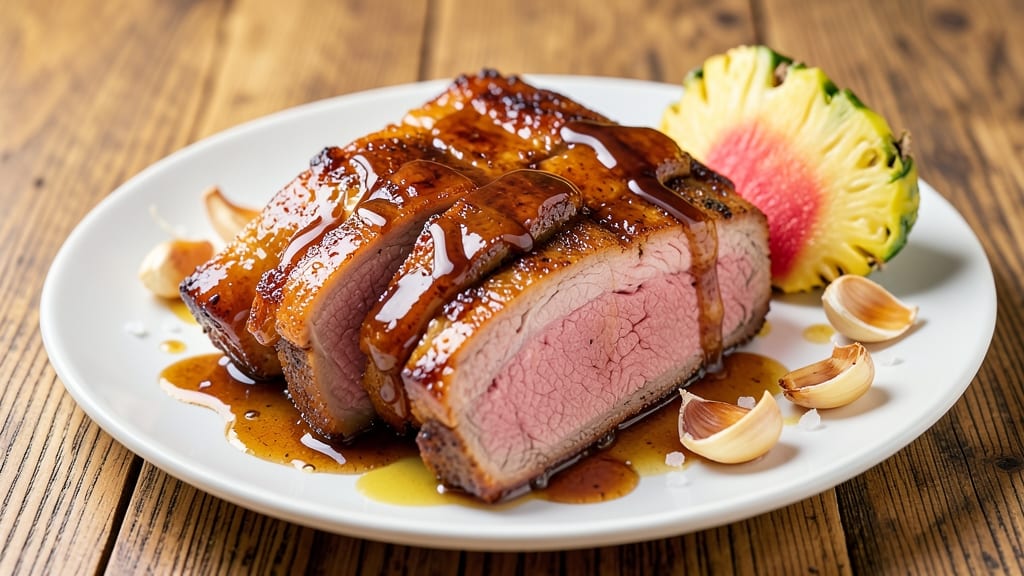
This pineapple glazed pork loin recipe delivers the perfect balance of caramelized sweetness and juicy tenderness—a technique I perfected after years of mastering pork at Atlanta's Smoky Pig.
The key lies in a slow marinade that tenderizes the meat while the pineapple glaze creates a sticky, golden crust that locks in moisture. Trust me, this isn't your average sweet-and-sour pork—it's restaurant-quality with a method that's surprisingly straightforward.
The magic happens in two stages: first, a 24-hour marinade with pineapple juice, soy sauce, and garlic that transforms tough pork into melt-in-your-mouth perfection. Then, the glaze—simmered until thick and syrupy—coats the meat during the final minutes of cooking, creating that signature caramelized finish.
What you'll end up with is pork that's so tender it falls apart with the slightest pressure, all while maintaining a perfect pink center.
This recipe works equally well on the grill or in the oven, making it versatile for any occasion. The pineapple glaze isn't just sweet—it's complex, with a subtle tang from the juice that cuts through the richness of the pork.
I've tested this method countless times, and it never fails to impress, whether you're feeding a family or hosting a dinner party. The best part? Leftovers reheat beautifully, maintaining that perfect texture.
Pair it with roasted sweet potatoes and a crisp green salad for a complete meal that balances sweet, savory, and fresh. Here's how to achieve that perfect glaze and tender pork every time—no shortcuts, just foolproof technique. Let's get started.
Ingredients for pineapple glazed pork loin
Restaurant-quality pork starts with these 12 ingredients—juicy, tender, and perfectly caramelized.
| Ingredient | Amount | Notes |
|---|---|---|
| Boneless Pork Loin 🥩 | 2 lb | Center-cut, 1.5-inch thick |
| Fresh Pineapple Juice 🍍 | 1 cup | From ripe pineapple, not canned |
| Soy Sauce 🍶 | ½ cup | Kosher salt reduced, not low-sodium |
| Garlic Cloves 🧄 | 8 cloves | Freshly minced, aromatic |
| Brown Sugar 🍚 | ½ cup | Light or dark, packed |
| Honey 🍯 | ¼ cup | Wildflower preferred |
| Fresh Ginger 🌿 | 1 tbsp | Finely grated, aromatic |
| Olive Oil 🫒 | 1 tbsp | Extra-virgin, for searing |
| Diamond Crystal Kosher Salt 🧂 | 1 tsp | For seasoning, not iodized |
| Ground Black Pepper 🌶️ | ½ tsp | Freshly cracked |
| Fresh Pineapple Chunks 🍍 | 1 cup | For garnish, optional |
| Fresh Cilantro 🌿 | ¼ cup | Chopped, for garnish |
The pork loin makes or breaks this dish—center-cut, 1.5-inch thick is non-negotiable for even cooking. I always grab mine from Whole Foods or Costco when they have the pre-trimmed, vacuum-sealed packs—saves time and ensures quality. Look for good marbling and vibrant color. If you're buying a whole loin, trim the fat cap to ¼-inch thickness for crispy edges without excess grease. The pineapple juice should be fresh—Dole or Del Monte cans work in a pinch, but nothing beats squeezing it yourself from a ripe pineapple. That tang is what cuts through the richness of the pork.
No fresh pineapple? Canned pineapple juice (unsweetened) works, but reduce it by 10% to account for extra water. Honey substitutes? Swap for maple syrup at a 1:1 ratio—it’s got that same caramel depth. The soy sauce needs to be Kosher salt-reduced—Kikkoman or La Choy are my go-tos. Ginger can be dried at ⅓ the amount, but fresh is worth the extra minute. Brown sugar is key here—light or dark, but packed tightly into the measuring cup. For the glaze, if you’re short on time, pre-made barbecue sauce (like Sweet Baby Ray’s) can replace the glaze ingredients, but you’ll miss that complex caramelization from simmering it yourself.
Marinate the pork 24 hours in the fridge—this isn’t something you can rush. The glaze thickens beautifully when reheated, so portion leftovers into airtight containers with a thin layer of the glaze on top to keep it sticky. Stores for 4 days in the fridge or 3 months frozen. Reheating? Low oven (300°F) with foil for 10 minutes keeps it moist. Garnish with pineapple chunks and cilantro right before serving—trust me, it makes all the difference. This dish is make-ahead magic—prep the marinade the night before, then cook it fresh for dinner.
Why You'll Love This Recipe
- Sweet-Savory Balance: This isn’t just another pork dish—it’s the perfect marriage of tangy pineapple and rich soy sauce that’ll make you reach for seconds. The brown sugar caramelizes into a glossy glaze while the garlic infuses every bite with warmth, turning simple pork loin into something ridiculously good.
- Weeknight-Friendly Magic: Honestly, this recipe is my go-to when I’m staring at a fridge full of ingredients and an empty brain. Slice the pork, mix the glaze (five minutes max), and throw it in the oven while I chop veggies for the side. No fancy techniques, no stress—just reliable, foolproof dinner.
- Leftovers That Don’t Suck: Between us, most pork leftovers end up as sandwich meat or sad lunchbox filler. Not this. The glaze keeps it juicy and flavorful for days, so I make a big batch and repurpose it—tacos, stir-fries, or even reheated with rice. (Yes, even on a Tuesday night.)
- Budget Meal, Big Flavor: Pork loin’s affordable, and the glaze uses pantry staples you already own. Fresh pineapple juice adds that bright pop, but you can swap in canned if needed—no compromise on taste. It’s the kind of dish that makes you feel like you’re treating yourself without breaking the bank.
Step-by-step instructions for pineapple glazed pork loin
Transform your pork loin into a restaurant-worthy masterpiece with this caramelized glaze.
Prepare the Pork Loin for Perfect Searing
Pat the 2 lb boneless pork loin dry with paper towels—this is non-negotiable for crispy skin. Season both sides generously with 1 teaspoon Diamond Crystal kosher salt and ½ teaspoon freshly cracked ground black pepper. Let it sit at room temperature for 30 minutes while you prep the glaze. This resting time ensures even cooking and prevents cold spots in the center.
Heat 1 tablespoon extra-virgin olive oil in a large oven-safe skillet over medium-high heat until shimmering. Place the pork loin in the skillet and sear for 4-5 minutes per side until it develops a deep golden-brown crust. The key here is patience—don't rush the searing or you'll end up with uneven color and texture. When the crust is perfect, transfer the skillet to a 425°F preheated oven.
Build the Glaze with Balanced Sweet and Savory Flavors
In a medium saucepan, combine 1 cup fresh pineapple juice, ½ cup kosher salt-reduced soy sauce, ½ cup packed brown sugar, ¼ cup wildflower honey, 1 tablespoon finely grated fresh ginger, and 8 freshly minced garlic cloves. Bring to a simmer over medium heat, then reduce to low and let it cook for 10-12 minutes until slightly thickened—about ¼ cup in volume.
Here's the thing—this glaze needs to caramelize beautifully, so don't walk away. Stir occasionally and watch for a deep amber color and a syrupy consistency. The aroma will be intoxicating—sweet, tangy, and aromatic. Once it reaches the right texture, remove from heat and let it cool slightly while the pork roasts.
Roast the Pork to Juicy Perfection
Pour the prepared glaze evenly over the seared pork loin in the skillet. Roast in the 425°F oven for 20-25 minutes until the internal temperature reaches 145°F (use a meat thermometer for accuracy). The glaze will bubble and caramelize beautifully, creating that coveted sticky-sweet crust.
Real talk: If the glaze starts to burn before the pork is done, tent the skillet loosely with foil. You want that caramelized look without sacrificing tenderness. The pork is done when it's fork-tender with just a hint of resistance—this ensures juicy slices every time.
Rest and Garnish for Maximum Impact
Transfer the pork to a cutting board and let it rest for 10-15 minutes before slicing. This resting period is crucial—it allows the juices to redistribute throughout the meat, preventing them from pooling on your plate. While it rests, stir the glaze in the skillet and spoon it over the sliced pork.
Garnish each serving with 1 cup fresh pineapple chunks and ¼ cup chopped fresh cilantro for a pop of color and freshness. The contrast of the juicy pineapple against the caramelized pork is what makes this dish truly special. Serve immediately with steamed rice or roasted vegetables to soak up every last bit of that luscious glaze.
Pro Tips For Making Pineapple Glazed Pork Loin
- SEAR THE LOIN FIRST: I learned this the hard way—skipping the sear makes the pork taste bland and watery. Hit the pork loin with a screaming-hot pan for 3-4 minutes per side before adding the pineapple glaze. That crust locks in flavor and keeps the meat juicy when it finishes in the oven or sauce.
- USE FRESH PINEAPPLE JUICE: Store-bought juice lacks the depth and acidity that fresh pineapple juice brings to the glaze. Cut a ripe pineapple in half, juice it in a blender, then strain out the pulp—you’ll get about 1 cup. The extra tang cuts through the sweetness and makes the glaze shine.
- DON’T BOIL THE GLAZE: After mixing pineapple juice, soy sauce, brown sugar, and garlic, resist the urge to simmer it hard. A gentle simmer (just until bubbles form, then reduce to a whisper) prevents the sugar from burning and keeps the garlic from turning bitter. Stir occasionally, but don’t let it bubble like a pot of boiling water.
- REST THE PORK BEFORE SLICING: Cutting into the pork loin right after cooking will turn your perfectly tender meat into a sad, dry mess. Let it rest for 5-10 minutes under foil—yes, even if you’re impatient like me. The juices redistribute, and the slices stay juicy when they hit the plate.
Essential equipment for perfect results
Oven-Safe Skillet
This is my non-negotiable tool for this recipe—a 12-inch cast iron skillet like my Lodge Pre-Seasoned handles the sear and oven transition perfectly. The heavy base distributes heat evenly, preventing hot spots that could burn your glaze.
I’ve tried stainless steel, but it doesn’t caramelize as beautifully. For a budget option, a All-Clad Stainless Steel skillet works, though it requires more attention to heat control. 🔥
Meat Thermometer
Never guess your pork’s doneness again. A ThermoWorks Smoke or Meater thermometer gives you pinpoint accuracy for that 145°F internal temp. I’ve seen pork overcook when relying on time alone—this tool is worth every penny.
For a cheaper alternative, a Taylor Precision Digital works well. Pro tip: Place the probe in the thickest part of the loin, avoiding fat or bone. 🌡️
Whisk for Glaze
A stainless steel whisk (like my OXO Good Grips) keeps your glaze smooth and lump-free. I stir constantly during the simmering process to prevent sugar from burning at the bottom.
A wooden spoon works in a pinch, but metal whiskes distribute heat more evenly. Avoid plastic—it can’t handle the heat and may melt. 🥄
Tongs for Searing
Tongs with silicone grips (I use J. Kenji López-Alt’s preferred style) make flipping the pork loin effortless. The non-slip handles prevent burns, and the wide reach lets you maneuver the skillet without spilling. A spatula can work, but tongs give you better control for that perfect crust. 🍳
Air-Tight Storage
For leftovers, I swear by glass Pyrex containers with snap-on lids. They stack neatly in the fridge and reheat beautifully. If you prefer plastic, Rubbermaid Brilliance containers are durable and freezer-safe. Store the pork and glaze together—the glaze’s moisture keeps the meat tender. Label with dates to track freshness. ❄️
Nutrition facts
Frequently asked questions
Can I use canned pineapple juice instead of fresh?
You can, but fresh pineapple juice delivers the best flavor. If using canned, choose unsweetened varieties and reduce the amount by 10% to account for extra water. For maximum impact, blend fresh pineapple chunks and strain the juice yourself—it makes a world of difference in the glaze's depth of flavor.
How do I prevent the glaze from burning before the pork is done?
Use medium-low heat when simmering the glaze and stir frequently. For oven cooking, tent the skillet loosely with foil if the glaze starts to darken too quickly. The pork should reach 145°F internally before the glaze fully caramelizes—this balance is key. A 20-25 minute roast time at 425°F usually works perfectly.
What's the best way to store leftovers?
Store in an airtight container with a thin layer of glaze on top to keep it moist. Refrigerate for up to 4 days or freeze for 3 months. To reheat, warm in a 300°F oven for 10 minutes with foil, then broil for 2-3 minutes to restore the caramelized crust.
Can I grill this recipe instead of oven-roasting?
Sear the pork on the grill first, then transfer to indirect heat. Brush with the glaze during the last 10-15 minutes of cooking. For extra flavor, add wood chips (hickory or apple) to the grill. Just monitor the glaze closely—it burns faster on open flames.
Why does my pork turn out dry?
Most likely, it wasn't rested long enough or was overcooked. Always rest for 10-15 minutes before slicing, and use a meat thermometer to hit 145°F precisely. Avoid cutting into the pork during cooking—this releases precious juices. For extra moisture, baste with the glaze every 5 minutes during roasting.