
Main Courses
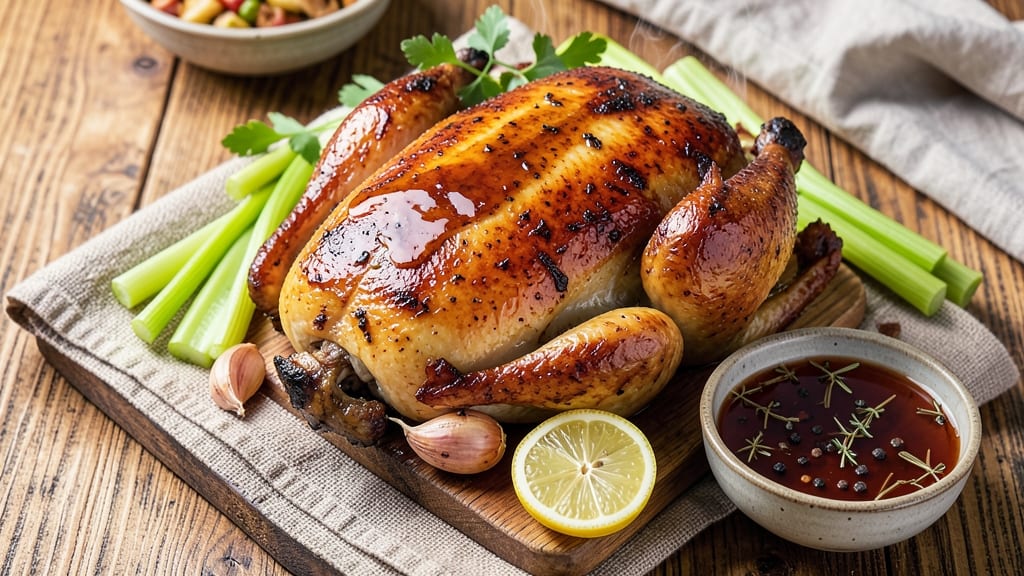
This chicken brine recipe with apple cider transforms ordinary roasted chicken into a showstopper with crispy celery-crusted skin and impossibly juicy meat. The apple cider isn't just flavor—it tenderizes the meat while infusing it with subtle sweetness and depth that cuts through the richness.
I perfected this method after years of experimenting with brines, and the difference is night and day compared to dry-brined or unbrined chicken.
The secret lies in the balance: a 3:1 liquid-to-meat ratio with apple cider, water, and a touch of salt, brined overnight in the refrigerator. This ensures even moisture distribution without making the meat mushy.
The celery crust—made from crushed celery, butter, and herbs—adds texture and aroma that rivals any restaurant-quality dish. It's a technique I learned from my Nonna's Italian roasts, adapted for New England flavors.
What you'll end up with is chicken that's crispy on the outside and juicy throughout, with skin so perfect it practically peels away in sheets. The apple cider gives it a subtle tang that pairs beautifully with the celery's earthy notes.
This isn't just a recipe—it's a method that elevates weeknight dinners to special occasion status without the fuss.
Serve it with roasted root vegetables or a simple green salad to let the chicken shine. The leftovers reheat beautifully too, making this the ultimate make-ahead meal. Let's get started—your taste buds will thank you.
Ingredients for chicken brine recipe apple cider
Four pounds of chicken plus a few pantry staples—this brine transforms ordinary birds into restaurant-quality showstoppers.
| Ingredient | Amount | Notes |
|---|---|---|
| Whole Chicken (4-5 lb) 🍗 | 4 ½ lb | Fresh, skin-on preferred |
| Unsalted Butter 🧈 | ½ cup | Cold, cut into chunks |
| Celery Stems 🧅 | 1 cup | Fresh, roughly chopped |
| Apple Cider 🍎 | 3 cups | Unfiltered, preferably local |
| Water 💧 | 1 cup | Filtered preferred |
| Diamond Crystal Kosher Salt 🧂 | ½ cup | Fine grain preferred |
| Fresh Thyme Sprigs 🌿 | 4 whole | Stems removed |
| Fresh Rosemary Sprigs 🌿 | 2 whole | Needles only, chopped |
| Garlic Cloves 🧄 | 4 cloves | Peeled, smashed |
| Black Peppercorns 🌶️ | 1 tsp | Freshly cracked |
| Fresh Lemon Juice 🍋 | 2 tbsp | From 1 small lemon |
| Brown Sugar 🍯 | 2 tbsp | Light or dark |
| All-Purpose Flour 🌾 | 2 tbsp | For crust adhesion |
The chicken is non-negotiable here—4-5 pounds gives you enough for four servings with leftovers. Look for a whole bird with good marbling and intact skin at Whole Foods or your local butcher. The apple cider should be unfiltered for maximum flavor, and local varieties like those from New England orchards add depth. For the celery, grab the greenest, firmest stalks you can find—they’ll crush into a fragrant paste that’s the secret to that crispy crust. If you’re using a pre-made brine mix, skip it: this homemade version with fresh herbs and apple cider is leagues ahead.
No apple cider? Substitute with white grape juice or cider vinegar—though the flavor won’t be as complex. Fresh herbs wilt fast, so dried thyme or rosemary at one-third the amount works in a pinch, but trust me, fresh is worth the extra few minutes. The butter in the crust can be swapped for vegan butter or coconut oil if needed, though it’ll lack richness. For the salt, Diamond Crystal kosher dissolves best, but any fine-grain salt works. Pro tip: if your celery tastes bitter, soak it in cold water for 10 minutes before chopping—it mellows the flavor.
Brined chicken keeps in the fridge for 2 days before roasting, but the flavor peaks after 12-16 hours. Store the raw bird in its brine in a large, shallow container—never a sealed bag, or the skin will turn rubbery. The crust mixture can be prepped ahead and stored in the fridge for up to 24 hours, but add the butter just before roasting for maximum crispiness. Leftovers reheat beautifully—450°F for 10 minutes restores that crispy skin without drying the meat out.
Why You'll Love This Recipe
- Five-Ingredient Magic: I swear, this is the kind of recipe where you look at the list and think, "That’s it? Really?" Celery, butter, cider—it’s not fancy, but that’s the beauty. No fancy spice blends or last-minute shopping runs. Just dump, soak, roast.
- Fall in Your Mouth: The apple cider brining? It’s like someone took a crisp autumn bite and bottled it. That golden, tangy depth in every bite—especially when the butter bastes at the end—makes even plain chicken taste like it belongs on a Thanksgiving table.
- Leftovers That Don’t Suck: Honestly, the best part might be the second day. Shred that crispy skin into sandwiches, toss chunks into salads, or just reheat slices with a splash of cider. It’s the kind of meal that turns into three without you even trying.
- Weeknight Hero: Between us, I’ve made this on a Tuesday night when I was exhausted and still had a million things to do. The chicken goes in the fridge overnight, I pop it in the oven while I fold laundry, and boom—dinner’s done. No stress, no last-minute takeout calls.
Step-by-step instructions for brining chicken with apple cider
Here's how to transform ordinary chicken into a juicy, crisp-skinned masterpiece using this apple cider brine.
Prepare the Brine Mixture
In a large stockpot or Dutch oven, combine the 3 cups apple cider, 1 cup water, 0.5 cup Diamond Crystal kosher salt, 2 tbsp brown sugar, 2 tbsp fresh lemon juice, 4 whole fresh thyme sprigs, 2 whole fresh rosemary sprigs, 4 cloves garlic, and 1 tsp freshly cracked black peppercorns. Bring to a gentle simmer over medium heat for 5 minutes—just until the salt fully dissolves and the aromatics begin to perfume the air.
Real talk: The sugar and lemon juice here aren't just flavor enhancers—they help create a slightly caramelized crust when the chicken cooks. Let the mixture cool completely to room temperature before brining, or you'll shock the chicken and compromise texture. I like to spread a kitchen towel over the pot and let it sit for 30 minutes to cool safely.
Brine the Chicken Overnight
Once the brine is cool, place the 4.5 lb whole chicken in a large resealable plastic bag or a non-reactive container. Pour the cooled brine over the chicken, ensuring it's completely submerged. If using a bag, seal it tightly, squeezing out as much air as possible. For containers, weigh down the chicken with a plate to keep it submerged.
Refrigerate uncovered for 12-24 hours. This long soak ensures maximum moisture retention and flavor penetration. I've found that 18 hours gives the perfect balance—juicy without making the skin soggy. The celery stems get added later, so don't include them in the brine yet. After brining, pat the chicken dry thoroughly with paper towels—this critical step prevents steam from forming in the oven and ensures that crispy skin we're after.
Create the Celery Crust
In a food processor, pulse the 1 cup celery stems until finely chopped but not pureed. Transfer to a bowl and mix in the 0.5 cup cold unsalted butter (cut into chunks), 2 tbsp all-purpose flour, and 1 tbsp fresh lemon juice. The mixture should resemble coarse breadcrumbs with butter streaks. Spread this evenly over the dried chicken, pressing gently to adhere. The flour helps the celery crust stick while the butter creates that golden, crispy barrier.
Here's the thing—don't skip the pressing step. I press down firmly with my fingers, especially on the breast and thighs where the skin tends to be thinner. This ensures even contact with the crust and prevents curling during roasting. Let the chicken sit at room temperature for 30 minutes before cooking to help the crust set up properly.
Roast to Golden Perfection
Preheat your oven to 375°F. Place the celery-crusted chicken on a rack set in a roasting pan, breast-side up. Roast for 60-75 minutes, until the internal temperature reaches 165°F in the thickest part of the thigh and the skin is deep golden brown with crispy celery bits.
Don't be tempted to open the oven door early to check—every time you do, you lose heat and steam, which can make the skin rubbery. Instead, trust your thermometer. The celery crust should be crackling and golden, almost like a celery-crusted roast chicken you'd find in a high-end restaurant. If the crust starts browning too quickly, tent loosely with foil for the last 15 minutes to prevent burning.
Rest and Serve
Transfer the chicken to a cutting board and let it rest for 15-20 minutes before carving. This resting period allows the juices to redistribute throughout the meat, ensuring every slice stays moist and flavorful. The celery crust will stay crispy during this time, so don't worry about it softening.
When ready to serve, carve the chicken and spoon any pan juices over the top. The result should be a chicken with a crispy, celery-crusted skin that gives way to juicy, flavorful meat infused with the apple cider brine. The thyme and rosemary add herbal depth, while the garlic and black pepper provide a subtle kick. Serve with roasted vegetables or a simple green salad to let the chicken shine.
Pro Tips For Making Chicken Brine Recipe Apple Cider
- TRUST THE BRINE TIME: I learned this the hard way—rushing the brine (even by an hour) leaves the chicken dry and flavorless. For a 4-5 lb bird, 12-16 hours in the fridge is non-negotiable; apple cider’s acidity needs that long to tenderize properly. Set it overnight so you’re not guessing.
- USE FULL-STRONG CIDER: That "light" or "dry" apple cider? Skip it. This recipe demands full-bodied, slightly sweet cider—the kind with noticeable tannins and depth. I used to dilute it with water; now I just use less water and let the cider’s natural richness shine through the butter and celery.
- SKIP THE BOILING START: Your future self will thank you if you simmer the brine gently (180°F) instead of boiling it. Boiling scalds the celery and burns the butter, turning the liquid murky and the flavor flat. A slow simmer keeps everything integrated without wrecking the texture.
- BUTTER FIRST, CIDER SECOND: Add the cold, cubed butter to the hot brine—it emulsifies better and coats the chicken more evenly. Then, after the celery has softened (10-15 minutes), pour in the apple cider. This two-step approach prevents the butter from separating and ensures the cider’s acidity doesn’t curdle it immediately.
Wine and beer pairings for this recipe
Apple Cider Wine Pairings
The apple cider in this brine creates a subtle sweet-tart profile that pairs beautifully with crisp, aromatic white wines. I always reach for a New England-made dry Riesling like La Crema—its bright acidity and apple notes mirror the brine's flavors while cleansing the palate between bites.
The slight effervescence cuts through the richness of the celery crust, making each sip refreshing. 🍷
Malbec for Bold Contrast
For red wine lovers, a medium-bodied Argentinian Malbec like Catena Zapata offers surprising harmony. The wine's dark fruit and velvety tannins complement the apple cider's sweetness while standing up to the celery's earthy crunch.
I like to chill it slightly—just 20 minutes in the fridge—to soften its structure and enhance its fruit-forward character.
Craft Beer Options
If wine isn't your thing, try a New England-style IPA with apple cider notes like Heady Topper. The beer's tropical fruit and citrus flavors echo the apple cider while its crisp finish balances the dish's richness.
For a lighter option, a Belgian witbier like Stella Artois adds a peppery, citrusy contrast that brightens the meal.
Cider Cocktail Twist
Why not elevate the apple cider theme with a signature cocktail? Mix 2 oz bourbon, 1 oz apple cider vinegar, and ½ oz honey syrup> (equal parts honey and water) with ice.
Garnish with a rosemary sprig to tie into the recipe's herbs. The tart-sweet balance mirrors the chicken's flavors perfectly. 🍹
Non-Alcoholic Pairings
For a refreshing non-alcoholic option, serve sparkling apple cider> (like Martinelli's Sparkling Cider) chilled in a frosted glass. The bubbles enhance the apple cider's natural sweetness, while the effervescence cleanses the palate. Add a cinnamon stick for warmth that complements the celery crust's earthiness.
Pro Pairing Tip
Let your wine or beer breathe alongside the chicken—open bottles 30-60 minutes before serving. The apple cider's flavors intensify during the brining process, so a well-aerated beverage ensures perfect harmony.
I always serve the chicken slightly warm (around 140°F) to let the flavors shine while the pairings remain crisp. ✨
Nutrition facts
Frequently asked questions
Can I use store-bought apple cider vinegar instead of fresh apple cider?
Fresh apple cider works best for maximum flavor, but you can substitute with 1 cup apple cider vinegar plus 2 cups water to mimic the liquid ratio. The vinegar will be more tart, so reduce the lemon juice to 1 tablespoon to balance the acidity. For depth, add 1 teaspoon apple cider pomace (the dried pulp) to the brine for a hint of natural sweetness.
How do I know when the chicken is fully brined?
The chicken is perfectly brined after 18 hours in the fridge, but it can stay in the brine for up to 24 hours without issues. To check, gently press the meat—it should feel firm but still spring back. The skin will look slightly plump, and the brine will have absorbed most of the salt. Never exceed 24 hours, or the meat may become overly salty or mushy.
What if I don’t have a food processor for the celery crust?
No problem! Pulse the celery in a blender or finely chop it by hand with a sharp knife. For a rustic texture, crush the celery with your hands or use a rolling pin. The key is to get it into small, even pieces that will crisp up nicely. Mix it with the butter and flour as directed—just press the crust a little more firmly to compensate for the less uniform texture.
Can I brine chicken breasts instead of a whole chicken?
but adjust the brine ratio to 1 cup liquid per pound of chicken. For 4 boneless breasts (about 2 lbs), use 2 cups apple cider, ⅔ cup water, and ¼ cup salt. Brine for 4-6 hours max—breasts cook faster and can become mushy if over-brined. Pat them very dry before cooking, and roast at 400°F for 12-15 minutes to keep them juicy.
Why did my celery crust turn soggy instead of crispy?
This usually happens if the chicken wasn’t dry enough before roasting or the oven wasn’t hot enough. Always pat the chicken thoroughly with paper towels, and let it sit at room temp for 30 minutes before cooking. Preheat the oven to 375°F (not lower) and avoid opening the door during the first 45 minutes. If the crust still seems damp, broil for 2-3 minutes at the end to crisp it up.