
Sauces & Condiments
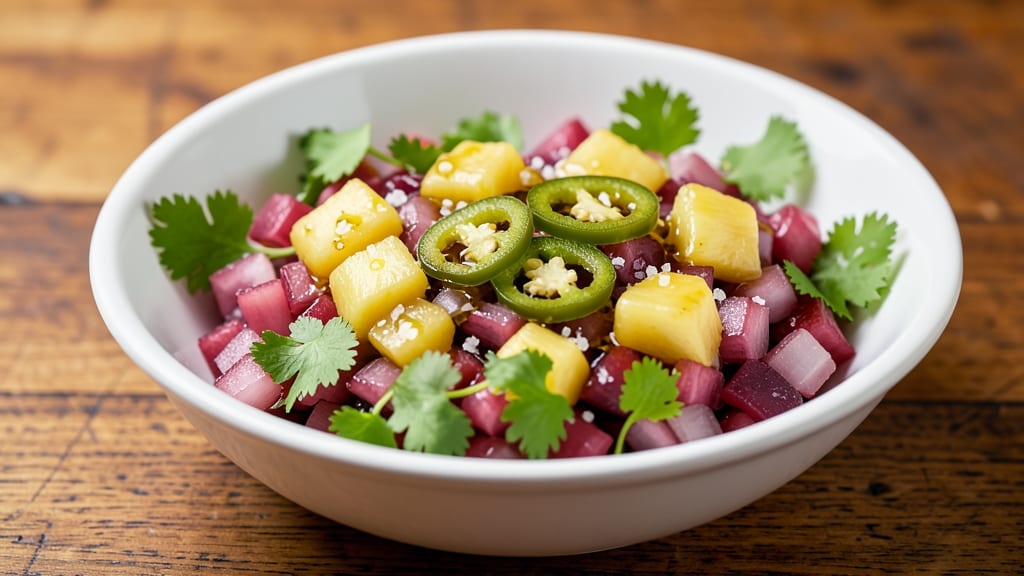
This café red onion pineapple salsa recipe transforms a simple mix of ingredients into a vibrant, tangy-sweet condiment that elevates everything from tacos to grilled fish. The secret lies in balancing the sharp bite of red onion with the tropical sweetness of pineapple—creating a harmony that’s both refreshing and addictive.
I developed this recipe after craving something bright enough to cut through rich, savory dishes while adding a burst of flavor without overpowering them.
What makes this salsa stand out is its versatility—it works as a fresh topping for fish tacos, a zesty dip for chips, or even a marinade for grilled meats.
The key steps are precise chopping (fine dice for onion and pineapple) and a quick rest in the fridge to let the flavors meld. No cooking required—just mix, taste, and adjust the lime or jalapeño to your preference.
The result is a salsa that’s crisp, tangy, and perfectly balanced—sweet from the pineapple, sharp from the red onion, and brightened by lime juice. The cilantro adds freshness, while a touch of jalapeño gives it a subtle kick.
It’s the kind of condiment that turns ordinary meals into something special with minimal effort. Best of all, this salsa keeps well in the fridge for up to 5 days, making it perfect for meal prep.
Whether you’re hosting a summer gathering or just looking to add a tropical twist to your weeknight dinners, this recipe delivers restaurant-quality flavor at home. Let’s get started!
Ingredients for cafe red onion pineapple salsa
Nine fresh ingredients blend into a vibrant salsa that brightens every dish effortlessly.
| Ingredient | Amount | Notes |
|---|---|---|
| Red Onion 🧅 | 1 ½ cups | Finely diced, vibrant color preferred |
| Pineapple 🍍 | 1 ½ cups | Fresh, finely diced, juicy variety |
| Fresh Cilantro 🌿 | ½ cup | Stems removed, chopped fine |
| Lime Juice 🍋 | ½ cup | Freshly squeezed, seeds removed |
| Jalapeño Pepper 🌶️ | 1 whole | Seeds removed, finely diced |
| Extra-Virgin Olive Oil 🫒 | ¼ cup | High-quality, fruity variety |
| Salt 🧂 | ½ tsp | Diamond Crystal preferred |
| Fresh Lime Zest 🍋 | 1 tsp | For extra brightness |
| Honey 🍯 | 1 tbsp | Optional, for subtle sweetness |
The red onion and pineapple are the foundation—look for crisp, firm pineapple with no browning and a vibrant red onion with no soft spots. Trader Joe’s and Whole Foods carry excellent varieties, but any quality grocery store will do. For the cilantro, avoid the wilted bunches—pick bundles with bright green leaves. If you can’t find fresh jalapeños, pickled jalapeños work too, just drain and chop them. The lime juice should be freshly squeezed; bottled juice lacks the same bright acidity. Extra-virgin olive oil is non-negotiable here—it adds depth that cheaper oils can’t match.
No fresh pineapple? Canned pineapple in juice (not syrup) works in a pinch—just drain it well. Substitute green onion for half the red onion if you’re out, but the sharpness will be milder. Dried jalapeño flakes can replace fresh jalapeño at one-third the amount, but you’ll lose that fresh bite. Skip the honey if you prefer a sharper salsa, or use agave nectar for a vegan option. The cilantro can be omitted if you dislike it, but the salsa will lose some freshness. Fresh lime zest is optional but adds a bright aroma—just grate the peel of one lime and remove any white pith.
This salsa holds up beautifully in the fridge for up to 5 days, though it’s best within the first 24 hours when the textures are crispest. Store it in an airtight container with a layer of plastic wrap pressed directly on the surface to prevent browning. For longer storage, freeze in ice cube trays—thaw and mix with a splash of lime juice to revive. Double the batch if you’re entertaining; it disappears fast. The flavors actually improve slightly after 30 minutes of resting, so let it sit before serving.
Why You'll Love This Recipe
- No-Chop Shortcuts: I swear by this recipe because the red onion only needs quick slicing—not those annoying rings. The pineapple? Just dice it—no peeling, no fuss. Five minutes tops, and you’re done.
- Sweet Heat Balance: That jalapeño packs a punch, but the pineapple’s natural sweetness tames it perfectly. The lime juice ties it all together—bright, tangy, and just spicy enough to keep you reaching for more.
- Party in a Bowl: Serve it with chips for game day, drizzle it over grilled fish for a summer dinner, or toss it into tacos when friends drop by. It’s the one thing I always keep on hand because it works everywhere.
- Fridge Magic: Make a big batch—it keeps for days without sogginess (I’ve tested this). Plus, pineapple’s cheap in bulk, so you’re saving cash while still feeling fancy. Leftovers? They disappear faster than I can say “second round.”
Step-by-step instructions for café-style red onion pineapple salsa
Bright flavors and perfect texture come together with this straightforward method.
Prepare the Base Ingredients with Precision
Start by finely dicing the 1.5 cups red onion into small, even pieces—think about ⅛-inch dice for consistent texture. I like to work in batches to avoid a watery pile, and I always rinse the onions briefly under cold water to remove any sharpness before dicing. This step is crucial because raw onions release moisture that can dilute your salsa if not handled properly.
Next, dice the 1.5 cups pineapple into similar-sized pieces. Use a sharp knife and cut through the core to maintain uniform chunks. The pineapple should be juicy but not overly mushy—this ensures your salsa stays vibrant and doesn't turn into a sauce. For extra brightness, I recommend using fresh pineapple rather than canned, as it retains more natural sweetness and acidity.
Finely Dice the Jalapeño and Chop the Cilantro
Remove the seeds and membranes from the whole jalapeño pepper to control the heat level—this keeps the salsa tangy without being overly spicy. Then, finely dice the jalapeño, aiming for pieces no larger than ⅛-inch. The smaller the dice, the more evenly distributed the heat will be throughout the salsa.
Chop the 0.5 cup fresh cilantro stems removed, into small pieces—this herb adds freshness and balances the sweetness of the pineapple. I like to stack the cilantro leaves and fold them before chopping for even, fine pieces. Avoid over-chopping, as this can release bitter flavors from the stems.
Combine Wet Ingredients for Balance
In a large mixing bowl, combine the diced red onion, pineapple, jalapeño, and cilantro. Add the 0.5 cup lime juice and 1 tsp fresh lime zest—this is where the magic happens. The lime juice brightens the flavors, while the zest adds a citrusy aroma that elevates the dish. Stir gently to distribute the lime evenly without mashing the ingredients.
Next, add the 0.25 cup extra-virgin olive oil and 0.5 tsp salt, mixing thoroughly. The olive oil helps bind the ingredients and adds a smooth, fruity richness. At this stage, taste the mixture—it should be tangy, slightly sweet, and well-balanced. If it tastes too sharp, add the 1 tbsp honey to mellow the acidity slightly.
Rest and Adjust for Perfect Texture
Let the salsa sit at room temperature for 15-20 minutes before serving. This resting period allows the flavors to meld and the juices to distribute evenly, resulting in a more cohesive texture. During this time, I like to give it a quick stir to ensure everything is well incorporated.
After resting, taste again and adjust the seasoning if needed. If the salsa is too thick, add a splash of additional lime juice or a pinch of salt. If it's too thin, let it sit uncovered for another 5-10 minutes to allow excess moisture to evaporate. The ideal consistency should be bright, chunky, and just slightly moist—like a fresh, vibrant salad.
Serve Immediately for Maximum Freshness
Transfer the salsa to a serving bowl and garnish with an extra sprinkle of lime zest and cilantro for presentation. Serve it immediately while the flavors are at their peak. This salsa pairs beautifully with grilled fish, shrimp tacos, or even as a refreshing topping for avocado toast.
For the best results, consume within 2-3 hours of preparation, as the freshness of the ingredients is key to its bright, zesty flavor. If you must store it, keep it refrigerated in an airtight container for up to 2 days, but the texture may soften slightly over time.
Pro Tips For Making Cafe Red Onion Pineapple Salsa
- RINSE THE PINEAPPLE: Cut the pineapple into chunks first, then give it a quick rinse under cold water—even if it’s fresh. The enzymes in the fruit can make your salsa turn mushy faster than you’d think, and this step cuts down on excess juice pooling at the bottom of your bowl.
- PEEL AND CHAR THE ONION: Don’t just slice the red onion raw. Peel it first, then sear the slices in a dry skillet over medium-high heat for 2-3 minutes until the edges are slightly blackened. The smoky depth makes this salsa taste like it came from a café, not your kitchen.
- SALT THE JALAPEÑO: Toss the diced jalapeño with a pinch of salt before mixing it into the salsa. It softens the heat and draws out moisture, so the spice blends in smoother—no harsh bite, just balanced flavor. (Yes, even if you’re impatient like me.)
- PULSE THE CILANTRO: Instead of chopping cilantro by hand, pulse it in a food processor with the lime juice first. This breaks down the leaves into tiny, even pieces that distribute flavor more evenly—no clumps, no wasted effort. Just hit it twice, then mix it in. Done.
Flavor customization for this dish
Sweet Heat Balance
Adjust the jalapeño for your preferred heat level—remove all seeds for a mild kick or keep a few for extra spice. I like to start with one seedless jalapeño and add more if needed after tasting.
For a sweeter touch, add 1 tbsp honey or agave nectar to balance the acidity from the lime. This works especially well if you prefer a dessert-like salsa for fruit plates or grilled chicken. 🌶️
Tropical Twist
Swap the pineapple for mango or papaya to create a different tropical profile. Use 1.5 cups finely diced mango or 1 cup diced papaya (it’s juicier, so reduce by half).
For extra depth, add ½ tsp ground cinnamon or a pinch of cardamom—this pairs beautifully with mango and transforms the salsa into a dessert-friendly topping. Try it on grilled shrimp or as a dip for plantain chips.
Herb Variations
Replace cilantro with fresh mint for a Middle Eastern-inspired twist—use 0.3 cup chopped mint and reduce the lime juice to 0.3 cup to avoid overpowering the dish. For a Mediterranean vibe, add 0.2 cup finely chopped parsley and 1 tbsp capers to the mix.
Both variations work wonderfully with grilled meats or as a marinade for chicken skewers.
Smoky Depth
Add ½ tsp smoked paprika or 1 tsp adobo sauce (from canned chipotles) for a smoky depth that complements the tropical flavors. This works especially well if you’re serving the salsa with grilled fish or pork.
For extra smokiness, char the red onion and pineapple in a dry skillet for 2-3 minutes per side before dicing—this adds a caramelized note that elevates the dish to café-quality. 🔥
Creamy Option
For a richer texture, stir in 2 tbsp Greek yogurt or sour cream after resting. This adds a creamy contrast that balances the sharpness of the red onion. I recommend using full-fat yogurt for the best mouthfeel, and it pairs perfectly with spicy dishes like tacos or grilled shrimp.
Keep the yogurt chilled until ready to mix to prevent the salsa from becoming too warm.
Spicy Kick Boost
Crank up the heat with ½ tsp cayenne pepper or 1 serrano pepper (seeds removed, finely diced). For a fruity heat, add 1 tbsp habanero-honey jam—this sweet-spicy combo is a game-changer for those who love bold flavors.
Serve this version with grilled steak or roasted vegetables for a showstopping contrast. Always taste before serving, as heat levels can vary widely!
Nutrition facts
Frequently asked questions
Can I use canned pineapple instead of fresh?
Yes, but drain it thoroughly to avoid a watery salsa. Use 1.5 cups drained canned pineapple (in juice, not syrup) and pat it dry with a paper towel. The texture will be slightly softer than fresh, but the flavor remains bright. For extra freshness, add 1 tsp extra lime juice to compensate for the lack of natural acidity.
How do I make this salsa less spicy?
Remove all seeds and membranes from the jalapeño before dicing to minimize heat. If the salsa is already made, stir in 1 tbsp honey or 1 tsp sugar to balance the spice. For a milder version, reduce the jalapeño to ½ pepper or swap it for bell pepper (add ½ tsp cayenne for subtle heat instead).
Can I prep this ahead of time for parties?
This salsa keeps well in an airtight container for 5 days in the fridge. For best texture, make it 1 day ahead and let it rest uncovered for 30 minutes before serving to reduce excess moisture. If storing longer, freeze in ice cube trays—thaw and mix with 1 tbsp fresh lime juice to revive.
What’s the best way to serve this salsa?
This versatile salsa shines as a taco topping, fish dip, or grilled meat marinade. Try it with crispy fish tacos, grilled shrimp skewers, or chicken quesadillas. For a café-style presentation, serve in a glass bowl with lime wedges and a sprinkle of tajín seasoning on top.
Why does my salsa turn brown after resting?
This happens when the pineapple and onion oxidize. To prevent it, press plastic wrap directly on the surface before sealing the container. For a quick fix, stir in 1 tsp extra lime juice or a pinch of vitamin C powder (like from a supplement capsule) to slow browning. Serve within 2 hours of making for the freshest look.