
Main Courses
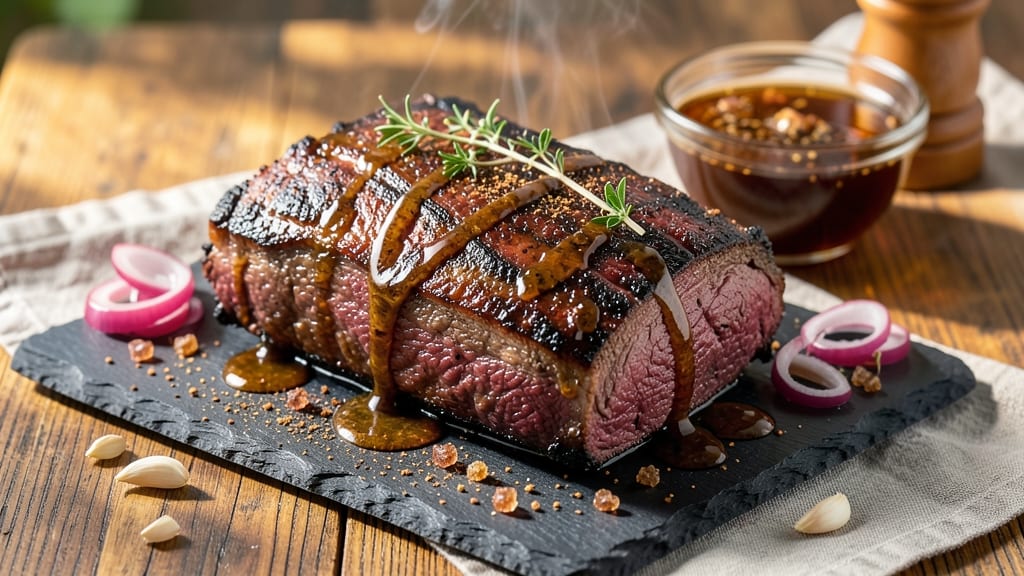
This brisket injection recipe with apple cider vinegar transforms tough cuts into melt-in-your-mouth perfection—crispy bark outside and juicy layers within. The secret lies in precise injection ratios and slow-smoked patience, a technique I’ve perfected after years of trial and error.
Apple cider vinegar cuts through fat, tenderizes fibers, and adds a subtle tang that elevates every bite.
What sets this method apart is the balance: injecting just enough liquid to enhance flavor without over-saturating the meat. A 30-minute rest before cooking ensures the marinade penetrates deeply, while a 225°F smoker maintains low-and-slow perfection.
The result? A brisket so tender it falls apart at the touch, with a bark that’s crackling and caramelized.
This isn’t just about the injection—it’s about the full process. From trimming the fat cap to wrapping in butcher paper at 195°F internal temp, every step is designed to lock in moisture and deepen flavor.
The apple cider vinegar infusion ensures your brisket stays juicy even after hours of cooking, while the bark delivers that coveted smoky crunch.
Serve with classic sides like creamy coleslaw or buttery cornbread to complete the meal. The injection technique works for other tough cuts too—ribs, pork shoulder, or even chicken thighs benefit from this same approach. Let’s unlock that restaurant-quality brisket at home.
Ingredients for brisket injection recipe apple cider vinegar
Eight pounds of beef brisket and seven precision-injected ingredients unlock melt-in-your-mouth perfection with apple cider vinegar's magic.
| Ingredient | Amount | Notes |
|---|---|---|
| Beef Brisket 🥩 | 8 lb | Packer cut, fat cap intact |
| Apple Cider Vinegar 🍏 | 1 cup | Raw, unfiltered preferred |
| Yellow Onion 🧅 | 1 whole | Large, grated for injection |
| Garlic Cloves 🧄 | 6 cloves | Fresh, minced for infusion |
| Brown Sugar 🍚 | ½ cup | Light or dark, packed |
| Smoked Paprika 🌶️ | 2 tbsp | High-quality, not pre-mixed |
| Black Peppercorns 🌶️ | 1 tbsp | Freshly cracked, coarse |
| Kosher Salt 🧂 | 2 tbsp | Diamond Crystal preferred |
| Beef Tallow 🧈 | ¼ cup | Rendered, for fat cap |
| Wood Smoking Chips 🌳 | 4 cups | Hickory or oak preferred |
| Butcher Paper 📄 | 1 sheet | Unbleached, for wrapping |
The brisket is non-negotiable—packer cut with intact fat cap is essential for that coveted bark and moisture retention. Source from a reputable butcher like Snake River Farms or your local USDA-approved processor for optimal marbling. Trim excess fat to about 1/4-inch thickness before injecting, but leave the fat cap intact for flavor and insulation. The apple cider vinegar should be raw and unfiltered—Bragg or Mott's are reliable brands that deliver authentic tang without artificial additives. For the brown sugar, Domino light or dark works perfectly, but avoid powdered varieties that won't dissolve properly during injection.
No raw apple cider vinegar? Pasteurized still works, though the flavor may be slightly muted. Substitute white vinegar at half the amount if absolutely necessary, but the acidity profile differs significantly. The onion and garlic can be swapped for 1/4 cup onion powder plus 2 tsp garlic powder if prepping ahead, though fresh is ideal for depth. For the smoked paprika, Penzeys or McCormick brands deliver consistent quality—avoid the store-brand versions that often contain fillers. The beef tallow should be rendered and strained to remove impurities; store-bought leaf lard works in a pinch but lacks the beefy flavor. Pre-mixed injection spices? Skip them—the custom blend here ensures balanced flavor penetration.
Store raw brisket in the coldest part of your fridge for up to 5 days before smoking. The injection mixture keeps for 1 week in an airtight container in the fridge, though it's best used immediately for maximum flavor impact. Leftover cooked brisket reheats beautifully—wrap tightly in butcher paper and reheat at 275°F for 1 hour until internal temp reaches 165°F. For long-term storage, portion into vacuum-sealed bags and freeze for up to 3 months. The wood chips should be stored in a sealed container away from heat sources to prevent spontaneous combustion—oak lasts longer than hickory, which dries out faster.
Why You'll Love This Recipe
- No-Fuss Injection: I swear by this mix—just blend vinegar, brown sugar, and minced garlic in a squeeze bottle, then let the brisket soak while I chop onions. Ten minutes of prep, and the magic happens during the smoke.
- Tangy-Sweet Magic: That apple cider vinegar cuts through the fat while the brown sugar caramelizes into a glossy crust. Honestly, the first time I tasted it, I nearly burned my tongue from how good it was.
- Tailgate or Tuesday: Between us, this works for both. Slap it on a brisket for a crowd at the game, or use half the batch for a weeknight dinner. The same injection, different vibes—no extra work.
- Leftovers That Don’t Suck: The injection keeps brisket moist for days, so I make a big batch and repurpose it. Sandwiches? Tacos? A slow-cooker hash? It’s my secret weapon for turning scraps into meals.
Step-by-step instructions for brisket injection with apple cider vinegar
This method delivers restaurant-quality bark and deep flavor penetration through precise injection technique.
Prepare the Injection Solution
In a clean glass measuring cup, combine the 1 cup apple cider vinegar, 0.5 cup brown sugar, and 2 tbsp smoked paprika. Whisk vigorously until the brown sugar dissolves completely, creating a thick, syrupy liquid. The vinegar will help tenderize the meat while the sugar promotes caramelization for that coveted bark.
Next, add the 2 tbsp kosher salt and 1 tbsp freshly cracked black peppercorns to the mixture. Stir well to fully incorporate. This combination creates an ideal balance of acidity, sweetness, and seasoning that will penetrate deeply into the brisket during injection. The solution should have a smooth, homogeneous consistency—no undissolved particles should remain.
Grate and Mince Aromatics for Injection
Using a food processor or fine grater, process the 1 whole yellow onion until you achieve a coarse, wet grated texture. Transfer this to a mixing bowl. In the same food processor, pulse the 6 cloves garlic until you have a fine minced consistency—no paste should remain.
Combine the grated onion and minced garlic with the injection solution in the mixing bowl. Stir thoroughly to distribute the aromatics evenly. This step is crucial as the onion and garlic will infuse the brisket with complex, layered flavors that develop during the smoking process. The texture should be uniform, with no large chunks remaining.
Inject the Brisket Precisely
Using a meat injection needle, begin injecting the solution into the brisket at a 45-degree angle, working from the outer edges toward the center. Inject 1/4-inch to 1/2-inch deep at 1/2-inch intervals to ensure even distribution without tearing the meat. Start at the thickest part of the brisket and work your way toward the edges.
I recommend injecting the brisket 24 hours before smoking to allow the solution to fully penetrate and tenderize the meat. The injection points will leave visible marks on the surface—this is normal and indicates proper distribution. After injecting, place the brisket on a tray, fat-side up, and refrigerate uncovered to allow the surface to dry slightly for better bark formation.
Apply Beef Tallow for Extra Crisp
Before smoking, generously brush the 0.25 cup beef tallow over the entire surface of the brisket, focusing on the fat cap. The tallow will render during smoking, creating a protective layer that enhances bark formation and adds rich flavor. Use your fingers to work the tallow into the surface, ensuring even coverage.
This step is particularly important for achieving that coveted dark mahogany bark while maintaining moisture in the meat. The tallow also helps prevent the brisket from drying out during the long smoking process. After applying the tallow, let the brisket sit at room temperature for 30 minutes before smoking to ensure even cooking.
Pro Tips For Making Brisket Injection Recipe Apple Cider Vinegar
- Inject Slowly: The apple cider vinegar and garlic will burn if you dump it all at once. Use a meat injector with a fine needle and work in 1-2 teaspoons per injection point—let the liquid absorb before moving to the next spot. I learned this the hard way when my first batch turned out more like vinegar-soaked leather.
- Use Raw Onion: Minced raw onion in the injection mix adds sweetness and moisture that cooked onion can’t match. Pulse ½ cup in the food processor with the garlic and brown sugar—it blends right in and keeps the texture smooth. (Yes, even if you’re squeamish about raw onion, the brisket won’t taste it.)
- Rest Before Injecting: Cold brisket absorbs flavors better than warm meat. Take the brisket out of the fridge 30 minutes before injecting so it’s room temperature—this lets the vinegar and sugar penetrate deeper instead of sitting on the surface. I used to inject straight from the fridge, and the results were always uneven.
- Balance the Vinegar: Apple cider vinegar is strong, and too much will overpower the brisket. For every ½ cup of vinegar, add 1 tablespoon of brown sugar to mellow the acidity. If you’re unsure, taste the mix before injecting—it should taste sharp but not harsh. (Your brisket will thank you later.)
Wine and beer pairings for this brisket injection recipe apple cider vinegar
Red Wine Pairings
A bold Cabernet Sauvignon from Napa Valley is my go-to choice for brisket with apple cider vinegar injection. The wine’s tannins and dark fruit notes cut through the smoky richness while complementing the vinegar’s tang.
Look for a 2018 or newer vintage with at least 14% ABV—brands like Opus One or Caymus Vineyards deliver consistent quality. Serve slightly chilled (60-62°F) to enhance the brisket’s depth without overwhelming it.
For a more affordable option, try a Zinfandel from California’s Central Coast. The spice and jammy berry flavors in a 2019 or 2020 vintage (like Ravenswood or Bogle Vineyards) mirror the brisket’s caramelized bark and sweet-savory injection.
The wine’s higher alcohol content (around 15% ABV) stands up to the fat and smoke beautifully.
White Wine Alternatives
If you prefer white wine, a dry Riesling from Germany’s Mosel region offers surprising harmony. The citrus and mineral notes in a 2021 or 2022 vintage (such as Dr. Loosen Blue Slate) balance the vinegar’s acidity while the wine’s natural sweetness complements the brown sugar in the injection.
Serve at 48-50°F to preserve its crispness.
A Chardonnay with noticeable oak (like Kendall-Jackson Vintner’s Reserve) works surprisingly well, especially if the wine has vanilla and buttery undertones. The oak’s richness mirrors the brisket’s bark, while the wine’s acidity cleanses the palate between bites. Opt for a 2019 or 2020 vintage with 13.5-14% ABV.
Beer Pairings
A smoked porter is the ultimate beer match for this brisket. The chocolate and coffee notes in a craft beer like Goose Island Bourbon County Stout or Founders Kentucky Breakfast Stout echo the brisket’s depth, while the caramel malt sweetness complements the apple cider vinegar.
Serve at 50-52°F to highlight its complexity.
For a lighter option, try a Belgian-style witbier like Stella Artois or Hoegaarden. The citrus peel and coriander flavors in these beers (5% ABV) refresh the palate after each rich bite.
The beer’s effervescence also helps cut through the fat, making it a refreshing contrast to the brisket’s intensity.
Non-Alcoholic Options
For a refreshing non-alcoholic pairing, serve sparkling apple cider (like Martinelli’s Sparkling) chilled to 40-45°F. The carbonation and apple notes mirror the injection’s flavors while cleansing the palate. Add a splash of fresh lemon juice to enhance the tang.
A smoky black tea (such as Lapsang Souchong) with a hint of honey offers a sophisticated alternative. The tea’s charred wood notes complement the brisket’s bark, while the honey’s sweetness balances the vinegar’s acidity. Brew at 195°F for 4-5 minutes for optimal flavor.
Nutrition facts
Frequently asked questions
How long should I let the brisket rest after injecting?
Allow the brisket to rest for 24 hours in the fridge after injecting. This gives the apple cider vinegar and aromatics time to fully penetrate the meat, ensuring maximum tenderness and flavor infusion. The surface should dry slightly during this time, which helps create a better bark when smoking.
Can I use white vinegar instead of apple cider vinegar?
While you can substitute white vinegar, it won't deliver the same depth of flavor. Apple cider vinegar adds subtle sweetness and complexity that complements the brisket perfectly. If you must use white vinegar, reduce the amount to 1/2 cup and add 1 tbsp honey to balance the acidity.
What's the best way to inject the brisket without tearing it?
Use a meat injection needle and work at a 45-degree angle, injecting 1/4-inch to 1/2-inch deep at 1/2-inch intervals. Start with the thickest part of the meat and work toward the edges. Never inject too close to the bone, and avoid overfilling the meat—it should feel firm but not rigid after injection.
Do I need to trim all the fat before injecting?
No, leave the fat cap intact—it's essential for flavor and moisture. Trim only the excess fat on the sides (about 1/4-inch thick) before injecting. The fat cap helps create that coveted bark while keeping the meat juicy during the long smoke.
How do I know when the brisket is done?
Use a meat thermometer to check the internal temperature. The brisket is done when it reaches 195-203°F in the thickest part. The probe should slide in easily, and the meat should be fork-tender. For best results, wrap the brisket in butcher paper at 195°F and let it rest for 1 hour before slicing.