
Main Courses
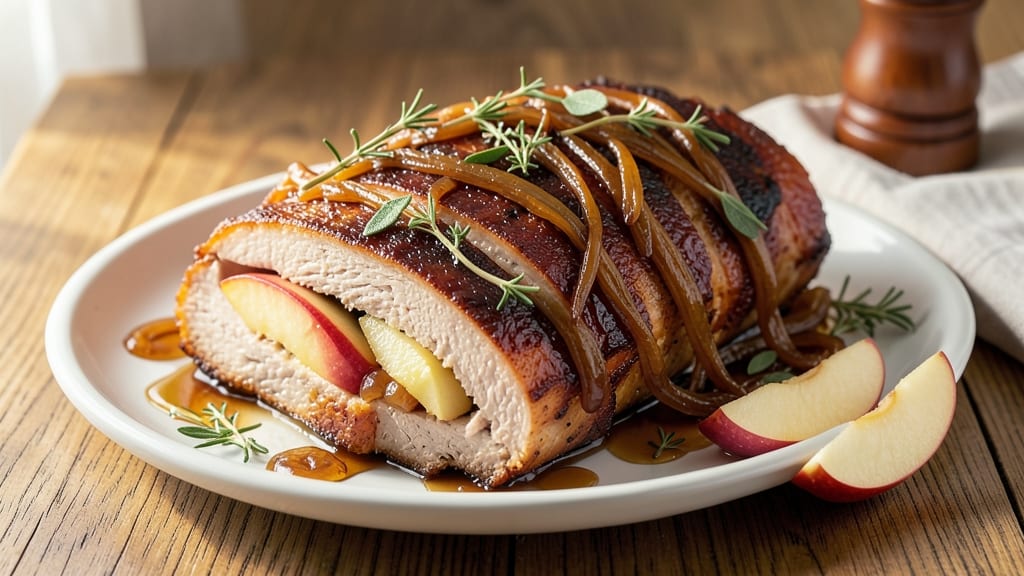
This boneless apple stuffed pork loin roast recipe transforms a simple roast into a showstopper with tender meat and sweet, caramelized apples.
The secret lies in the stuffing method—juicy apples, savory herbs, and a touch of mustard create a flavor bridge that keeps the pork impossibly moist while adding a satisfying crunch. I perfected this technique after years of dry pork roasts, and the difference is night and day.
The roasting process is straightforward but critical: cook at 325°F until the internal temperature reaches 145°F, then rest for 15 minutes to let the juices redistribute. The apples caramelize beautifully during this time, releasing their natural sweetness into the meat.
This recipe delivers restaurant-quality results with minimal effort, making it perfect for holiday dinners or special weeknight meals. What you’ll end up with is a golden-brown roast cut into perfect slices, revealing tender pork infused with apple flavor and a center of caramelized fruit.
The stuffing stays intact, offering a textural contrast that elevates every bite. Serve with a red wine reduction or roasted vegetables to complement the dish’s rich, balanced flavors.
For extra depth, add a splash of apple cider to the roasting pan during the last 30 minutes—it enhances the caramelization and adds a subtle tang. This recipe is foolproof, but the key is patience: don’t rush the resting time, and let the pork cook slowly for even doneness.
Ready to impress your guests with a dish that’s both elegant and effortless?
Ingredients for apple stuffed pork loin roast recipe boneless
Six ingredients transform simple pork into a restaurant-worthy centerpiece with caramelized apple crunch.
| Ingredient | Amount | Notes |
|---|---|---|
| Boneless Pork Loin Roast 🥩 | 3 lb | Center-cut for even cooking |
| Honeycrisp Apples 🍎 | 4 medium | Peeled, cored, sliced thin |
| Unsalted Butter 🧈 | ½ cup | Cold, cubed for stuffing |
| Yellow Onion 🧅 | 1 whole | Diced, for stuffing base |
| Fresh Sage Leaves 🌿 | ½ cup | Chopped, for herb blend |
| Fresh Thyme Leaves 🌿 | ¼ cup | Chopped, for herb blend |
| Dijon Mustard 🍯 | 2 tbsp | For flavor bridge |
| Dry White Wine 🍷 | ½ cup | Sauvignon Blanc preferred |
| Apple Cider 🍏 | ¼ cup | For caramelization boost |
| Kosher Salt 🧂 | 1 ½ tsp | Diamond Crystal preferred |
| Freshly Ground Black Pepper 🌶️ | 1 tsp | For seasoning |
| All-Purpose Flour 🌾 | 1 tbsp | For dusting roast |
| Olive Oil 🫒 | 2 tbsp | For searing roast |
The pork loin is non-negotiable—center-cut ensures even cooking and maximum tenderness. Costco or Whole Foods carry excellent boneless loin roasts, but check for good marbling. Honeycrisp apples are ideal (their crispness holds up during roasting), but Fuji or Granny Smith work too. Slice them uniformly—about 1/4-inch thick—for even caramelization. Fresh herbs are crucial here; Penzeys bulk bins offer superior quality over grocery store containers. The Dijon mustard acts as a flavor bridge, so don't skimp—it's what keeps the stuffing cohesive during roasting.
No Honeycrisp apples? Braeburn or Pink Lady are excellent substitutes—they hold their shape better than Granny Smith. Running low on white wine? Apple juice works in a pinch, though it lacks the acidity. The apple cider can be swapped for dry hard cider**>—just reduce to 2 tablespoons to avoid excess moisture. Fresh herbs wilt during roasting, so dried thyme at one-third the amount is acceptable, but fresh sage is essential for that signature aroma. For the mustard, whole-grain Dijon adds texture, while classic smooth Dijon provides deeper flavor. Always use Diamond Crystal kosher salt
Prep the stuffing ingredients ahead—they keep for 2 days in the fridge. The roast itself stays fresh 3-4 days uncooked, wrapped tightly in butcher paper. Once stuffed, roast immediately or refrigerate for up to 8 hours before cooking. Leftover roast reheats beautifully—350°F for 15 minutes covered with foil, basted with pan juices. The caramelized apples become even more intense overnight, so plan to serve within 2 days of roasting for peak texture. Store leftovers in an airtight container with a paper towel to absorb excess moisture.
Why You'll Love This Recipe
- No-Fuss Stuffing: I swear by this recipe because the apples and onions practically prep themselves—just slice, toss with butter, and stuff. No peeling endless apples or wrestling with a whole roast; the boneless cut makes it a breeze even when I’m distracted.
- Sweet-Savory Magic: That Honeycrisp apple melting into tender pork? It’s like a hug for your taste buds. The sage adds earthy warmth, while the caramelized onions tie everything together—rich, bright, and impossible to resist.
- Weeknight to Dinner Party: Serve it sliced over mashed potatoes for a lazy night or platter it for guests—same effort, different vibes. Honestly, I’ve used leftovers in sandwiches the next day, and no one ever guessed it wasn’t fresh.
- Leftovers That Don’t Suck: This roast actually tastes better reheated because the juices redistribute. I make a double batch, freeze half, and pull it out for busy nights—no sad, dry pork here, just flavor that keeps giving.
Step-by-step instructions for apple stuffed pork loin roast
A perfect balance of savory pork and sweet apple awaits with this method.
Prepare the Apple and Herb Stuffing
Preheat your oven to 375°F while you prepare the filling. In a large skillet over medium heat, melt 0.5 cup unsalted butter and add the 1 whole yellow onion that's been diced. Cook for 5-6 minutes until softened and translucent, stirring occasionally. Here's the thing—you want the onion to caramelize slightly for deeper flavor.
Add the 4 medium Honeycrisp apples that have been peeled, cored, and sliced thin. Cook for another 3-4 minutes until they begin to soften but still retain some bite. Stir in the 0.5 cup fresh sage leaves and 0.25 cup fresh thyme leaves that have been chopped, letting them wilt slightly. Remove from heat and stir in the 2 tbsp Dijon mustard—this creates a flavor bridge between the sweet apples and savory pork.
Season and Sear the Pork Loin
While the filling cooks, pat the 3 lb boneless pork loin roast completely dry with paper towels. This step is critical—moisture prevents proper browning. In a small bowl, combine 1.5 tsp kosher salt and 1 tsp freshly ground black pepper. Rub this generously over the entire surface of the pork, pressing it into the meat so it adheres well.
Heat a large oven-safe skillet over medium-high heat until very hot. Add the 2 tbsp olive oil and swirl to coat the pan. Place the pork loin in the skillet and sear for 2-3 minutes per side until it develops a deep golden-brown crust. This sear locks in juices and creates that beautiful caramelized exterior we're after. Don't move the pork during searing—let it develop that perfect crust.
Stuff and Roast the Pork
Carefully transfer the seared pork to a cutting board and make a shallow lengthwise cut down the center, stopping about halfway through the meat. Be gentle—you don't want to cut all the way through. Open the pork like a book to create a pocket. Spoon the apple and herb mixture evenly into the pocket, pressing down gently to ensure good contact between the filling and meat.
Close the pork and tie it securely with kitchen twine at 2-inch intervals to maintain its shape during cooking. Return the stuffed pork to the skillet and transfer it to the preheated oven. Roast for 45-50 minutes until the internal temperature reaches 145°F when measured with a meat thermometer in the thickest part of the roast.
Deglaze and Finish
Remove the pork from the oven and let it rest on a cutting board for 10-15 minutes. While it rests, place the skillet with any accumulated juices over medium heat. Add the 0.5 cup dry white wine and 0.25 cup apple cider, scraping up all the browned bits from the bottom of the pan with a wooden spoon. This deglazing captures all the flavor that would otherwise be lost.
Simmer the liquid for 3-4 minutes until reduced by half. In a small bowl, whisk together 1 tbsp all-purpose flour with 1 tablespoon cold water to make a slurry. Slowly stir this into the pan, whisking constantly until the sauce thickens slightly to a glossy consistency. This sauce will be perfect for basting the pork or serving alongside.
Carve and Serve
Once the pork has rested, carefully remove the twine and slice it into 6 equal portions (about ½-inch thick slices). The filling should peek out slightly from between the slices, revealing the beautiful contrast of golden pork and tender apples. Arrange the slices on a warm serving platter and spoon the pan sauce over the top.
Serve immediately with the sauce spooned over each portion. The pork should be tender with a perfect pink center, while the apple stuffing adds a delightful sweetness that complements the savory meat. Each bite delivers a harmonious balance of textures and flavors that makes this dish truly special.
Pro Tips For Making Apple Stuffed Pork Loin Roast Recipe Boneless
- Use a Knife, Not Your Teeth: Honeycrisp apples are stubborn—don’t slice them with a butter knife or you’ll end up with mush. Use a sharp chef’s knife and cut them into even ½-inch cubes so they cook through without turning to applesauce. (Yes, even if you’re in a hurry.)
- Salt the Pork Before Stuffing: Generously season the pork loin before you stuff it—at least 30 minutes ahead if possible. The salt penetrates deeper, and the apples will soak up that flavor instead of sitting in a bland pool. I learned this the hard way when my first batch tasted like butter and sage with zero pork character.
- Don’t Overstuff the Roast: Pack the apple-onion-sage mix loosely—think "snug but not stuffed like a Thanksgiving turkey." Overfilling means the center won’t cook evenly, and you’ll end up with a sad, undercooked core while the outside burns. Aim for about ¾ full, then tuck in the butter slices on top for extra moisture.
- Rest It—Seriously: After roasting, give the pork a solid 10 minutes under foil before slicing. Skipping this step means juices will pool on your plate instead of redistributing into the meat. (I know, I know—you’re starving. But trust me, the first slice will be worth the wait.)
Storing and reheating your leftovers
Refrigerator Storage
Store your cooked apple stuffed pork loin in an airtight container with a paper towel on top to absorb any excess moisture. The roast keeps well in the refrigerator for 3-4 days when stored properly at 40°F or below.
I always let it cool completely before refrigerating to prevent condensation, which can make the meat soggy. The flavors actually deepen overnight as the apple stuffing continues to caramelize slightly. 🧊
Freezer Preparation
For longer storage, wrap the roast tightly in plastic wrap followed by foil, then place it in a freezer-safe bag with all air removed. Label with the date—this dish freezes beautifully for up to 3 months. When ready to cook, thaw it overnight in the refrigerator.
I've found that frozen apple stuffed pork roasts reheat just as well as freshly cooked ones, though you may need to add a splash of apple cider during reheating to maintain moisture.
Reheating Methods
My preferred method is oven reheating at 350°F for 15-20 minutes, covered with foil. This gentle heat preserves the texture of both the pork and the apple stuffing. For quicker options, use the microwave on medium power for 2-3 minutes, stirring halfway through.
Always cover with a damp paper towel to prevent drying. The pan sauce reheats well too—simmer it separately for 3-4 minutes and adjust consistency with a splash of water if needed. 🔥
Leftovers Strategy
Use your leftovers creatively! Thinly sliced pork makes excellent sandwiches with horseradish cream or apple chutney. The stuffing can be removed and served as a warm side dish with crusty bread.
I also love transforming leftovers into pork and apple pot pie by mixing with cream and baking under puff pastry. Store all leftovers in shallow containers to cool quickly and prevent bacterial growth. 🍽️
Sauce Refresh
The pan sauce often gets even better the second day. Reheat it gently with a splash of apple cider vinegar (about 1 tablespoon) to brighten the flavors. If the sauce has thickened too much, thin it with warm water or broth.
I keep a small jar of this sauce in the fridge to drizzle over individual portions—it adds that restaurant-quality touch. The acidity helps cut through the richness of the pork beautifully. 💫
Portioning Tips
For easy reheating, portion the roast into individual servings before storing. Wrap each portion tightly in plastic wrap and label with reheating instructions. This way, you can grab just what you need without thawing the entire roast.
I also recommend storing the pan sauce separately—it reheats faster and can be used for multiple meals. When reheating portions, add 1 teaspoon of water to each serving to maintain moisture during the process. 💡
Nutrition facts
Frequently asked questions
Can I use a different type of apple for the stuffing?
While Honeycrisp apples are ideal for their balance of sweetness and texture, Braeburn or Pink Lady work beautifully too. Avoid overly soft varieties like McIntosh—they'll turn mushy during roasting. For extra tartness, try Granny Smith, but reduce the sugar in the stuffing by ½ teaspoon to balance flavors.
How do I prevent the stuffing from falling out when slicing? Tie the roast securely with kitchen twine at 2-inch intervals before roasting, and
Can I make this recipe ahead of time?
Yes! Assemble the stuffed roast up to 8 hours ahead and refrigerate uncovered on a wire rack. This helps the pork dry slightly for better browning. Roast as directed, but increase the oven time by 10-15 minutes since the cold roast will take longer to come to temperature. The flavors actually improve overnight as the apples caramelize further.
What's the best way to reheat leftovers?
For best results, reheat in the oven at 350°F for 15-20 minutes, covered with foil. Add 1 teaspoon of apple cider to the pan to maintain moisture. Microwave reheating works in a pinch (use medium power for 2-3 minutes with a damp paper towel covering), but oven reheating preserves the texture better.
Can I substitute wine in the sauce?
Certainly! Use apple juice or dry hard cider as a 1:1 substitute. For extra depth, add ½ teaspoon of apple cider vinegar to the pan sauce when reheating. Avoid sweet wines or juices—they'll overpower the dish's savory-sweet balance.