
Sauces & Condiments
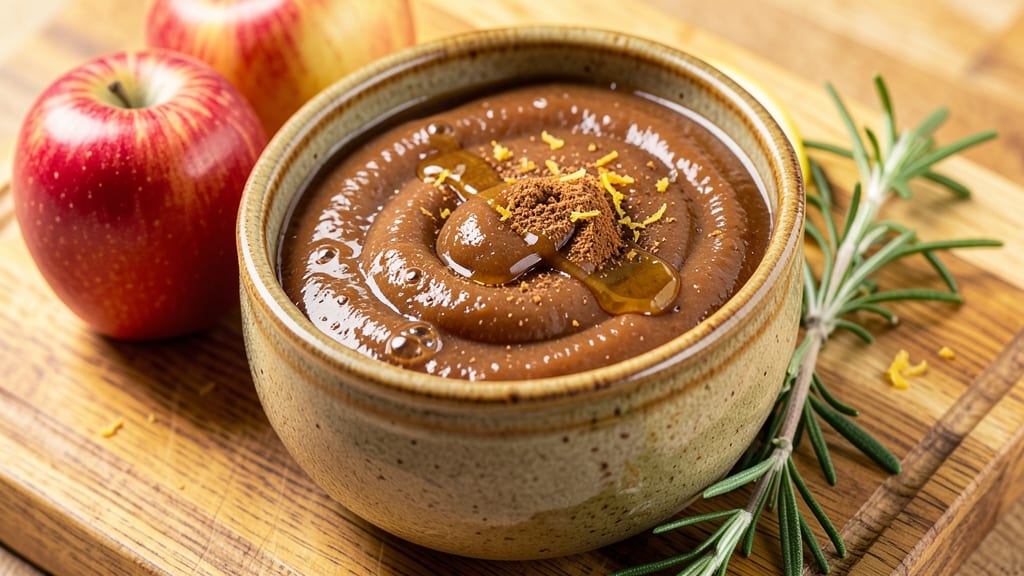
This apple sauce and apple butter recipe transforms seasonal apples into two versatile spreads that elevate everything from breakfast toast to holiday pies.
Simmering apples with cinnamon and a touch of sugar creates a smooth, spoonable sauce perfect for dipping or baking, while reducing it further yields a thick, spreadable butter with deep caramel notes.
The process is straightforward—just peel, core, and cook—but the results are restaurant-quality, with a natural sweetness that shines in both forms.
The key to success lies in the cooking method: gentle simmering preserves the apples' natural flavors while allowing them to break down into a velvety texture. For apple sauce, blend the cooked mixture until silky smooth, while apple butter requires additional reduction time to achieve that rich, jam-like consistency.
Both versions keep beautifully in the refrigerator for up to two weeks, making them ideal for meal prep or gifting.
What sets these spreads apart is their versatility—use the sauce as a topping for oatmeal, a filling for pastries, or a natural sweetener in place of sugar. The butter, with its intensified flavor, is perfect for slathering on toast, swirling into yogurt, or drizzling over roasted meats.
The recipe delivers fast results (about 45 minutes total) without requiring any special equipment, just a pot, a peeler, and a blender.
Whether you're stocking your pantry for fall baking or craving a healthier alternative to store-bought spreads, this dual-purpose recipe ensures you'll have both options on hand.
The cinnamon-spiced aroma alone makes your kitchen feel like an autumn bakery, and the process is simple enough for beginners while still impressive enough for entertaining. Let’s get started!
Ingredients for apple sauce apple butter
Eight ingredients transform seasonal apples into two luxurious spreads perfect for breakfast and baking.
| Ingredient | Amount | Notes |
|---|---|---|
| Honeycrisp Apples 🍎 | 4 lb | Peeled, cored, sliced into even pieces |
| Granulated Sugar 🍚 | 1 cup | Light brown preferred for depth |
| Ground Cinnamon 🌿 | 2 tbsp | Freshly ground for maximum aroma |
| Lemon Juice 🍋 | 2 tbsp | Freshly squeezed for brightness |
| Vanilla Extract 🌸 | 1 tsp | Pure vanilla for authentic flavor |
| Water 💧 | ½ cup | For even cooking and blending |
| Apple Cider Vinegar 🍶 | 1 tsp | For preservation and tang |
| Salt 🧂 | ½ tsp | Kosher or sea salt for balance |
The Honeycrisp apples are non-negotiable—their crisp texture and natural sweetness create the best base for both spreads. Local farmers markets often have them in season, but any firm, sweet apple variety (like Gala or Fuji) works in a pinch. Look for apples that are firm to the touch and free of bruises. The granulated sugar should be light brown if available—it adds subtle caramel notes that enhance the apple butter's depth. Whole Foods or Trader Joe's carry high-quality sugar options, but regular supermarket sugar works fine. For cinnamon, Penzeys or McCormick offer freshly ground varieties that elevate the flavor significantly compared to pre-ground options.
No Honeycrisp? Gala or Fuji apples are excellent substitutes—they hold their shape well during cooking. Running short on sugar? Maple syrup or agave can replace up to half the amount, though the texture will be slightly different. Fresh lemon juice is ideal, but bottled lemon juice works in a bind—just add a pinch more salt to compensate. For vanilla, pure extract is essential; imitation vanilla lacks the complexity. The apple cider vinegar might seem unusual, but it prevents browning and adds a subtle tang that bridges the sauce and butter flavors. If you're avoiding vinegar, a splash of apple juice will work, though the texture may be slightly less stable.
Both spreads keep beautifully in the refrigerator for up to two weeks when stored in airtight glass jars. For the sauce, a thin layer of olive oil on top prevents browning and preserves freshness. The apple butter, with its thicker consistency, can be stored at room temperature for one week or refrigerated for three months. Freezing is also an option—both spreads maintain their quality for up to six months when frozen in ice cube trays or small jars. Label your jars with dates to track freshness, and always reheat gently on the stove or in the microwave for even consistency.
Why You'll Love This Recipe
- No Chopping Needed: I swear by Honeycrisp apples here—peel, core, and toss. That’s it. No dice, no fuss, just big chunks that melt into velvety butter while you sip coffee.
- Sweet-Spiced Magic: The cinnamon and sugar caramelize into something dangerously addictive. A splash of lemon keeps it bright, and vanilla? That’s the cherry on top—literally.
- Breakfast to Dessert: Slather it on toast, stir it into oatmeal, or drizzle it over ice cream. Honestly, I’ve even used it as a glaze for roasted pork—it’s that versatile.
- Lasts All Week: A batch keeps for months in the fridge, and it only gets better with time. Between us, I’ve had jars from last fall’s harvest—still perfect for spreading.
Step-by-step instructions for homemade apple sauce and apple butter
Transforming fresh apples into versatile spreads is simpler than you think—just follow these precise steps.
Prepare and Cook the Apple Base
In a large, heavy-bottomed pot, combine the peeled, cored, and sliced 4 lb Honeycrisp Apples with the 0.5 cup Water and 1 tsp Apple Cider Vinegar. Bring to a boil over medium-high heat, then immediately reduce to medium-low heat. Cover and simmer for 20-25 minutes, stirring occasionally, until the apples break down completely and the mixture becomes thick and chunky.
Here's the thing—Honeycrisp apples are naturally crisp, so you'll notice they resist breaking down at first. Keep stirring gently to prevent sticking, and watch for the mixture to transform from separate apple pieces to a cohesive, thick purée. If the apples aren't breaking down after 25 minutes, add 1-2 tablespoons of water and continue cooking.
Season and Simmer for Flavor Development
Once the apples are fully broken down, stir in the 1 cup Granulated Sugar, 2 tbsp Ground Cinnamon, 2 tbsp Lemon Juice, 1 tsp Vanilla Extract, and 0.5 tsp Salt. Return the mixture to a gentle simmer and cook uncovered for 15-20 minutes, stirring frequently. This step is where the flavors meld together—you'll smell the cinnamon deepen and the lemon brighten as the sugar caramelizes slightly.
For apple butter, continue simmering until the mixture thickens to a spreadable consistency, about 10-15 minutes longer. You'll know it's ready when it coats the back of a spoon smoothly and leaves a slight sheen. If it's too thin, simmer uncovered for another 5 minutes to reduce further. Resist the urge to rush—this slow cooking builds depth of flavor.
Blend for Smooth Texture (Optional)
For classic apple sauce, use an immersion blender to purée the mixture until smooth. If you prefer a slightly textured sauce, blend in short bursts or mash with a potato masher. For apple butter, skip blending entirely—its rustic texture comes from the natural breakdown of the apples during cooking.
Taste and adjust seasoning if needed. I often find the homemade version needs a touch more salt or lemon juice to balance the sweetness. Transfer the finished spread to a clean jar, leaving about ¼ inch headspace to allow for expansion as it cools. Seal while warm for a perfect airtight finish.
Cool and Store Properly
Let the apple sauce or apple butter cool to room temperature, then refrigerate in an airtight container. It will keep for up to 2 weeks in the fridge or 6 months in the freezer. The texture will thicken as it cools—this is normal. If you prefer a smoother consistency, reheat gently over low heat, stirring frequently, until it reaches your desired thickness.
This method delivers a spread that's perfect for toast, pancakes, or even as a glaze for roasted meats. The key to success lies in patience during the simmering—rushing leads to flat flavor, while proper timing creates that perfect balance of sweet, tangy, and spiced notes.
Pro Tips For Making Apple Sauce Apple Butter
- PEEL AND CORE FAST: Use a sharp paring knife instead of an apple corer—it’s faster and you’ll actually get every last bit of fruit. I used to waste good apple flesh with those clunky tools, and this method cuts prep time in half.
- STIR CONSTANTLY AT FIRST: The first 10 minutes are when it burns. Keep your spoon moving in the pot like you’re stirring oatmeal—especially if you’re using a heavy-bottomed pan. After that, you can ease up, but don’t let it sit.
- USE BROWN SUGAR FOR DEPTH: Swap half the granulated sugar for brown sugar. It caramelizes faster and adds a molasses-like richness that cuts through the Honeycrisp’s sharpness. Trust me, the flavor shifts in a good way.
- SKIP THE BOIL-OVER: If your mixture starts foaming like a science experiment, lower the heat immediately. I learned this the hard way—once, I had apple butter splattered across my ceiling. A wooden spoon skimming the foam helps too.
Serving suggestions for apple sauce apple butter
Breakfast Pairings
Start your day with this apple sauce drizzled over steaming oatmeal—the warm cinnamon notes complement the creamy texture perfectly. I like to add a pinch of cardamom for an extra layer of warmth.
For a protein boost, pair with Greek yogurt and a sprinkle of granola—the tangy yogurt balances the sweetness beautifully. 🍳
Baking Enhancements
Use apple butter as a pie filling or swirl it into muffin batter for a moist, flavorful twist. I recommend adding it to apple cinnamon muffins or pumpkin bread—the caramelized depth elevates the dish instantly.
For a quick dessert, spread it on toasted brioche with a sprinkle of sea salt and a drizzle of honey.
Savory Applications
Don’t limit these spreads to sweet dishes! Apple butter makes an unexpected but delicious glaze for roasted pork tenderloin—simmer it with a splash of apple cider and brush it on during the last 10 minutes of cooking.
It also pairs wonderfully with grilled chicken, especially when served with a side of caramelized onions. The sweet-tangy balance cuts through rich meats beautifully. 🍖
Holiday Gifting
Both spreads make thoughtful gifts—package them in small, amber glass jars tied with twine for a rustic touch. I like to include a handwritten note with serving suggestions, like "Perfect for toast, oatmeal, or roasted meats."
For a festive twist, add a cinnamon stick as a garnish. These homemade treats feel luxurious yet simple, making them ideal for teacher gifts, hostess presents, or holiday exchanges.
Dessert Upgrades
Elevate ice cream sundaes by adding a dollop of apple butter and a sprinkle of crushed pecans. For a cheesecake topping, blend the apple sauce with a touch of vanilla bean paste and spread it over a chilled cheesecake before baking.
It also works as a filling for crepes—simmer it with a splash of bourbon for an adult-friendly twist. 🍰
Global Twists
Try a German-inspired approach by mixing apple butter with crumbled bacon and spreading it on rye toast for a sweet-savory breakfast. In Japan, it’s often paired with matcha—drizzle it over matcha-flavored ice cream for a unique fusion.
For a Middle Eastern twist, blend it with harissa and serve with warm pita—the heat balances the sweetness perfectly. 🌍
Nutrition facts
Frequently asked questions
What’s the difference between apple sauce and apple butter?
Apple sauce is smooth, spoonable, and blends the cooked apples into a velvety texture—perfect for dipping or baking. Apple butter is thicker, spreadable, and has a deeper caramelized flavor from extended simmering. The key difference is cooking time: sauce stops when apples break down, while butter continues until it thickens to a jam-like consistency.
Can I make this with tart apples like Granny Smith?
Yes, but you’ll need to adjust the sweetness. Tart apples work well for apple butter, where the longer cooking time caramelizes their natural sugars. For apple sauce, add an extra ¼ cup sugar or 1 tbsp maple syrup to balance the tartness. Always taste as you go!
How do I know when apple butter is done?
It’s ready when it coats the back of a spoon smoothly and leaves a sheen (like thick jam). For extra accuracy, test by chilling a small spoonful—if it holds its shape without sliding off, it’s perfect. Overcooking can burn it, so watch closely during the last 5 minutes of simmering.
Can I skip the apple cider vinegar?
You can substitute 1 tsp lemon juice or ½ tsp citric acid, but vinegar helps preserve color and adds subtle tang. Without it, the spread may brown faster. If you’re avoiding vinegar entirely, add an extra ½ tsp salt to balance flavors.
Why did my apple sauce turn out watery?
This usually happens if you didn’t cook the apples long enough or added too much liquid. For a quick fix, simmer uncovered for 5-10 minutes to reduce excess moisture. Next time, stir frequently and let the mixture thicken naturally—no extra water needed!