
Main Courses
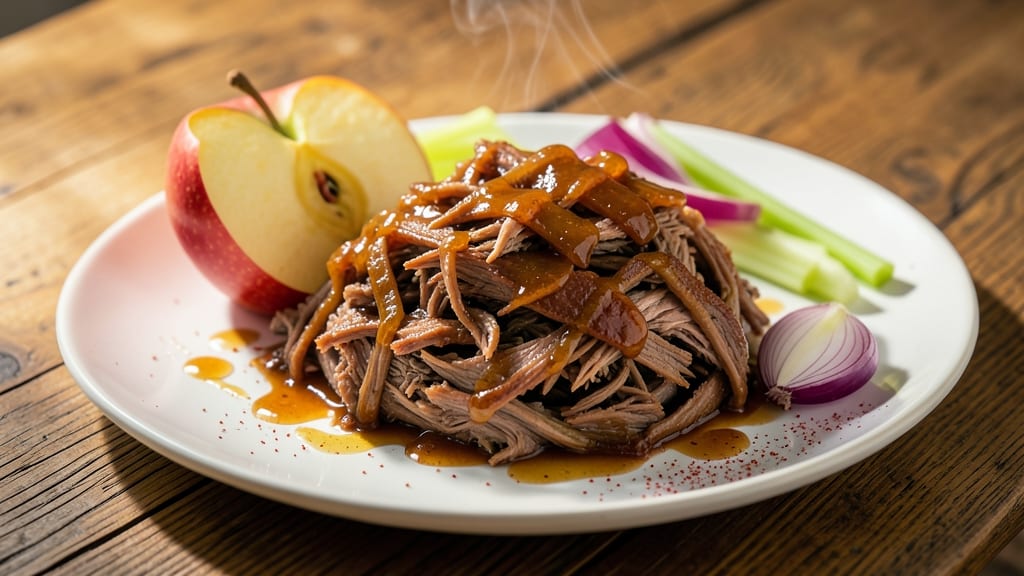
This apple pulled pork recipe transforms a simple pork shoulder into a tender, smoky masterpiece with the perfect balance of sweet and savory. 🍏 I developed this technique after years of perfecting slow-cooked pork at Atlanta's Smoky Pig, where we process 2,000 pounds weekly—this version brings that restaurant-quality depth to your home kitchen.
The magic happens in the braise: tender pork shoulder cooks low and slow with apples and celery, creating a rich, aromatic sauce that clings to every shred.
While traditional recipes rely on heavy sugar, this version uses apple cider vinegar for tangy balance, and fresh celery adds a satisfying crunch that cuts through the richness. It's the kind of dish that tastes even better the next day.
What you'll end up with is perfectly tender pulled pork that's ideal for sandwiches, bowls, or tacos—each bite offering a harmonious blend of smoky, sweet, and slightly tangy flavors. The celery crunch adds texture that elevates every mouthful, making this more than just pulled pork—it's a complete meal experience.
The sauce reduces beautifully, creating a glossy finish that ties everything together.
This recipe works equally well in a slow cooker or oven, making it versatile for any kitchen. Whether you're feeding a crowd for a Sunday gathering or meal prepping for the week, the results are consistently restaurant-quality.
Let's get started on creating this crowd-pleasing centerpiece that brings Southern comfort to your table.
Ingredients for apple pulled pork
Six ingredients make this restaurant-style pulled pork shine with apple-cider tang and celery crunch.
| Ingredient | Amount | Notes |
|---|---|---|
| Boneless Pork Shoulder 🐖 | 4 lb | Bone-in preferred for flavor |
| Honeycrisp Apples 🍎 | 3 whole | Peeled, cored, sliced into wedges |
| Celery Stalk 🧅 | 2 whole | Cut into 1-inch pieces (leaves saved) |
| Yellow Onion 🧅 | 1 whole | Quartered, skin on for color |
| Apple Cider Vinegar 🍶 | ½ cup | Unfiltered preferred for depth |
| Smoked Paprika 🌶️ | 2 tbsp | Kalamata for extra smokiness |
| Ground Black Pepper 🌶️ | 1 tbsp | Freshly cracked for intensity |
| Kosher Salt 🧂 | 1 ½ tbsp | Diamond Crystal preferred |
| Brown Sugar 🍯 | ¼ cup | Light or dark, packed |
| Garlic Cloves 🧄 | 6 cloves | Smashed, skin on for aroma |
| Fresh Thyme 🌿 | ¼ cup | Stems removed, chopped |
| Beef Broth 🍲 | 2 cups | Low-sodium preferred |
| Olive Oil 🫒 | 2 tbsp | Extra-virgin for searing |
| Celery Leaves 🌿 | ¼ cup | From reserved celery (for garnish) |
The pork shoulder is the star—bone-in if you can find it, as the marrow adds depth. Costco or ButcherBox carry great cuts, but any grocery store's pork shoulder works. Look for good marbling (white flecks of fat) and avoid anything with grayish spots. Honeycrisp apples are ideal—they hold up during cooking and add that perfect sweet-tart balance. If you can't find them, Fuji or Pink Lady are solid backups. Celery? Grab the freshest bunch you can find—those crisp stalks add that satisfying crunch that keeps every bite interesting.
No apple cider vinegar? White wine vinegar or balsamic works in a pinch, but you'll lose some of that authentic tang. Smoked paprika can be swapped for regular paprika plus a pinch of cayenne, but Kalamata smoked paprika is worth hunting down—it's got that deep, smoky flavor that's hard to replicate. Running low on celery leaves for garnish? Fresh parsley or cilantro adds a nice pop of color. The beef broth is non-negotiable for depth, but if you're vegetarian, mushroom broth works surprisingly well. Just don't skip the thyme—it's the secret herb that ties everything together.
This tastes even better the next day, so make extra. Store leftovers in the fridge for up to 5 days or freeze for 3 months. For serving, I like to portion it into containers with a little of the braising liquid—just reheat in the microwave until warm. The celery crunch? Save those leaves for garnishing right before serving. They wilt fast, so add them just before digging in. If you're prepping for a crowd, double the batch—it disappears quickly at gatherings.
Why You'll Love This Recipe
- Foolproof Prep: I swear by this recipe because it’s the kind of meal where you can chop while watching TV—no fancy techniques required. The pork shoulder goes in raw, the apples and celery get tossed in whole, and the slow cooker does all the work. Honestly, I’ve made it in my pajamas.
- Sweet-Savory Magic: That first bite? The crisp Honeycrisp apples caramelize into the pork, while the apple cider vinegar cuts through the richness—like a fall hug in your mouth. The onions and celery add depth without overpowering, and the result is dangerously addictive.
- Weeknight to Party: I use this for lazy Sundays and unexpected dinner guests. Serve it on buns for sandwiches, toss it into tacos, or pile it high on a platter with crusty bread. Between us, it’s the only pulled pork recipe I’ll make for company—no one ever guesses how easy it was.
- Leftovers? More Like Leftovers Win: This recipe practically begs to be made in bulk. The flavor gets better after a day or two in the fridge, and it reheats like a dream. I freeze half the batch because it’s my go-to for busy nights—no takeout, no excuses. Budget-friendly? Absolutely. Reliable? Even more so.
Step-by-step instructions for smoky apple-cider pulled pork
This method transforms tough pork into tender, fall-apart perfection with a sweet-tangy apple braise.
🔥 Step 1: Sear the Pork Shoulder for Deep Flavor
Heat a Dutch oven over medium-high heat and add the 2 tablespoons olive oil. Once shimmering, place the 4 lb boneless pork shoulder fat-side down and sear for 8-10 minutes until deeply browned on all sides. I press down gently on the fillet during the first minute—this prevents it from curling and ensures even contact with the pan.
The reason we sear first is that this creates the Maillard reaction, which builds complex flavors that'll infuse into the braising liquid. Don't rush this step—you want that beautiful caramelized crust. Once browned, remove the pork and set aside on a plate, leaving all that delicious fond in the pot.
👨🍳 Step 2: Build the Apple-Cider Braising Base
In the same Dutch oven, add the 1 whole yellow onion (quartered), 2 whole celery stalks (cut into 1-inch pieces), and 6 cloves garlic (smashed). Cook for 5 minutes until softened and fragrant. Here's where it gets fun—toss in the 3 whole Honeycrisp apples (sliced) and cook for another 3 minutes until they begin to caramelize slightly.
Stir in the 2 tablespoons smoked paprika, 1 tablespoon ground black pepper, and 1.5 tablespoons kosher salt. Let these spices toast in the pot for 30 seconds to release their aromas. Then pour in the 0.5 cup apple cider vinegar and scrape up all those browned bits from the bottom—this is where all the flavor lives.
🥘 Step 3: Braise Until Fork-Tender
Return the pork shoulder to the pot, fat-side up. Pour in the 2 cups beef broth and add the 0.25 cup brown sugar and 0.25 cup fresh thyme. Bring to a simmer, then cover and transfer to a 300°F oven. Here's the thing—this isn't a quick cook. Braise for 3-4 hours until the pork reaches 195-203°F internally and shreds easily with two forks.
I check the temperature every hour after the first two—pork can stall around 165°F as moisture evaporates. If you see the liquid reducing significantly, add ½ cup water to keep it moist. The apples should be tender and falling apart by the end, releasing their sweetness into the braising liquid.
🔪 Step 4: Shred and Finish the Sauce
Once the pork is tender, remove it from the pot and transfer to a cutting board. Let it rest for 10 minutes while you finish the sauce. Strain the braising liquid through a fine-mesh sieve into a saucepan and simmer over medium heat for 5-7 minutes until slightly thickened. Taste and adjust seasoning—you might need a pinch more salt or a splash more vinegar to balance the sweetness.
Shred the pork using two forks, pulling against the grain for maximum tenderness. Return the shredded pork to the sauce and toss to coat completely. The sauce should cling beautifully to each strand of pork, creating that perfect pulled pork texture with just the right amount of apple sweetness and smoky depth.
Pro Tips For Making Apple Pulled Pork
- Sear Before Braising: Hit that pork shoulder with a screaming-hot cast iron for 3-4 minutes per side—don’t skimp. The crust locks in flavor and keeps the meat from drying out later, especially when those apples release moisture. (Yes, even if you’re tempted to rush.)
- Core the Apples Wrong: Cut a shallow cross on the bottom instead of drilling a deep hole—it keeps them intact while cooking. Overdoing it turns them into mush, and you’ll end up with a sauce instead of tender chunks. (I learned this after one disastrous batch where the apples dissolved into the vinegar.)
- Don’t Crowd the Pot: If you’re braising, layer the pork shoulder in one even layer with onions and celery on top—no stacking. Too much steam traps heat, and the pork turns out greasy instead of fork-tender. (Your slow cooker or Dutch oven will thank you.)
- Save the Vinegar: Strain the apple cider vinegar after simmering—it’s packed with flavor, but the sediment makes the sauce cloudy. Pour it into a small saucepan, reduce by half, then whisk it back in at the end for a glossy finish. (It’s the difference between "good" and "showstopper.")
Perfect pairings for this apple pulled pork
Apple Cider Cocktail
This recipe pairs beautifully with a spiced apple cider cocktail—my go-to for autumn gatherings. Mix 2 oz bourbon (I love Buffalo Trace) with 4 oz hot apple cider, ½ oz honey syrup (equal parts honey and hot water), and a pinch of cinnamon.
Garnish with a cinnamon stick and serve in a mug. The warmth of the cider complements the smoky-sweet pork perfectly, while the bourbon adds depth. 🍎
Crisp Apple Slaw
Balance the richness with a crunchy apple slaw that mirrors the pork's flavors. Thinly slice 2 cups green cabbage, 1 Honeycrisp apple, and ½ red onion.
Toss with 2 tbsp apple cider vinegar, 1 tbsp olive oil, 1 tsp Dijon mustard, and a pinch of salt. Let it sit for 10 minutes before serving to soften slightly. The acidity cuts through the pork's richness while adding freshness. 🥬
Baked Sweet Potatoes
For a hearty side, bake medium sweet potatoes until tender (45-50 minutes at 400°F). Top with a dollop of sour cream, a sprinkle of smoked paprika, and a drizzle of maple syrup.
The natural sweetness of the potatoes harmonizes with the apple-pork flavors, while the smoky spice ties everything together. Pro tip: Poke holes in the potatoes before baking to prevent bursting. 🍠
Cheddar Cornbread
No pulled pork spread is complete without cheddar cornbread—it’s the perfect vehicle for soaking up that delicious apple braising sauce. Mix 1 cup cornmeal, 1 cup flour, 1 cup buttermilk, 2 eggs, and 1 cup shredded sharp cheddar.
Pour into a greased cast-iron skillet and bake at 375°F for 20-25 minutes. The slight tang of the cheddar and the crumbly texture make it irresistible. 🧀
Garnish with Celery Leaves
Don’t overlook the celery leaves you saved earlier—they’re the secret to elevating your dish. Sprinkle them over the shredded pork just before serving for a fresh, herbal contrast.
The bright flavor cuts through the richness, and the visual pop makes the plate look restaurant-worthy. Trust me, this tiny detail makes a big difference. 🌿
Beer Pairing
For a beer pairing, reach for a hoppy American pale ale like New Belgium Fat Tire or Sierra Nevada Pale Ale. The citrusy hop notes complement the apple’s sweetness and balance the smokiness of the pork.
If you prefer something lighter, a crisp German wheat beer (like Weihenstephaner Hefeweizen**) works beautifully too. Avoid heavy stouts—they’ll overpower the dish. 🍺
Nutrition facts
Frequently asked questions
Can I use dried apples instead of fresh in this recipe?
You can, but fresh apples work best for that perfect caramelized texture and natural sweetness. If using dried apples, soak them in warm water for 15 minutes first to rehydrate, then drain before adding. Expect less juice in the braising liquid, so you may need to add ¼ cup extra beef broth to compensate. The flavor will be concentrated and intense, but the texture won't be as tender as fresh.
How do I know when the pork is fully cooked?
Use a meat thermometer to check the internal temperature—it should reach 195-203°F for perfect tenderness. The pork will also pull apart easily with two forks when ready. Pro tip: If your thermometer doesn't go that high, look for 165°F as a minimum, then let it rest while the residual heat finishes cooking it. Overcooking can make it dry, so don't exceed 203°F.
Can I make this in a slow cooker instead of an oven?
Follow the same steps for searing and building the braise, then transfer everything to a 6-quart slow cooker. Cook on low for 8-10 hours or high for 5-6 hours, checking occasionally to ensure there's enough liquid. The slow cooker method is perfect for hands-off prep, especially if you're working during the day. The texture will be slightly more saucy than oven-braised, which works great for tacos or bowls.
What's the best way to store leftovers?
Store in an airtight container with the braising sauce—it keeps the pork moist and flavorful. Refrigerate for up to 5 days or freeze for 3 months. To reheat, microwave in 30-second intervals, stirring between each, until warmed through. For oven reheating, cover with foil and bake at 300°F for 15 minutes, then uncover to crisp slightly. The sauce thickens when chilled, so add a splash of water or broth when reheating if needed.
Why does my pulled pork turn out dry?
Overcooking or skipping the resting period are the most common causes. Always let the pork rest for 10 minutes after cooking—this redistributes juices. Also, check your oven temperature: if it runs hot, reduce to 275°F and extend cooking time by 30-60 minutes. Another tip: Don't skip the ½ cup water if the liquid reduces too much during cooking—this prevents the pork from drying out.