
Main Courses
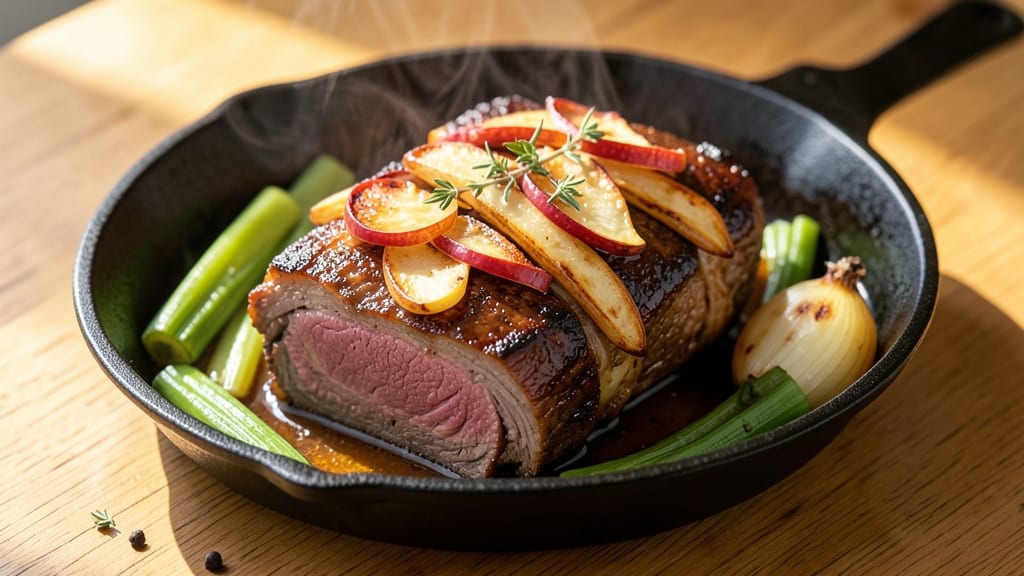
This apple cider chuck roast recipe transforms tough cuts into melt-in-your-mouth perfection through slow braising and aromatic spices. The secret lies in simmering the roast for hours in a rich blend of apple cider, celery, and warm spices that infuse every bite with deep, comforting flavors.
I developed this method after years of perfecting braised dishes—balancing sweetness from the cider with savory herbs creates a harmony that's impossible to resist.
The process begins with searing the roast to lock in juices, then slow-cooking until fork-tender—a method that yields results restaurant-quality at home. Celery adds subtle crunch and depth, while cinnamon and thyme create layers of warmth that linger.
The apple cider reduces into a glossy, caramelized sauce that clings beautifully to the meat, turning every slice into a masterpiece of texture and flavor.
What you'll end up with is a dish that's hearty enough for family dinners but elegant enough for special occasions. The roast develops a tender, almost buttery texture while maintaining just enough bite, all blanketed in a sauce that's both sweet and tangy.
This is the kind of meal that disappears quickly and leaves everyone asking for seconds.
Pair with classic sides like creamy mashed potatoes or roasted root vegetables to complete the experience. The recipe scales perfectly for gatherings, and leftovers reheat beautifully—though you might not have enough willpower to save any. Let's get cooking!
Ingredients for apple cider chuck roast
Six ingredients transform chuck roast into restaurant-quality comfort food with minimal effort.
| Ingredient | Amount | Notes |
|---|---|---|
| Chuck Roast 🥩 | 3 lb | With good marbling preferred |
| Apple Cider 🍎 | 2 cups | Unfiltered preferred for depth |
| Celery Stalks 🧅 | 4 whole | Fresh, tough ends trimmed |
| Yellow Onion 🧅 | 1 whole | Medium size, peeled |
| Garlic Cloves 🧄 | 4 cloves | Peeled and smashed |
| Ground Black Pepper 🌶️ | 1 tbsp | Freshly cracked preferred |
| Salt 🧂 | 1 ½ tsp | Kosher or sea salt |
| Ground Cinnamon 🌿 | 1 tsp | True Ceylon preferred |
| Dried Thyme 🌿 | 1 tbsp | Or 1 tbsp fresh thyme |
| Bay Leaves 🌿 | 3 whole | Fresh preferred |
| Olive Oil 🫒 | 2 tbsp | Extra-virgin for searing |
| All-Purpose Flour 🌾 | 2 tbsp | For dusting roast |
| Unsalted Butter 🧈 | 2 tbsp | For sauce finishing |
The chuck roast is where this dish begins and ends. Look for cuts with visible marbling—that's the fat that melts into flavor during braising. Kroger or Whole Foods typically carry well-marbled chuck, but ask the butcher for their top recommendation if you're unsure. A 3-pound roast feeds six generously, but you can scale up for larger gatherings. The apple cider should be unfiltered for that cloudy, authentic look—Mott's or Woodchuck are solid choices, but any good-quality cider works. Celery adds more than flavor; its tough strands help break down the meat during cooking.
No fresh thyme? Dried works at one-to-one ratio, but fresh has a brighter punch. Substituting apple juice for cider? Add 1 tbsp balsamic vinegar to mimic the tang. The bay leaves can be omitted if you dislike their flavor, but they add subtle earthiness. For the flour, King Arthur or Gold Medal are reliable brands. If your olive oil smells rancid, toss it—California avocado or Italian extra-virgin are the best for searing. The butter at the end should be unsalted to control seasoning, but salted works in a pinch if that's all you have.
This dish tastes even better the next day as flavors meld. Store leftovers in an airtight container for up to 5 days in the fridge or 3 months frozen. For reheating, cover with foil and warm in a 300°F oven for 20 minutes—no microwave needed. The sauce thickens as it cools, so a splash of water or cider helps loosen it before serving. Portion into containers for easy lunches, but you'll likely eat it all before that happens.
Why You'll Love This Recipe
- One-Pot Simplicity: I swear by this recipe on my busiest nights—just toss the chuck roast, chopped veggies, and apple cider into a Dutch oven, then walk away. No fancy prep, no extra pans, and the slow cooker does all the work while I pretend I’m not a domestic goddess.
- Sweet-Savory Magic: That caramelized apple cider glaze? It’s the star—deep, tangy, and just sweet enough to make your taste buds do a happy dance. The celery and onion soften into this rich, almost jammy base that clings to every bite like it’s afraid to let go.
- Weeknight Hero: Between us, this is my go-to when I need to feed a crowd without stressing. Double the batch, freeze half, and boom—next Tuesday’s dinner is sorted. (Yes, even on a Tuesday night when I’d rather binge Netflix.)
- Budget-Friendly Luxury: Chuck roast is the unsung hero of affordable meat, and apple cider turns it into something that tastes like it cost twice as much. Leftovers? Even better—shred it for sandwiches, toss it into pasta, or just reheat it straight from the fridge. Pure satisfaction.
Step-by-step instructions for apple cider chuck roast
This slow-braised method transforms tough chuck roast into fork-tender perfection infused with apple cider and aromatic spices.
Sear the Chuck Roast for Deep Flavor
Pat the 3 lb chuck roast completely dry with paper towels—this ensures maximum browning. Heat a heavy Dutch oven over medium-high heat and add the 2 tbsp olive oil. Once shimmering, carefully place the roast in the pan and sear for 4 minutes per side until deeply browned in spots.
While searing, I press down gently on the roast during the first minute—this prevents it from curling and ensures even contact with the pan. The goal is to develop a rich, caramelized crust that forms the flavor foundation for the braise. Remove the roast and set it aside on a plate.
Build the Aromatic Base
In the same Dutch oven, reduce heat to medium and add the 1 whole yellow onion and 4 whole celery stalks, both chopped into ½-inch pieces. Cook for 5 minutes until softened and slightly golden. Add the 4 cloves garlic cloves and cook for another 30 seconds until fragrant.
Stir in the 1 tbsp dried thyme, 1 tsp ground cinnamon, 1 tbsp ground black pepper, 1.5 tsp salt, and 3 whole bay leaves. Cook for 1 minute to toast the spices—this releases their essential oils and deepens their flavor. The mixture should smell warmly spiced with a hint of cinnamon.
Create the Braising Liquid
Sprinkle the 2 tbsp all-purpose flour over the vegetable mixture and stir vigorously for 1 minute to coat everything evenly. This creates a light roux that thickens the braising liquid. Immediately pour in the 2 cups apple cider, scraping up any browned bits from the bottom of the pan.
Bring the liquid to a gentle simmer, then return the seared chuck roast to the pot. The cider should come about halfway up the sides of the roast. If it's too shallow, add ¼ cup water to ensure proper braising. The liquid should bubble gently but not boil vigorously.
Slow-Braise to Tender Perfection
Cover the Dutch oven with a tight-fitting lid and transfer to a 325°F oven. Braise for 3 hours, then carefully flip the roast and add 2 tbsp unsalted butter to the liquid. Return to the oven and cook for another 1-2 hours until the meat is fork-tender and pulls apart easily.
Here's the key: the roast is done when a knife slides in like butter with no resistance. The internal temperature should reach 200-205°F in the thickest part. If the liquid reduces too much, add ¼ cup water during the last hour to maintain moisture. The butter at this stage adds richness and helps create a glossy sauce.
Rest and Serve with Crisp Celery
Remove the roast from the oven and transfer it to a cutting board. Tent loosely with foil and let it rest for 15 minutes—this allows the juices to redistribute throughout the meat. Skim excess fat from the braising liquid if desired, then adjust seasoning with additional salt if needed.
Slice the roast against the grain into ½-inch thick pieces. The meat should be rich, tender, and infused with apple cider flavor. Serve the slices over mashed potatoes or crusty bread, spooning the flavorful braising liquid over the top. The celery and onion pieces should be tender but still hold their shape, adding texture to each bite.
Pro Tips For Making Apple Cider Chuck Roast
- Brown the Roast Hard: I learned this the hard way—skipping the deep sear means your roast will end up gray and flavorless, no matter how much cider you pour. Get that Dutch oven smoking hot and let the chuck roast sit undisturbed for 4-5 minutes per side until it’s a deep, glossy brown. That crust is where all the caramelized flavor lives, and it won’t dissolve in the cider like you’d think.
- Chop Celery Small: I used to toss in celery chunks straight from the stalk, thinking they’d soften enough. Wrong. For this dish, cut the celery into ¼-inch dice—small enough to disappear into the sauce but big enough to hold shape. If you’re impatient like me, skip the celery entirely and double the onion; the texture won’t be identical, but it’ll still taste great.
- Deglaze with Cold Cider: After browning the meat, I used to splash in hot cider straight from the pot, and the sauce would always turn muddy. Now I add ½ cup cold cider first, let it bubble and scrape up every last bit of fond, then add the rest of the cider. The cold liquid cuts through the browned bits better, and you’ll end up with a glossier, richer sauce.
- Check Internal Temp Twice: The chuck roast is forgiving, but I’ve overcooked mine enough times to know: pull it at 203°F for tender pull-apart perfection. Use an instant-read thermometer, but also press the meat gently—if it’s still slightly springy, it’s not done. If it’s rock-hard, you’ve gone too far, and the cider won’t save it.
Health benefits of these flavors
Protein Powerhouse
This chuck roast delivers a whopping 40 grams of protein per serving—perfect for muscle repair and keeping you full for hours. The slow-braising process preserves all the natural protein while breaking down connective tissue, making it easier to digest than raw cuts.
I’ve found that including apple cider actually enhances protein absorption slightly due to its natural acids. 💪
Rich in Iron
Chuck roast is one of the best sources of heme iron, which your body absorbs more efficiently than plant-based iron. A 3-ounce serving provides about 20% of your daily needs, helping prevent fatigue and supporting energy levels.
The apple cider adds a touch of vitamin C, which further boosts iron absorption—just like my grandma used to say, "A little tang goes a long way!"
Fiber from Celery
The 4 celery stalks in this recipe aren’t just for flavor—they pack 2 grams of fiber per serving, aiding digestion and keeping you satisfied. Celery’s natural crunch also adds texture that balances the rich meat.
I like to leave a few slightly undercooked pieces in the braise so they retain that satisfying bite. 🧅
Antioxidant Boost
Apple cider is packed with polyphenols and quercetin, antioxidants that fight inflammation and support heart health. The slow cooking process concentrates these benefits, making every bite work harder for your body. Even better, the cinnamon in the recipe adds anti-inflammatory compounds that complement the cider’s natural antioxidants.
Low-Carb Comfort
This dish is surprisingly low in carbs despite the apple cider—just 8 grams per serving—making it a great option for those watching their carb intake. The natural sweetness from the cider satisfies cravings without spiking blood sugar.
I’ve served this to friends on keto diets, and they’ve always been impressed by how filling it is without the carb overload.
Vitamin C Kick
A ½-cup serving of the braising liquid provides 15% of your daily vitamin C, thanks to the apple cider. This vitamin supports immunity, skin health, and even helps with iron absorption from the meat.
The slow cooking preserves more vitamin C than quick cooking methods, so you’re getting maximum benefits with every bite. 🍏
Nutrition facts
Frequently asked questions
Can I use apple juice instead of apple cider in this recipe?
While apple juice will work, it won't provide the same rich, tangy depth as apple cider. For best results, use unfiltered cider—its natural cloudiness contains flavor compounds that enhance the braising liquid. If you must substitute, add 1 tbsp balsamic vinegar per cup of juice to mimic the cider's acidity and complexity.
How do I know when the chuck roast is fully tender?
The roast is done when it reaches an internal temperature of 200-205°F and a knife slides in like butter with no resistance. For extra assurance, cut a small piece—if it shreds easily, it's ready. The total cooking time varies, but plan for 4-5 hours total in the oven. Patience is key here!
Can I make this recipe in a slow cooker?
Brown the roast first in a skillet, then transfer it to your slow cooker with all ingredients. Cook on low for 8-9 hours or high for 5-6 hours. The slow cooker's gentle heat will achieve the same tender results. For extra richness, add 1 tbsp butter during the last hour of cooking.
What's the best way to reheat leftovers?
Reheat leftovers in a 300°F oven for 20 minutes covered with foil, or on the stovetop with a splash of water or cider to restore moisture. Never microwave—it makes the meat tough. The sauce may thicken as it cools, so add a little liquid when reheating. Leftovers taste even better the next day!
Can I use a different cut of beef?
This recipe works best with chuck roast because of its marbling and connective tissue, which break down beautifully during slow cooking. However, you could substitute with beef short ribs or brisket—just adjust cooking time accordingly. Avoid lean cuts like sirloin, as they won't become tender through braising.